Axios from Tel Aviv

March 02, 2022

Welcome back to Axios from Tel Aviv.
- This week's edition (2,063 words, 8 minutes) takes us to the United Nations and gives a status check on the Iran nuclear talks.
- Subscribe.
1 big thing: Behind the scenes of the UAE's Security Council vote
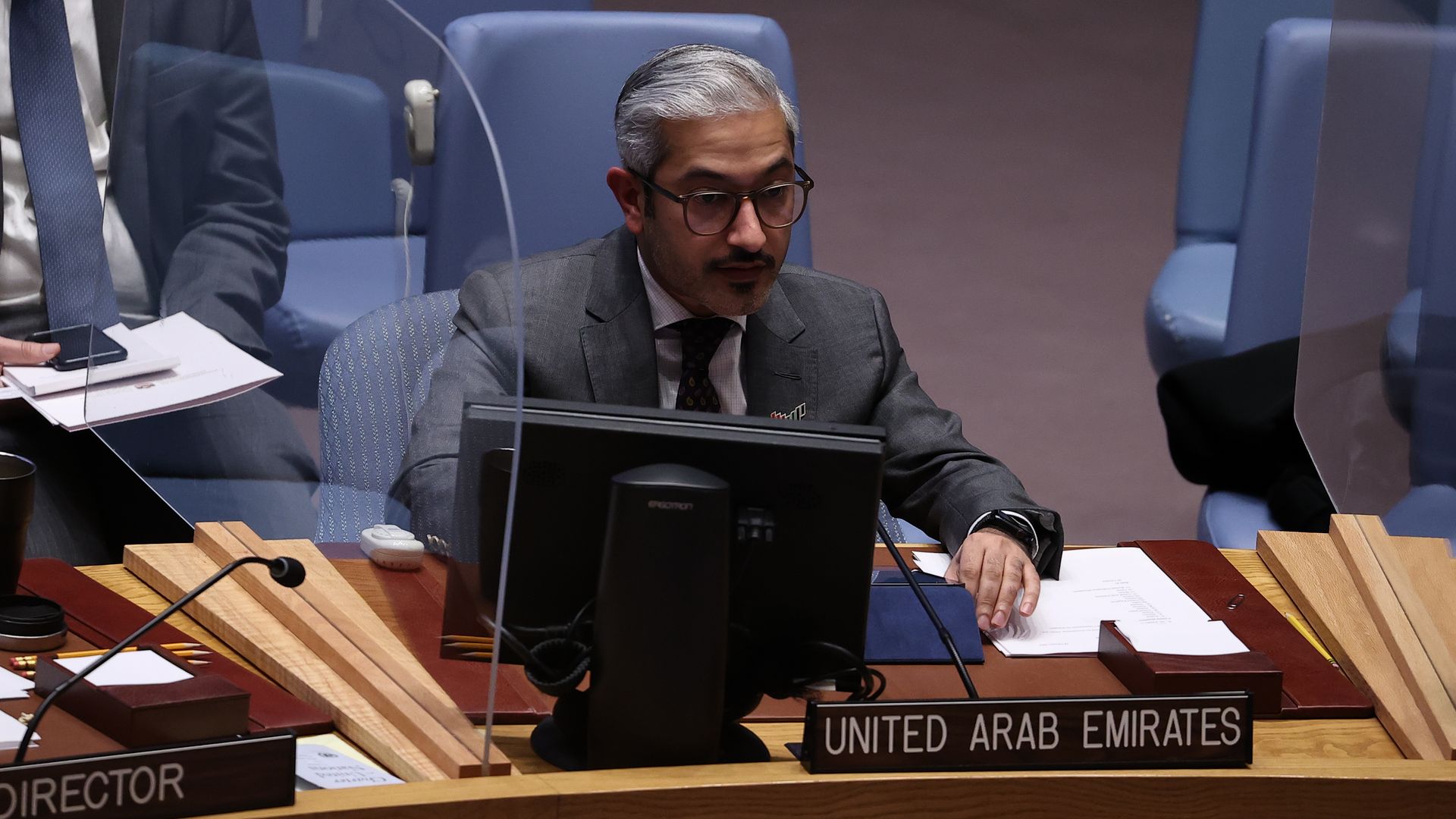
Mohamed Abushahab, the permanent representative of the UAE to the UN, speaks during the UN Security Council meeting on Feb. 28. Photo: Tayfun Coskun/Anadolu Agency via Getty Images
The UAE's decision to abstain last week from a U.S.-led resolution to condemn Russia's invasion of Ukraine at the UN Security Council was largely due to frustrations over the U.S. response to an attack on Abu Dhabi six weeks earlier, three Emirati, U.S. and Israeli sources tell me.
- The UAE today voted at the UN General Assembly to condemn the invasion, but tensions remain between the U.S. and UAE, who cooperate closely on security, intelligence and trade issues.
Flashback: Three people were killed and six wounded in an unprecedented missile and drone attack on Abu Dhabi by Yemen's Houthi rebels on Jan. 17.
- The Biden administration quickly condemned the attack as an act of terrorism, sent a squadron of F-22 fighter jets and the USS Cole to Abu Dhabi, and helped to intercept at least one of the subsequent attacks.
- But the U.S. has not accepted the UAE's request to redesignate the Houthis as terrorists. Aid groups say that move would make it harder for them to operate in Yemen.
Behind the scenes: While the Biden administration saw its response as quick and robust, the Emiratis had bigger expectations and felt abandoned, the three sources say.
- When CENTCOM commander Gen. Frank McKenzie visited Abu Dhabi on Feb. 7, Crown Prince Mohammed Bin Zayed (MBZ) refused to meet with him. That snub was intended to signal disappointment with the fact that it took McKenzie 22 days since the attack to visit, according to a U.S. source with direct knowledge.
- A senior Biden administration official said McKenzie couldn’t visit sooner because he was overseeing and advising the president on the operation that killed ISIS leader Abu Ibrahim al-Hashimi al-Qurayshi. The official says U.S. officials had been in contact with their UAE counterparts several times per day after the attack.
- MBZ did agree to see White House Middle East coordinator Brett McGurk a week later in Abu Dhabi, but used the meeting to air his frustration at the U.S. The senior U.S. official said the meeting was nonetheless "constructive" in terms of future cooperation over Yemen.
But when Russia invaded Ukraine, the Emiratis felt the U.S. response — including the push for sanctions and Security Council resolutions at the UN — was much stronger and faster than when they were attacked, the three sources say.
- The U.S. lobbied UN Security Council members hard on the resolution condemning Russia, but when it came up for a vote on Friday, the Emiratis abstained.
- That was intended as a signal of frustration with the U.S., all three sources say, and it deeply disappointed the U.S. side.
State of play: The frustrations are still alive on both sides.
- The Emiratis want more access to U.S. intelligence and targeting capabilities to prevent further attacks in Yemen.
- U.S. officials say they acted fast even with their resources stretched and the Emiratis want capabilities that don't exist, like pinpoint intelligence for targeting in Yemen.
What they're saying: Another senior Biden administration official said it was not clear whether the Emirati vote at the Security Council was completely tied to their grievances about U.S. policy on the Houthis.
- The official stressed the issue of redesignating the Houthis is still being discussed. “In any case. there will be more steps to address the issue of the Houthi threat not only symbolically," the official said.
2. Inside U.S.-Israel discussions on Ukraine
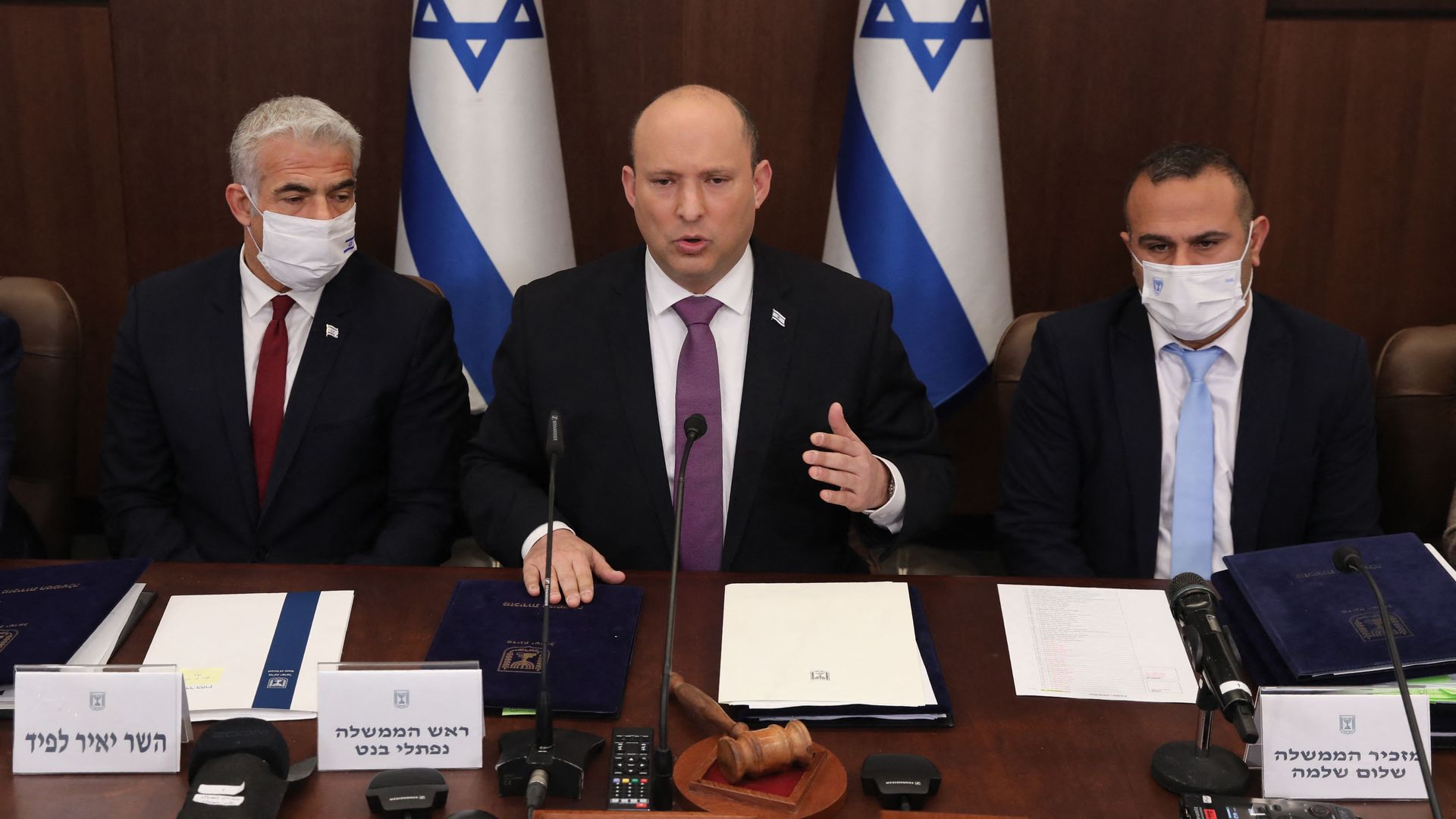
From left: Israeli Foreign Minister Yair Lapid, Prime Minister Naftali Bennett and Government Secretary Shalom Shlomo attend a Cabinet meeting on Feb. 27. Photo: Abir al-Ahmar/AFP via Getty Images
U.S. officials privately urged Israel to take a clearer stance on the Russian invasion of Ukraine, three U.S. and Israeli officials told me.
Why it matters: That contrasts with the Israeli government's public claim that the Biden administration has no complaints about Israeli policy and understands Israel's need to calibrate its reaction to the Russian invasion in order to maintain its security coordination with Russia in Syria.
A senior Biden administration official told me the U.S. understands Israel’s interests regarding Russia in Syria.
- But after Russia invaded Ukraine, U.S. officials urged Israel to take a clear stance and be on the right side of the issue, the official said.
- “We told the Israelis this is a moment of right and wrong," the official said.
Behind the scenes: Ahead of the UN Security Council vote last Friday on a resolution condemning Russia for the invasion, U.S. Ambassador to the UN Linda Thomas-Greenfield and other U.S. officials lobbied the Israelis to join dozens of co-sponsors of the resolution.
- Thomas-Greenfield even told her Israeli counterpart Gilad Erdan that President Biden expected Israel to co-sponsor the resolution, according to the Israeli officials.
- Erdan recommended that Israel co-sponsor it, but Israeli Foreign Minister Yair Lapid decided not to.
- Shortly after, Thomas-Greenfield protested to Erdan and expressed disappointment with Israel while mentioning Biden's expectation once again, an Israeli official told me.
The messages from the White House were more nuanced, several Israeli officials said.
- A senior Israeli official told me the U.S. didn’t push or press Israel hard, but urged and expressed its expectation that Israel would sound a moral voice.
- On Sunday, the Biden administration was initially concerned when it heard reports that Prime Minister Naftali Bennett told Cabinet ministers not to speak publicly about the Russian invasion and not to criticize Russia, a U.S. official said.
- According to the U.S. official, when the White House and State Department raised their concerns, the Israelis made clear the directive was given to ensure that only Lapid and Bennett spoke publicly about it.
To reassure the Biden administration, Lapid gave a statement the next day stressing Israel is against the Russian invasion and would vote in favor of condemning Russia at the UN General Assembly.
- “We feel good about the Israeli position heading into this historic vote. Their position has been positive and helpful, and we have an ongoing dialogue with Israel about the crisis," the U.S. official said.
Driving the news: Israel voted today at the UN General Assembly to condemn the invasion.
What to watch: Israeli officials say they are concerned about the perception created in the U.S. that Israel wasn’t supporting Ukraine.
- Republican and Democratic senators have criticized Israel in recent days, in addition to critical reports in U.S. media.
- Yesterday, Michael Herzog, Israel's ambassador to the U.S., stressed in a series of tweets that Israel opposes the Russian invasion and will support condemning it at the UN.
- Israeli officials say they will continue conveying this message in public in an effort to change the U.S. perception.
3. Arab world divided on Russia-Ukraine

A banner in the coastal town of Halat north of the Lebanese capital Beirut reads, high "quality flour from (friendly) Ukraine," on Feb. 26. Photo: Joseph Eid/AFP via Getty Images
Public opinion in the Arab world is split on Russia's invasion of Ukraine, with many players taking positions according to their domestic or regional political divides, journalist Daoud Kuttab writes for Axios from Amman, Jordan.
Driving the news: The majority of Arab countries kept silent or gave very careful responses after Russia began its assault on Ukraine, trying to balance their relations with the U.S., Russia and Ukraine.
- The Arab League, meanwhile, took a largely neutral position, with an emergency meeting on Sunday ending with a statement expressing “concern” regarding the “events” in Ukraine and stressing the importance of “continued coordination” to help Arab communities in Ukraine.
The big picture: Russia and Ukraine provide nearly one-quarter of the world's exports of wheat, with a significant amount sent to the Middle East and North Africa.
- About 85% of Egypt's recent wheat imports, for example, came from Russia and Ukraine.
What they're saying: There is no one Arab position on the war, according to Sen. Mustafa Hamarneh, a member of the Jordanian upper house of parliament.
- “Those who support [Syrian President Bashar al-Assad] and Hezbollah are in favor of Russia, irrespective of everything else, while those who believe in human rights and freedom of speech support Ukraine," he tells Axios.
- Agyyad Abu Zayed, a Syrian journalist working in Jordan, said that by and large the Syrian opposition is with Ukraine, while those supporting Assad are with Putin.
The Israeli-Palestinian conflict has also divided support for Ukraine.
- Hamarneh said Arab social media feeds are full of people sharing posts made by Ukrainian President Volodymyr Zelensky in support of Israel during the Gaza war. “This will mobilize the anti-Zelensky coalition," he said.
- Dima Khatib, a Palestinian activist living in Doha, claimed it was hypocritical for the West to support Ukrainian resistance while often calling Palestinian resistance to the Israeli occupation terrorism. It's an argument echoed by other Palestinians and some of their supporters online.
Meanwhile, opinion in Lebanon is mixed along long-standing divisions in the country.
- The pro-Hezbollah camp has sided completely with Russia, while those who do not back Hezbollah are voicing their support for Ukraine, according to Ayman Mhanna, director of the Beirut-based Samir Kassir Foundation.
4. U.S. asked Israel for potential energy assist to Europe
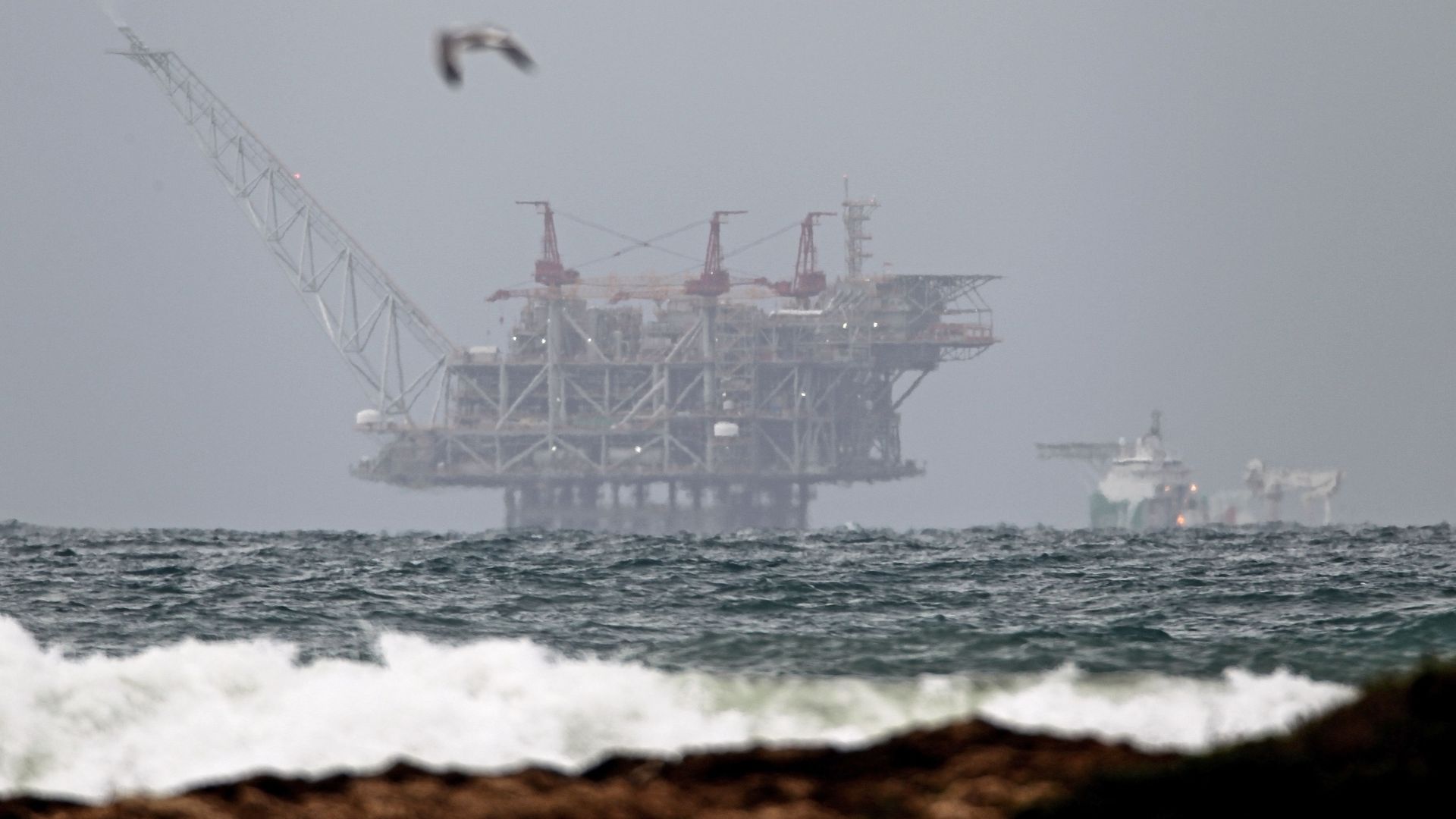
The platform of the Leviathan natural gas field in the Mediterranean Sea. Photo: Jack Guez/AFP via Getty Images
The Biden administration asked Israel three weeks ago if it could help mitigate possible natural gas shortages in Europe in anticipation of a Russian invasion of Ukraine, a senior Israeli official told me.
Why it matters: The U.S. outreach to Israel was part of a wider effort by the Biden administration to prepare for a scenario where a war in Ukraine could lead Russia to cut natural gas supply to Europe, which could cause a severe energy crisis.
- State Department officials say a disruption in energy supplies transiting Ukraine would most acutely affect natural gas markets in Europe.
Driving the news: A senior Israeli official told me that several weeks ago, State Department officials approached the Israeli Ministry of Energy and asked if it would be possible to increase Israel's natural gas production.
- The U.S. officials wanted to check the possibility that Israel could deliver more natural gas to Egypt in order to process it there to liquid natural gas and ship it to Europe, the Israeli official said.
- The Israeli ministry asked Delek Group, an Israeli company that is a partner of the U.S. energy giant Chevron, if it could increase natural gas production, a source with direct knowledge told me.
State of play: The senior Israeli official said the move hasn’t developed yet mostly because the amount of natural gas Israel can add to its current deliveries to Egypt is relatively small and wouldn't help much to address Europe's needs.
What they're saying: A State Department spokesperson told me that, in the context of the Ukraine crisis, the Biden administration is working with countries and companies around the world to ensure the security of energy supplies and to mitigate against price shocks that could affect the U.S. and global economies.
- “We have been working to identify additional volumes of non-Russian natural gas from North Africa and the Middle East,” the State Department spokesperson said.
- He added that the U.S. is talking to major natural gas producers around the globe and with suppliers of liquid natural gas to understand their capacity and willingness to temporarily surge natural gas output and to allocate these volumes to European buyers.
5. Major hurdle still exists as Iran talks reach finish line
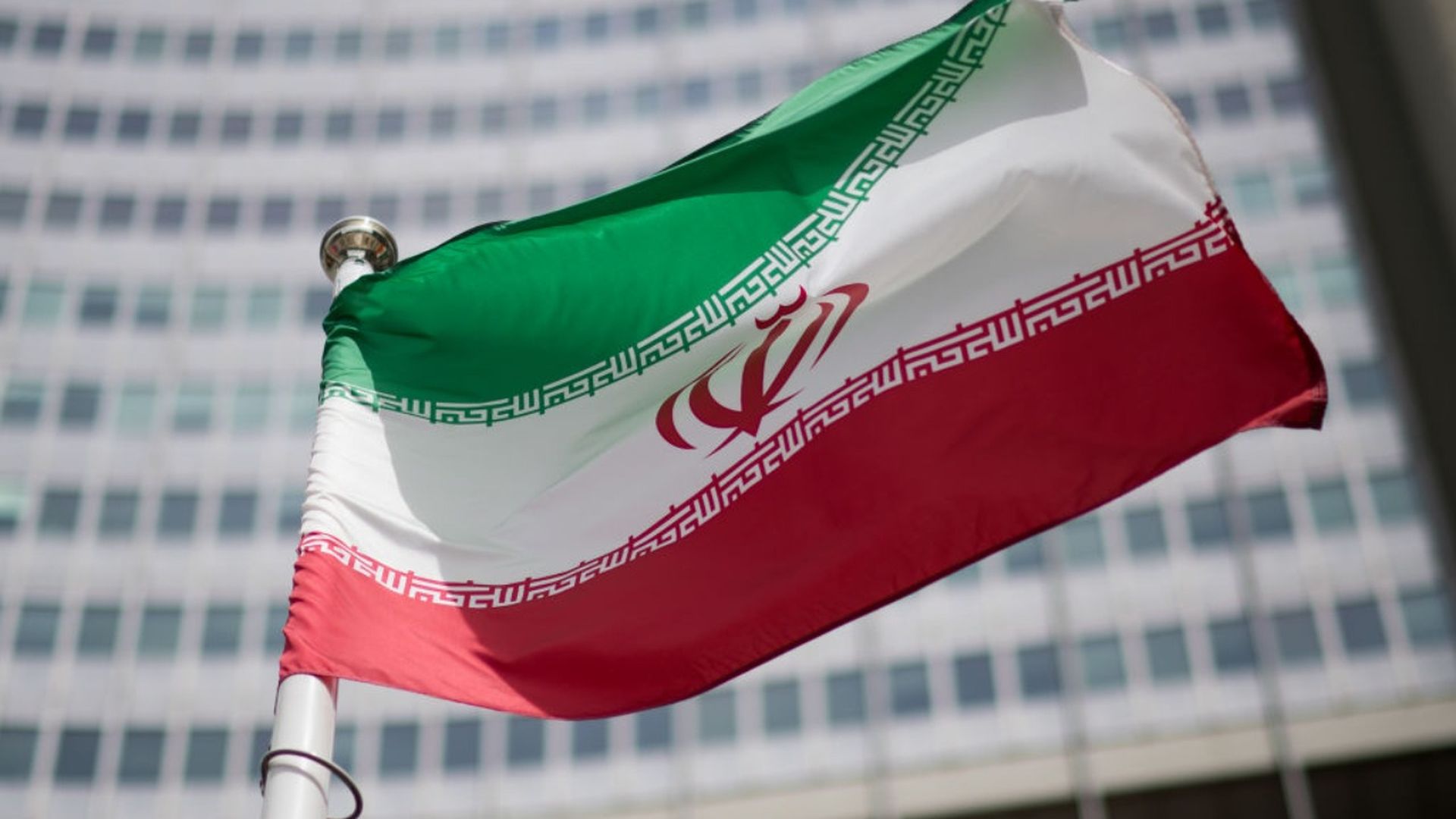
The Iranian flag in front of the International Atomic Energy Agency headquarters in Vienna. Photo: Michael Gruber/Getty Images
Officials from the U.S. and its European allies — France, Germany and the U.K. — say they won't comply with Iran’s demand that an investigation into its undeclared nuclear activity be shut down as a condition for a deal.
Why it matters: Iran says the International Atomic Energy Agency (IAEA) probe is politically motivated, but its demand that it be shut down is a major remaining hurdle as the talks approach the finish line.
The backstory: Over the past several years, evidence has surfaced suggesting Iran might have undeclared nuclear material in secret sites around the country.
- Samples taken by UN inspectors who visited the sites only raised more questions, but Iran has declined to answer them.
- Israel claims that's evidence that Iran continued to hide parts of its nuclear program after joining the 2015 deal.
Driving the news: Iranian chief negotiator Ali Bagheri returned to Vienna earlier this week after consultations in Tehran for what may be the final days of negotiations.
- U.S. officials say that although the parties are close to a deal, differences remain, including the IAEA probe issue and Iran's demand that the U.S. remove the Islamic Revolutionary Guard Corps from its terror blacklist.
- Washington continues to insist that if a deal isn't reached within a matter of days, there will be no point in continuing negotiations.
What they're saying: A senior Biden administration official told me that it was impossible for anyone other than IAEA Director-General Rafael Grossi to determine that open investigations had been resolved.
- Grossi said Wednesday that his agency will never stop a process that it launched for "political reasons."
- U.K. negotiator Stephanie Al-Qaq tweeted that the European powers will always reject any attempt to compromise IAEA independence.