Axios from Tel Aviv
May 11, 2022

Welcome back to Axios from Tel Aviv.
- This week's edition (2,001 words, 7½ minutes) starts with the tragic killing of Al Jazeera journalist Shireen Abu Akleh. It also gives a preview of Friday's White House meeting between President Biden and Jordan's King Abdullah before diving into Israeli domestic politics and Palestinian-Bahraini relations.
- Sign up here to receive this newsletter.
1 big thing: Palestinian Al Jazeera journalist killed
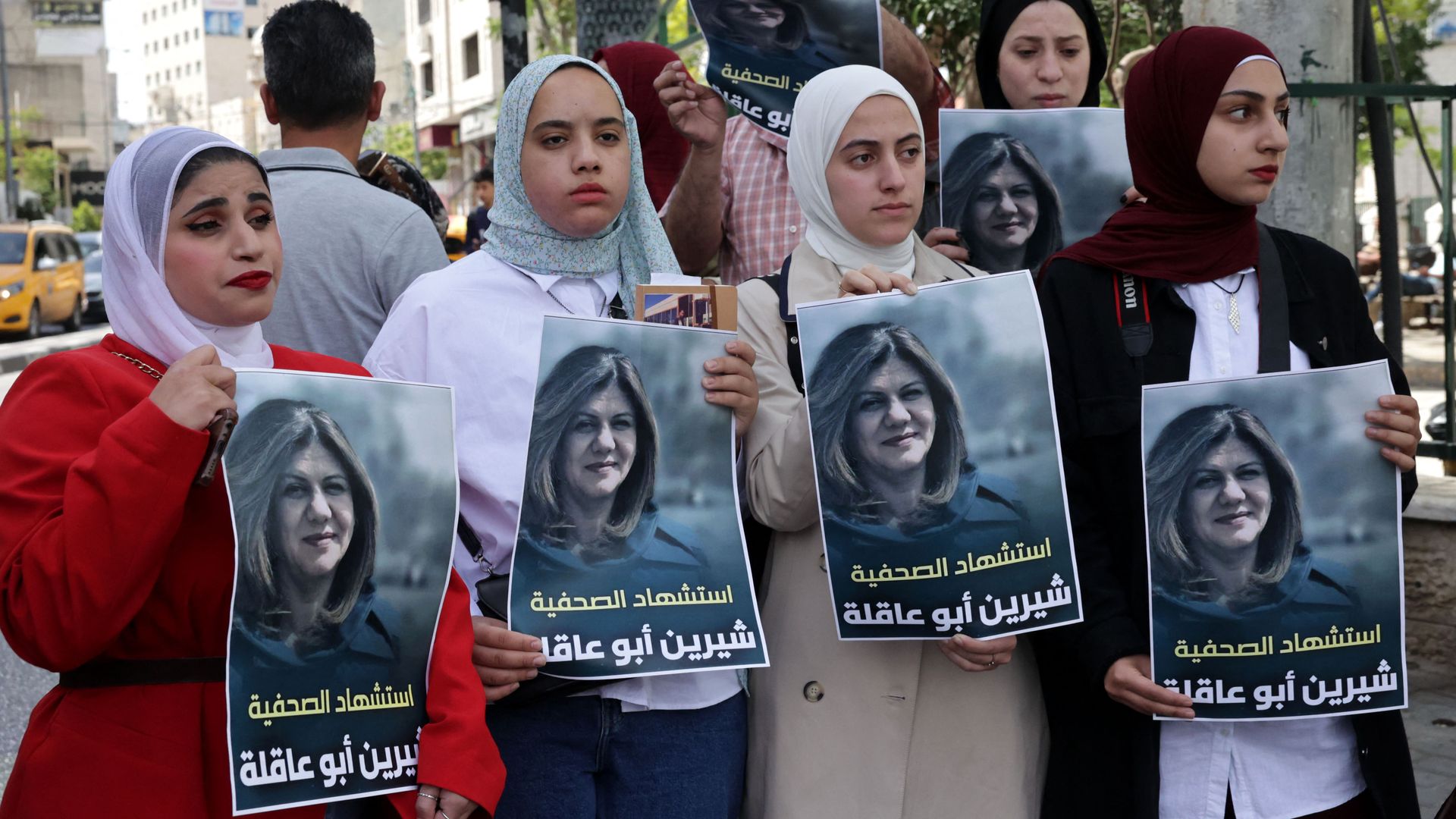
Palestinians hold posters displaying Al Jazeera journalist Shireen Abu Akleh on May 11 in Hebron. Photo: Hazem Bader/AFP via Getty Images
Palestinians, human rights groups and officials worldwide condemned today's killing of Shireen Abu Akleh, a Palestinian American Al Jazeera journalist who was fatally shot while covering an Israeli military raid in the occupied West Bank city of Jenin.
The big picture: Tom Nides, U.S. ambassador to Israel, called for "a thorough investigation into the circumstances of her death," as Palestinian and Israeli officials gave conflicting accounts of what happened to the veteran reporter.
- The Palestinian Ministry of Health and Al Jazeera, including journalists who witnessed the incident, said Abu Akleh was killed by Israeli gunfire.
- Israeli Prime Minister Naftali Bennett said, according to Israeli information, "It appears likely that armed Palestinians — who were indiscriminately firing at the time — were responsible."
- But later Wednesday, the Israeli military backtracked from its initial claim. Lt. Gen. Aviv Kohavi, IDF chief of staff, said in a statement that “at the moment, it is not possible to determine from which fire Abu Akleh was killed." Kohavi said he regrets her death and announced he appointed a special team to hold an operational investigation into the incident.
Driving the news: Israeli military forces entered Jenin in an operation to arrest Palestinians suspected of planning attacks against Israelis, the Israeli military said.
- During the incursion, Palestinian militants fired at the Israeli forces and used explosive devices, according to the Israeli military.
- Palestinian officials said 51-year-old Abu Akleh and another Palestinian journalist, Ali al-Samudi, who works for al-Quds newspaper, were both wearing bulletproof vests with the word "Press" on them. Samudi was wounded but is reportedly in stable condition.
Abu Akleh, a highly respected journalist who was well-known in the Arab world and beyond, had worked for Al Jazeera's Arabic channel since 1997 covering the West Bank.
- Al Jazeera in a statement called on the international community to condemn her killing and hold Israel accountable.
- "We commit to take legal action against those responsible and bring them to justice," the news outlet said.
What they're saying: Palestinian President Mahmoud Abbas condemned the killing, saying Israel was responsible "for a crime against a Palestinian journalist who was trying to tell the truth."
- Hussein al-Sheikh, Palestinian minister for civilian affairs, added in a statement that the "truth is murdered by the bullets of the occupation. A sad day in Palestine."
State Department spokesperson Ned Price condemned the killing on Twitter, calling for an "immediate and thorough" investigation and for those responsible to be held accountable. "Her death is an affront to media freedom everywhere," he said.
Israeli officials said Foreign Minister Yair Lapid spoke to al-Sheikh Wednesday morning and proposed holding a joint investigation. Earlier, Lapid said, "Journalists must be protected in conflict zones and we all have a responsibility to get to the truth."
- Al-Sheikh on Twitter denied that Israeli officials "were heading to the Palestinian Authority to conduct an investigation into her assassination." He added, "The Palestinian Authority will transfer this file to the International Criminal Court."
- Ibrahim Milhim, a spokesperson for the Palestinian Authority, told Al Jazeera that Palestinian officials "reject and refuse the participation of any Israelis in this kind of investigation."
- “Let me ask, when does the criminal have the right to take part in the investigation against his victim?” Milhim said.
State of play: The director of the forensic institute in Ramallah said the first stage of the autopsy was completed and a piece of a bullet was extracted from Abu Akleh’s body and sent for a lab test. He said there was no evidence so far that will allow officials to determine who shot her.
- Abbas will lead a ceremony honoring Abu Akleh at the Palestinian Presidential compound in Ramallah tomorrow.
- A funeral is expected to take place on Friday in the Beit Hanina neighborhood of East Jerusalem where Abu Akleh lived.
2. King Abdullah to meet Biden as Israel-Jordan tensions soar
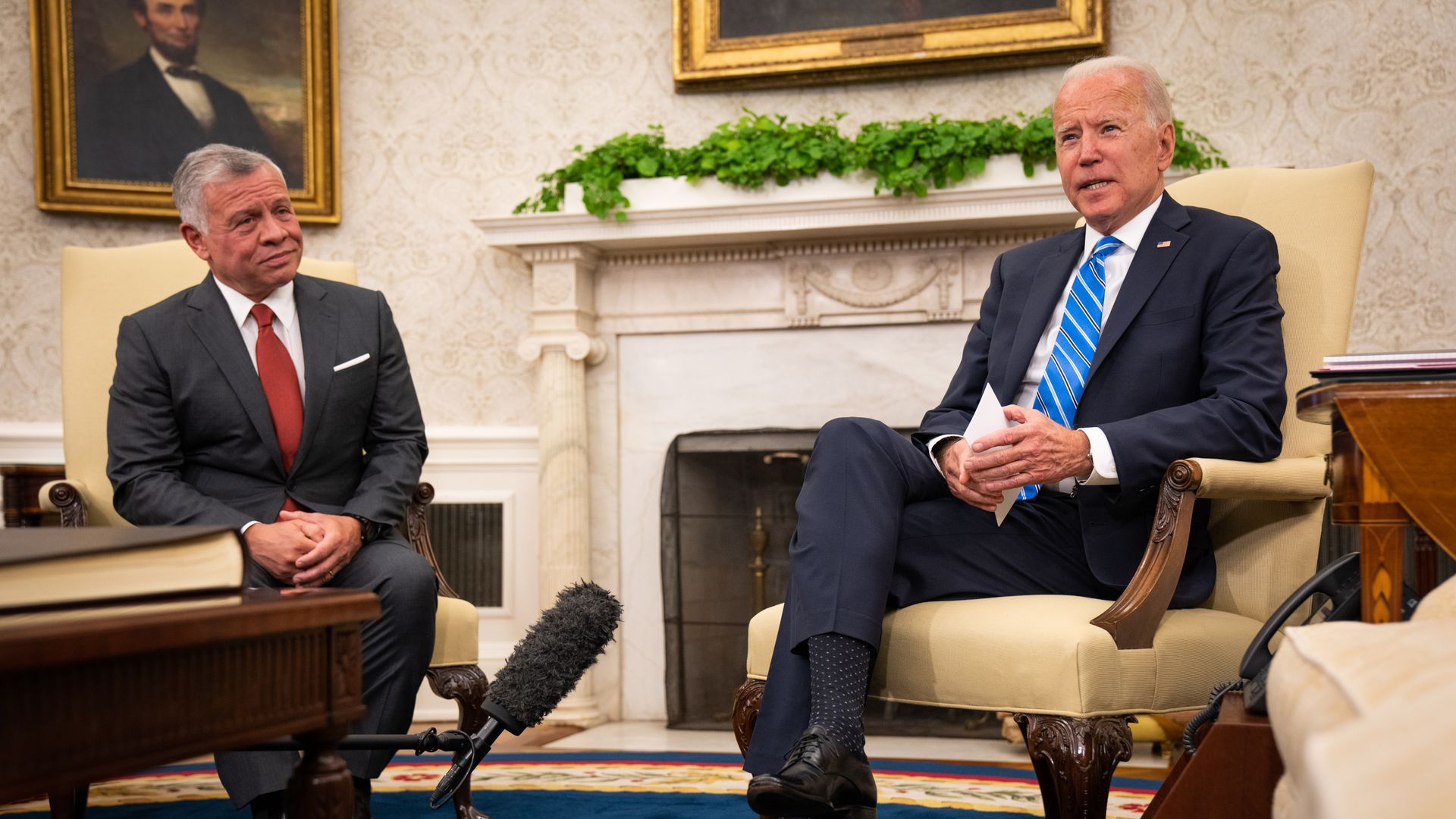
President Biden and Jordan's King Abdullah in the Oval Office on July 19, 2021. Photo: Sarahbeth Maney/The New York Times/Bloomberg via Getty Images
President Biden will meet Jordan's King Abdullah at the White House Friday amid rising tensions in Jerusalem, mainly about the Al-Aqsa Mosque.
Why it matters: The Biden administration is concerned by the situation in Jerusalem and the tensions between Israel and Jordan, U.S. officials said.
- It will be the second time Biden meets Abdullah at the White House — more than with any other leader in the Middle East.
Driving the news: The king arrived in Washington on Tuesday. He held a series of meetings with lawmakers, including those on the Senate Foreign Relations and Appropriations committees.
- The king is also expected to hold meetings with Secretary of Defense Lloyd Austin and Secretary of State Tony Blinken, U.S. and Jordanian sources said.
What's happening: Recent violence in Jerusalem and official rhetoric around it led to a crisis between Jordan and Israel.
- It also destabilized the fragile Israeli government, with the Ra'am party, also known as the United Arab List, temporarily suspending its membership in the coalition.
- In recent weeks, there has been a wave of attacks by Palestinians against Israelis and an increase in Israeli military operations in the occupied West Bank.
King Abdullah will discuss with President Biden the need to maintain the status quo at the Al-Aqsa Mosque, Jordanian Foreign Minister Ayman Safadi said ahead of the meeting.
- The Al-Aqsa compound, which is important to both Muslims and Jews, is administered by Jordan. Muslims can pray at the site while non-Muslims can only visit, per the status quo.
- He said the king will also discuss the new memorandum of understanding about U.S. financial aid to Jordan.
What they're saying: Safadi, in an interview with Jordan's state-owned Al-Mamlaka TV, blamed the latest escalation on “Israeli provocations."
- He said Jordan wants to restore calm, but blamed Israel for limiting the ability of the Jerusalem Islamic Waqf, the endowment run by Jordan that administers the site, to maintain security at the compound.
- “Israel has no sovereignty at the Al-Aqsa Mosque — it is an occupied Palestinian land and a Muslim worship place," he said.
The other side: Israel is highly frustrated and upset with Jordan’s actions and rhetoric and made it clear to Jordanian officials at all levels, a senior Israeli official told me.
- “We told the Jordanians that their behavior was unacceptable. Instead of trying to calm the situation as we agreed weeks ago, they just fueled the flames," the Israeli official said.
What to watch: Biden is expected to travel to the Middle East toward the end of June and meet with Israeli and Palestinian Authority officials.
- Israeli and Jordanian officials are expected to hold discussions in the coming weeks on the situation in Jerusalem.
3. Bennett's coalition hangs on as Ra'am announces return
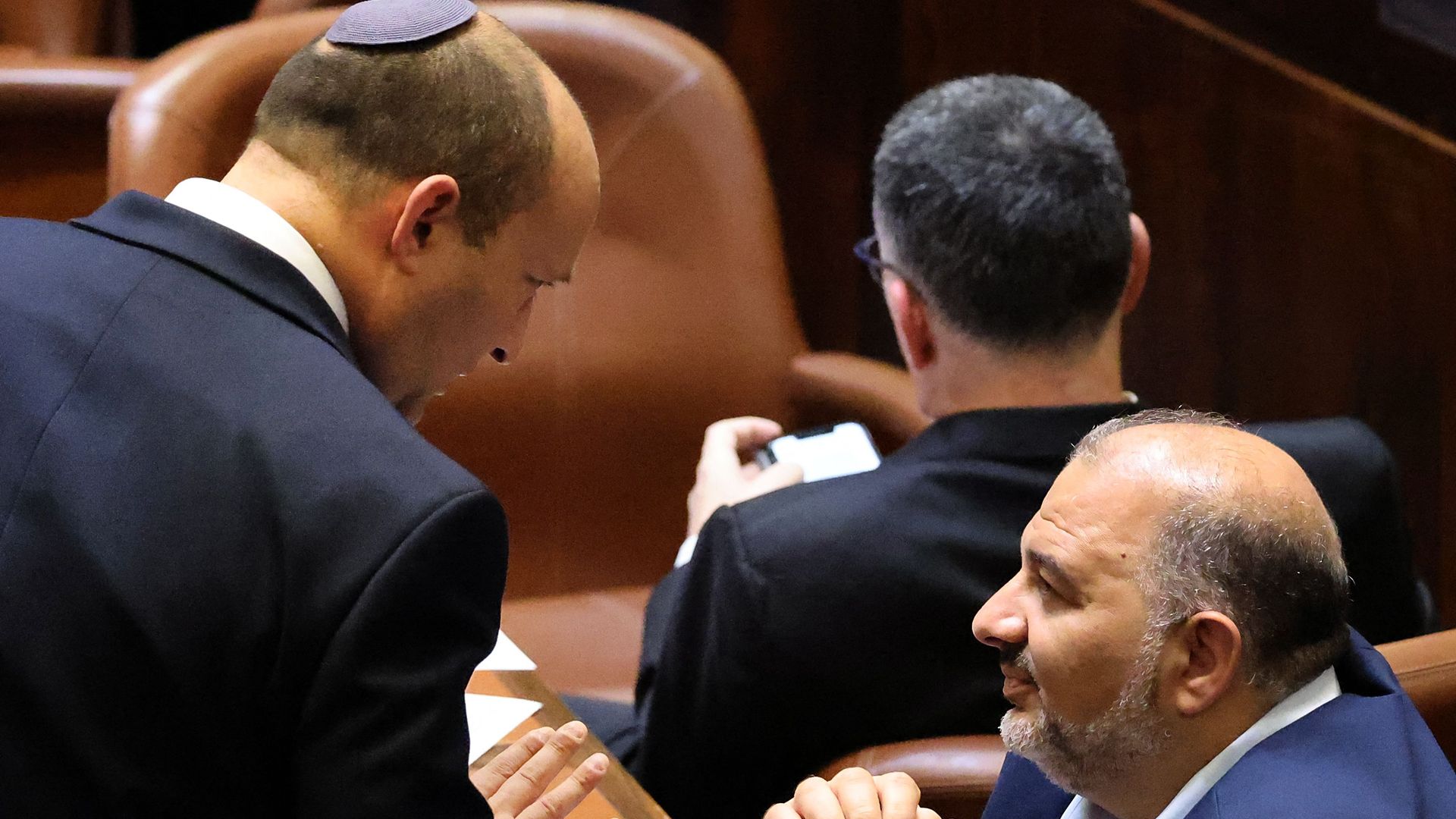
Naftali Bennett and Mansour Abbas on June 13, 2021. Photo: Emmanuel Dunand/AFP via Getty Images
Israel's fragile coalition got a bit more stable on Wednesday when the Islamist Ra'am party announced it would return to the fold.
Why it matters: The opposition had tabled a bill to move toward new elections, but withdrew it after the announcement from Ra'am leader Mansour Abbas, which confirmed the bill lacked the votes to pass.
The backstory: Ra'am, formally known as the United Arab List, suspended its membership in the coalition in mid-April over the incidents at the Al-Aqsa Mosque compound between Israeli police and Palestinians.
- The move was symbolic at the time because the Knesset was out of session, but as parliament returned on Monday, the coalition still hadn't reached an agreement with Abbas, who was facing pressure from within his party to make the suspension permanent.
Behind the scenes: In recent days, there were low-profile negotiations between Abbas and other senior members of the coalition, including Foreign Minister Yair Lapid.
- Ra'am party leadership met for six hours on Tuesday night and was expected to announce its decision on Wednesday morning.
- But shortly before the press conference was to take place, news emerged that Palestinian American journalist Shireen Abu Akleh was killed in the occupied West Bank.
- Abbas canceled the press conference and issued a strong statement condemning the killing and calling for an international investigation.
- Several hours later, Abbas and members of his party announced their return to the coalition in brief remarks at the Knesset.
What he's saying: "We are engaged in a political partnership that aims at giving solutions to the problems of the Arab citizens of Israel. Therefore, we decided to give the coalition another chance," Abbas said at the Knesset.
- He attacked opposition leader Benjamin Netanyahu for claiming Ra'am members support terrorism, and he said opting for new elections would only bring Netanyahu back to power.
- Abbas also said he had recorded Netanyahu last year as Netanyahu made the case for a coalition between his Likud party and Ra'am, and warned, "I might have to release some of it."
Between the lines: Abbas had another reason to rejoin the coalition — polls currently suggest his party might fail to reach the electoral threshold if an election is held.
What’s next: Abbas’ decision stabilizes the coalition, but it still lacks a majority.
- And while Abbas overcame internal opposition to rejoining the coalition this time, it's unclear whether he will do so again if another crisis erupts around the Al-Aqsa Mosque or in the West Bank and Gaza.
4. EU mediator in Tehran for last-ditch effort to save Iran deal
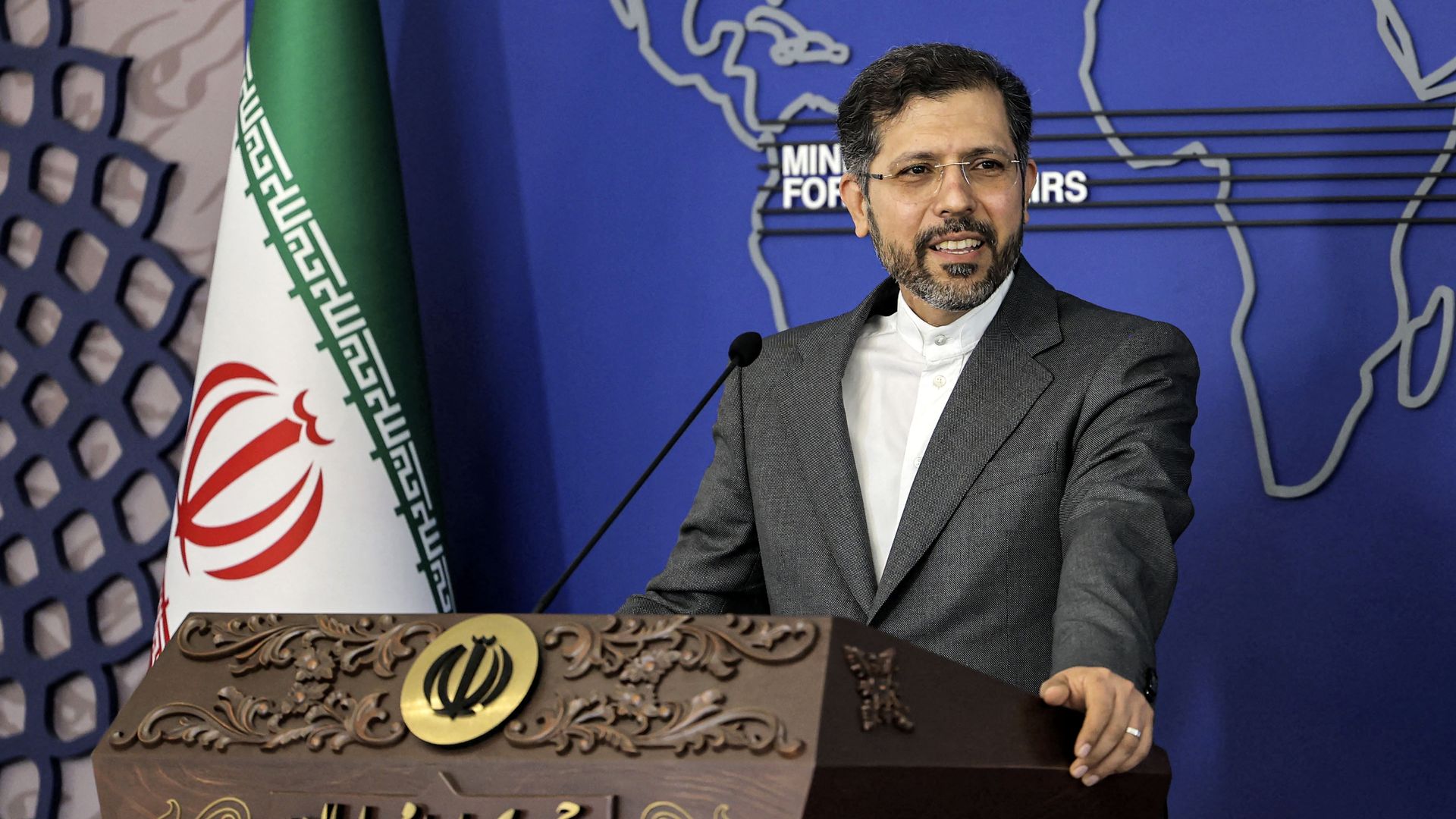
Iran's Foreign Ministry spokesperson Saeed Khatibzadeh holds a press conference in Tehran on May 9. Photo: Atta Kenare/AFP via Getty Images
Enrique Mora, the EU mediator in the indirect nuclear talks between the U.S. and Iran, met with Iranian chief negotiator Ali Bagheri in Tehran on Wednesday in an effort to salvage a possible nuclear deal.
Why it matters: It's Mora’s second trip to Tehran since a “pause” in the Vienna nuclear talks was announced eight weeks ago.
- Mora is making a last-ditch effort to find a way to solve the disagreement over Iran’s demand to remove the Islamic Revolutionary Guard Corps from the U.S. terror blacklist so that the parties can move toward signing a nuclear deal.
The big picture: The Biden administration, its European allies and Israel have expressed concerns that Iran will continue to advance its nuclear program while the talks are stalled.
Driving the news: Mora coordinated his trip with the Biden administration and the E3 — France, the U.K. and Germany.
- Biden administration officials said they haven’t given Mora any new U.S. proposals to the Iranians.
- The U.S. still refuses to remove the IRGC from the terrorism blacklist unless Iran agrees to give concessions on issues outside its nuclear program, including its regional activity.
- A senior U.S. official told me the Biden administration hopes the Iranians would agree to give up on their demand regarding the IRGC and sign the draft deal achieved in Vienna.
Worth noting: Shortly before the meeting between Mora and Bagheri, the Iranian Ministry of Intelligence announced the arrest of two European nationals for “organizing chaos, social disorder and destabilizing society” in the country.
What’s next: Qatari Emir Tamim Bin Hamad Al Thani is expected to visit Tehran in the coming days and meet President Ebrahim Raisi to discuss ways to move past the current impasse and reach a deal.
5. Signs that Palestinian-Bahraini relations may be improving
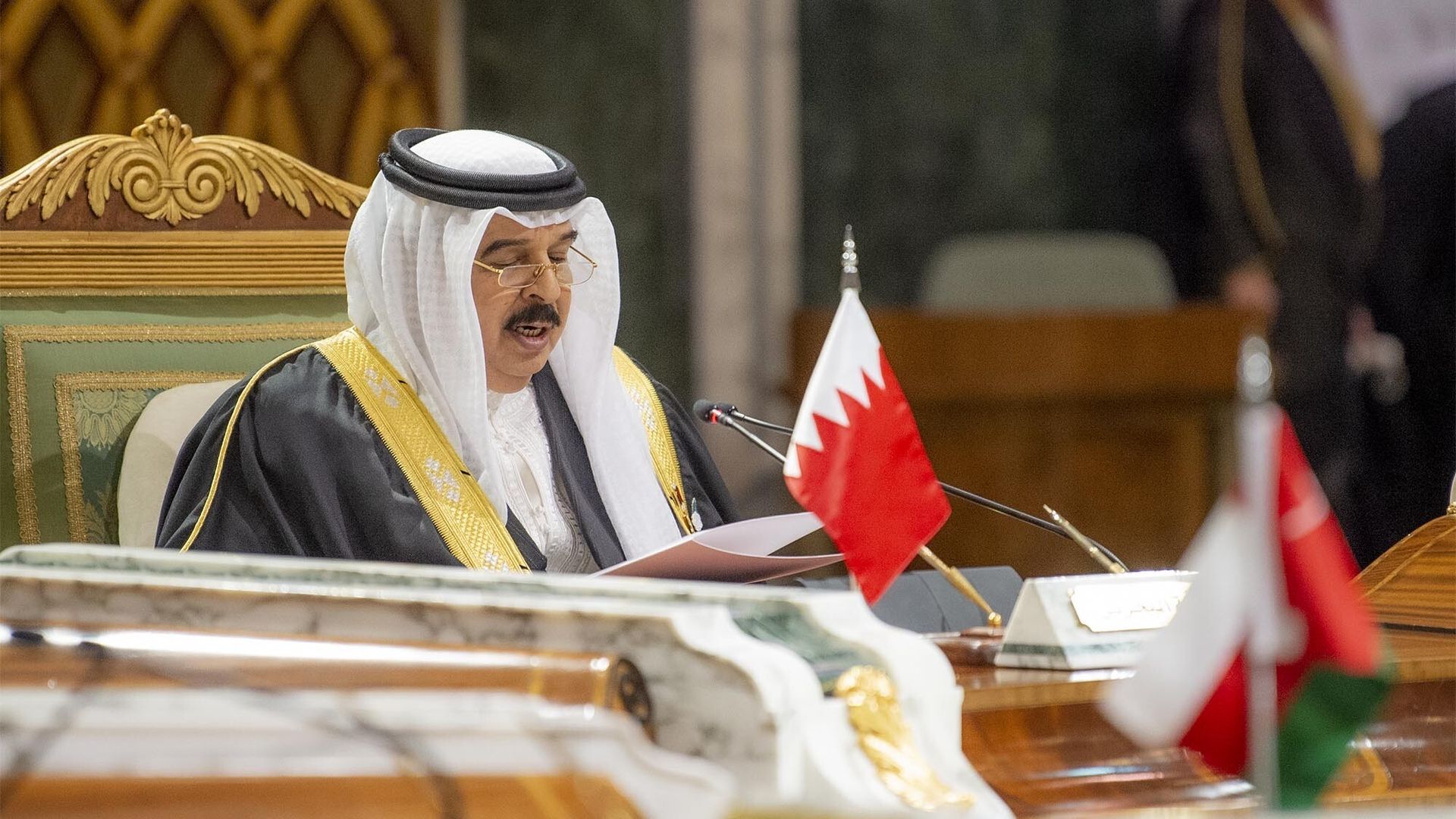
Bahrain King Hamad bin Isa Al Khalifa attends the Gulf Cooperation Council Summit in Riyadh, Saudi Arabia, on Dec. 14, 2021. Photo: Handout/Royal Court of Saudi Arabia/Anadolu Agency via Getty Images
Palestinian President Mahmoud Abbas sent his son Yasser Abbas to Bahrain for a meeting with King Hamad bin Isa Al Khalifa on Monday.
Why it matters: Relations between the Palestinian Authority and Bahrain have been almost completely frozen since September 2020 when the Gulf kingdom joined the U.S.-brokered Abraham Accords and established diplomatic relations with Israel.
- The Palestinian ambassador in Bahrain was recalled to Ramallah at the time and only returned to the kingdom in recent months.
- Yasser Abbas' visit could signal a shift in the Palestinian position and a willingness to mend relations with Bahrain.
State of play: Abbas is a private businessman and doesn’t hold any government post, but he was sent as the “personal representative of the Palestinian president.”
- This was the highest-level visit by a Palestinian representative to Bahrain since the Abraham Accords.
What they're saying: Abbas gave the Bahraini king a painting of the Al-Aqsa Mosque in Jerusalem and conveyed to the king greetings from his father, the Bahraini official news agency said.
- King Hamad stressed that Bahrain supports the Palestinian cause and the Palestinian right for an independent state.
- A senior Bahraini official told me that since the Abraham Accords, Bahrain’s channels of communication with the Palestinians continued to stay open but stressed that he hopes the visit is a sign of an improvement in relations.