Axios from Tel Aviv
March 10, 2021

Welcome back to Axios from Tel Aviv.
- This week's edition (1,777 words, 6½ minutes) begins with an interview with President Biden's Iran envoy and some breaking news on Netanyahu's campaign plans.
- Please keep spreading the word about this newsletter, and sign up if you haven't yet.
1 big thing: U.S. envoy on nuclear timetable with Iran
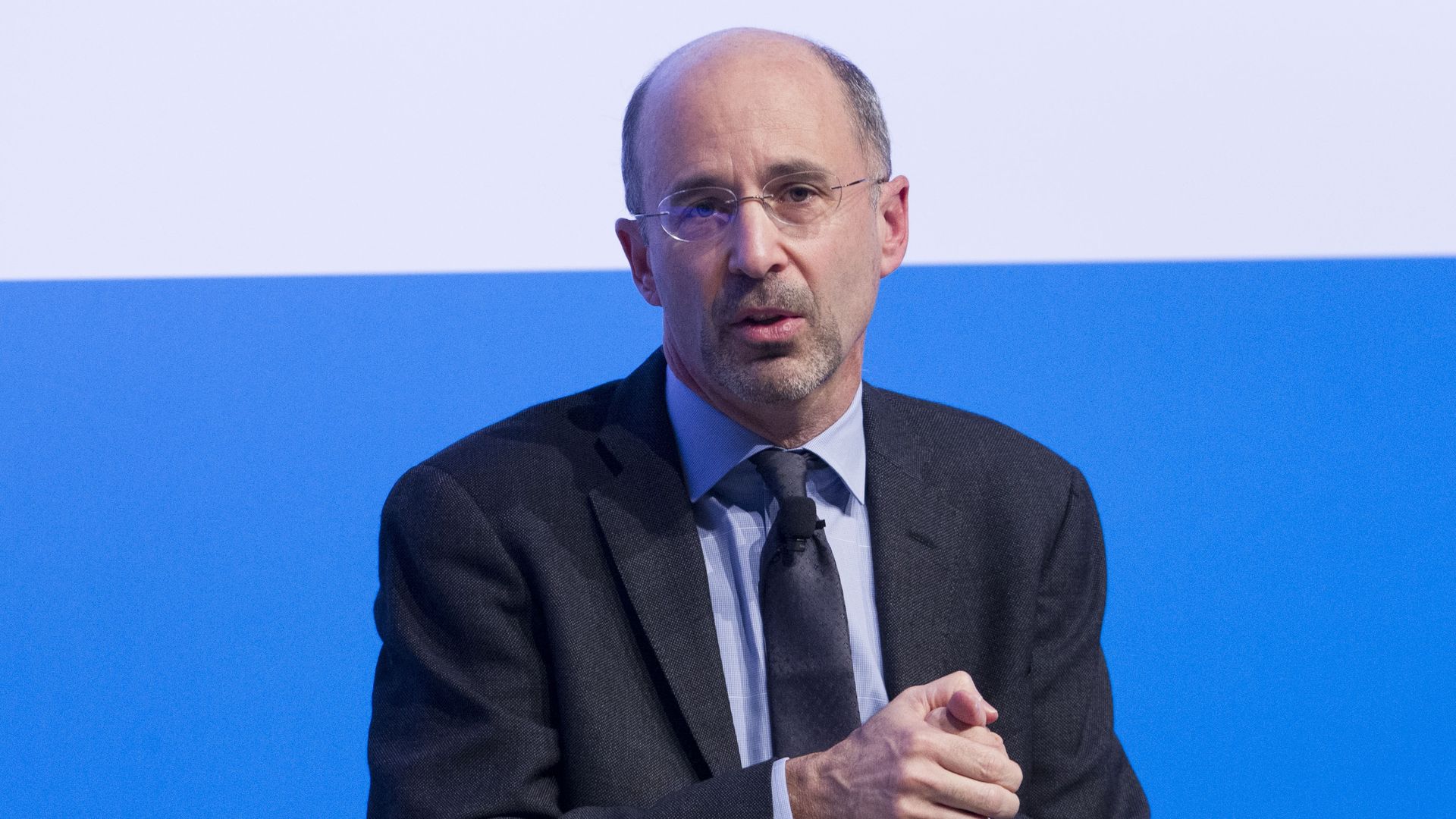
Rob Malley. Photo: Riccardo De Luca/Anadolu Agency/Getty Images
Iran's elections in June are not a factor in the Biden administration’s decision-making for how to proceed with nuclear talks, State Department Iran envoy Rob Malley told me in his first interview since taking office.
Why it matters: Iran’s President Hassan Rouhani and Foreign Minister Mohammad Javad Zarif, who pushed for the 2015 nuclear deal and supported engagement with the U.S., are not running in June's elections and will finish their terms in August. The next Iranian president is likely to be more skeptical of nuclear diplomacy with the U.S.
- "We don’t intend to base the pace of our discussions on the Iranian elections. The pace will be determined by how far we can get consistent with defending U.S. national security interests," Malley said.
- "In other words, we won’t rush or slow things because of the Iranian elections."
Driving the news: Malley said the U.S. has made clear to Iran it is ready to engage in a serious diplomatic process to achieve a mutual return to compliance with the nuclear deal.
- “Our view is that direct talks are more effective and less prone to misunderstanding, but for us, the substance is more important than the format," Malley said.
The big picture: The Biden administration will be ready to consider some sanctions relief for Iran only after talks between the parties resume and only as part of a reciprocal process, senior State Department officials tell me.
- “Possible U.S. steps with regard to sanctions can be on the table, but we need to get into a conversation with Iran, whether direct or indirect," a senior State Department official said.
- "The president will not take unilateral steps when it comes to removing sanctions. Any substantial move by the U.S. will have to be part of a process in which both sides take actions."
The other side: So far, U.S. efforts to re-engage with Iran have met with a cool response from Iranian leaders.
- The Iranians are demanding that the U.S. make the first move, but President Biden isn't prepared to meet their demands for unilateral sanctions relief before Iran returns to full compliance with the nuclear deal.
- Flashback: The Trump administration made several requests to meet with their Iranian counterparts, but Iran made clear it would not meet until the U.S. provided some sanctions relief.
- “That remains their position” under Biden, a senior State Department official told me.
Behind the scenes: The Biden administration wasn't surprised by Iran's tough position, the senior official says.
- The official added that the Iranians were surprised and disappointed that Biden hadn't moved more quickly to lift sanctions and re-enter the deal.
- Nevertheless, Biden's position remains the same: The U.S. is prepared to resume full compliance with the deal if Iran does, “and we are ready to engage in meaningful diplomacy to get there,” the official said.
What’s next: Once talks with Iran resume, State Department officials believe one of the sticking points will be the sides' different interpretations of what it means to get back to full compliance.
- “Those will have to be negotiated. That’s why we expect there could be difficult talks, even as we both agree on the goal, and even as we agree on a roadmap to get there,” the State Department official told me.
Meanwhile, the State Department's Iran team is slowly taking shape. Malley recruited nuclear weapons and sanctions expert Richard Nephew — a member of the U.S. negotiating team during the talks that led to the 2015 deal — as his deputy.
- Another member of the team is Jarrett Blanc, who led the implementation of the deal under Barack Obama. More members are expected to be added.
- Malley told me the internal discussions on the way forward include a range of views. “For every person I speak to who agrees with me I try to speak to another person who does not,” he said.
2. U.S. aims to avoid rift with Netanyahu on Iran
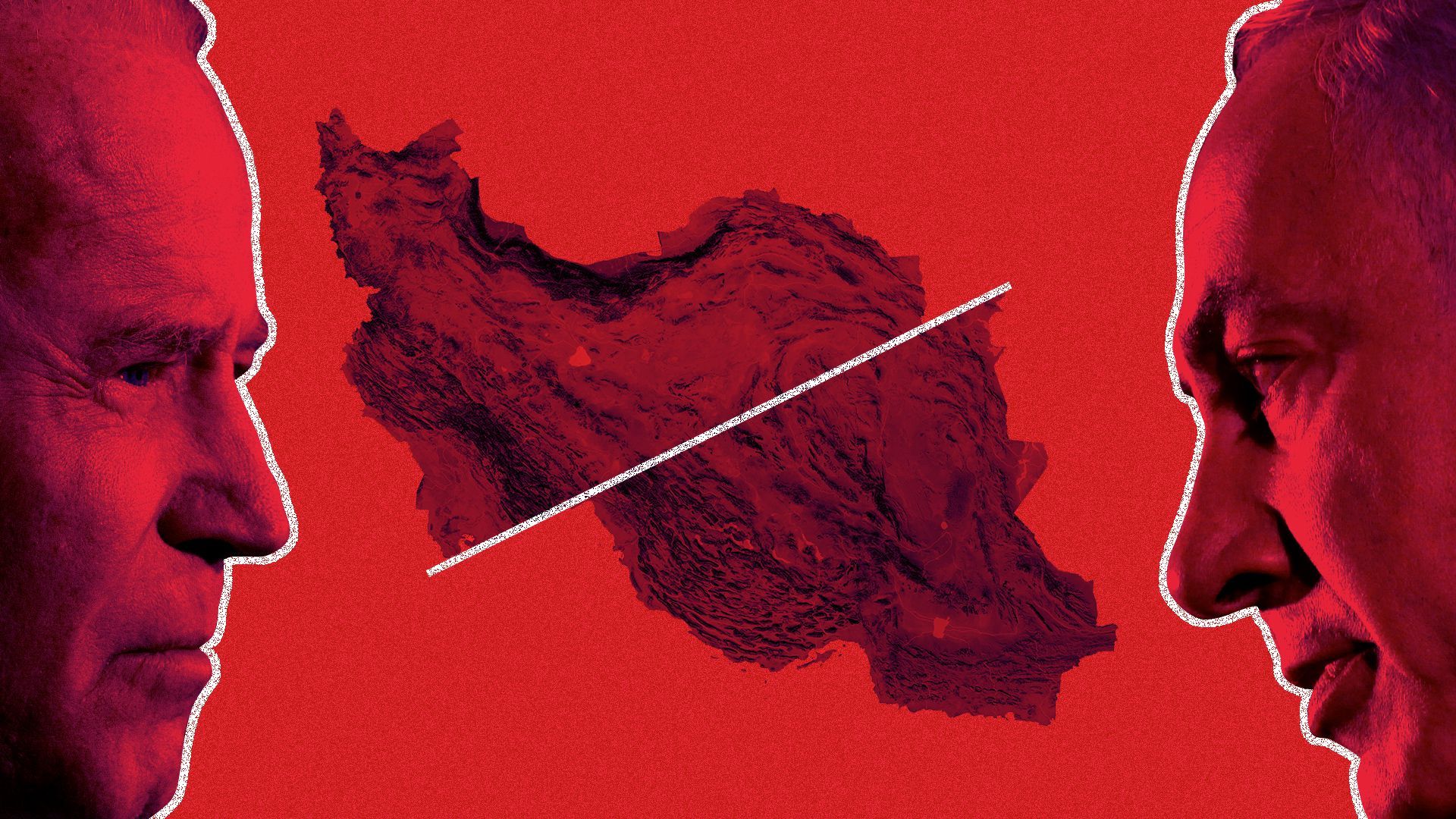
Photo illustration: Aïda Amer/Axios. Photos: Eric Baradat (AFP), Gali Tibbon (AFP)/Getty Images
Malley told me the U.S. and Israel want to avoid the sort of public confrontation over Iran that they had during the Obama administration.
Why it matters: Israeli Prime Minister Benjamin Netanyahu publicly campaigned against Obama's attempts to reach an agreement with Iran between 2013 and 2015 — including in a highly controversial speech to Congress. This created a rift that scarred both sides.
Driving the news: U.S. and Israeli interagency teams led by national security Adviser Jake Sullivan and his Israeli counterpart Meir Ben-Shabbat will hold a first round of talks tomorrow on Iran via secure video conference.
- The Israelis are very happy that the U.S.-Israel strategic forum, which was established during Obama’s first term, has been resumed by the Biden administration.
- Israeli officials tell me they want to use the first meeting to lay out the latest intelligence and data on Iran's nuclear program and assess whether the U.S. and Israeli intelligence pictures align.
- National Security Council spokesperson Emily Horne confirmed that the meeting would take place on Thursday.
What he's saying: Malley told me the Biden administration is committed to being consultative and transparent with Israel and that he had already spoken extensively with Israeli officials.
- “We don’t always agree, but the talks are extremely open and positive. While we may have different interpretations and views as to what happened in 2015–2016, neither of us wishes to repeat it," Malley said.
- Foreign Minister Gabi Ashkenazi said in a briefing with Israeli ambassadors abroad last week there is an understanding between the U.S. and Israel on a “no surprises policy” — meaning the Biden administration will give Israel prior notice of any decision regarding Iran.
3. Bibi Barometer: Taking the campaign to Abu Dhabi
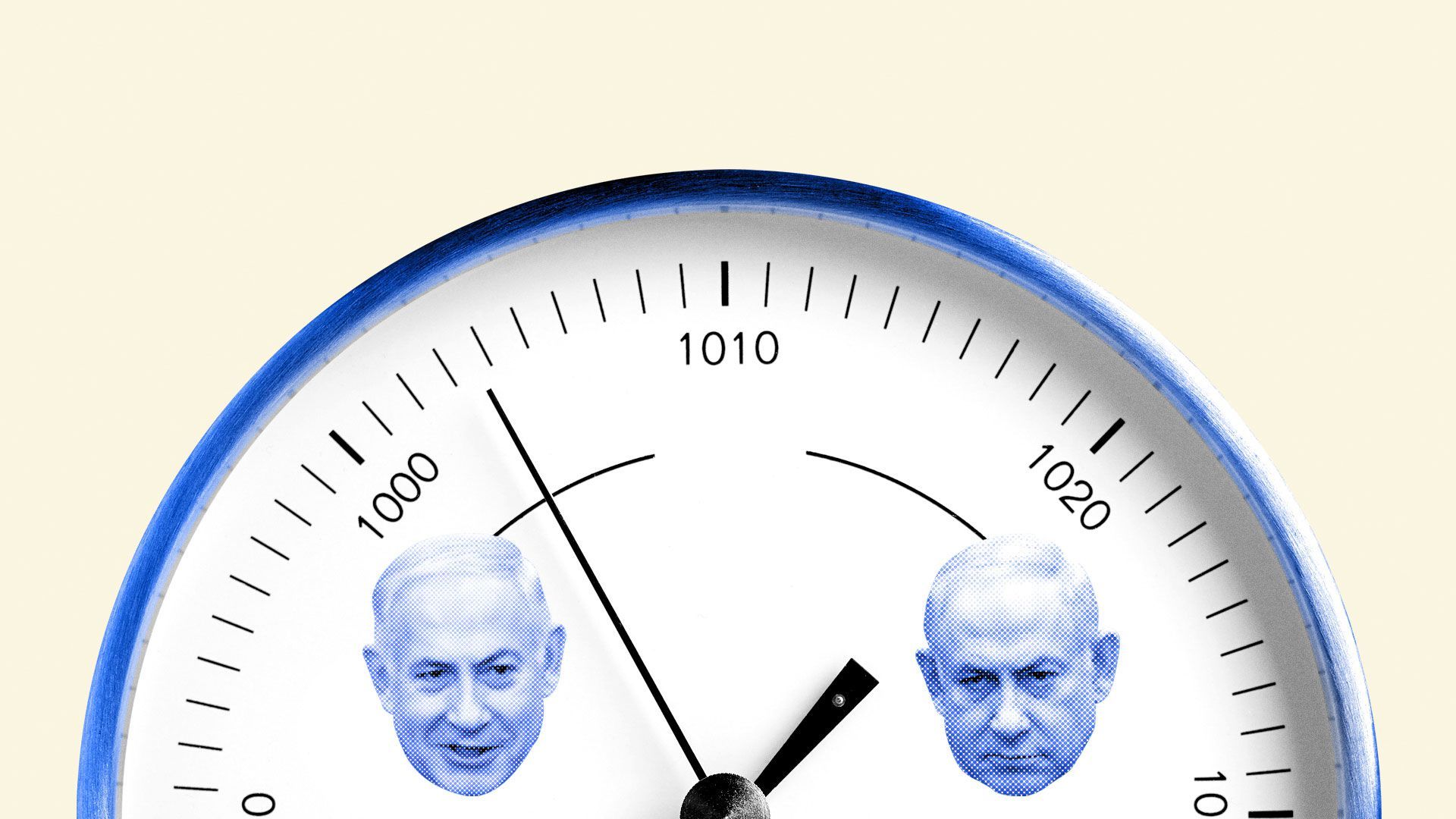
Photo Illustration: Eniola Odetunde/Axios. Photos: Pool, Gali Tibbon/Getty Images
Netanyahu will meet tomorrow in Abu Dhabi with Crown Prince Mohammed bin Zayed, sources familiar with the matter tell me.
Why it matters: Netanyahu will use the trip — which comes less than two weeks before the Israeli elections — to rally his base and stress his foreign policy advantage over his less-experienced rivals.
- This will be the first-ever official trip by an Israeli prime minister to the UAE and the first trip for Netanyahu since the signing of the Abraham Accords with the UAE and Bahrain at the White House.
The state of play: Netanyahu is in need of a boost. His right-wing bloc is short of the 61 seats needed for a majority in the latest polls.
Behind the scenes: Netanyahu raised the possibility of the visit in a phone call with the crown prince 10 days ago, but the Emiratis hesitated due to concerns about perceived interference in the Israeli elections.
- Netanyahu sent Yossi Cohen, director of the Mossad intelligence agency, to press his Emirati counterparts, sources familiar with the matter tell me.
- The Emiratis sent signals that they'd rather postpone the visit until after the elections, but Netanyahu and Cohen pressed hard until the Emiratis agreed.
Worth noting: Netanyahu will spend only a few hours on the ground. It's unclear whether he gave the Emiratis anything in return for the visit.
4. Palestinians want Biden's backing for elections
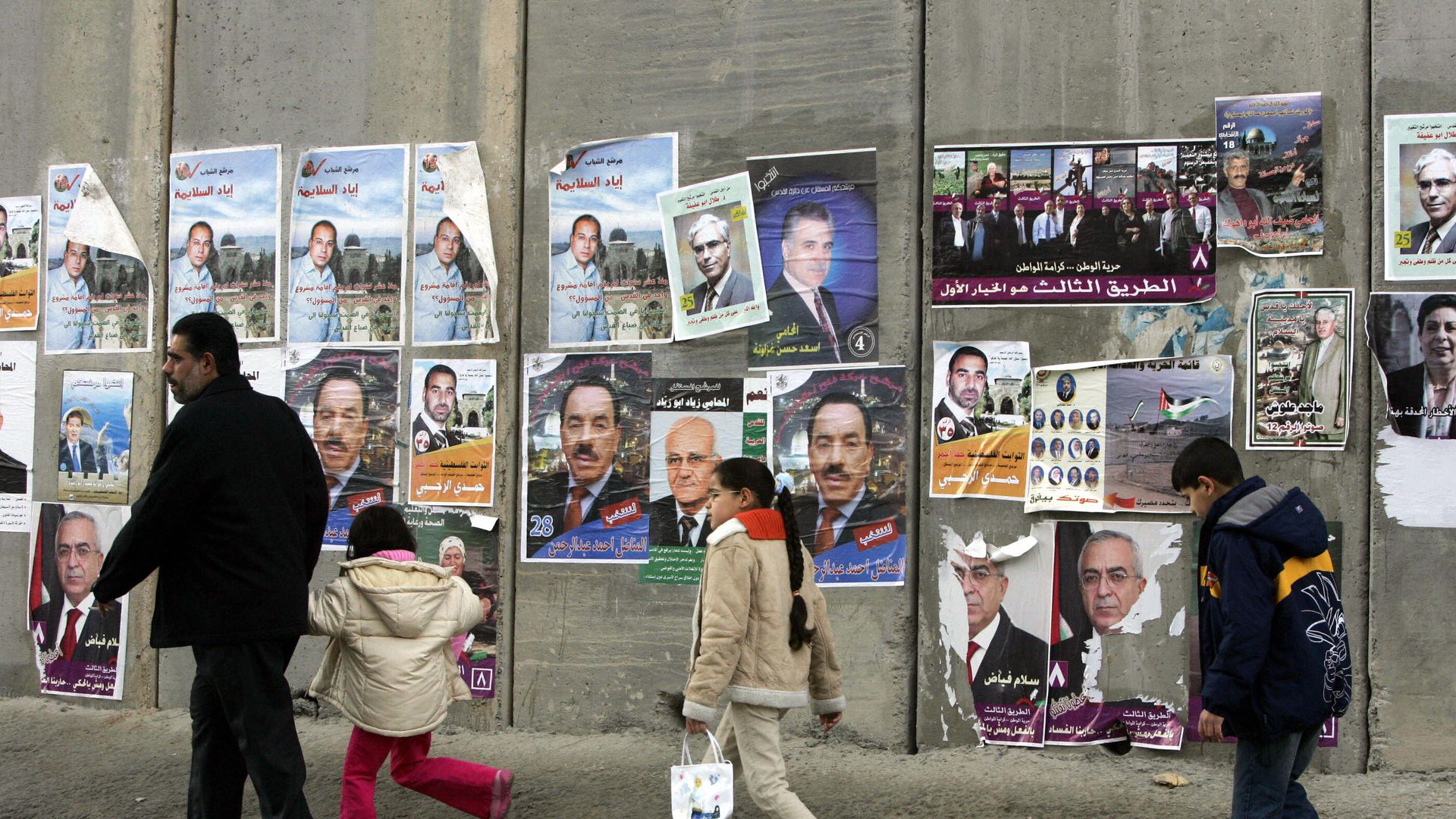
The last election campaign, in 2006. Photo: Menhaem Kahana/AFP via Getty
The Palestinian Authority is trying to convince the Biden administration to support the upcoming Palestinian parliamentary elections, planned for May 22, and not to object to the participation of Hamas.
Why it matters: The elections currently appear to be a low priority for the Biden administration — but that will change if they actually take place, and in particular, if they're won by Hamas, a U.S.-designated terror organization.
Flashback: Hamas' victory in the last elections, in 2006, surprised the George W. Bush administration, which had pressed for the elections and for Hamas to be allowed to participate.
- The U.S. and many other Western countries boycotted Hamas after its victory and demanded the group renounce violence, recognize Israel and commit to previous agreements signed by the Palestine Liberation Organization and the Palestinian Authority. Hamas refused.
- Elections have been planned since 2006 but never held.
The state of play: Many senior Palestinian officials said in recent days that the elections will indeed take place as preparations have passed the point of no return. The deadline for selecting candidate lists is March 31.
Driving the news: Three weeks ago, Palestinian Civilian Affairs Minister Hussein al-Sheikh sent a letter to Hady Amr, the U.S. deputy assistant secretary of state for Israel-Palestine, about the upcoming elections.
- Sheikh — who is positioning himself as the main point of contact in the Palestinian Authority for the Biden administration following the death of former PLO chief negotiator Saeb Erekat — claimed Hamas committed itself to nonviolence and agreed to the PLO parameters of the two-state solution.
- Yes, but: Hamas has not followed with a clear statement of its own.
What's next: State Department officials stressed that the exercise of democratic elections is a matter for the Palestinian people to determine.
- But for now, it seems the Biden administration is sticking to the general policy of all U.S. administrations since 2006.
- “We note that the U.S. and other key partners in the international community have long been clear about the importance of participants in the democratic process accepting previous agreements, renouncing violence and terrorism and recognizing Israel’s right to exist," a State Department official told me.
The bottom line: If the elections do proceed on schedule, the Biden administration will have to shape a policy of its own — or at least brace for a contentious outcome.
5. One to watch: White House ceremony for Israel and Sudan?
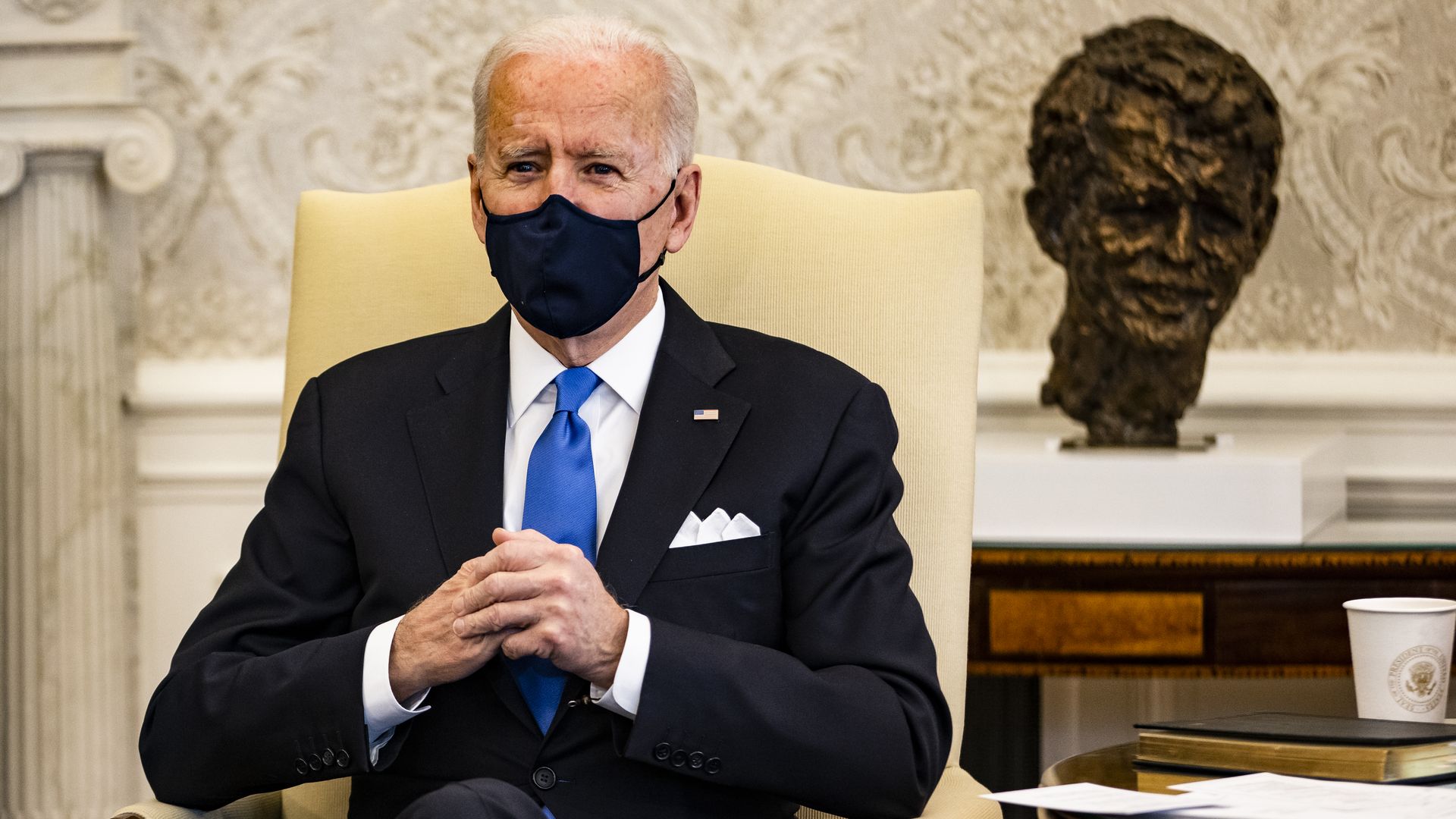
Biden in the Oval. Photo: Samuel Corum/Getty Images
Israel is encouraging the White House to host an official ceremony marking the establishment of diplomatic relations between Israel and Sudan, Israeli officials tell me.
Why it matters: The Trump administration brokered four normalization agreements between Israel and Arab countries, but the deal with Sudan is the only one that still needs to be anchored down.
- While Israel has presented Sudan with a draft agreement for establishing diplomatic relations, the Sudanese want an endorsement from the Biden administration.
Driving the news: In recent weeks, Biden’s senior Middle East advisers Brett McGurk and Barbara Leaf have spoken several times with their Israeli counterparts about ways to push forward the wider normalization process, Israeli officials told me.
- One priority is determining which other Arab or Muslim countries could be next to normalize relations with Israel.
- The Israelis pointed to Mauritania as a country that was close to normalizing relations in the last days of the Trump administration. Mauritania hoped to get economic incentives in return, but the clock ran out on Trump before a deal could be reached.
Yes, but: The Israelis told their White House counterparts that more work is still needed to stabilize the existing normalization deals, particularly the one with Sudan, Israeli officials tell me.
- The Israelis believe that deal is nearly finished, but that a White House ceremony would be very helpful for the Sudanese government and provide an easy win for Biden.
Between the lines: The Biden administration wants to continue a process that began under Trump while securing achievements of its own through new deals.
- The Biden administration is also not enthusiastic about Trump's name for the agreements: the “Abraham Accords.” The White House and State Department prefer to discuss “the normalization process."
What they're saying: A senior U.S. official told me it's premature to single out any particular countries, but confirmed there had been discussions with Israel about the opportunities that lie ahead on normalization.
- “Several of the newly established relationships between Israel and the four countries of the Abraham Accords are accelerating in their own right, and the U.S. will continue to encourage that dynamic," the U.S. official said.