Axios Sneak Peek

November 06, 2022

Josh Kraushaar here. Thanks for joining our last Sunday Sneak Peek before the midterm elections.
- Smart Brevity™ count: 1,188 words ... 4.5 minutes.
1 big thing: The limitations of gerrymandering
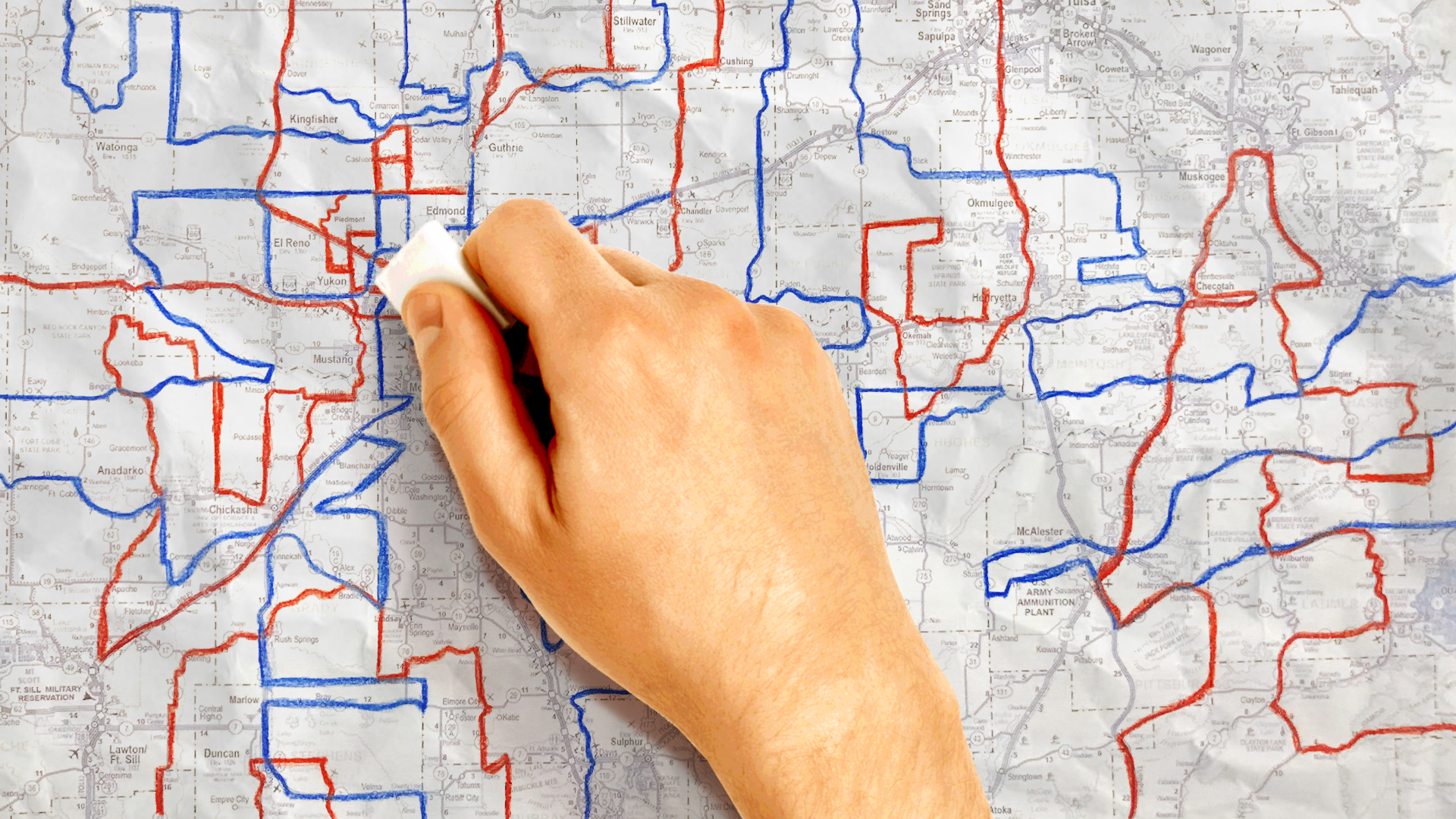
Illustration: Rebecca Zisser/Axios
One of the paradoxes in breaking down the map of House races this year:
- Gerrymandering reduced the number of traditional swing seats on the board. But the potential for a sizable Republican wave has turned many otherwise-safe seats into competitive battlegrounds.
By the numbers: In 2020, there were 51 House districts that backed either President Biden or former President Trump by five points or less. This year, only 34 districts fit those categories.
- But the Cook Political Report with Amy Walter rates 64 House seats as either toss-ups or "leaning" in one direction — meaning there are a historically high number of competitive races.
- Democrats are playing defense in the majority of those seats (44).
Zoom out: If Republicans only won the districts that Trump carried, they'd be in the minority. Even if they carried all the seats that Biden won by five points or less, they'd still only have a majority of 224 (R+11) — hardly a comfortable outcome for House Minority Leader Kevin McCarthy (R-Calif.).
- "Success this cycle required us to expand the map into double-digit Biden territory," said Dan Conston, president of the McCarthy-aligned Congressional Leadership Fund.
- To that end, CLF spent a total of $57.7 million in races that Biden carried by double digits, according to Conston. That's nearly four times the amount of money the super PAC spent in districts Trump carried ($15.8 million).
Between the lines: Several of the states in which Democrats controlled the redistricting process could end up becoming "dummymanders" — a term describing an attempted gerrymander that backfires.
- In Oregon, Democrats are at risk of losing three of their House seats despite drawing a map to protect the party's dominance in the state delegation. Democrats have already stopped spending for their candidate in Oregon's 5th, a district Biden carried by nine points.
- In Nevada, all three Democratic-held House seats are in danger of flipping, even with a map drawn to protect their incumbents. A new Emerson College poll found Republicans were ahead in three of the four statewide House seats, with Democratic Rep. Steven Horsford in a close contest against Republican Sam Peters in the fourth.
- Even in Illinois, the Democratic-drawn political map is suddenly looking a bit shaky. Republicans are running competitively in the seat of retiring Democratic Rep. Cheri Bustos. Meanwhile, the Cook Political Report moved two seemingly safe seats in the Chicago suburbs (Illinois' 6th and 14th districts) into more-competitive "lean Democratic" territory this week.
The bottom line: If Democrats lose control of their House majority, gerrymandering won't be the culprit. The political environment will often disrupt the best-laid plans (or maps!) of both parties.
2. 📊 Poll of the week: Racial divide on crime

Illustration: Sarah Grillo/Axios
Pew Research Center's latest national survey, conducted in mid-October, found a fascinating divide on crime between white and Black Democratic voters.
- While a whopping 82% of Black Democrats say that violent crime is "very important" to their vote this year, only one-third of white Democrats said the same. The alarm among Black voters over violent crime is at the same level as Republican voters' concern overall.
- At the same time, progressives are out of sync with the growing national concern about crime. Overall, 61% of respondents rated crime a very important issue — fifth-highest among all 18 issues tested. But only 34% of liberals rated it as an important issue, ranking near the bottom.
Why it matters: One of the reasons Republicans have made surprising inroads in some solidly blue states — like New York — is because of widespread worries about crime.
- Republicans are gaining ground on the issue not just among anxious suburbanites but also disenchanted Democratic voters they've been courting in deep-blue cities.
Notable quotable: In an essay in The American Prospect this month titled, "How Democrats Mishandled Crime," Democratic pollster Stanley Greenberg concluded:
- Democrats "have to go back to the choices they made in the tumultuous year of 2020 — moral, ideological, and strategic choices that I believe branded the Democrats in ways that alienated them from key parts of their own base."
3. 🗳️ Play of the week: GOP outreach to Black voters
Screenshot: Jennifer-Ruth Green ad
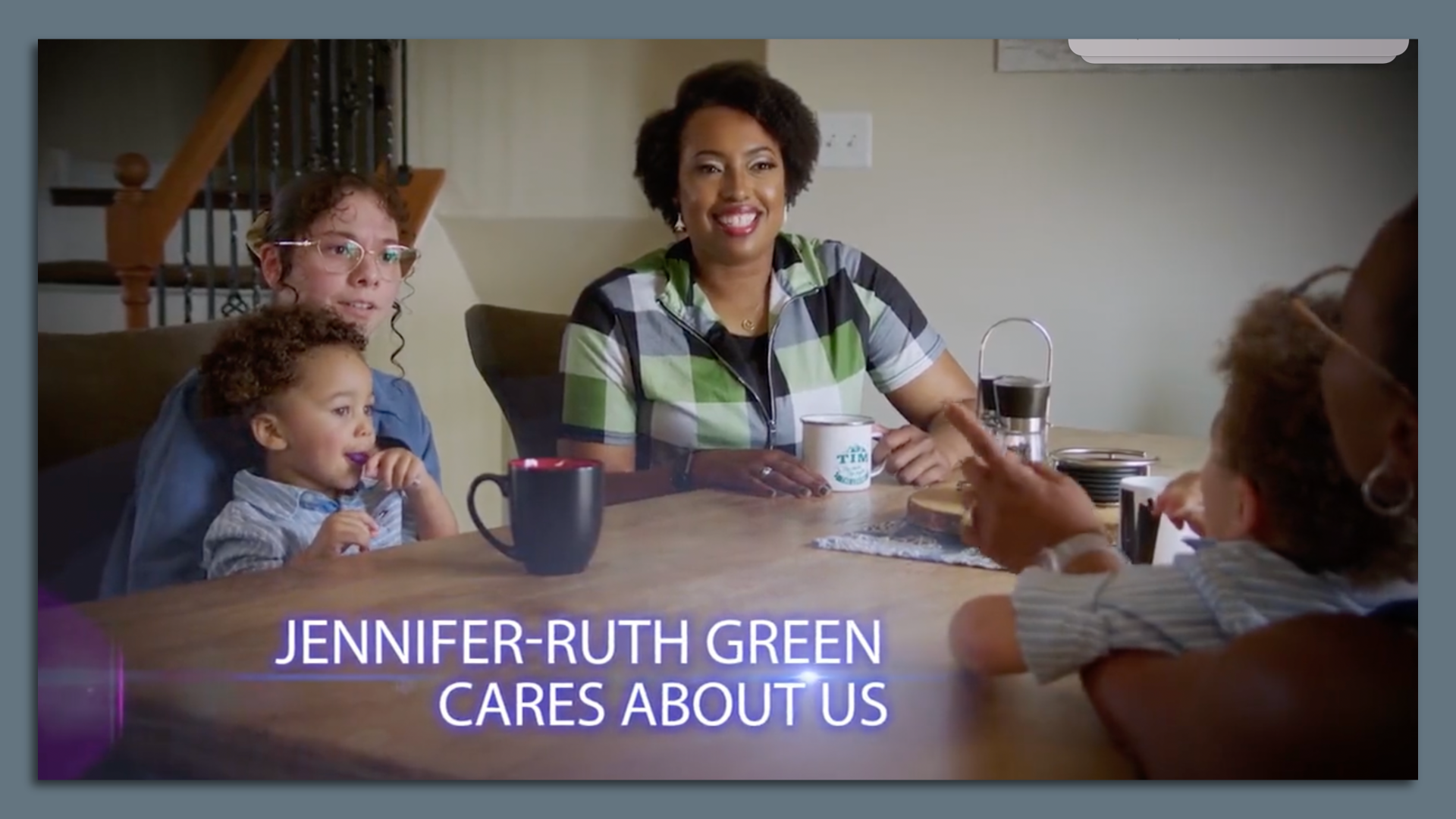
This new ad from Indiana Republican Jennifer-Ruth Green's campaign caught our eye: It features Black voters living in the northwest Indiana district talking about how they'll vote Republican for the first time.
- "Frank Mrvan works for rich white people, not for us," said one man in the ad. "We need one of us to represent us."
- "We've been voting the same way for years, and nothing has changed," said another woman.
Why it matters: Green is a Black GOP candidate running against Rep. Frank Mrvan (D-Ind.), who is white. The race is rated as a toss-up by the Cook Political Report.
- About one-fifth of the district's population is Black, predominantly centered in the impoverished city of Gary.
Zoom out: Green is one of seven Black House Republican nominees who have a credible chance of getting elected (or re-elected) to Congress. If they all win, it would mark the largest Black Republican representation in Congress since Reconstruction.
4. 📺 Spot of the week: Unconventional alliances
Screenshot: Imagine This Oklahoma ad
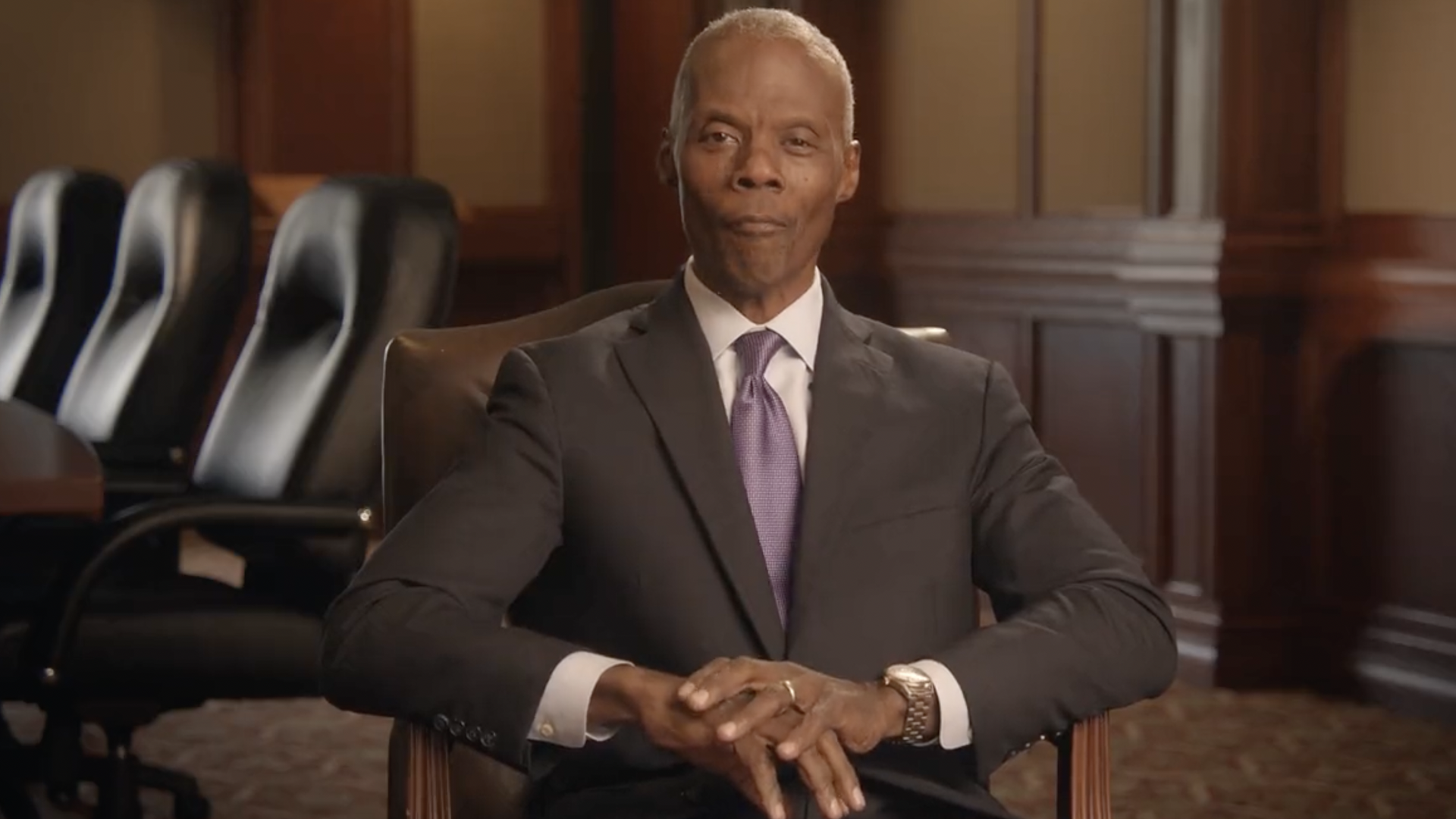
Talk about surprising alliances: Former House GOP Conference Chair J.C. Watts (R-Okla.), the first Black Republican ever elected to a congressional leadership post, endorsed and cut an ad for Democrat Joy Hofmeister in the Oklahoma governor's race.
- "I was a Republican then, and I'm a Republican now," Watts says in the ad. "And friends, I'm voting for Joy Hofmeister. All this scandal and corruption is just too much. Joy is a woman of faith and integrity, and she'll always put Oklahoma first."
Zoom out: Hofmeister was elected twice as a Republican to be the state's superintendent of public instruction but switched parties in 2021 to challenge GOP Gov. Kevin Stitt. She cited the governor's lax mask policies in schools at the time as the main reason for her party switch.
- Stitt holds only a three-point advantage over Hofmeister in the FiveThirtyEight polling average, with four October polls showing Hofmeister narrowly ahead. The latest Emerson College poll of the race shows Stitt leading, 52%-43%.
Details: Stitt has feuded with Native American groups, amid court rulings affirming their sovereignty and proposals for fee hikes from casinos, the Cook Political Report notes. Outside groups tied to the state's Native American tribes have boosted Hofmeister's campaign, allowing her to outspend him on the airwaves.
The big picture: We're seeing a lot of cross-party endorsements in the closing weeks of the midterms.
- In a closely watched Michigan battleground, Rep. Liz Cheney (R-Wyo.) endorsed Rep. Elissa Slotkin (D-Mich.), while former Democratic Rep. Tulsi Gabbard backed Republican Tom Barrett. Cheney also offered a late endorsement to Rep. Abigail Spanberger (D-Va.) in her highly competitive race against Republican Yesli Vega.
- The now-unaffiliated Gabbard has also endorsed other Republicans, including New Hampshire Senate nominee Don Bolduc and South Dakota Gov. Kristi Noem.
- Former Kansas governors Bill Graves and Mike Hayden — both Republicans — endorsed Democratic Gov. Laura Kelly in a new ad from the Democratic Governors Association's Kansas affiliate.
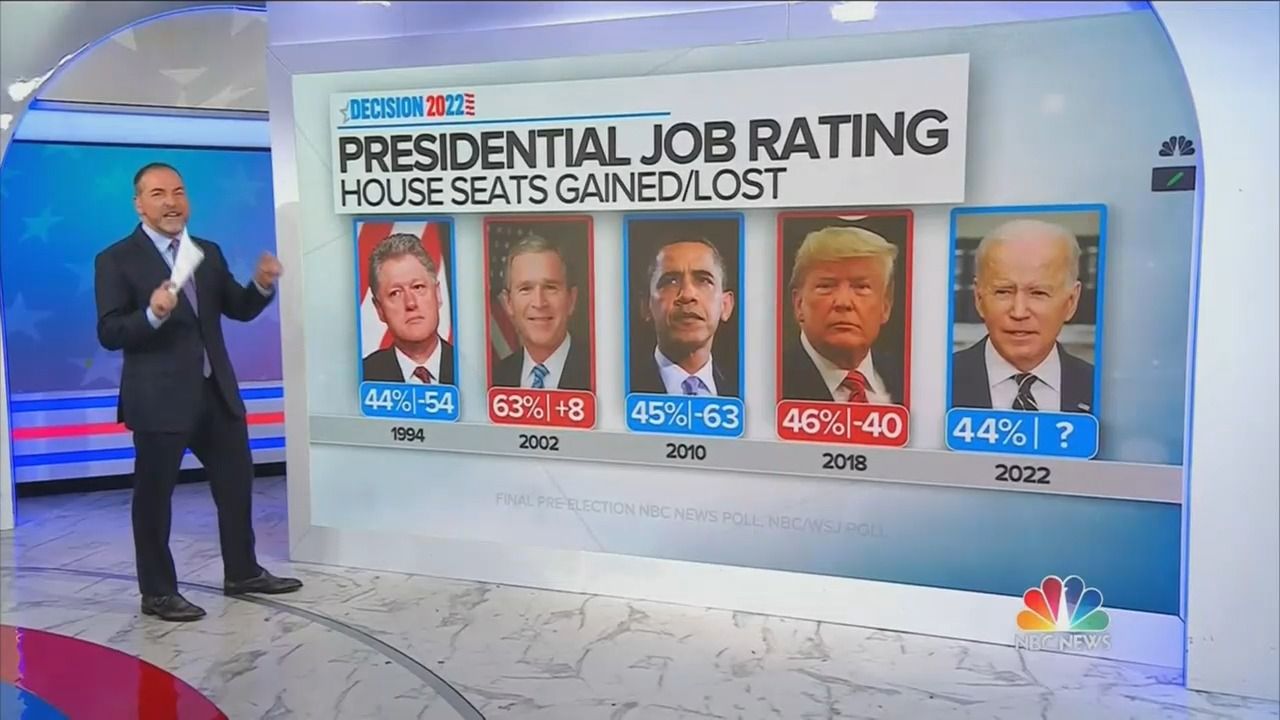
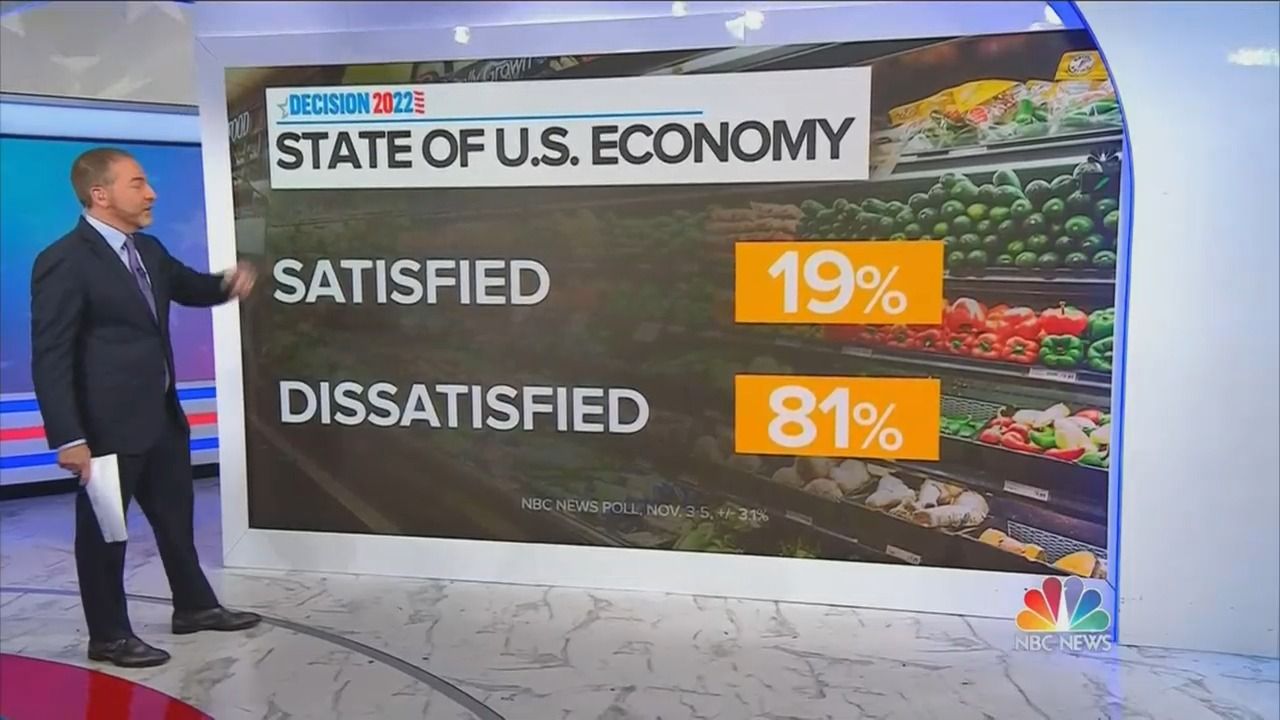
5. 👀 Graphics worth 1,000 words
📬 Thanks for starting election week with us. This newsletter was edited by Zachary Basu and copy edited by Kathie Bozanich.