Axios Seattle

January 07, 2025

Happy Tuesday!
☁️ Today's weather: Foggy in the morning. Cloudy in the afternoon. High near 46.
🏡 Help keep your home news coverage strong by becoming an Axios Seattle member.
🎂 Happy birthday to our Axios Seattle member Mev!
Situational awareness: Kevin Dave, the Seattle police officer who fatally struck Jaahnavi Kandula, 23, in a crosswalk two years ago while speeding in his police cruiser, has been fired, KIRO 7 reports.
Today's newsletter is 881 words, a 3.5-minute read.
1 big thing: 🐋 Whales on edge
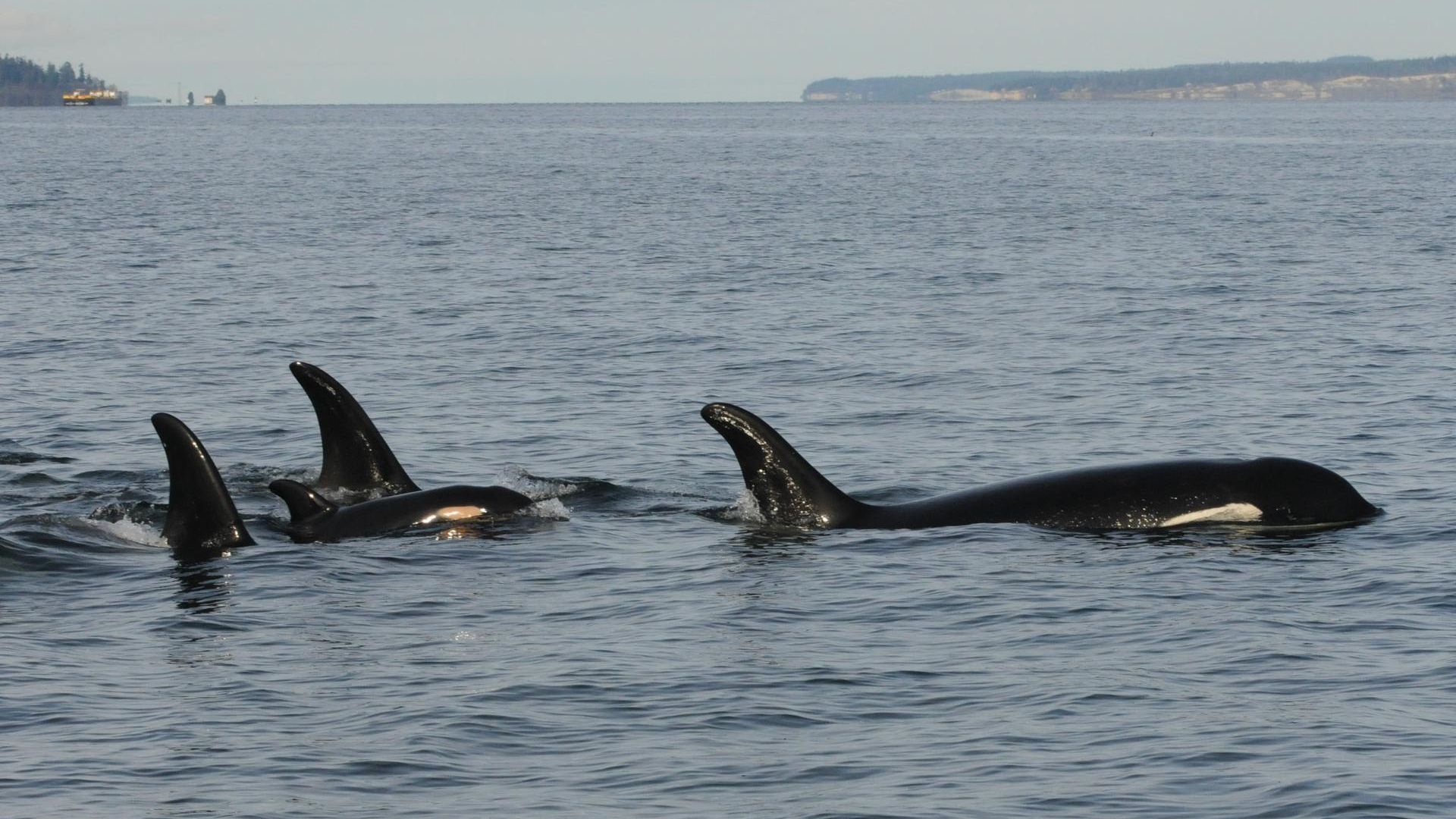
The southern resident orca population marked the turn of the year with both heartbreak and hope: the death of a newborn calf and the birth of another, underscoring the precarious existence of this critically endangered group.
Why it matters: Every birth and death in this population of just over 70 whales represents a more than 1% change, highlighting the fragility of their survival.
Driving the news: A female calf, designated J61, was born to J35 — also known as Tahlequah — around mid-December, per the Center for Whale Research (CWR), but was confirmed dead on New Year's Eve.
- Tahlequah, who has two living male descendants, captured international attention in 2018 by carrying her first dead female calf for 17 days across 1,000 miles.
- Echoing her previous mourning behavior, Tahlequah was seen carrying the body of her newly deceased calf, also a female, on Sunday, Brad Hanson, a biologist with the National Oceanic and Atmospheric Administration's Northwest Fisheries Science Center, told Axios.
- Days earlier, on Dec. 30, researchers confirmed the birth of another calf, J62, traveling with the J19 and J16 pods. The calf's sex is unknown, but it appears healthy and strong, said CWR research director Michael Weiss.
The big picture: Reduced Chinook salmon runs — the southern residents' primary food source — are the most critical factor affecting their survival, according to Weiss.
- Despite occasional good salmon returns, long-term declines have pushed the orcas to the edge of viability, Weiss noted.
By the numbers: About 43% of southern resident calves die before their first year. Even among those observed, 20% do not survive, said Weiss.
- "It was a tough week for everyone who watches and cares," Weiss said.
What they're saying: Southern resident orcas are more than marine mammals; they're cultural icons and symbols of the Pacific Northwest. Their deep family bonds and frequent presence in Seattle waters connect them to the region in a way that feels personal, Weiss said.
- "They do feel like our whales," he said.
What's next: Researchers will monitor J62's progress while continuing efforts to bolster Chinook salmon populations.
2. 🚗 Traffic woes grow
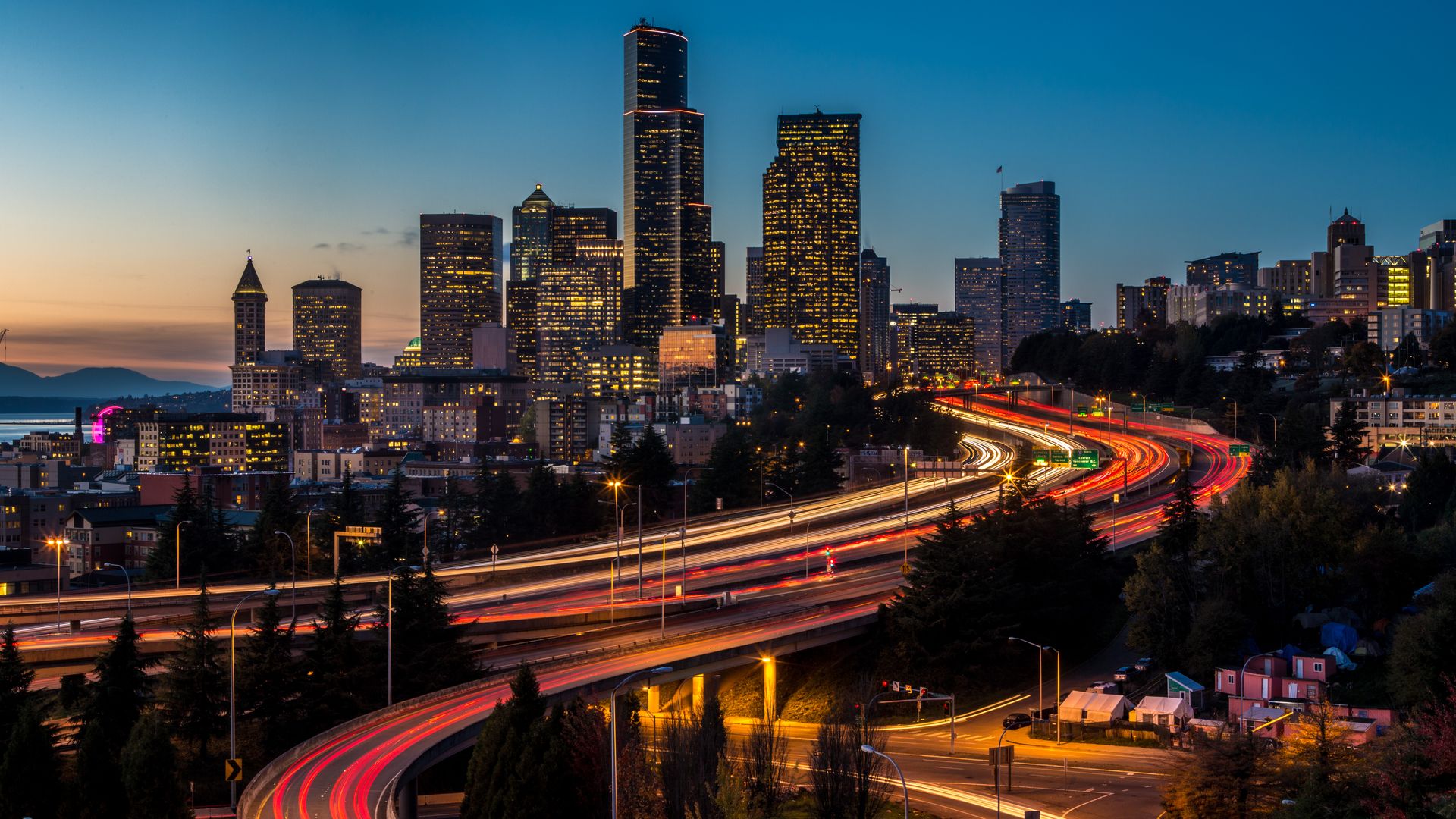
Seattle ranked as the 10th-most-congested city in the U.S. and the 23rd globally, with drivers losing an average of 63 hours to traffic in 2024, according to a new report released this week.
Why it matters: Nationwide, congestion is rising as more employees return to in-person work, and Seattle is no exception.
- A 19% drop in telecommuting from 2022 to 2023 signals a continued shift away from remote work, fueled by policies like Amazon's return-to-office mandate, according to Kirkland-based Inrix, a transportation data company.
By the numbers: Seattle-Everett-Bellevue drivers saw a 9% increase in time lost to traffic in 2024, according to the analysis of nearly 1,000 cities across 37 countries.
- Peak-time Seattle-area drivers lost 58 hours in 2023 and 46 hours in 2022 to congestion, per Inrix.
The big picture: New York City and Chicago topped U.S. congestion rankings with 102 hours lost per driver, followed by Los Angeles (88 hours) and Boston (79 hours).
3. 🏘️ Millionaire market


More than one-third of homes listed for sale in the Seattle metro area last year were priced over $1 million, per Redfin.
Why it matters: The rising share of local homes with seven-figure asking prices puts homeownership further out of reach for many aspiring buyers — especially when coupled with recent increases in mortgage rates.
By the numbers: Last year, 34.4% of homes listed for sale in the Seattle metro area had asking prices over $1 million, Redfin found.
- That's up from 30.3% of local listings in 2023, and 16.1% in 2020, per the Seattle-based real estate company.
Zoom out: Nationwide, 9.3% of home listings were priced over $1 million last year — a much lower share than in the Seattle area.
4. Morning Buzz: 👋🏼 Grubb is gone
🏈 The Seattle Seahawks fired offensive coordinator Ryan Grubb following just one season after the team narrowly missed the playoffs, signaling another reset under coach Mike Macdonald. (MyNorthwest)
⚖️ Washington Attorney General Bob Ferguson filed a consumer protection lawsuit against T-Mobile yesterday, alleging long-standing cybersecurity failures led to a data breach affecting over 2 million state residents. (FOX 13)
🍽️ Public health officials are investigating a salmonella outbreak linked to Christmas meals at a Seattle emergency shelter that sickened at least 14 people, including five who were hospitalized. (KING 5)
5. 💍 Hitched for less
Weddings are poised to cost more in 2025, but couples can get hitched for slightly less money in the Seattle area, according to the wedding planning website Zola.
By the numbers: Nationwide, the average wedding this year is expected to cost about $36,000, according to a Zola survey of about 6,000 engaged couples nationwide. That's up from $33,000 in 2024.
Yes, but: The average wedding in the Seattle-Tacoma metro area is expected to cost $29,528 in 2025, per the survey results.
- That's far less than New York, where the typical 2025 wedding is predicted to cost $65,000, or Washington, D.C., where it's expected to cost $52,000.
Thought bubble: If Seattle weddings really are cheaper than the national average, I suspect it's because we have lots of outdoorsy couples willing to get married in parks or outdoor locations — or, straight up elope on a mountain.
💡 Melissa is puzzled by the LED light fixtures in her home that lack bulbs, and is busy figuring out what to do now that some have burned out.
🕯️ Clarridge is packing away the lights, wreaths and candles.
This newsletter was edited by Rachel La Corte.
Sign up for Axios Seattle