Axios Seattle

November 20, 2026

Happy Friday! We've checked the forecast, and unfortunately, Monday is still coming.
🌤️ Today's weather: Partly sunny, with a high of 48.
🎂 Happy early birthday to our members Christine Ellis, Michael Fewel and Mary Jesse!
Today’s newsletter is 932 words — a 3.5-minute read.
1 big thing: 🚲 Meals on two wheels
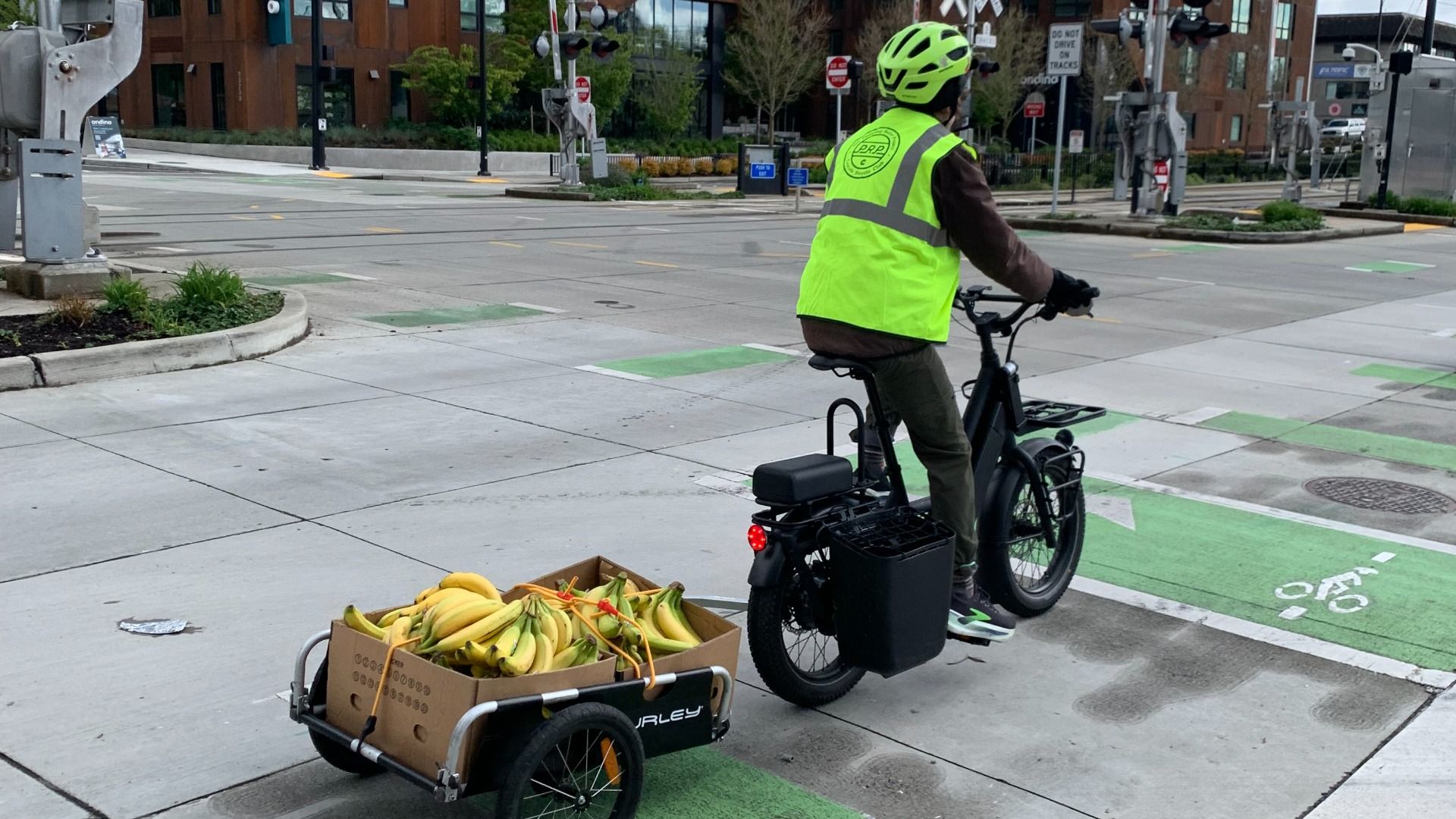
Some Seattle cyclists are putting a new spin on volunteer work, hauling rescued food and essential goods to local residents and food banks via two wheels.
Why it matters: Few things could be more Seattle than using bicycles, pedal power and a commitment to reducing waste to address food insecurity.
Driving the news: The Cascade Bicycle Club's Pedaling Relief Project this month celebrated a milestone — rescuing and delivering 2 million pounds of food and essential goods to homes and food banks.
- Founded during the pandemic, the program sends volunteers on bicycles and e-bikes, often pulling cargo trailers, to collect surplus food from grocery stores and farmers markets.
- The groceries are delivered to area food banks and people who need home deliveries, bicycle club spokesperson Paul Tolmé told Axios.
By the numbers: Since 2020, Pedaling Relief volunteers have:
- Pedaled more than 100,000 miles.
- Made approximately 3,400 food rescue and delivery rides.
- Served more than 40,000 homes.
What they're saying: About half of all food produced in the U.S. goes to waste, Tolmé told Axios.
- By rescuing what might otherwise end up in landfills, the project helps reduce climate pollution and shows how bicycles can make communities stronger.
Zoom in: The program operates five days a week, serving five food banks in Seattle and Bellevue, including the University District Food Bank, Byrd Barr Place and White Center Food Bank.
- Across the region, need has skyrocketed, said Tolmé.
- University District Food Bank executive director Joe Gruber says the number of families accessing the food bank weekly has increased 80% in the last year.
The big picture: The University of Washington's Urban Freight Lab featured Pedaling Relief in its 2023 Biking the Goods report, which examines how cargo bikes can replace some motor vehicle deliveries.
- In one documented trip, two volunteers transported about 243 pounds of groceries to 18 households in 45 minutes.
What's next: Cascade is developing a toolkit to help other cities and nonprofits launch similar programs.
Want to help? Volunteers can sign up for food rescue and home delivery rides through Cascade Bicycle Club.
2. 💥 Brace for glitches
Many Americans are baffled and alarmed by the daily, if not hourly, explosion of technical glitches hitting air travel, banks and work products like Microsoft Outlook. What the heck is going on?
The most likely answer: This is the first true wave of unintended consequences of increasingly powerful AI hitting us at once.
The big picture: AI is exceptionally good at building software, and therefore exceptionally good at spotting and exploiting bugs in large technical, software-based systems.
- The causes range from routine software updates and efforts to patch AI-discovered vulnerabilities to hackers exploiting weaknesses and launching sophisticated AI-powered cyberattacks.
The new reality: Experts expect months of disruption as increasingly powerful AI tools expose flaws in aging systems.
What this means for YOU: Understand the different causes and resist the temptation to panic every time something goes haywire.
You should also prepare: Reset and protect your passwords. Keep more cash on hand if possible, in case your bank is down for a day or two. Buy some basic emergency supplies in case power or water do go out.
The bottom line: Most companies and much of government are woefully unprepared for the new era of AI-powered cyberattacks. But we can see the danger coming — and still have a little time to protect ourselves.
3. Morning Buzz: 🗑️ Trash fee trouble

⚖️ Four Seattle residents have filed claims against the city alleging it knowingly collected millions of dollars in inaccurate "extra garbage" fees, the first step toward a proposed class-action lawsuit. (Seattle Times)
🏫 The Seattle school board unanimously approved policy changes giving the superintendent authority to close schools without a final board vote, speeding up the process as the district considers mergers involving 21 schools. (KOMO)
⛴️ Several daily Bremerton-Seattle fast ferry sailings have been cancelled through Dec. 1 as two of the route's three vessels undergo repairs or maintenance, leaving just one boat in service. (Kitsap Transit)
🧵 A new Chinatown-International District nonprofit has received a $100,000 city grant to help immigrant and refugee women earn money through sewing and caregiving jobs. (International Examiner)
🤖 Google has acquired Seattle startup Howie, adding the artificial intelligence scheduling assistant into the tech giant's orbit. (GeekWire)
4. ⚾️ Gingerbread gets sporty

Even the holiday gingerbread displays are getting into Seattle's sports scene this year.
The annual Gingerbread Village at the Sheraton Grand Seattle opened yesterday, recreating some of the city's beloved sports stadiums in candy and gingerbread.
This year's theme is "The Great Seattle Gingerbread Village Games," with three displays that include candy-laced versions of T-Mobile Park, Husky Stadium and Lumen Field.
Visiting the displays is free — although you can contribute a donation to vote for your favorite gingerbread scene.
- Donations benefit Breakthrough T1D and type 1 diabetes research.
If you go: I encountered no line when I went around lunchtime yesterday, although lines can form when it gets closer to the holidays or when there are major events downtown.
Stop by: In the lobby of the Sheraton Grand Seattle, 1400 6th Avenue.
- Display hours are 9am-9pm Sunday-Thursday, 9am-11pm Friday-Saturday. Runs through Jan. 1.

🎄 Melissa is looking for some new Christmas tree ornaments.
🚙 Clarridge is driving around SoDo, looking for fun… or trouble, whichever comes first.
This newsletter was edited by Geoff Ziezulewicz.
Sign up for Axios Seattle