Axios Seattle

August 26, 2024


1 big thing: Seattle's back-to-school cooling demand is way up




Seattle classrooms need more cooling during back-to-school season now compared with past decades, a new Climate Central analysis finds.
Why it matters: A comfortable and healthy environment in schools for kids, who are among the most vulnerable to heat-related illness, is key to educational success, says the nonprofit climate research group.
- But maintaining a comfortable environment is harder with a warming climate and deferred costly maintenance at aging schools.
Driving the news: The Climate Central report finds that cooling demand between late July and early September increased in 95% of nearly 250 U.S. locations between 1970 and 2023.
- The nonprofit climate research group's analysis is based on a metric called "cooling degree days" (CDD), which measures the difference between a location's daily average outdoor temperature and 65° — "considered the ideal indoor temperature," per the report.
- "For example, a day with an average temperature of 90°F has 25 CDD (90°- 65°)."
Context: Heat waves in Seattle are getting hotter and lasting longer, with the average length of heat waves increasing 2.1 days between 1961 and 2023, according to the EPA.
- That's longer than the national average of 1.4 days, per the data.
Threat level: Many schools in Washington start in early September, when heat waves can still strike.
What they did: To get annual demand, CDD was added for every day in the seven-week period when students typically return to school.
By the numbers: Seattle saw a 152% increase in back-to-school cooling days between 1970 and 2023.
- Reno, Nevada (+320%); Eureka, California (+300%); and San Francisco (+240%) saw the biggest percentage increases.
The big picture: Back-to-school cooling demand was around 34% higher nationwide over the last decade largely due to human-caused climate change, Climate Central estimates.
- That's based on the group's Climate Shift Index, which seeks to measure how climate change has affected daily temperatures.
What's next: Like other buildings, schools must adapt to a changing climate — and that can mean costly upgrades.
Be Part of Something Bigger

2. Mapped: Life expectancy based on birth state
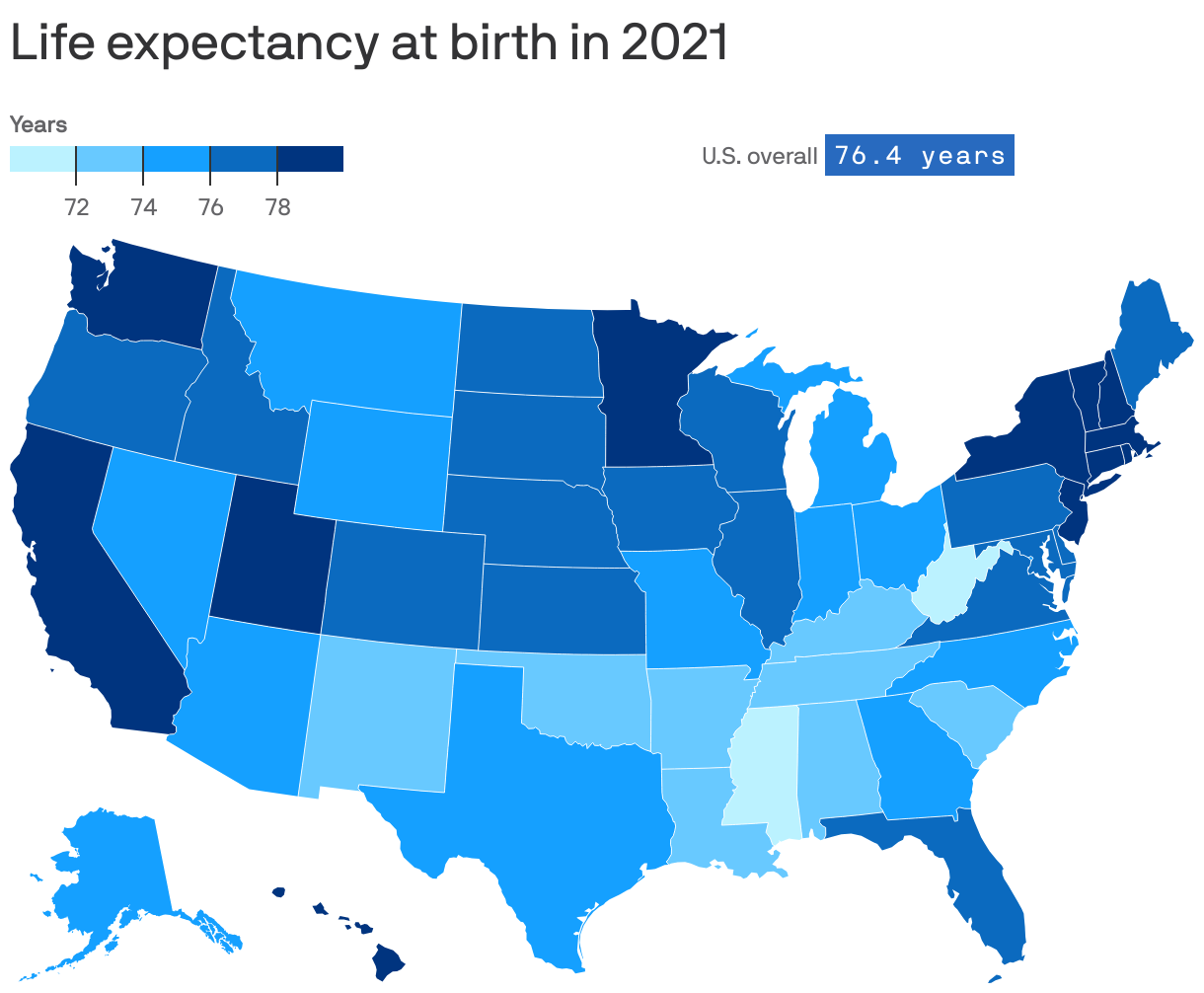
People born in Washington live longer than those born in the majority of other states, a new report finds.
By the numbers: The average life expectancy for Washingtonians is 78.2 years, compared to the national average of 76.4 years, according to a new Centers for Disease Control and Prevention analysis based on mortality statistics and Census and Medicare data.
- It's 75.8 years for males and 80.8 for females.
- Hawai'i had the longest life expectancy at 79.9 years and Mississippi had the shortest at 70.9 years.
Between the lines: Women are expected to live longer than men across the country, with Utah having the smallest gender gap at 3.9 years.
The big picture: Life expectancy nationwide fell by 0.6 years between 2020 and 2021 — largely due to the COVID-19 pandemic and drug overdoses, per the report.
- But with the pandemic behind us, preliminary data suggests these numbers will likely improve.
3. Morning Buzz: 🏆 Hawks beat Browns

4. Free COVID test program to resume in September


Axios Seattle
