Axios San Francisco

June 15, 2026

👋 Good morning, it's Monday.
- Today, we're bringing you a special newsletter from our colleagues examining America's entrepreneurial streak — a time when small businesses applications are booming.
🌤️ Today's weather: Mostly sunny with highs near 70, lows in the mid-50s.
🎂 Happy birthday to our members Brad Coy and Elyse Jacobs!
Today's newsletter is 1,072 words — a 4-minute read.
1 big thing: 🧨 Small business dynamism

Americans are starting businesses at a record pace — an entrepreneurial hot streak that helps set the U.S. apart from the rest of the global economy.
Why it matters: The strong pace of new startups in the years since the pandemic likely plays a role in U.S. economic resilience and dynamism.
- It's amplified by AI, which gives the smallest startups new capabilities that once required much larger operations.
The big picture: Small businesses employ about half of the American private-sector workforce. So far this year, the nation's smallest businesses are doing the bulk of hiring.
- Through the first four months of 2026, companies with fewer than 20 employees have added 236,000 jobs, per payroll processor ADP. That accounts for 95% of the economy's net gains over that period.
Small businesses drive our economy. "You rarely find a large business that just appears out of nowhere with hundreds, if not thousands, of employees," Holly Wade, executive director of the National Federation of Independent Business, a small business lobbying group, tells Axios. "They start off small."
State of play: Americans are filing paperwork to start new businesses at near-record rates — averaging 470,000 applications a month in 2025. That's about 66% above pre-pandemic norms.
- This year, those applications are running even higher.
Yes, but: Would-be entrepreneurs filing applications with planned wages — meaning they intend to take on employees, the surest sign of a real, lasting company — fell back to pre-pandemic levels in 2025 and are tracking even lower this year.
Zoom in: That means the startup surge is increasingly composed of solo operators rather than businesses with plans to hire.
- AI tools may be enabling this. A one-person business can do the work that previously required staff.
Zoom out: Fed research shows AI adoption among the smallest businesses — those with fewer than 50 employees — is stronger than would be expected based on size alone.
What to watch: The White House is betting AI will be the "great equalizer," Trump's top economist Kevin Hassett told Axios last month.
- "It's making it so that small businesses who start to use AI can compete better with big businesses," Hassett says.
2. 😓 Reality check: It's hard!


The pandemic may have touched off a historic startup boom, but many of those new businesses have struggled. Truth is, it's been pretty hard to run a business in the recently rocky economy.
State of play: Among the new businesses started in 2022, an above-average share shuttered within three years, according to government data.
- Those businesses launched on the assumption that low interest rates and strong demand would last. But they got hit right out of the gate with rapid rate hikes and an inflation shock.
The latest: Confidence among small business owners fell below historical norms in March in the wake of the Iran war energy shock, according to a survey by the National Federation of Independent Business that has been conducted for the last 50 years.
3. 👏 The fanbase economy

Your local coffee shop isn't just selling breakfast anymore — it's building a fanbase.
The big picture: The pandemic forced small businesses to get more creative online about reaching customers. The loyalty forged during that period has stuck around and evolved.
State of play: Restaurants, coffee shops and fitness studios aren't just selling their core products anymore. Hats, hoodies and pins are now part of the playbook.
- They drop merch like streetwear brands, crowdsource ideas from followers, and document behind-the-scenes stories on Instagram and TikTok.
Zoom in: Souvla — one of San Francisco's favorite restaurant chains — has embraced the trend with its own line of branded merch, selling everything from totes, hats and tumblers to baby bibs, dog toys and onesies.
Zoom out: Even unlikely businesses are playing along. A brother-run pest control company in Miami posts videos of critter removals to a few hundred followers.
4. The Wiggle: 🎨 SCRAP finds permanent home
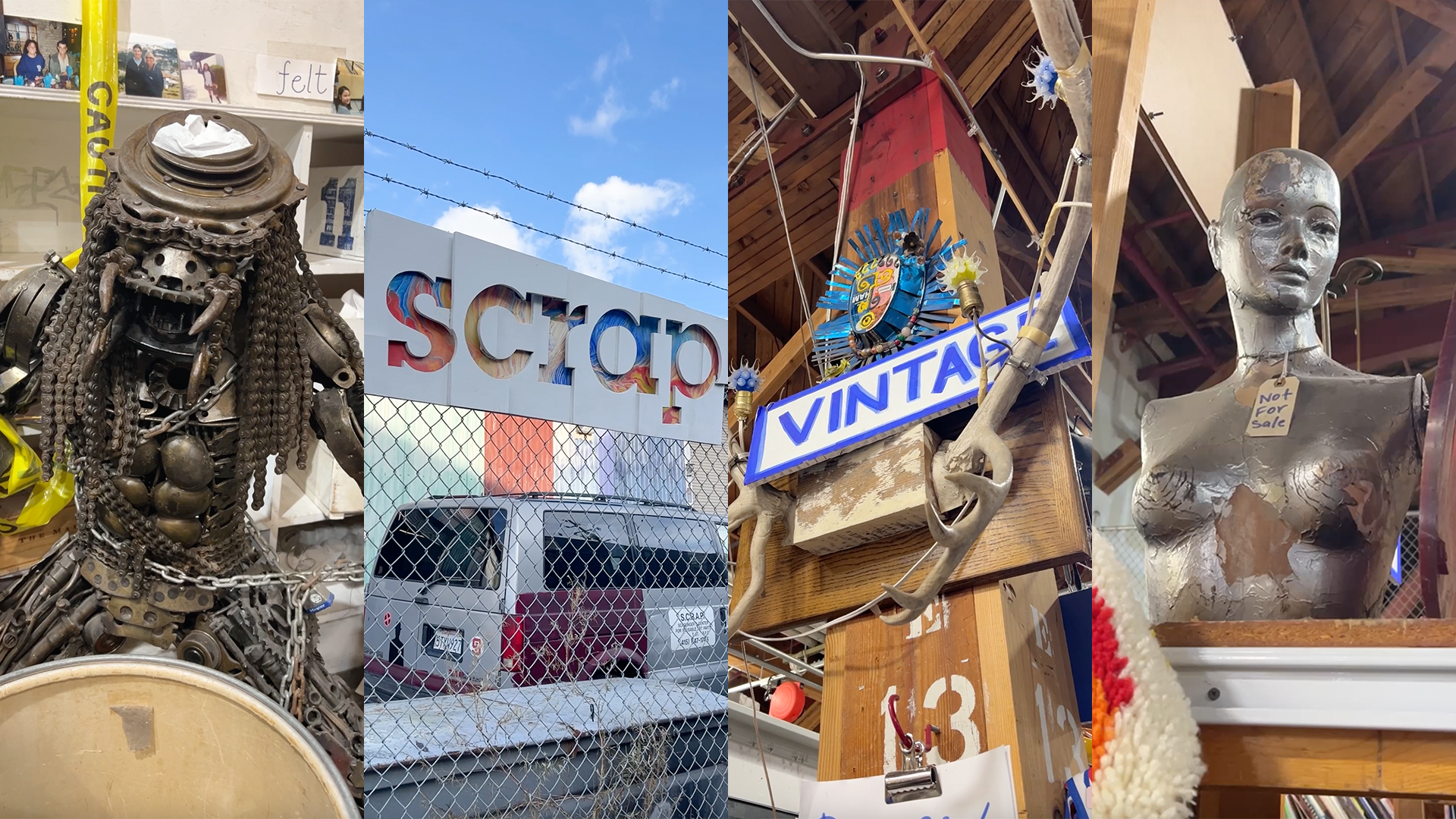
🎨 After losing its longtime lease, the art store SCRAP has bought its first-ever permanent home at 141 Industrial Street just blocks from its current Bayview location. (KQED)
🏙️ San Francisco voters scrapped a tax on companies with highly paid CEOs after business leaders and billionaires poured millions into the campaign against it. (Bloomberg)
🚪 Park Tavern in North Beach will permanently close June 21 after a short-lived revival failed to overcome years of legal, financial and post-pandemic struggles. (SFGATE)
🏳️🌈 Frameline, the LGBTQ+ film festival that grew from a 1977 screening tied to Harvey Milk's camera shop, is celebrating its 50th anniversary this month with a return to the Castro Theatre. (SF Chronicle)
Invest in local journalism
Strong communities grow with clear, reliable local news at their roots.
Why it matters: Your support helps our newsroom continue covering the stories that shape how your community grows, from big developments to everyday changes.
🌱 Become a member today. You'll support the reporting that keeps you informed and helps our newsroom keep growing alongside your community.
- We appreciate your support.
5. 🌏 Immigrants' entrepreneurial spirit

Immigrants play an outsized role in entrepreneurship, launching more than 20% of U.S. businesses while representing just 15% of the population, a 2024 National Bureau of Economic Research paper shows.
- About 3.5 million immigrants are self-employed, according to the Immigration Research Initiative.
Zoom in: Many of the country's most valuable companies have immigrant founders.
- Immigrants or the children of immigrants founded nearly half of Fortune 500 companies as of 2023, according to one analysis.
- Those include Jensen Huang's Nvidia, Elon Musk's SpaceX and Tesla, and Sergey Brin's Alphabet.
What to watch: Mass deportations and stiffer immigration restrictions could undermine small businesses, as entrepreneurs fret about their own residency, face expensive visa rules and struggle to retain foreign-born employees.
6. 👥 Boomer succession crunch
The largest ownership transition in American history is quietly underway: Baby boomers are retiring and no one knows who — if anyone — will take over their small businesses.
Why it matters: Baby boomers own about a quarter of all small businesses, about double the share held by their predecessors 20 years ago, McKinsey estimates.
- Their children often don't want to take over the family business. The risk: Those firms close instead of selling to capable investors, slowly wiping out jobs and economic anchors in communities nationwide.
By the numbers: About 6 million businesses with fewer than 500 employees will face ownership transitions between now and 2035 as owners retire, up from about 4.5 million in the prior decade.
The bottom line: Millions of small businesses will soon face a moment of truth: Find a successor or a buyer — or close.
📬 If you enjoyed this dispatch, check out our free Axios Business Suite.
Sign up for Axios San Francisco