
Axios San Diego

October 14, 2025

Hey there, let's get this Tuesday started!
☔️ Today's weather: Coast — Rain, high near 64; Inland — Heavy rain, high near 67
🏡 Help keep your home news coverage strong by becoming an Axios San Diego member today.
Today's newsletter is 1,031 words — a 4-minute read.
1 big thing: Fueling the mental health workforce
San Diego County is launching five new behavioral health workforce programs to address the shortage of professionals in the field.
Why it matters: The worker shortage limits residents' access to mental health and substance use services during a crisis, particularly for children and the homeless.
- "People aren't getting the care they need when they need it," Stephanie Gioia-Beckman, who's leading the workforce initiative, told Axios.
Driving the news: The county is investing $75 million from the state over five years to fund the Elevate initiative, which was approved in 2023 and will be managed by the Policy and Innovation Center, a local nonprofit.
- The programs offer zero-interest loans, apprenticeships, peer support training, paid internships and nurse practitioner expansion programs.
Between the lines: Without proper staffing, the county's behavioral health system, which serves the most vulnerable residents, can't currently meet the demand for services, according to Gioia-Beckman.
- Some people are waiting up to six months for care, exacerbating the crisis they're in, she said.
- "That's where we see people in the hospital; that's how we see really high suicide rates," she said.
By the numbers: The San Diego region needs to more than double its behavioral health workforce by 2027 to meet demand, which means adding 18,500 practitioners, according to a 2022 report.
- Elevate aims to attract 3,000 new behavioral health workers over the next five years, including substance use disorder counselors, licensed clinicians and psychiatric nurse practitioners.
State of play: As local organizations and the county expand mental health care and substance use treatment facilities, the need for professionals also increases.
- The San Diego Foundation is providing workforce development grants, and a new state scholarship program also supports students pursuing these careers.
Zoom out: In 2019, the California Future Health Workforce Commission warned of a "severe and growing" shortage in the field, and since then, Gov. Gavin Newsom and state lawmakers have allocated more than $1 billion to train and recruit providers, the Los Angeles Times reported.
- The shortage has worsened since the pandemic, and workers are "buckling under the workload" while patients in crisis are "turning to costly emergency care," per the LA Times.
Students say the expensive years-long training and education required to become a mental health professional makes it difficult to pursue a career, especially in high cost of living areas such as San Diego.
The bottom line: These Elevate programs are meant to ease that burden and keep "people tethered to San Diego and this medical system," Gioia-Beckman said.
2. Young adult suicide rates rising
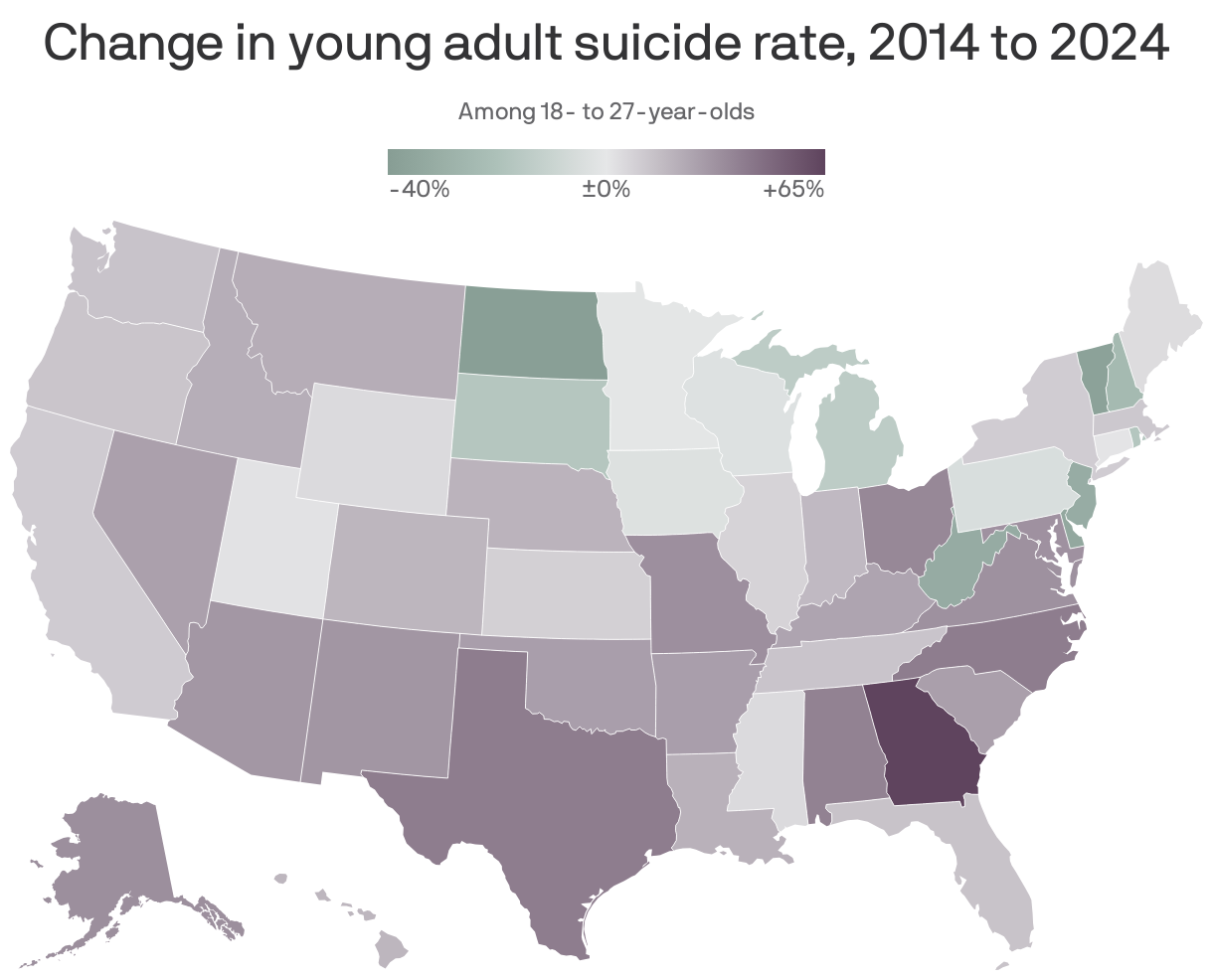
The young adult suicide rate increased in California and most U.S. states from 2014 to 2024, a new analysis finds.
Why it matters: The numbers underscore the toll of the country's mental health crisis.
Driving the news: The suicide rate for U.S. adults ages 18-27 increased nearly 20% between 2014 and 2024, rising from 13.8 per 100,000 people to 16.4, per a new analysis of CDC data from Stateline, a nonprofit newsroom.
- With 550 deaths in 2024, the young adult suicide rate was 10.7 per 100,000 people in California — a 10% increase from 2014.
Zoom in: San Diego County's Mobile Crisis Response Teams expanded to schools in 2024, providing thousands of students suicide risk assessments and interventions in an effort to combat rising youth suicide rates.
- In August, the San Diego Foundation awarded $500,000 in grants to local organizations to expand access to mental health care services for kids.
What they're saying: "Theories behind the increase range from bullying on social media — since Gen Z was the first generation to grow up with the internet — to economic despair to cultural resistance to seeking help for depression," per Stateline.
If you or someone you know may be considering suicide, call or text the National Suicide Prevention Lifeline at 988. Ayuda disponible en español.
3. The Lineup: 👋 Shildt retires as Padres manager

⚾️ Mike Shildt announced his retirement as the Padres manager on Monday with two years left on his contract. After leading the team to two consecutive 90-win seasons, he said the grind of the job has "taken a severe toll on me mentally, physically and emotionally." (Union-Tribune)
🦍 Denny, a 10-year-old western lowland gorilla, broke one of the layers of a three-layered tempered glass panel of his habitat at the zoo on Saturday. He was not injured and will be cared for behind the scenes until the panel is replaced. (NBC7)
✍🏼 Gov. Gavin Newsom signed a controversial bill allowing relatives to care for kids if their parents are deported. It also prevents daycare providers from collecting immigration information about a child or their parents. (CalMatters)
🩺 Kaiser Permanente health care workers are planning a five-day strike starting today at hospitals in Grantville, Kearny Mesa and San Marcos. The medical facilities will remain open, but some appointments and surgeries may be rescheduled. (City News Service)
4. 📍 Here in San Diego: 🚡 Skyfari at the Zoo
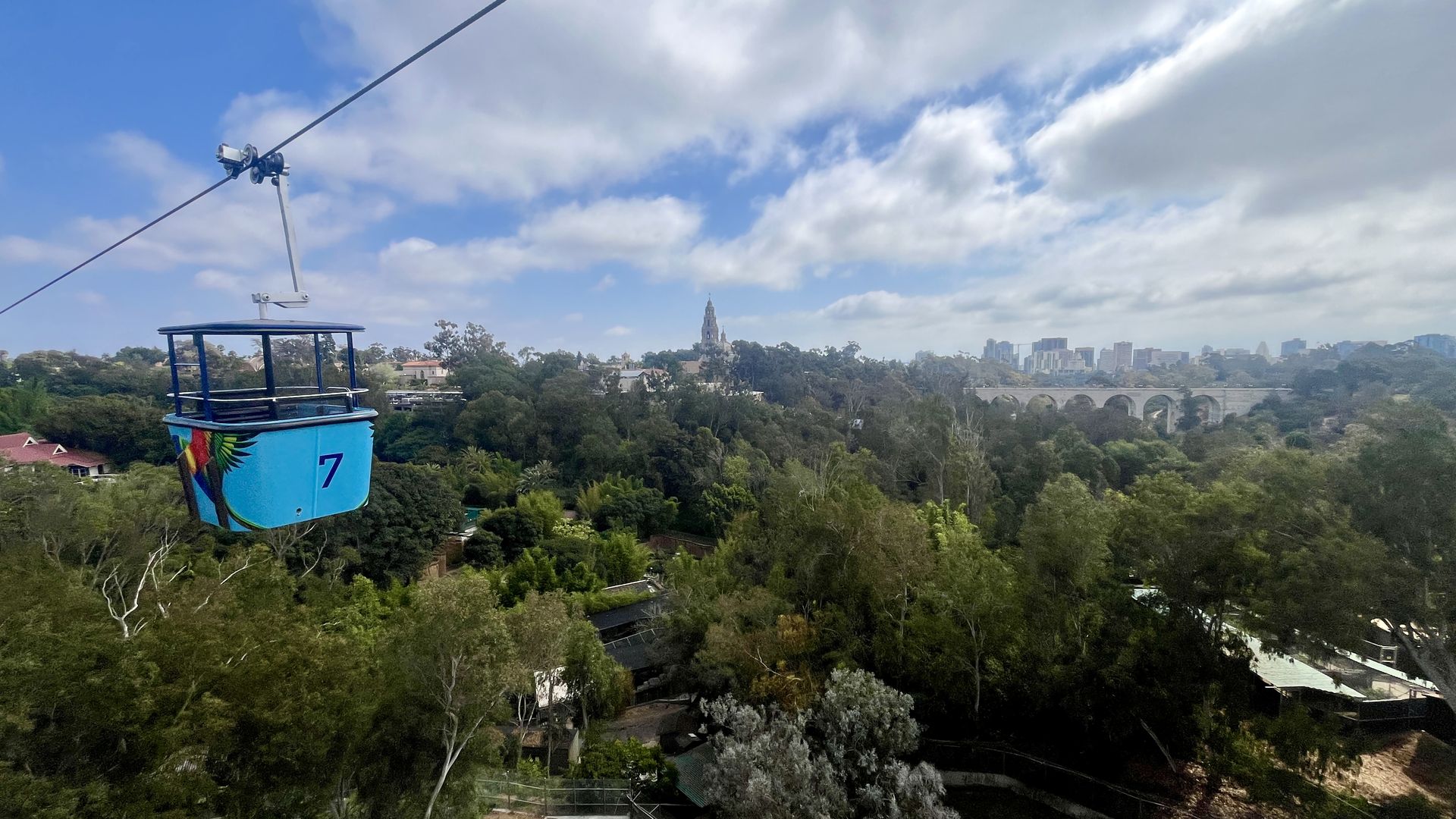
🎉 Congrats to Katherine C. for recognizing the view from the Skyfari Aerial Tram at the San Diego Zoo!
Why it matters: Visitors can take a smooth ride in the gondola from one end of the zoo to the other and enjoy a unique view of the city skyline, Balboa Park landmarks and animal habitats.
- It's also an efficient and fun way to navigate the 100-acre wildlife park, especially for tired legs.
Flashback: The Skyfari aerial tram opened in 1969, when zoo admission was $1.50 and memberships were $12.50. That's about $13 and $110 in today's dollars.
If you go: The tram is open from 10am to close, and would be beautiful during golden hour or sunset.
Pro tips: Many animals, like the big cats and giraffes, are most active in the mornings, so get to the Zoo or Safari Park early to beat the crowds and see the most wildlife.
- Download the San Diego Zoo app for an interactive GPS-enabled map to navigate.
- Kids can visit for free in October.
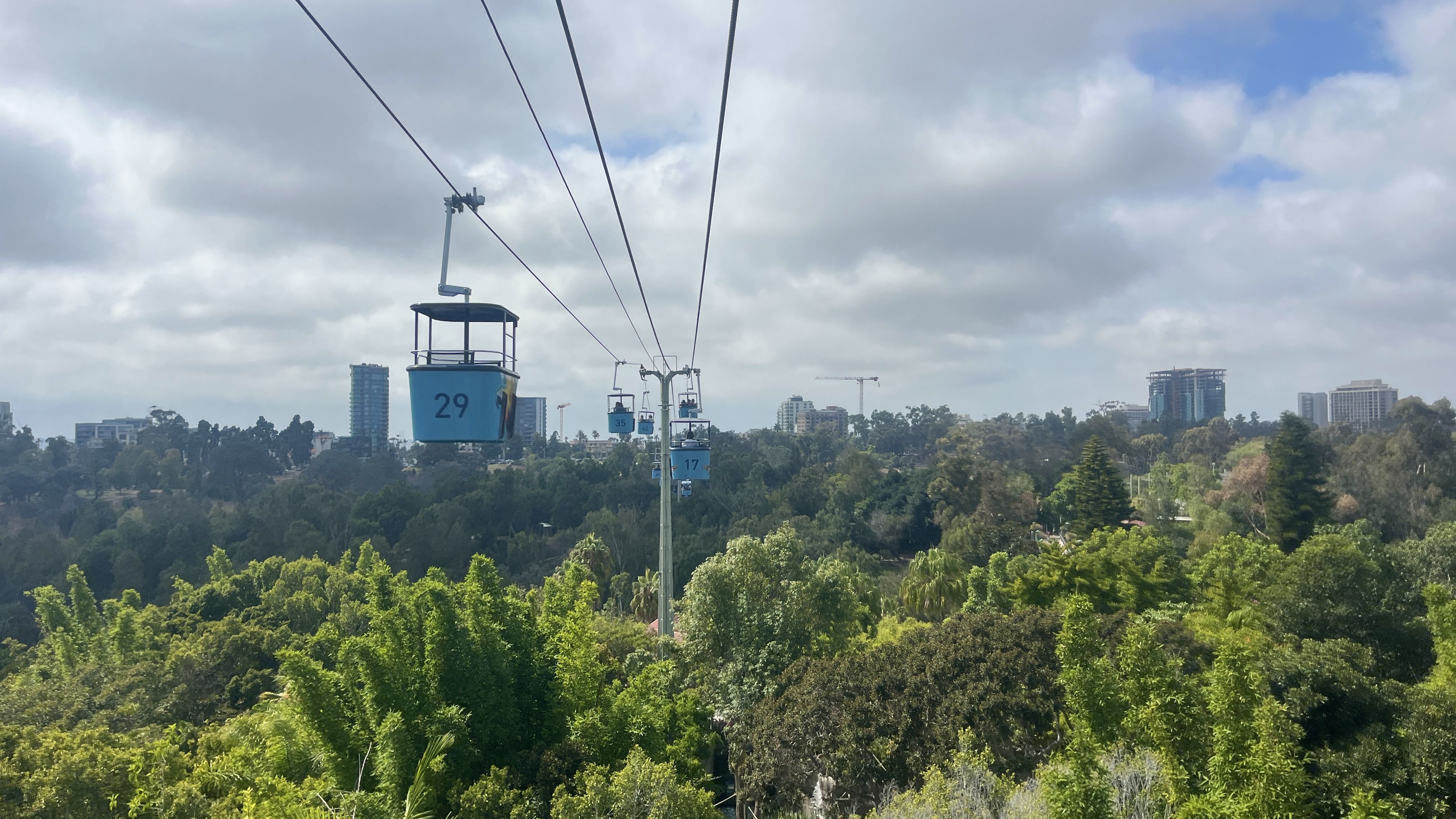
🍸 Kate is wishing every Monday afternoon could be spent with icy dirty martinis and chimichurri steak skewers on Born & Raised's rooftop.
This newsletter was edited by Geoff Ziezulewicz.
Sign up for Axios San Diego