Axios San Antonio

August 11, 2026

๐ All aboard the Tuesday train.
โ๏ธ Today's weather: Sunny, with a high nearing 100 but a "feels like" temperature up to 107.
- More on that below.
๐ Happy birthday to our member Joanne Fitzgerald!
๐ Our members are the driving force behind our newsroom. Join them today.
Today's newsletter is 1,007 words โ a 4-minute read.
1 big thing: ๐ก๏ธ Heat illnesses are up
Heat-related illnesses have been on the rise this summer in San Antonio, city data shows, as some of the hottest temperatures of the year are expected this week.
Why it matters: Even with fewer 100-degree days so far this year than last, high heat indices are dangerous on their own โ and can offer a different measure of how hot and miserable our summers feel.
How it works: Mixing in relative humidity with the actual air temperature, the heat index is a measure of how hot it really feels โ what we sometimes call the "feels like" temperature.
The big picture: Late July through mid-August is typically the hottest time of the year here, Harrison Tran, meteorologist with the National Weather Service's San Antonio/Austin office, tells Axios.
By the numbers: There have been at least 338 cases of heat-related illnesses so far this year in San Antonio, per a city dashboard maintained by Metro Health.
- By the same time last year, there were 279 heat-related illnesses.
- The dashboard shows how the illnesses typically rise alongside the average weekly heat index.
Zoom out: The NWS office has so far recorded just one triple-digit day in San Antonio this summer.
- But the last two weeks of July have seen an average heat index above 101 degrees, per the city dashboard.
What they're saying: "Especially for years like this one where there is a lot of humidity โฆ it might actually disguise the heat-related concerns that are present" if one is only considering the temperature, Tran says.
Zoom in: Heat-related illnesses in San Antonio are largely cases of heat exhaustion, which causes lethargy and can appear before heatstroke, per University Health. Symptoms include dizziness and headache.
- Many adults don't drink enough water, per Jennifer Northway, director of injury prevention at University Health.
- "Adults need to increase their fluid intake by drinking cool, nonalcoholic beverages regardless of their activity level," Northway said in a statement.
What's next: We're on track to have a warmer than average August, federal forecasters say.
2. The grid's climate stress test
This heat is putting the electric grid under a real-world stress test.
Why it matters: Successive summer heat waves are forcing utilities in Texas and beyond to rethink how they prepare the grid for longer and more frequent periods of extreme stress โ and the AI-driven electricity boom.
State of play: Heat waves create a double challenge by increasing electricity demand for air conditioning while reducing the efficiency of some power plants.
Zoom in: Texas has become one of the nation's biggest proving grounds for grid modernization since the deadly 2021 winter storm exposed major weaknesses.
- The Electric Reliability Council of Texas (ERCOT), which operates most of the state's grid, has since handled record seasonal demand with the help of rapid battery expansion, mandatory weatherization, improved forecasting and expanded demand response.
Yes, but: ERCOT told state lawmakers that statewide electric demand will reach about 175,000 megawatts by 2032 โ almost double the record number that was set last month.
Between the lines: "Texas has been enormously proactive" in building transmission and adding solar, wind and batteries, retired UC Berkeley electrical engineering professor Sascha von Meier tells Axios.
- But rapid growth in electricity demand from AI data centers is creating a new challenge, she says.
Zoom out: A growing number of U.S. utilities are linking home batteries, solar panels and EV chargers through software to virtual power plants that can supply electricity or reduce demand during periods of grid stress.
3. Sensor could better detect grid trouble

Speaking of the grid: University of Texas researchers say they've developed a new tool that could help spot problems on power lines before they lead to outages.
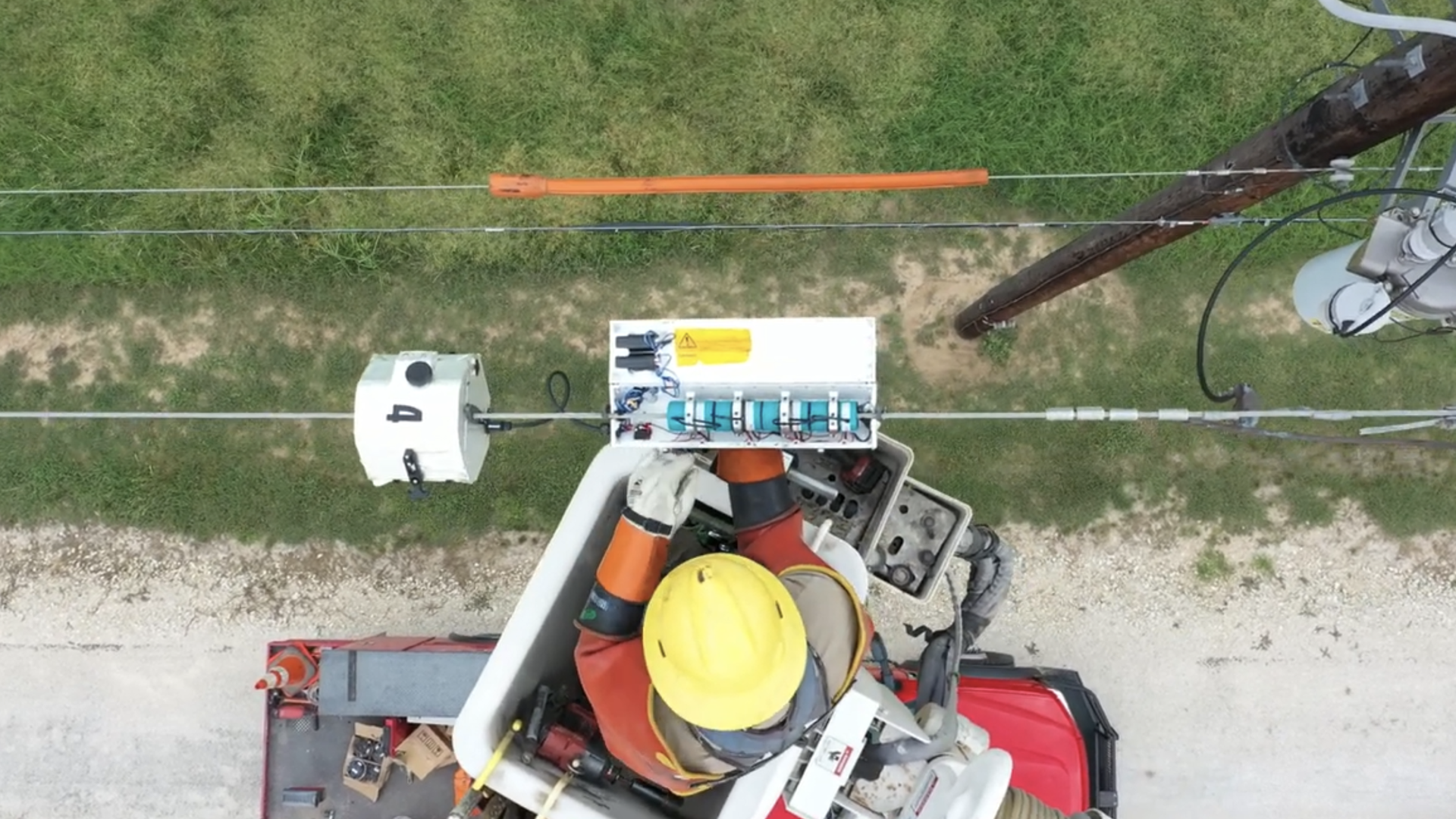
How it works: Engineers at UT have spent the past several years developing a "smart sensor" that clips directly onto power lines.
- The device continuously monitors electrical activity and can detect subtle changes that conventional equipment often misses, like when a tree touches a power line.
- That could allow utility crews to identify hazardous vegetation before it causes an outage or sparks a wildfire, instead of relying primarily on scheduled tree trimming every several years.
By the numbers: During a field test near Seguin, the sensors detected 34 issues on lines in one month โ compared with three identified by conventional monitoring equipment, per the researchers.
4. Inside the Loop
๐ญ Singhs Vietnamese has closed both its locations after eight years in business. (News 4)
๐ Amid an ongoing salmonella outbreak and national investigation linked to affected jalapeรฑos, H-E-B has removed some ready-to-eat meals from shelves. (MySA)
๐ซ Mead Elementary School in Northside ISD has elevated its test scores to avoid intervention from the state that could have led to its closure. (Express-News ๐)
5. How extreme heat is affecting our lives

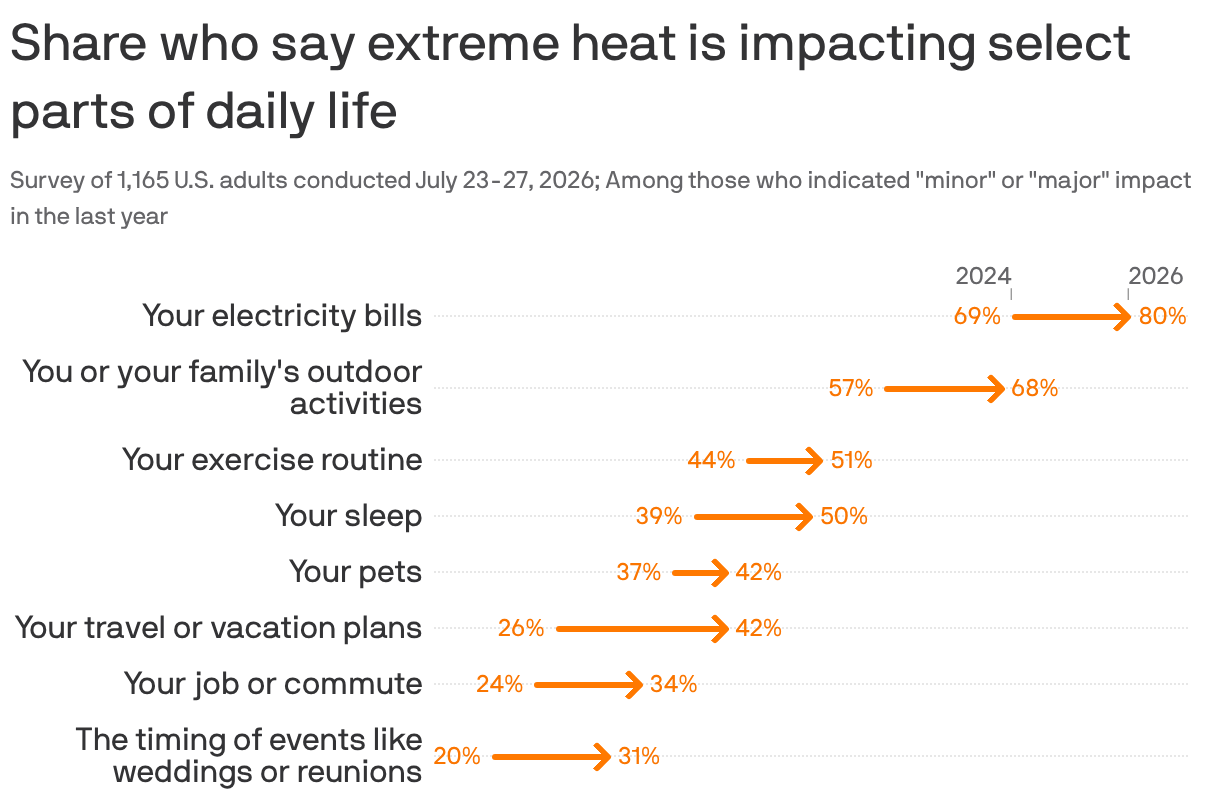
90% of Americans now say that extreme heat has had at least a minor impact on their lives broadly, up from 83% two years ago.
Why it matters: The findings, from the AP-NORC Center for Public Affairs Research, suggest that people are increasingly aware of extreme heat's impact.
By the numbers: 80% now say that extreme heat has had at least a minor impact on their power bills, up from 69% in 2024.
- 68% say it's affecting their outdoor activities, up from 57%.
- 42% say it's affecting their travel or vacation plans, up from 26%.
How it works: The poll of 1,165 adults was conducted July 23-27 with a margin of error of +-3.7 percentage points.
๐ฌ Tell us: Does the San Antonio heat change how you go about your summer?
- Hit reply to let us know. We may feature your response in a future newsletter.
Thanks to our editors Astrid Galvรกn and Bob Gee.
โ๏ธ Madalyn is thinking this weather could be put to good use by making sun tea โ a childhood favorite.
๐ Megan takes fewer long walks in the summer here, which makes her sad.
Sign up for Axios San Antonio