Axios Portland

June 22, 2026


🤗 It's Monday. We've missed you!
☀️ Today's weather: Sunny, high 93, low 62.
🎂 Happy belated birthday to our Axios Portland members Karen Oglesby and Ilene Burkhardt!
Today's newsletter is 826 words — a 3-minute read.
1 big thing: 📖 Oregon's radical roots, examined
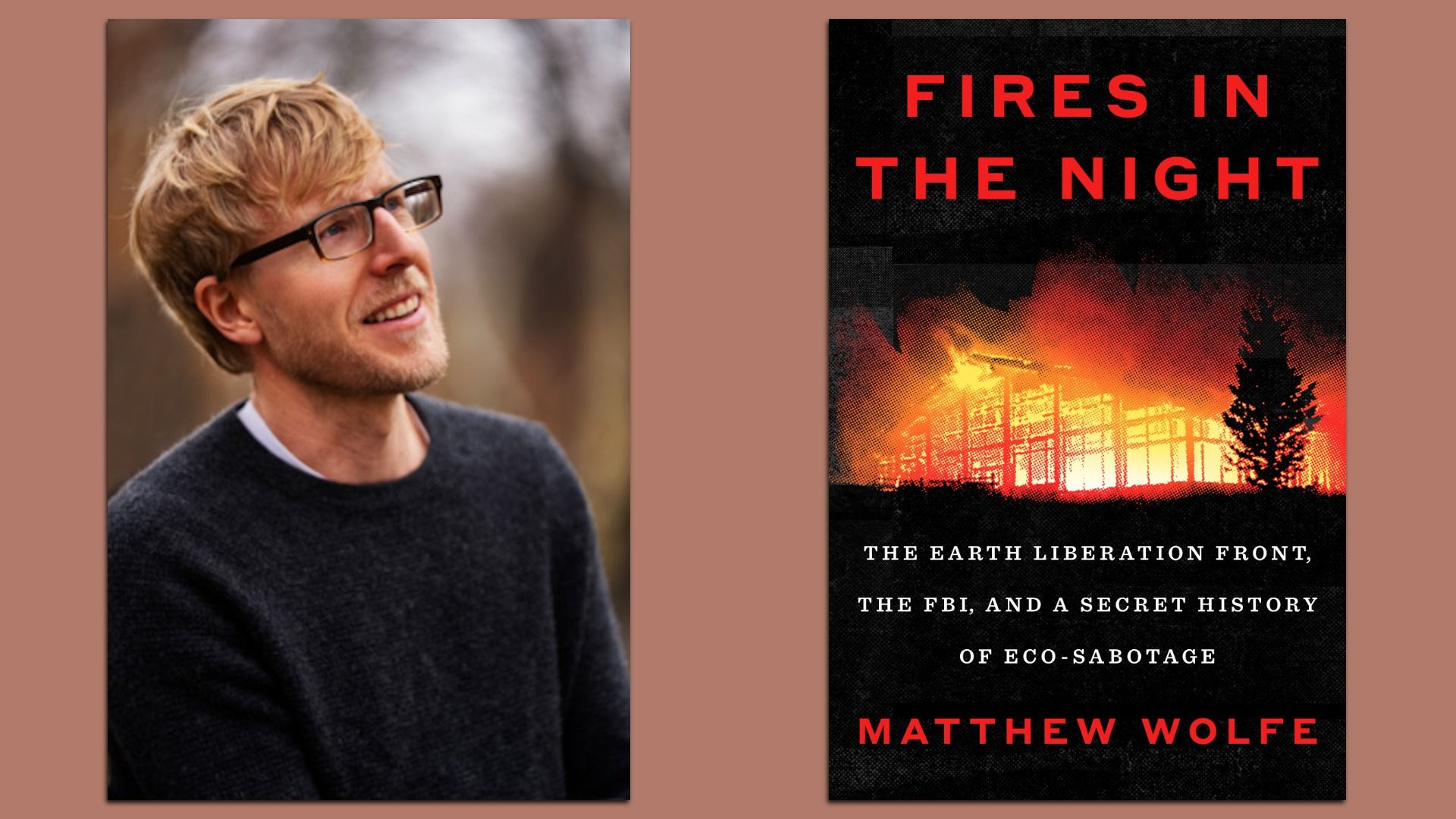
The rise and fall of the Earth Liberation Front (ELF), an environmental movement that grew out of Oregon, is chronicled in author Matthew Wolfe's new book, "Fires in the Night," which comes out tomorrow.
The big picture: Wolfe details how the underground group became frustrated with mainstream environmentalism and embraced arson and sabotage in the '90s and early aughts as a way to stop what they saw as unchecked ecological destruction.
- The ELF gained dedicated members like Kevin Tubbs and Stanislas Meyerhoff, Oregonians who ultimately served lengthy prison sentences.
What he's saying: "This story has the arc of a classical tragedy," Wolfe told Axios. "People coming together to do this ambitiously righteous thing, then collapsing and destroying themselves through hubris."
- "Fires in the Night" is also about post 9/11 politics, capitalism and how a renewed appetite for direct action is fueling newer climate groups like the Extinction Rebellion and Sunrise Movement today.
Zoom in: The book starts in Eugene. There, the Earth First! Journal and the University of Oregon spawned a generation of activists who believed mainstream environmental groups had become too willing to compromise with polluters and politicians, Wolfe said.
- Activists routinely clashed with the timber industry over the fate of the Willamette National Forest. Many staged sit-ins, blockades and other forms of "monkeywrenching" — like pouring sugar into bulldozer tanks or spiking trees — to deter logging.
Others took it a step further.
- Wolfe's reporting features interviews with former members who splintered off to form the ELF after deciding non-violent measures weren't stopping deforestation.
- They wanted to hit the wallet of companies they blamed for ecological destruction. The group set fire to fleets of SUVs at car dealerships and, most notably, burned down buildings at the Vail Ski Resort in Colorado to protest its expansion.
- At one point, the FBI listed the ELF as the biggest, most active terrorist group in the U.S. until the movement collapsed under the weight of arrests, infighting and distrust.
If you go: Wolfe will discuss the book in conversation with journalist Leah Sottile at Powell's Books on July 1 at 7pm.
News for your community

Every day, we work to bring you the local stories, insights and updates that help you stay connected to your community.
📍 Become a member today. Your support helps us continue delivering trusted local reporting and keeps our newsroom focused on the stories that matter most.
Help keep local journalism strong where you live.
2. 😱 We can recycle what now?

That pizza box you've been throwing away? You can recycle it now.
- Portland recently updated its recycling guidelines and a few common household items have new rules.
🍕 The biggest change is that pizza boxes can now go in your blue bin, so long as they're empty and not too saucy (in that case, compost it).
- Yes, but: Plastic pizza tables, grated cheese and red pepper packets as well as greasy paper liners go in the trash.
🧃 A few other updates: Plastic screw caps can remain on plastic bottles when you toss 'em. Caps on cardboard cartons are still not accepted. Put those in the trash.
- Aerosol cans must be completely empty before you can recycle them. Make sure to press all the way down on the nozzle until nothing comes out. Partially full cans can explode in the recycling facility and injure workers.
📝 Plus: Shredded paper goes in the garbage, unless you take it to a recycling drop-off site.
🤖 The bottom line: These changes are meant to standardize recycling rules across the state as Oregon moves to modernize more of its recycling facilities.
- New technology — including AI-powered sorting equipment — can do a better job separating recyclable materials from contaminants, making it easier to recover more of what residents put in the bin.
3. Rose City Rundown

📈 Videos of arrests circulating on social media are offering signs that immigration enforcement is increasing in Oregon. Immigrant advocacy groups say they've confirmed dozens of new cases. (The Oregonian)
💿 President Trump said in a Truth Social post that Intel has a chipmaking deal with Apple — a development that could have a big impact on Oregon's semiconductor industry.
- Neither company has confirmed the report. (Portland Business Journal)
💼 Under Armour said it plans to close its 70,000-square-foot Southwest Portland office and will shift some roles to Baltimore and New York. (KATU)
🏛️ Portland City Council approved an $8.5 billion budget after contentious debate last week, but many lawmakers said they were displeased with Mayor Wilson's cuts to city jobs and public safety programs. (OPB)
4. 🧐 Where's Joby?
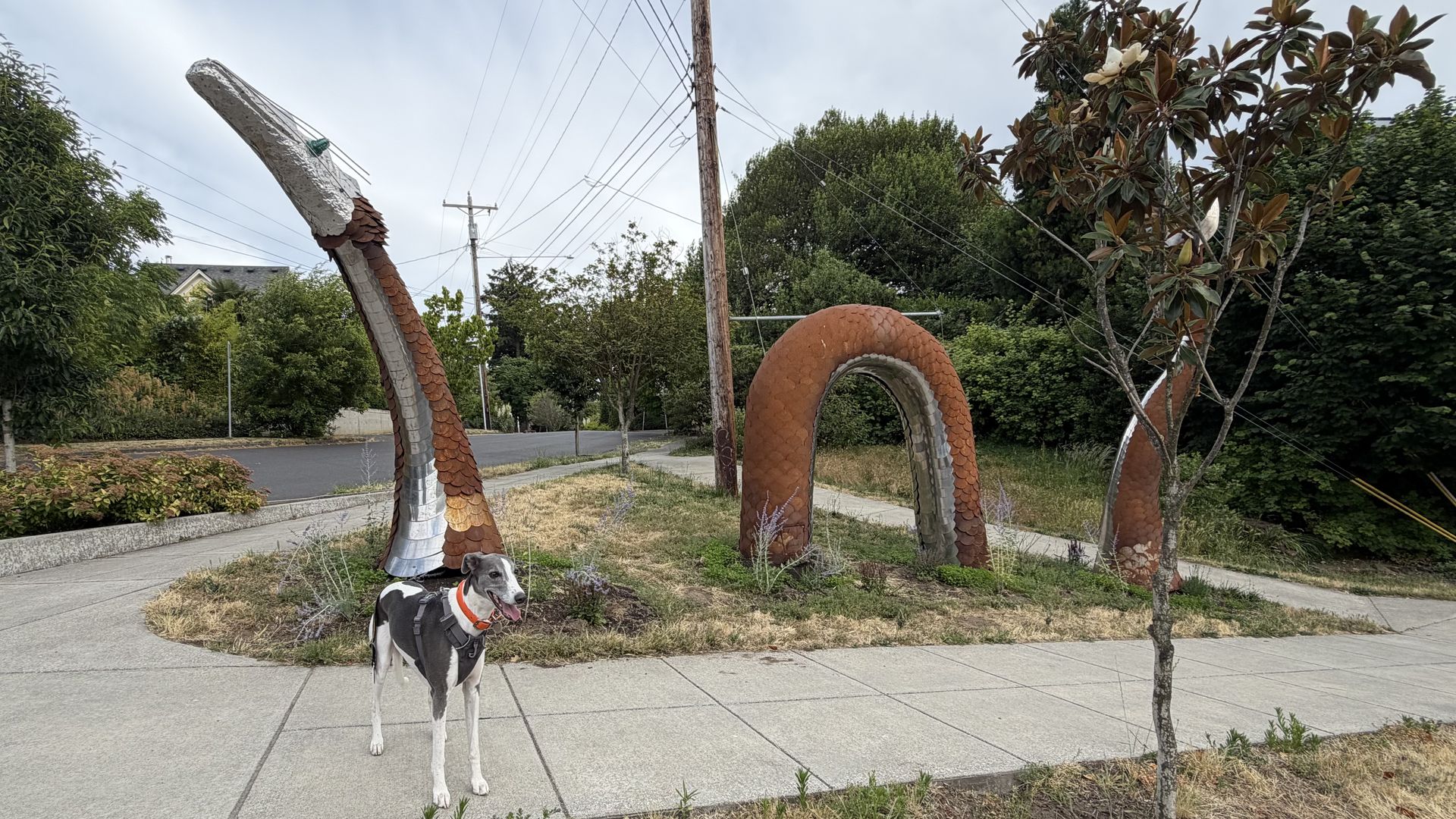
He's back! My dog Joby is hiding somewhere in Portland and it's your job to find out where.
🐉 Do you know where this mystical creature lives?
- Tell me the exact intersection. Bonus points if you include some of its lore.
📧 Send us your guesses! The first five readers to get it correct will win a shout out in this very newsletter and a fist bump if we ever see you in person.
- The answer will be revealed Wednesday.
Hit reply
🤕 Kale is still sore from last week's hike.
😁 Meira is happy to have replaced her office chair with a yoga ball.
This newsletter was edited by Geoff Ziezulewicz.
Sign up for Axios Portland
