Axios Phoenix

April 21, 2026


It's Tuesday. Make it a great one!
☀️ Today's weather: Sunny, high of 95.
🚘 Our members are the driving force behind our newsroom. Join them today.
Today's newsletter is 895 words — a 3.5-minute read.
1 big thing: Honeywell picks Phoenix for jet engines

Honeywell is expanding its Phoenix manufacturing operations to include engines powering the planes that the Navy may soon use to train pilots.
The big picture: Honeywell announced yesterday that it will begin manufacturing F124 jet engines at its Phoenix Engines campus if the plane it powers is chosen for a Navy training program.
- The Fortune 500 aerospace company chose the Valley for this project because the engine was originally designed and tested here, per John Turco, general manager for military turbofan engines at Honeywell Aerospace.
- It requires expensive, specialized facilities, which Honeywell already has in Phoenix and San Tan, he told us.
State of play: The engines will be used for Beechcraft M-346N aircraft.
- Honeywell plans to begin producing the engines next year and hopes to produce as many as 500 over 13 years.
Yes, but: F124 production will be dependent on whether the U.S. Navy chooses the Beechcraft for its Undergraduate Jet Training System.
- The Navy is looking for replacements for its T-45 training jets with a combination of aircraft and simulators, and it is looking to acquire up to 216 planes.
- The F124-powered Beechcraft is one of four planes under consideration, with a decision expected next year.
- The engine has other potential uses, including in unmanned aerial vehicles, Honeywell spokesperson Adam Konowe told Axios, but in aerospace "you only build for the orders you have."
Catch up quick: F124 engines are currently repaired in Phoenix, Turco told Axios.
- From 2012 to 2014, Honeywell manufactured 68 of the engines in Phoenix for the Israeli Air Force to qualify for federal Foreign Military Financing procurement.
Zoom out: The Valley will soon be home to F124 producer Honeywell Aerospace, which is spinning off into an independent company based in Phoenix.
2. Tortillas for healthy babies


California now requires folic acid in corn tortillas — a staple in many Latino households — in a move that could soon impact Arizona and other states.
Why it matters: A quiet change to corn tortillas could reshape grocery shelves nationwide — while helping prevent serious birth defects that disproportionately affect Hispanic babies.
State of play: California's requirement took effect Jan. 1, but its impact is only now becoming clear as manufacturers standardize products and other states weigh similar moves.
- The law requires folic acid in corn masa flour used in tortillas and similar items — closing a long-standing gap after decades of fortification in enriched breads and other grains.
The big picture: Folic acid, a B vitamin, prevents serious birth defects of the brain and spine early in pregnancy.
- Since 1998, the FDA has required folic acid in enriched grain products like bread and pasta — helping reduce those defects significantly.
Zoom in: Large tortilla makers are already standardizing production across the U.S. rather than maintaining separate lines, said Jim Kabbani, CEO of the Tortilla Industry Association.
- Consumers are likely already seeing fortified tortillas on shelves outside California.
Mission Foods told Axios it has transitioned 100% of its U.S. corn tortillas to include folic acid, after starting the process in 2024.
The shift is drawing a divide within the tortilla industry:
- Large manufacturers can scale fortification nationwide, while smaller, artisanal makers are often exempt — and some have raised concerns about taste and tradition.
- But Kabbani said any taste difference is "not perceptible" for most consumers.
3. Chips & salsa: Pinal County OKs data center zoning

⚡ The Pinal County Planning and Zoning Committee voted to rezone a 3,300-acre tract of vacant land for a data center hub near Eloy. (Phoenix Business Journal)
🗳️ A judge ruled that the Board of Supervisors must return information technology staff to Maricopa County Recorder Justin Heap. The elections employees had been at the center of a year-long dispute. (Associated Press)
💧 Republican legislative leaders met with the Trump administration last week to discuss possible solutions to the Colorado River water crisis. (KJZZ)
🏳️🌈 Barracks, a historic gay bar in Palm Springs, is relocating to Phoenix's Melrose District. (AZcentral)
Editor's note: This newsletter has been corrected to reflect that the tract of land near Eloy rezoned for a data center hub is more than 3,300 acres (not 3,300 square feet).
4. 🐆 Meet Himdam
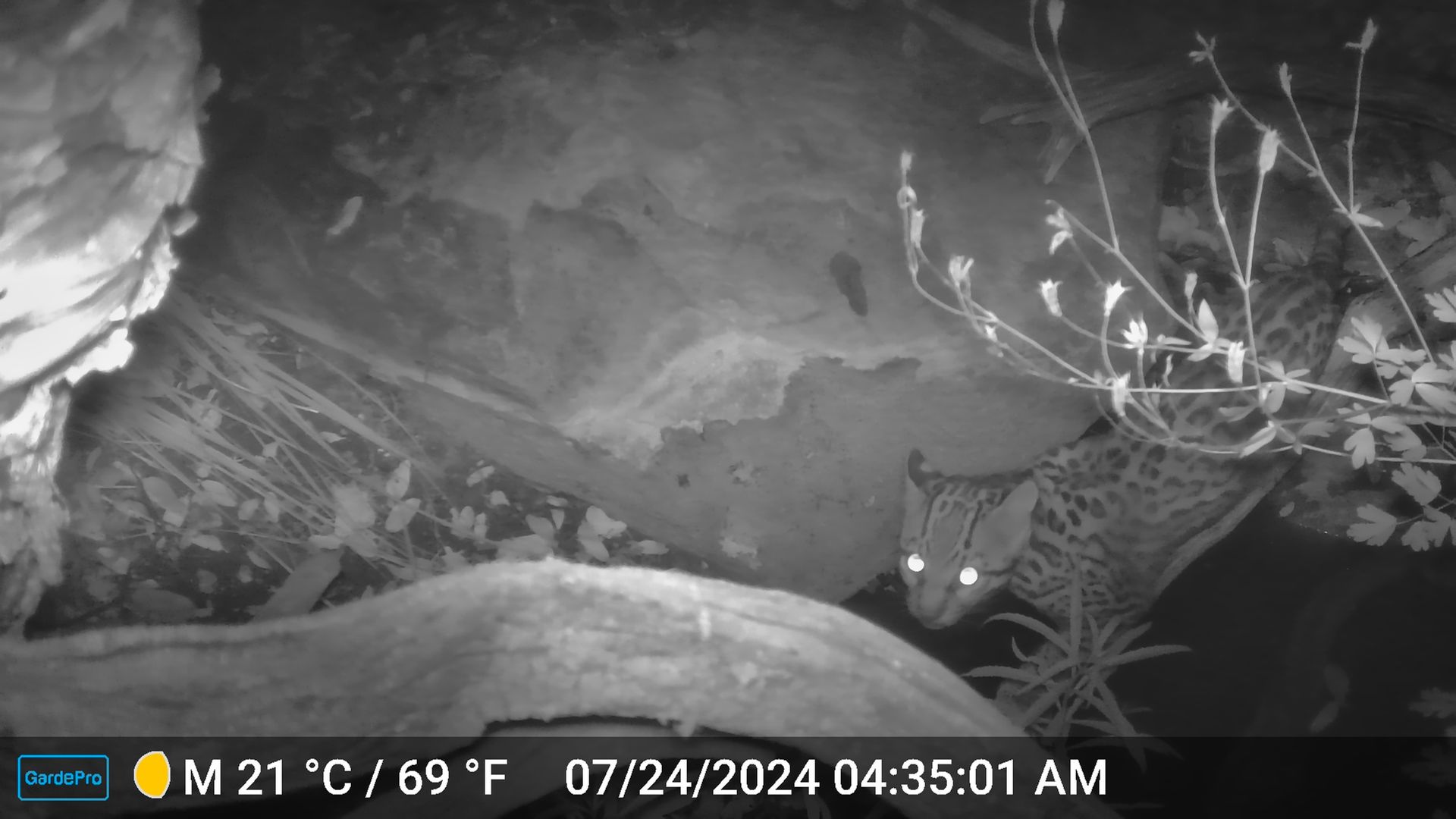
A rare, endangered ocelot that's been documented roaming through southern Arizona for the past two years has a new name — Himdam, which means "traveler" in the O'odham language.
The big picture: Himdam was first spotted in the Atascosa Highlands in 2024 and has since been detected in the Whetstone Mountains, Patagonia Mountains and Santa Rita Mountains, per the Center for Biological Diversity.
- A study published last month found that the big cat traveled 111 miles across four mountain ranges over the course of more than a year. It's the longest documented movement of an ocelot.
Zoom in: Students in the San Xavier school district on the Tohono O'odham Nation, which encompasses areas where the ocelot's been spotted, pitched the name "Himdam" because "he's always on the move," said Isaac Valencia, a member of the district's Voices of Our Youth program.
What they're saying: "Our youth took the time to learn, reflect and name this animal in our language, honoring both its journey and our responsibility to protect it," said Austin Nunez, chair of the San Xavier District.
🐱 Jeremy is disappointed to learn that Arizona doesn't allow people to own ocelots as pets. Salvador Dalí would be outraged.
🌮 Jessica checked the Mission corn tortillas in her fridge and confirmed they do include folic acid. She never noticed a difference!
Thanks to Jessica for editing.
Sign up for Axios Phoenix
