Axios Media Trends

November 09, 2021

1 big thing: NYT backs new tech unicorn

Illustration via OpenWeb
2. Sports surges in U.S. news diets
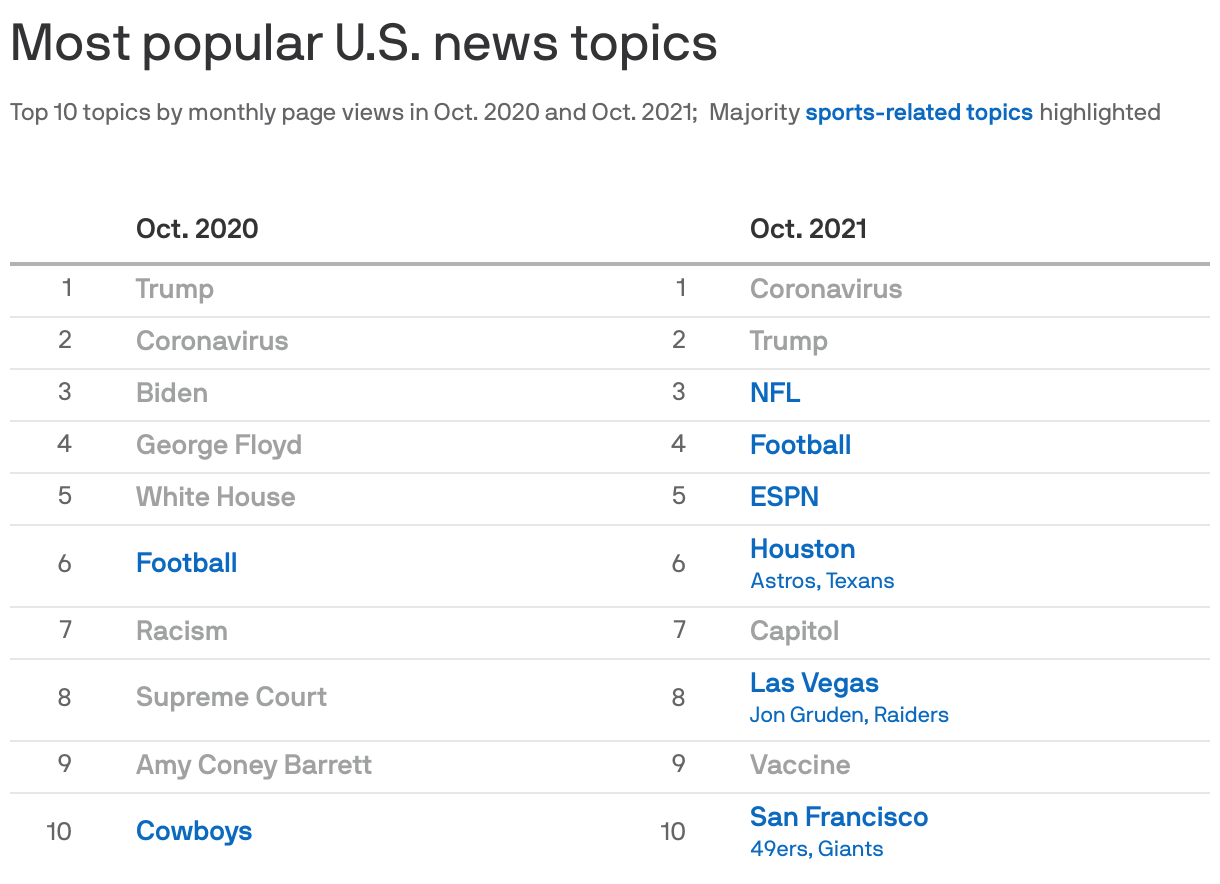
Politics and hard news have moved to the back burner of the national conversation, with sports — and particularly the NFL — generating more interest, new data shows.
Why it matters: It's a huge shift from a year ago, when most of the top stories in the U.S. were about hot-button political topics, Axios' Neal Rothschild and I write.
- Sports have climbed to the top of Americans' news diets, according to pageview data from Taboola, a content recommendation company known for its boxes of thumbnail ads, which pulled data from 1,400 news sites.
- On the day of and the day following the House passage of the bipartisan infrastructure bill, there were more Google searches for Aaron Rodgers than Joe Biden, according to Google Trends data.
The big picture: Simultaneously, interest in politics has plunged.
- Social media interactions (likes, comments, shares) on politics stories over the last 8 weeks have dropped 37% compared to late spring (before even the Afghanistan news began to ramp up), according to exclusive data from NewsWhip.
- Engagement on the @POTUS Instagram account has steadily waned. Interactions in October were down 78% from February and 59% from June, according to CrowdTangle data.
Zoom out: Coronavirus remains the top news topic, per Taboola, but interest is falling.
3. Privacy biz booming

Illustration: Sarah Grillo/Axios
4. Kids content arms race heats up
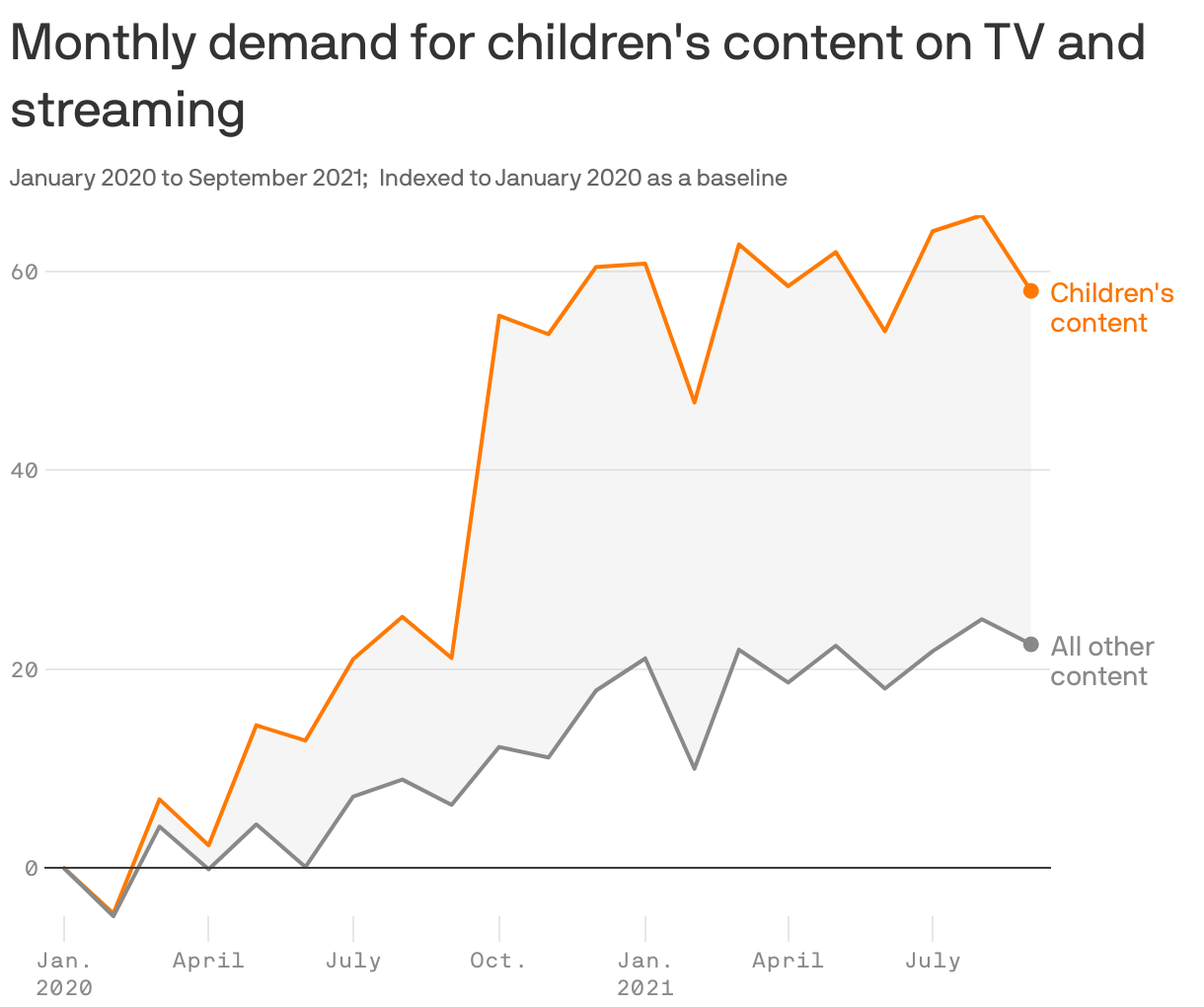
Kids and family programming deals are surging as streaming companies look to double down on content that serves a highly-engaged cohort of younger users.
Why it matters: Kids content used to be perceived as a tool to stop users from cancelling streaming accounts. Now it's a key driver for new user growth.
- "I think the big thing they (streamers) have realized is that the value of kids and family content goes beyond retention," said Chris Williams, founder and CEO of Pocketwatch Inc., a kids content firm.
- ViacomCBS CEO Bob Bakish told investors on an earnings call last week that kids and family content "was the top genre on Paramount+ for both acquisition and engagement in the quarter."
Driving the news: Pocketwatch has hired financial advisory firm Lazard as it explores potential new investments or a possible sale.
- The firm, which has exclusive licensing and production deals with major kids YouTube franchises, has received inbound interest about a possible sale as well as new investment, according to two sources familiar with the company's business.
- The Wall Street Journal reported about the effort last month.
What to watch: YouTube has proven a breeding ground for streamers looking to adopt franchises that can easily sell toys and other products.
- Merchandise from the Ryan's World franchise, formerly called Ryan's ToysReview, generated more than $250 million in sales in 2020.
The big picture: The streaming arms-race has put a premium on digital content studios, particularly those that cater to kids programming.
- Moonbug Entertainment, the UK-based digital content company that's home to the YouTube streaming hit "Cocomelon," sold for roughly $3 billion last week to an unnamed media company backed by Blackstone and led by former Disney executives Tom Staggs and, Deadline reported on Monday.
- Roald Dahl Story Company (RDSC), the UK-based firm that owns and manages the rights of the storied works from the late British author Roald Dahl, was acquired by Netflix in September.
- Alvin and the Chipmunks owner Bagdasarian Productions has engaged in sale talks, per CNBC, including with big streamers like ViacomCBS.
5. Alphabet hits $2 trillion


The combined market value of the six most valuable American companies is now more than a quarter of the entire value of the S&P 500.
Why it matters: These companies' gains accelerated in the past year, as the pandemic's initial shock receded and businesses like e-commerce, gaming, cloud storage and digital advertising exploded.
The big picture: Alphabet is the third U.S. company to surpass a $2 trillion market cap, following Apple in 2020 and Microsoft earlier this year. Amazon is closing in.
- Yes, but: Market capitalization is built on market sentiment as much as business fundamentals, and can be vulnerable to big swings.
What to watch: Facebook, now called Meta, joined the $1 trillion club over the summer, but has since seen its value drop below the $1 trillion mark in response to changes to Apple's privacy policies and its recent coverage of a whistleblower's leaked reports documenting harms to users.
6. The first-ever media literacy class by law
Axios Media Trends

Sara Fischer’s inside look at the forces reshaping media.