Axios Media Trends

July 16, 2024

✏️ Today's Media Trends, edited by Sheryl Miller, is 2,091 words, an 8-minute read. Sign up.
🏅Axios is headed to Paris for the 2024 Olympics. I'll be on the ground July 31–Aug. 10. Click here to find time to connect with our team or email me ([email protected]) to learn more about our events.
📕 Vance gone viral... The film adaptation of J.D. Vance's best-selling memoir "Hillbilly Elegy" grew +1,180% in the U.S. on Netflix yesterday, per Luminate.
- Lifetime print unit sales of his autobiography are 1.6 million through July 6, according to market research firm Circana. The book, originally published in 2016, is what pushed Vance into the national spotlight. Timeline.
1 big thing: 🗞️ Local look-alikes
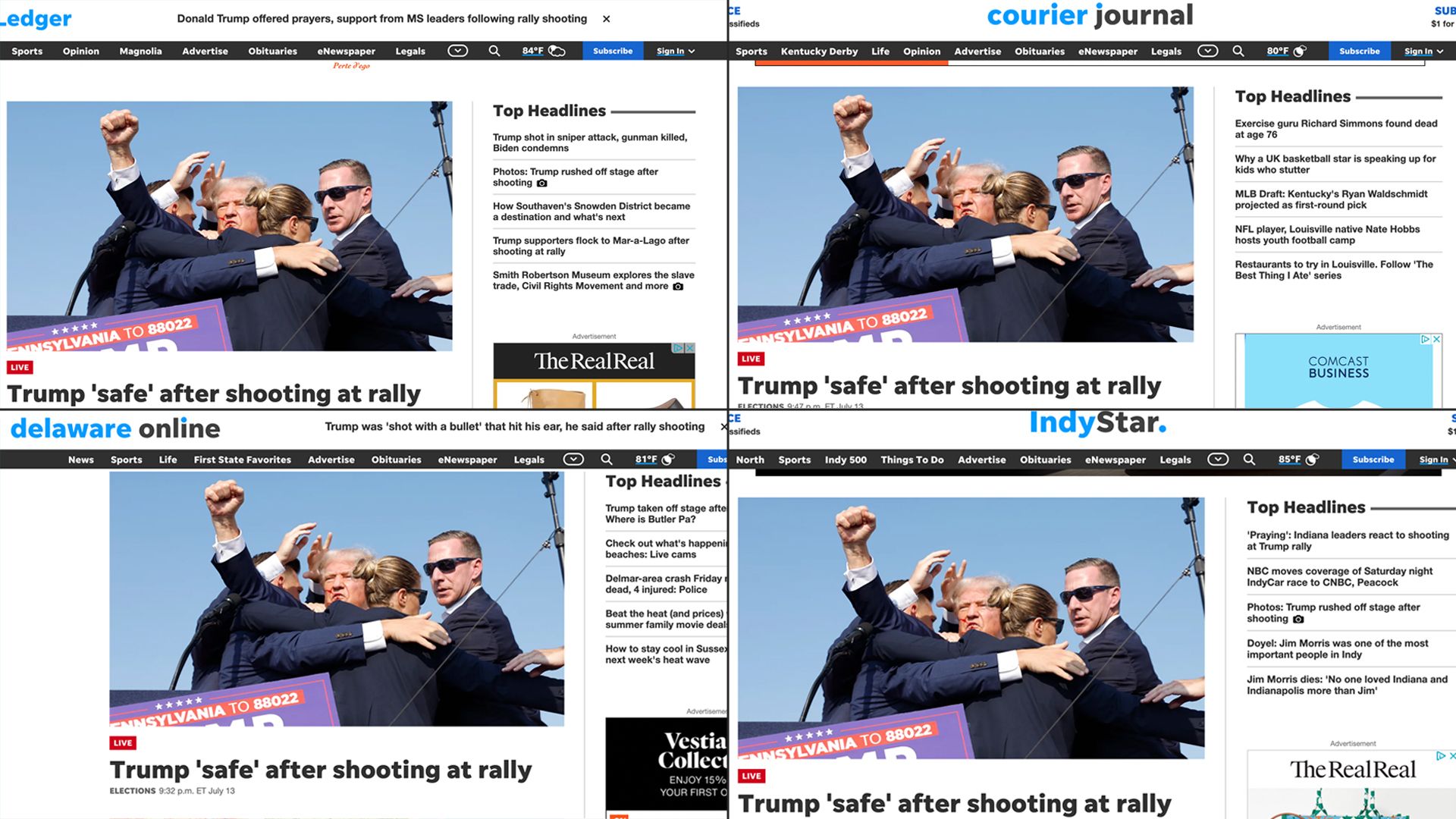
There was a striking similarity among local news coverage of the Trump rally shooting Saturday night, with sister publications from major local holding groups featuring the same home page stories, photos and headlines, and then updating them, mostly in unison, as the story developed.
Why it matters: In breaking news moments, it's easy to see just how much news is commoditized, but that is especially true at the local level, where papers are under-resourced and understaffed, especially on weekends.
State of play: Axios analyzed the home pages and lead stories of the largest news website in each U.S. state from 9:30 p.m. to midnight on Saturday.
- Many local outlets posted the same stories, photos and headlines aggregated from a central desk at their parent company, such as Gannett, Lee Enterprises or Advanced Publications.
- Nearly half of the local sites analyzed featured AP wire reports as the main stories on their home pages detailing what happened, instead of original reports.
- Independently owned papers, such as the Baltimore Sun and Minneapolis Star Tribune, featured original home pages, but still linked out to aggregated wire reports from AP for their main stories.
- Several of Axios' local newsletters also featured reporting and links back to our site's national coverage Sunday morning.
Zoom in: The home page for every local site featured Trump's assassination as its main story as of 11:30p.m., but some sites took hours to update.
- NJ.com, for example, was posting stories that covered the incident but did not update its homepage with a story about the shooting until late Saturday night, hours after the shooting. That decision was notable given that Trump was scheduled to depart the rally for New Jersey that evening.
The other side: Gannett spokesperson Lark-Marie Antón noted that by centralizing newsgathering operations during breaking events, news groups ensure the most accurate information is delivered to their local markets quickly and efficiently.
- Sometimes that system can also benefit local papers within the network. USA Today was one of the first outlets to identify the name of the shooter early Sunday morning, and the local sites within its network were able to run the update immediately.
2. Part 2: The problem with viral photos
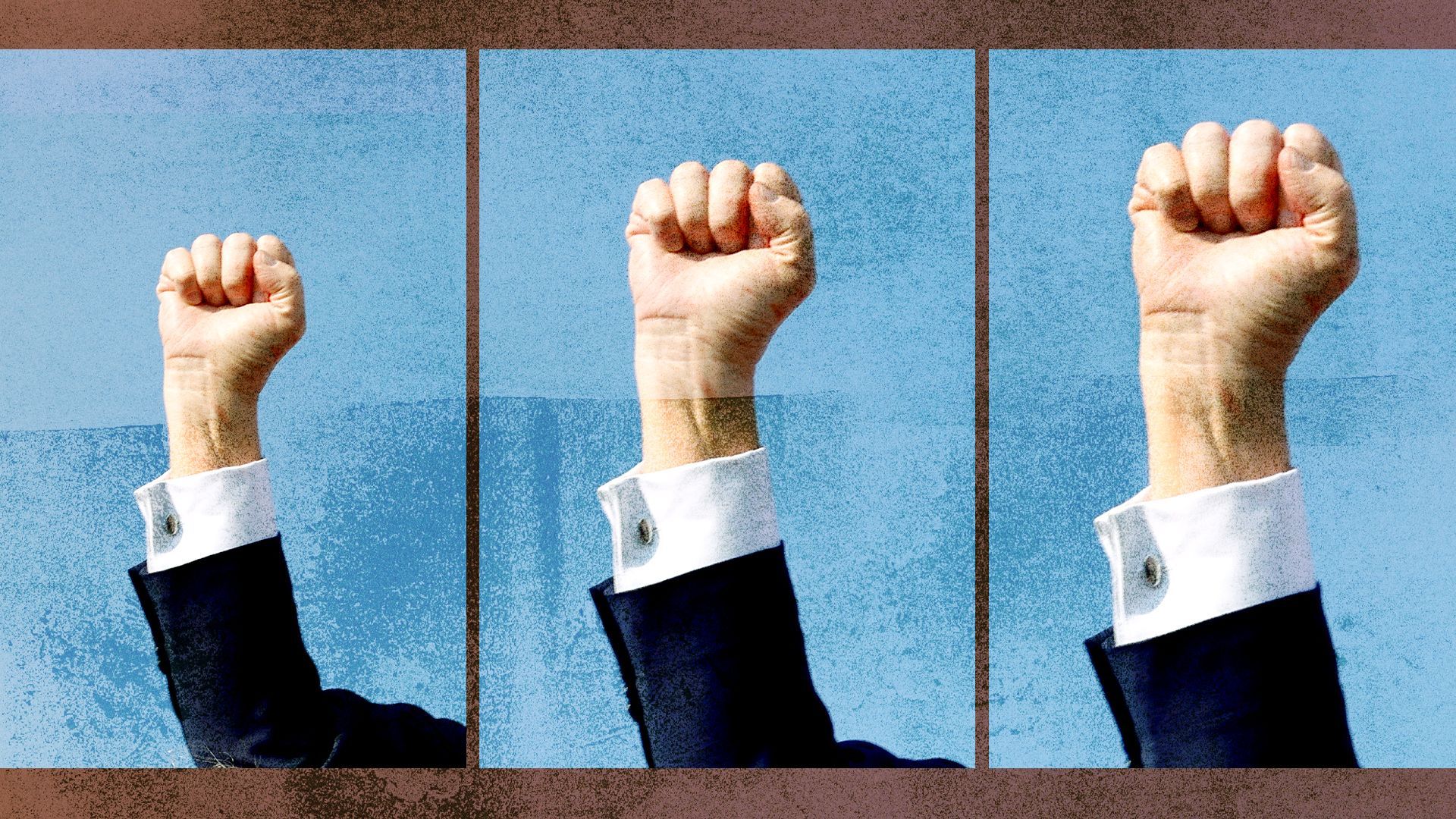
30 of the top 50 local news websites featured the historic photo, or a very similar shot, from AP's Evan Vucci of a defiant Trump raising his fist in the air on their homepage Saturday evening.
- Meanwhile, national outlets like the Washington Post and the New York Times featured pictures from their own photographers, Jabin Botsford and Doug Mills, on their homepages. The NYT's Mills took the incredible photo of a bullet whizzing by Trump's ear that's gone viral online.
- Other local homepages featured images from other AP photographers, such as Gene Puskar, or other photos from Vucci. Several featured photos from Getty's Anna Moneymaker, who took the emotional shot of Trump bleeding and on the ground.
The big picture: With only a limited number of outlets attending the rally, many national newsrooms also had to rely on reporting, video and photography on the ground from a few major outlets.
Yes, but: The overuse of the same photos, eyewitness videos and reporting from the ground can also pose risks.
- Multiple photographers worried privately in conversations with Axios' Aïda Amer that the viral images from the rally could turn into a kind of "photoganda," with the Trump campaign using them to further their agenda despite the photographers' intent of capturing a news event.
- A photo editor and photographer from a major news outlet said the "amount that publications have been using Evan's photo is kind of free PR for Trump in a way, and it's dangerous for media organizations to keep sharing that photo despite how good it is."
- Go deeper
3. 🎭 Redstone on her next act: "It was time for my family to move on"
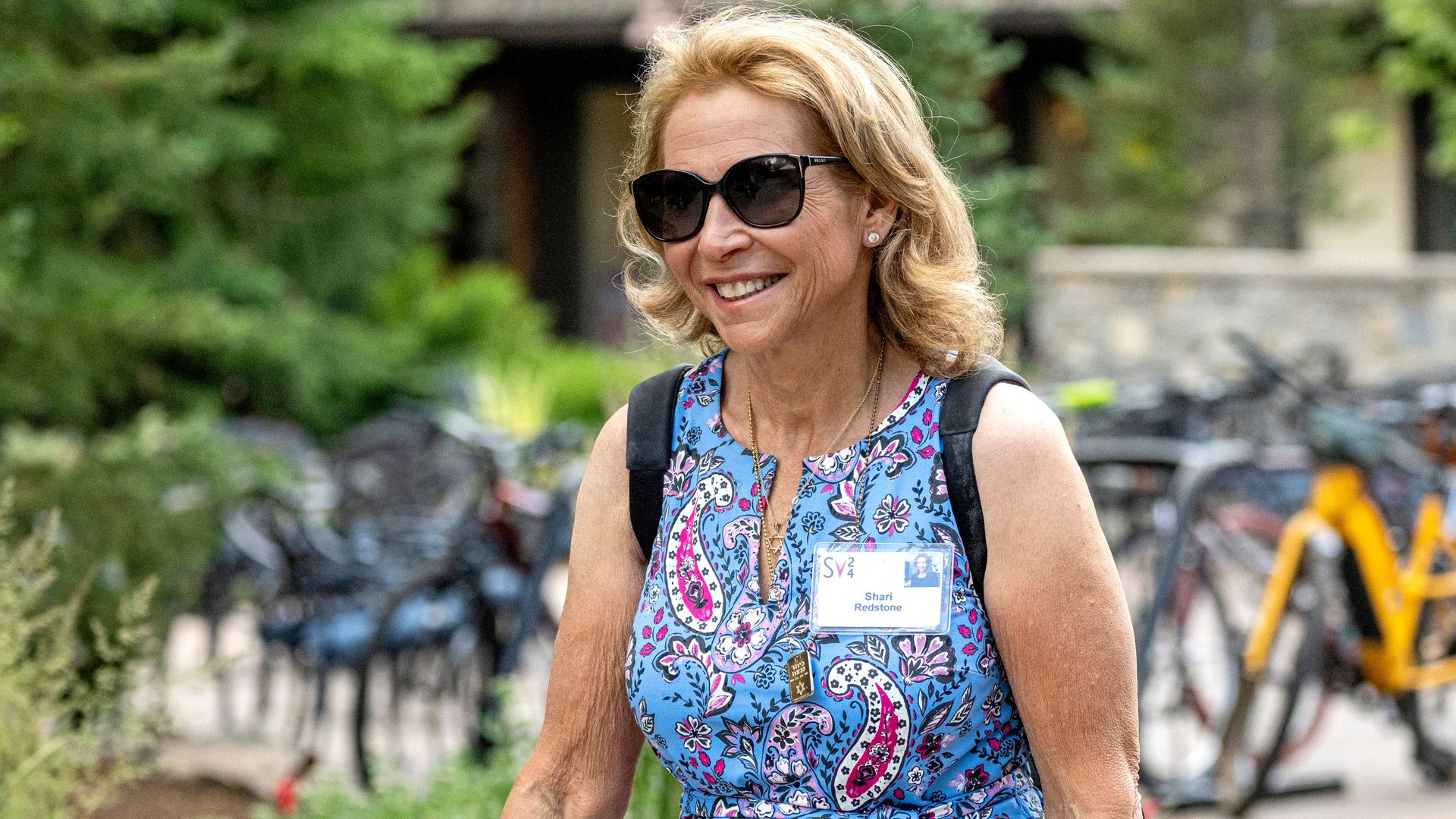
Shari Redstone has been quietly co-producing a new Broadway show, "Job," for the past few months, she told Axios in an interview.
- The psychological thriller debuted Monday on Broadway for its opening preview. It officially opens on July 30.
Behind the scenes: Redstone landed a producer role with "Job" after being introduced to one of the show's lead producers, Alex Levy, a speechwriter for Sen. Chuck Schumer (D-N.Y.) who now runs a communications firm that counts Redstone among its clients.
- Redstone was inspired to work with Levy, a four-time Tony award-winner, after having seen two of his shows, "Parade" and "Just For Us," both of which touched on themes of antisemitism, she said.
- Redstone was touting the show to peers at Allen & Co's ultra-exclusive annual conference for business leaders in Sun Valley, Idaho, last weekend.
- She hopes to work on more shows following the sale of Paramount.
The big picture: The sale of Paramount Global marks the end of an era for Hollywood and the Redstone family, which has controlled Paramount's biggest assets, such as CBS, Viacom and Paramount Pictures, for decades.
- "You know, my family will always love Paramount. It will always be a part of our lives," Redstone said when asked to reflect on the sale.
- "My father created a great company. He put together a combination of terrific assets, but I think it was time for my family to move on and to create our own legacy," she added.
- "And frankly, with everything that's going on in the world right now, I want that legacy to be around philanthropy, around fighting hate, around civic and moral leadership, and that's what I'm really excited about."
What's next: Redstone plans to focus more of her time on philanthropy and impact projects, especially those that fight antisemitism and bolster civic leadership.
4. Exclusive: Apple leaning on Taboola to sell ads


Ad tech giant Taboola has struck a deal with Apple to power native advertising within the Apple News and Apple Stocks apps, Taboola founder and CEO Adam Singolda told Axios.
Why it matters: The deal provides new validation for Taboola's business, which has ballooned to over $1.4 billion in annual revenue as of 2023.
- Taboola's effort to build trust with Apple across its various teams and stakeholders was "a multiyear process,'" Singolda said.
Between the lines: The deal is also a recognition from Apple that growing its ad business will require a serious sales operation — one that, if Apple doesn't build internally, will need to be outsourced.
- Marketing analytics company eMarketer estimates that Apple's worldwide ad revenues will total $10.34 billion this year.
- Apple's stock reached an all-time high Monday after a Morgan Stanley analyst lauded its AI efforts.
How it works: As an authorized advertising reseller for Apple News and Apple Stocks, Taboola will power native advertising placements within those two apps in every market available.
- Both apps are accessible in the U.S., U.K., Canada and Australia and are built in on every iPhone, iPad and Mac.
- Taboola can sell ads within the main feeds and articles for select publishers across both apps.
Flashback: Apple struck a deal with NBCUniversal to sell ads for Apple Stocks and Apple News in 2019 and renewed it in 2022. According to Apple, NBCU still sells ads for both apps in the U.S. and U.K., but it is not an authorized reseller in Australia and Canada.
5. Exclusive: Nate Silver joins Polymarket
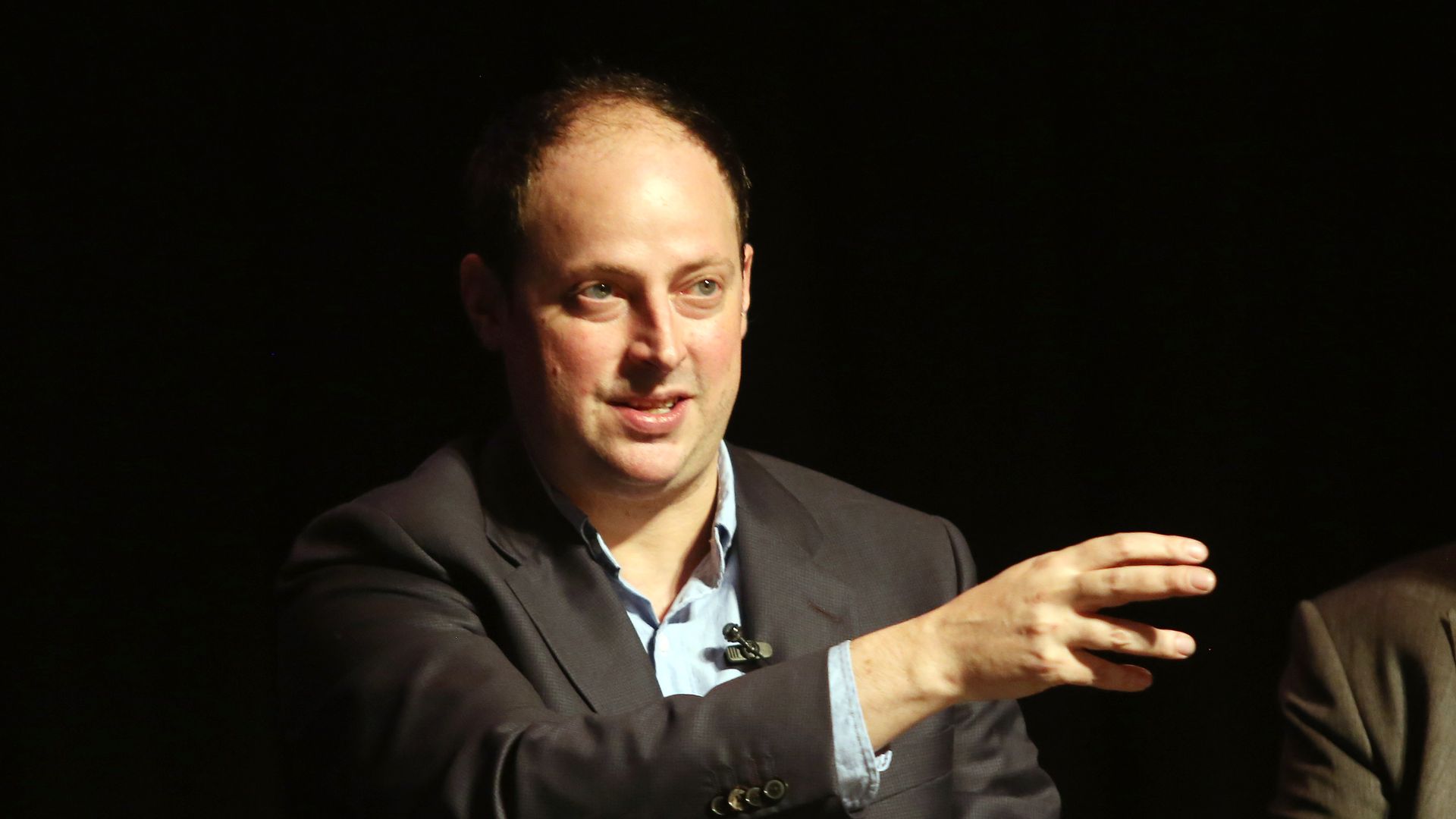
Polymarket, a venture-backed predictions market, has hired statistician and journalist Nate Silver as an adviser while it looks to build out more forecasts around news events.
Why it matters: More Americans are flocking to prediction markets to interpret crazy news cycles. And more news outlets are beginning to cite prediction odds for the outcome of news events, particularly the election.
- "Probabilities really matter when you're trying to make plans," Silver said in a phone interview.
- He cited the dilemma facing Democrats and Joe Biden about whether the president should remain on the ticket as an example of how high-stakes decisions can be determined using probability calculations.
How it works: Prediction markets allow users to buy shares in the outcome of an event.
- Polymarket is in growth mode and doesn't yet monetize the hundreds of millions of dollars in trades happening across its platform, Polymarket vice president David Rosenberg told Axios. Eventually, it will probably charge a fee for those transactions.
Between the lines: Founded in 2020, Polymarket has quickly risen to become one of the world's most popular prediction markets for U.S. elections, but it doesn't yet allow U.S. users to make trades off of its predictions.
- "All of the trading is happening outside the U.S.," Rosenberg said. "But we are exploring offering a regulated U.S. product soon."
By the numbers: The firm, which has raised $70 million in venture capital since launching in 2020, produces more than 80% of global predictions made around U.S. elections, by its estimates.
- Over $260 million worth of predictions related to the outcome of the 2024 election have been made on its platform in the past four years, per Rosenberg.
- More than $400 million of trades have occurred on its platform in 2024, including $8 million of trades made on the day of the first U.S. presidential debate last month.
The big picture: The rise in prediction markets mirrors a broader adoption of sports betting and online gambling, which have become more popular amid regulatory rollbacks and advances in blockchain technologies.
- Silver said he expects more of the investor class to leverage prediction markets to assess the risk of politics on their businesses.
6. ☕ Drama at "Morning Joe"
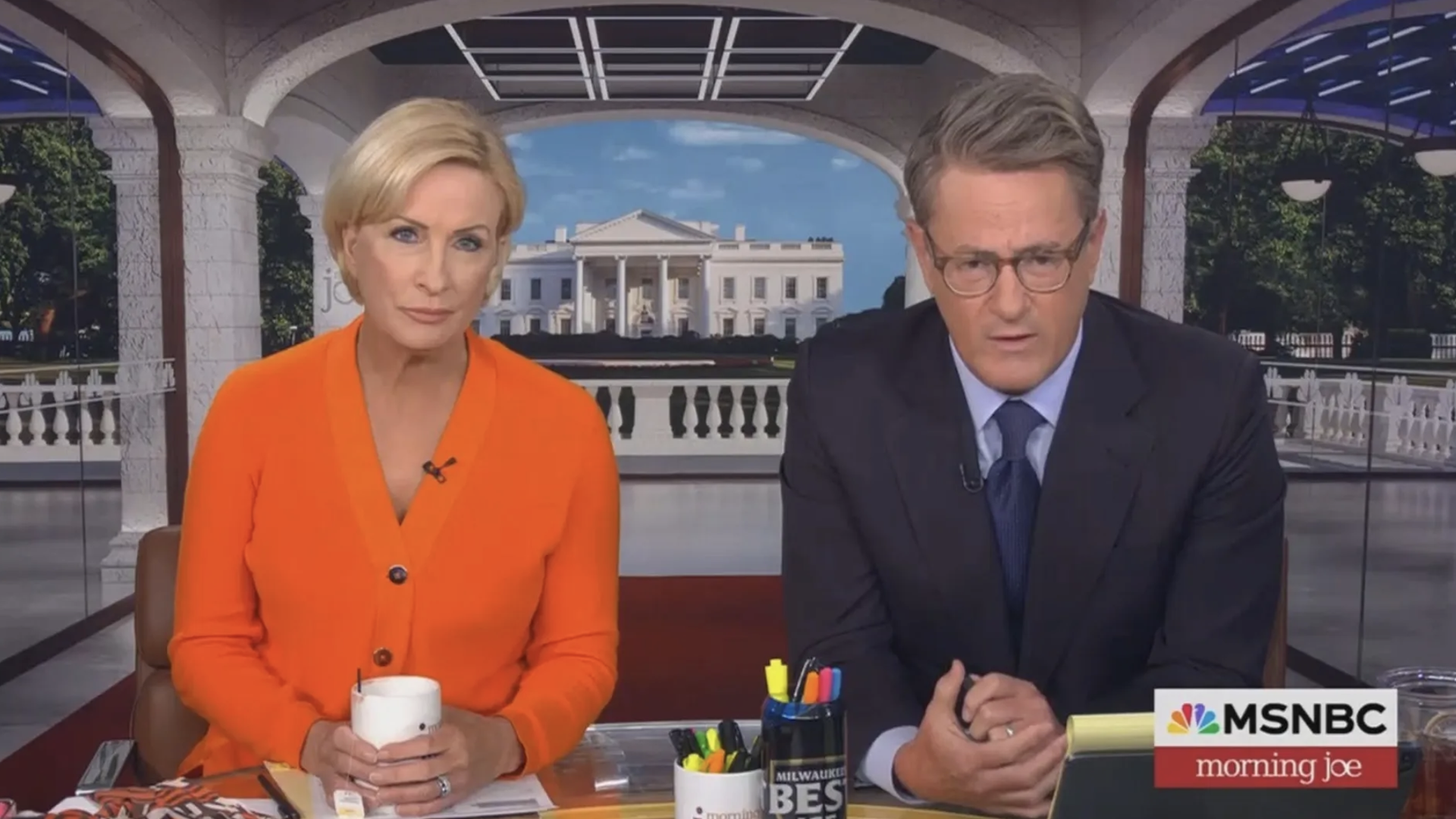
Hosts of MSNBC's popular "Morning Joe" program seemed dumbfounded Tuesday when trying to explain why their show did not air in its regularly scheduled time slot on Monday.
Why it matters: A CNN report suggested NBC News executives yanked the show to avoid any potential comments from the program's guests that could be seen as inappropriate in light of the assassination attempt on former President Trump Saturday evening.
- NBC News denied the CNN report, but that didn't stop the show's co-hosts from taking swipes at NBC News leadership.
What they said: "I think the reason why is this show began, and continues 17 years later, on being the place where you can go to have the hard conversations in a civil way," co-anchor Mika Brzezinski remarked.
- "Let me just say, next time we're told there's going to be a news feed replacing us, we will be in our chairs," co-anchor Joe Scarborough said. "The news feed will be us or they can get somebody else to host the show."
Flashback: The instance comes a few months after MSNBC news anchors and hosts publicly rebelled against management's decision to hire former RNC chair Ronna McDaniel as an on-air contributor.
The big picture: Tension between newsrooms and management at major outlets has grown with journalists questioning coverage decisions around major stories, such as the Israel-Hamas war and the 2024 election.
7. Us Weekly revival
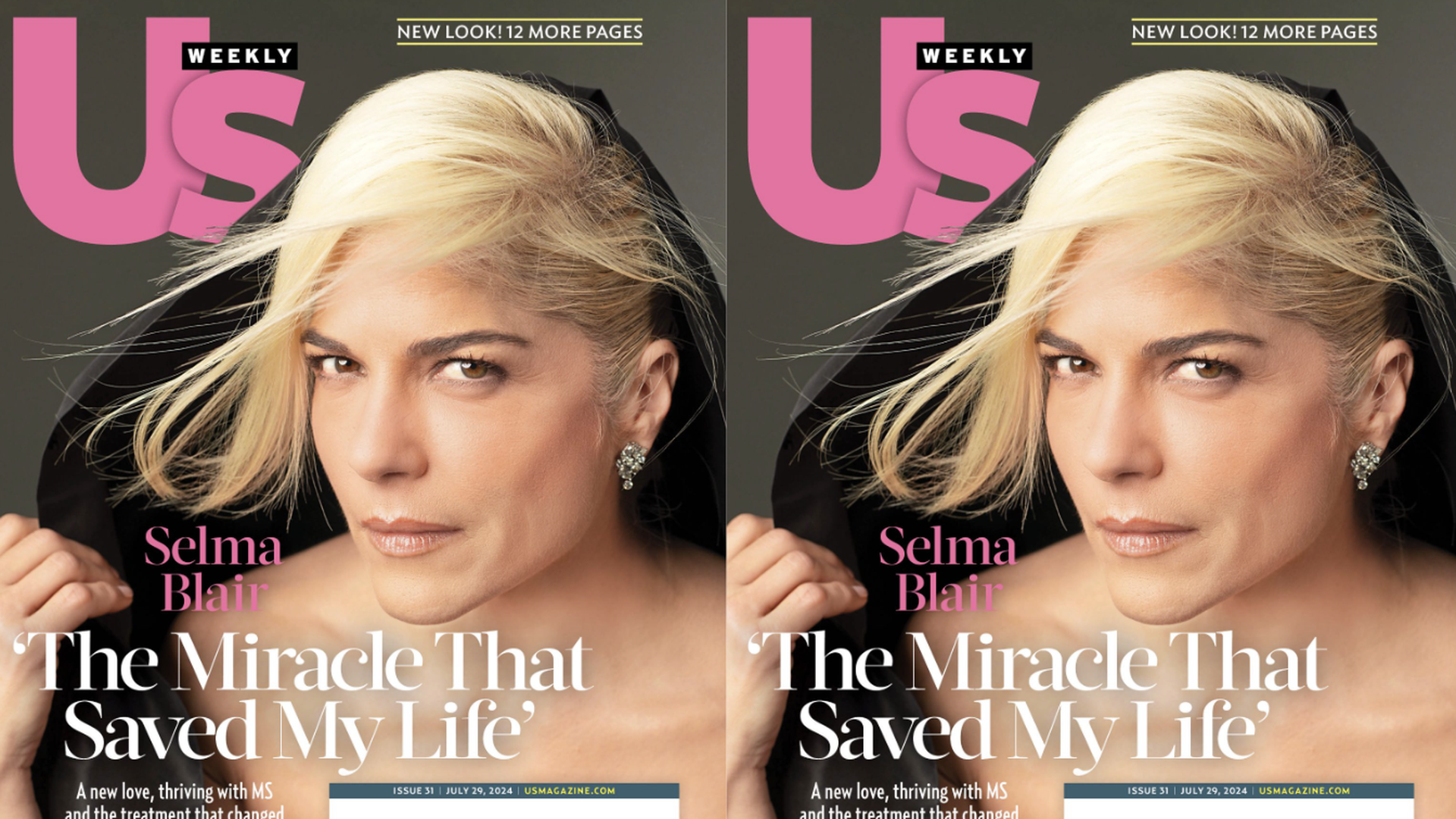
Us Weekly, the Hollywood and celebrity magazine, is expanding its print product from 48 issues to 52, its new editor Dan Wakeford told Axios. Each edition will also expand by 12 pages.
Why it matters: It's part of a broader overhaul of the 47-year-old publication to reach a more sophisticated audience with more authoritative content.
- "We want smart, busy and curious women," Wakeford said. "I want to bring in folks who at the moment feel a bit guilty about consuming this information."
Between the lines: Wakeford — who most recently served as editor-in-chief of The Messenger and before that was the editor of People and Entertainment Weekly — plans to expand the scope of Us Weelkly's celebrity coverage with a new focus on sports and influencer verticals.
- He also plans to double down on video. The firm has built a new TV studio in its New York offices to focus more on creating viral social media content.
Zoom out: Part of the brand overhaul includes leaning into more authoritative coverage of celebrity news, with new contributors, and a larger focus on accuracy and truth in the age of AI, Wakeford said.
- Famed horoscope star Susan Miller will be a regular contributor to the magazine, along with new contributing writers, such as Amy Odell and Jo Piazza.
Between the lines: Us Weekly is one of several gossip and celebrity outlets owned by A360 Media, the former parent to the National Enquirer, but it's by far its biggest.
- Its print circulation today stands at 1.95 million, a spokesperson confirmed, which makes it one of the largest print magazines by circulation in the country.
The big picture: Many legacy publications have returned to print or doubled down on it amid advertiser demand for higher-impact placements.
What's next: The magazine's first cover upon relaunch will feature Selma Blair, shot by famed photographer and videographer Hype Williams, and an interview focusing on Disability Pride Month.
Sign up for Axios Media Trends