Axios Media Trends

July 15, 2025

Good afternoon. Today's Media Trends, edited by Christine Wang and copy edited by Sheryl Miller, is 2,066 words, an 8-minute read. Sign up.
π Mark your calendars: We're bringing Media Trends to life with Axios' inaugural Media Trends Live event in NYC on Sept. 18.
- Reserve your spot here.
πΊ Situational awareness: NPR and the Corporation for Public Broadcasting both released new polls this morning that show widespread public support ahead of a critical vote this week that could strip them of federal funds.
- The vote is expected to be very close, as more centrist Republicans vocalize concerns about cutting access to local media in rural areas.
1 big thing: D.C.'s media culture wars

Government agencies in the Trump 2.0 era are going far beyond their traditional tech and media policy arenas to tackle issues around race, gender, alleged political bias and collusion.
ποΈ Why it matters: President Trump's push to expand executive branch power is testing the independence of regulatory agencies. Media companies are struggling to push back.
Zoom out: Trump signed an executive order in February claiming executive branch authority over what have historically been independent federal agencies.
- Shortly after, he fired the FTC's two Democratic commissioners. (They later sued the administration over the move and the litigation is ongoing.)
- There are currently only three commissioners serving at the FCC. The lone Democrat, Anna Gomez, has condemned chair Brendan Carr's investigations.
Here's a look at the state of play:
FTC: The agency is investigating roughly a dozen ad groups alleging they have banded together to block ads based on political content. It recently approved the Omnicom-Interpublic merger, but with a restriction on ad boycotts.
- Regulators rarely put in place merger provisions that specifically bar this type of coordination, but political pressure around allegations of ad groups penalizing conservatives has gained steam.
FCC: The FCC has launched several investigations into media and telecom companies over their diversity, equity and inclusion policies.
- It also recently decided to postpone enforcing a bipartisan law that made it more affordable to place calls from prisons and jails. Gomez said the move was "flouting the will of Congress."
DOJ: The department filed a statement of interest in a case where major media companies are accused of colluding with each other in an attempt to suppress alternative viewpoints on COVID-19.
The big picture: The agencies' efforts to target companies over social and political issues are largely working.
- πΆ The FCC last week approved two T-Mobile acquisitions after the telecom giant dropped its DEI programs.
- β°οΈ CBS parent Paramount Global has agreed to pay $16 million to settle with Trump over a defamation lawsuit that legal experts say it could've won in court.
2. ποΈ Scoop: Tariffs hit local
Lee Enterprises, one of the last remaining independent local newspaper companies, has added a $4.99 per month "temporary" surcharge to its newspaper subscriptions, citing inflation and global tariffs, Axios has learned.
π¨π¦ Why it matters: The vast majority of newsprint material comes from Canada, which President Trump has hit with a 25% tariff and threatened to raise that to 35% starting Aug. 1.
- But newspapers were exempted from the policy in April, leaving subscribers confused about what's really to blame for the price hikes.
Zoom in: Over the past few days, subscribers to various newspapers owned by Lee Enterprises, including the Lincoln Journal Star in Nebraska and the Richmond Times-Dispatch in Virginia, have received emails informing them about a new "small" $4.99 monthly surcharge, attributed to "rising operational costs due to inflation and global tariffs."
- For customers looking to purchase a print subscription for the first time, a notice appears on the checkout pages of various Lee Enterprises newspapers:
- "A temporary surcharge will be applied to your account and will increase the amount of your subscription. The surcharge amount is based on the frequency of delivery selected and will not exceed $11.99 per month."
Reality check: Subscribers are angry. "That is NOT a 'small surcharge.' That's a 50% increase," one subscriber wrote in an online forum.
- The subscriber said they were assured by a customer service representative that the surcharge would only last for August and September, but Lee never communicated a timetable directly to affected customers.
π° Yes, but: Just because newsprint is exempt from the administration's new tariff policy, doesn't mean newspaper owners aren't feeling cost pressures.
- A source told Axios that in recent weeks, U.S. printing companies that get their print supply from Canada have sent letters to newspaper owners about planned price increases to hedge against broader U.S.-Canadian tariffs.
What to watch: Tariffs are adding a significant economic constraint at a time when newspaper companies, especially Lee Enterprises, are already struggling significantly.
- Lee, which managed to stave off a hostile takeover from private investment firm Alden Global Capital, laid off hundreds of employees in 2022.
- It spent $2 million on ransomware recovery after a February cyberattack hacked its critical applications and stole data.
- The company is currently being eyed by billionaire David Hoffmann, who is looking to buy a controlling stake.
3. ποΈ Fox News gets "Ruthless"
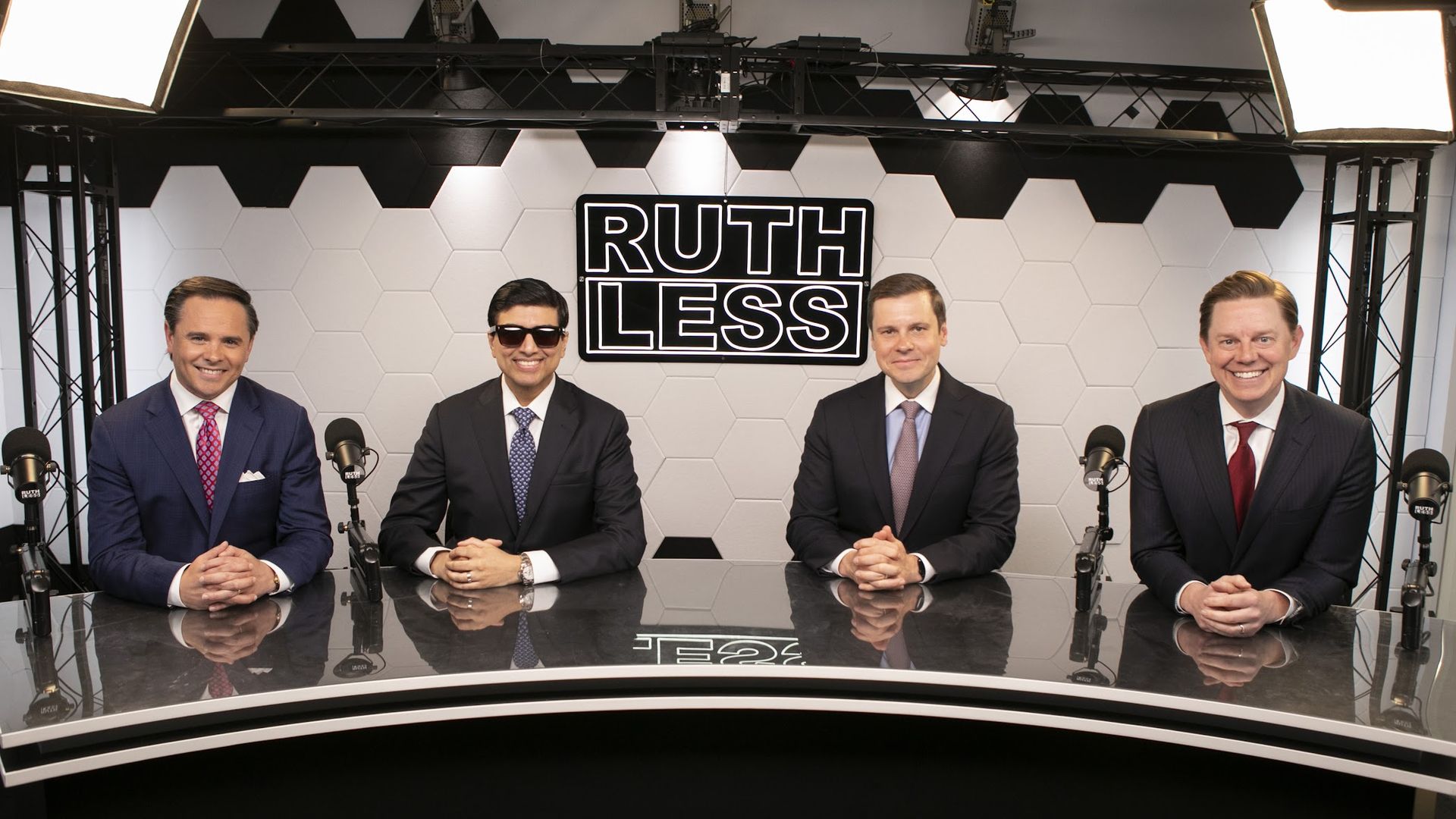
Fox News has reached a business and editorial licensing deal with the "Ruthless" podcast, a variety program hosted by veteran Republican staffers.
Why it matters: It's the first time Fox News has licensed a podcast.
π§ State of play: Fox News has created a "new media" division that will house all of its opinion and non-news podcasts, as it invests more in that type of audio programming.
- The new media unit will be overseen by Fox News Digital president Porter Berry, who will also take on social media as part of his portfolio.
- As part of the deal, the four "Ruthless" podcast hosts will serve as Fox News contributors, per Berry.
π Catch up quick: The "Ruthless" podcast, which launched right before the 2020 election, has become a hit among conservatives looking for an irreverent and digestible political talk show, somewhat akin to "Pod Save America" on the left.
Flashback: Earlier this year, Fox News parent Fox Corp. acquired Red Seat Ventures, a creator company that supports a slew of conservative opinion podcasters, such as Megyn Kelly and Tucker Carlson.
- That business will continue to operate separately from Fox News Media and Berry's new media unit.
π¦ The big picture: Fox News has pushed aggressively to diversify its business away from being solely reliant on cable revenue.
- This year, it's projecting $500 million in revenue for its non-cable TV businesses, Axios reported.
4. π€ Publishers enter AI race with custom chatbots
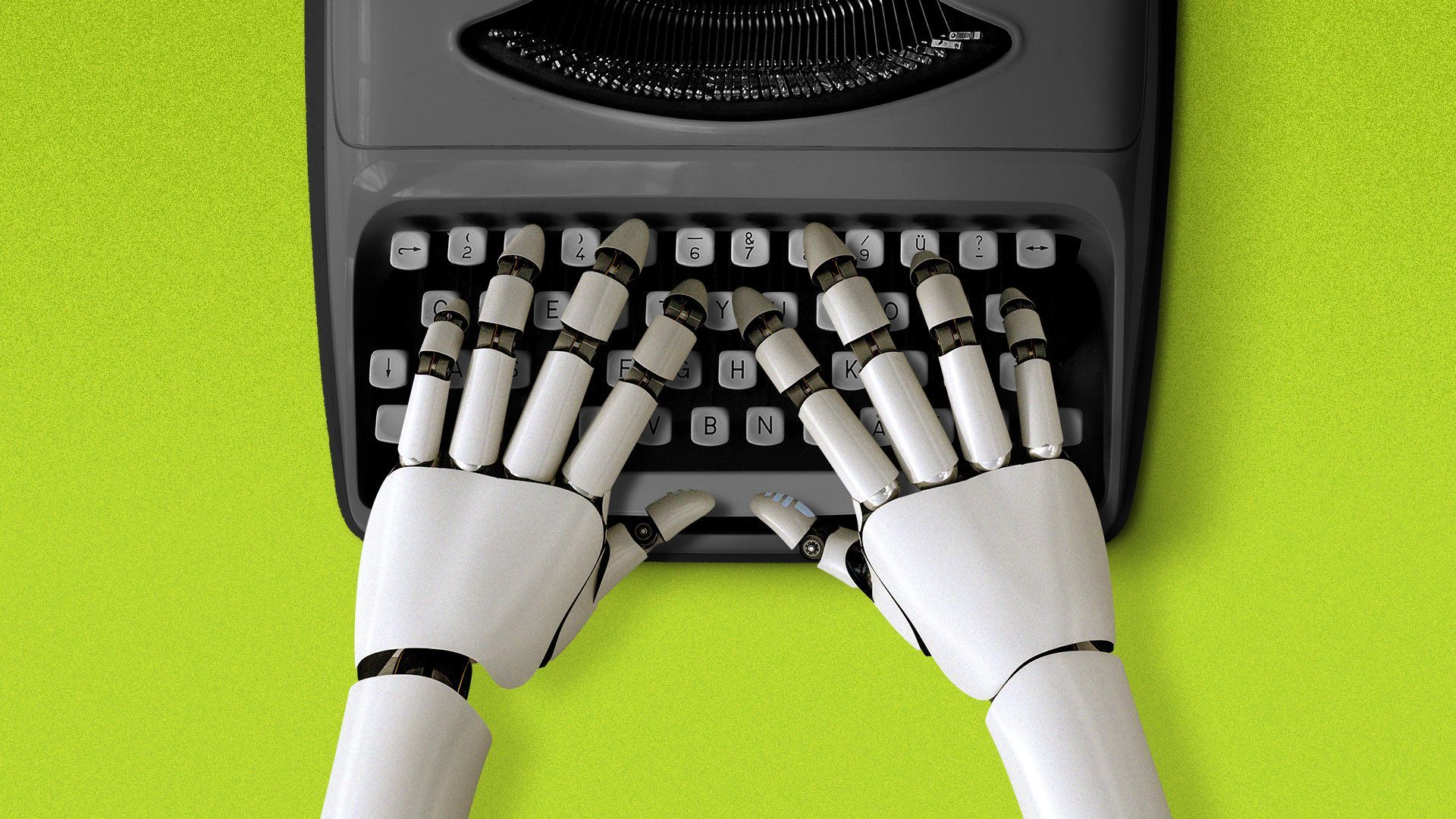
Media companies are racing to add custom AI chatbots to their websites and apps in an attempt to lure user traffic away from apps like ChatGPT and Gemini.
Yes, but: Time is running out. News-related prompts on ChatGPT are up 212% year over year, per Similarweb.
- Since Google launched AI Overviews in May 2024, the share of zero-click news searches has risen from 56% to nearly 69% year over year.
- In that same period, organic traffic to news publishers has declined noticeably.
Zoom in: While stocks, finance and sports have captured the lion's share of engagement on ChatGPT, topics often covered by news publishers, like politics, climate and economics, are becoming major growth drivers.
Zoom out: Publishers are racing to offer their own solutions.
- The Information last week launched its own AI chatbot tool called The Information Deep Research, designed to help subscribers answer business questions through a large language model trained solely on the outlet's proprietary data and reporting.
- The Financial Times released its first generative AI tool for subscribers in March. The tool pulls FT content from the past two decades to answer subscriber queries.
- The Washington Post was early to introduce an AI chatbot to its site last year. The tool launched initially to answer queries about climate with answers pulled from Washington Post articles. The Post plans to expand the tool more broadly across its journalism.
- Gannett/USA Today and The Independent have both partnered with ad giant Taboola to build their own, custom generative AI search engines trained on their proprietary journalism.
- Time rolled out a chatbot last December alongside its annual Person of the Year feature. The chatbot use case was narrow, and it only allowed users to ask questions, translate and summarize its single Person of the Year main story.
5. π¦Έπ» "Superman" breathes new life into DC films


The latest "Superman" reboot is a box office smash, bringing in an impressive $122 million in its domestic debut over the weekend, according to estimates from Comscore.
π₯ Why it matters: The fate of the DC Comics franchise, and to a smaller extent Warner Bros. Pictures, is riding on the film's success.
πΈ Zoom in: The movie, which cost $225 million to produce, brought in an estimated total of $95 million internationally, bringing its worldwide total haul to $217 million in its opening weekend.
- The opening marks the biggest weekend debut ever for a solo Superman movie β one not part of a larger crossover or franchise team-up.
- "Superman" boasts the third-biggest domestic movie opening of the year, behind "A Minecraft Movie" and "Jurassic World Rebirth."
π§ͺ Zoom out: The movie, written and directed by former Marvel director James Gunn, is seen as a litmus test for Gunn and Peter Safran, who co-heads Warner Bros. Discovery's DC Studios.
- Gunn, the Hollywood hitmaker known for producing Marvel's hit "Guardians of the Galaxy" films, was hired by Warner Bros. to help turn around the struggling DC Comics franchise alongside Safran.
- Gunn has drawn outrage from right-leaning media, which accused him of politicizing Superman's origins in calling the film an immigrant story.
ποΈ Catch up quick: "Superman" is the anchor and first film in DC Studios' bid to revitalize its banner after struggling to compete with rival Marvel at the box office.
- Announcing the slate two years ago, Gunn called the film the "true foundation of our creative vision for the DC Universe."
- After Warner Bros. Discovery was formed from the merger of WarnerMedia and Discovery, the new owners overhauled DC Entertainment to eventually form DC Studios.
- Gunn and Safran's slate established a more cohesive approach to DC intellectual property and franchises, similar to Marvel's approach, under the DC Universe.
- The rebrand represents a reset from the previous DC Extended Universe era, which included titles like "Man of Steel" and "Justice League."
π¦ΈββοΈ What's next: "Superwoman" is the next film, expected in 2026, for the DC Universe under Gunn and Safran.
πΏ What to watch: The battle between rival studios heats up later this month when Marvel's "The Fantastic Four: First Steps" debuts.
6. π Nextdoor reboot


Nextdoor has launched a redesigned app in an attempt for the 14-year-old neighborhood social network to serve more as a daily utility.
Why it matters: Nextdoor's stock price has dropped more than 80% since it went public via a SPAC in 2021 and has traded under $2 for most of 2025.
- The relaunch aims to deepen engagement among its existing 100 million users and attract more advertisers.
Driving the news: The relaunch centers on three features β News, Alerts and Faves β that align with Nextdoor's vision to help people stay informed, safe and smart.
- News showcases local stories from more than 3,500 vetted publishers across the U.S., U.K. and Canada, including Axios, the London Standard and The Toronto Star. The app doesn't host full stories but shows headlines and photos and links out to publishers' sites.
- Alerts provide real-time updates on weather, traffic and other local safety concerns and service interruptions from partners like Samdesk and Weather.com. The app color codes risk level (green, yellow, red) and shows neighborhood discussions.
- Faves highlights local recommendations, based on neighborhood conversations and distilled into AI-generated summaries, such as family-friendly hikes and trusted electricians.
- The app also features a cleaner feed, a news carousel and AI-generated prompts to spark discussion.
The big picture: Nextdoor CEO Nirav Tolia β the co-founder who stepped down as CEO in 2018 and then came back as CEO in 2024 β attributed his return and the relaunch to the company's flagging stock price and the idea that the product's potential was "not being realized."
- "There's a gap between how many people have heard of [Nextdoor], use it and rely on it," Tolia told Axios. "We want to be in that rely on it camp, and we identified that the way to do that was to build a better product."
7. πΊ 1 fun thing: HBO Emmy haul
HBO and HBO Max have taken the lead in Emmy nominations this year (142), cruising past Netflix (121), per Deadline.
πͺ· Why it matters: It's the most Emmy nominations for HBO in a single year, thanks to a slew of big hits over the past year, including "The White Lotus," "The Last of Us" and "The Penguin."
π Yes, but: Despite HBO's slate of hits, Apple's "Severance" still led the pack in terms of overall nominations for a single program, scoring 27 nods.
Flashback: This year's haul tops HBO's previous record of 137 nominations in 2019. Last year, HBO received 91 nominations, behind Netflix and FX.
What's next: The final round of voting for Television Academy members ends Aug. 27.
- The award show will take place Sept. 14 and will be broadcast on CBS and Paramount+.
Sign up for Axios Media Trends