Axios Markets

September 30, 2024

π¬ Good morning! All eyes are on the East and Gulf Coast ports, as midnight is the deadline to avert a strike. The International Longshoremen's Association said it "will hit the picket lines at 12:01 am on Tuesday."
- Today, we're looking at nuclear power's comeback. Plus, a different kind of gender gap is closing, and Felix dissects a logo. In 920 words, 3.5 minutes.
1 big thing: The nuclear promise
A new U.S. nuclear energy age may dawn after years of false starts and dashed hopes.
Why it matters: The data centers powering the AI revolution have an insatiable thirst for energy. Major stakeholders β in Washington, Silicon Valley, and beyond β see nuclear energy as one of the answers.
Driving the news: The Energy Department announced this morning it had finalized a $1.5 billion loan to stake the revival of a Holtec Palisades nuclear plant in Michigan.
- Microsoft and Constellation Energy this month unveiled a $1.6 billion power purchase deal to restart a dormant reactor at Pennsylvania's Three Mile Island plant in 2028.
- At Climate Week in New York, 14 of the world's biggest banks and financial institutions pledged to support the COP28 climate goal of tripling global nuclear energy capacity by 2050.
The big picture: U.S. electricity use is soaring after staying flat for 15 years, driven by new factories, data centers, electric vehicles, hotter summers, and more.
- A new Energy Department memo about the "resurgence" in U.S. nuclear power cites analysts projecting that up to 25 gigawatts of new data center demand could arrive on U.S. grids by 2030.
- That's equivalent to the output of about 29 average-size nuclear power plants, or more than 80 next-generation small modular reactors.
- Placing those power-thirsty data centers near nuclear plants is an "ideal solution" because it reduces the need for billions of dollars in grid upgrades, the memo states.
The intrigue: OpenAI pitched the White House this month on a plan to build multiple 5 gigawatt data centers β each requiring the equivalent output of five nuclear plants β across the U.S., Bloomberg reports.
- Other tech giants are exploring nuclear in one form or another, including Google, as the company's head of energy market development revealed on the latest Energy Gang podcast.
Reality check: Such "virtue-minded data center companies," that "don't want to be contributing to rising emissions and thus are willing to pay a premium," are still a relatively small section of overall U.S. energy use, Columbia University nuclear expert Matt Bowen tells Axios.
Zoom out: Nuclear's share of U.S. electricity has remained at roughly 20% or slightly less for 30+ years.
- New construction basically halted decades ago β thanks largely to the 1979 partial meltdown at a Three Mile Island reactor next to the unit Constellation hopes to revive.
- A wave of proposals in the mid-2000s was mostly abandoned, thanks partly to the fracking boom that brought cheap natural gas.
- The one mega-project that did proceed in recent decades, Southern Company's two new reactors at Georgia's Vogtle plant, ran massively over budget.
What we're watching: Whether any utility giants announce plans for the first massive, gigawatt-scale reactors since the Vogtle project.
The bottom line: It's the most hopeful moment for U.S. nuclear power in a very long time.
2. Edging closer to equality, in one way


The gap in labor force participation between working-age men and women is at a record low.
By the numbers: In August, about 90% of men aged 24-54 were in the workforce, compared to 78% of women.
- If you go back to 1955, only 39% of working-age women were in the workforce, and 97% of men!
Zoom in: For women, it's been a generally positive story of increasing equality and independence, as well as economic success.
For men, it's more of a mixed bag. The share of working-age men in the labor market has been declining for decades β particularly for those without college degrees who've seen manufacturing and other male-dominated career paths erode.
- For those with college degrees, it's a positive story. The decline in employment is happening primarily because they're staying in school longer and delaying entry into the workforce.
- Some are also leaving the workforce to be caregivers β an avenue typically unavailable, and sometimes unimaginable, for older generations.
Where it stands: In the strong, post-pandemic labor market, men have improved their lot.
- The increased investment in the manufacturing sector that's come from some of the Biden administration's key pieces of legislation is creating more jobs for those without college degrees βΒ and it's expected that the majority of that work will go to men.
- Women have seen stronger gains since 2020. The share of women who are either employed or looking for work now exceeds pre-pandemic levels. Men are back where they started.
Reality check: Men still out-earn women, on average, and dominate the upper ranks of most big companies.
- There's also a lot of occupational segregation in fast-growing fields like health care and education that steers men away from so-called pink-collar jobs. (There are vanishingly few male kindergarten teachers, for example.)
The bottom line: Men and women are edging toward something like gender equality in the workforce. At least in one respect.
3. No angel (anymore)
Freshfields is partying like it's 2018.
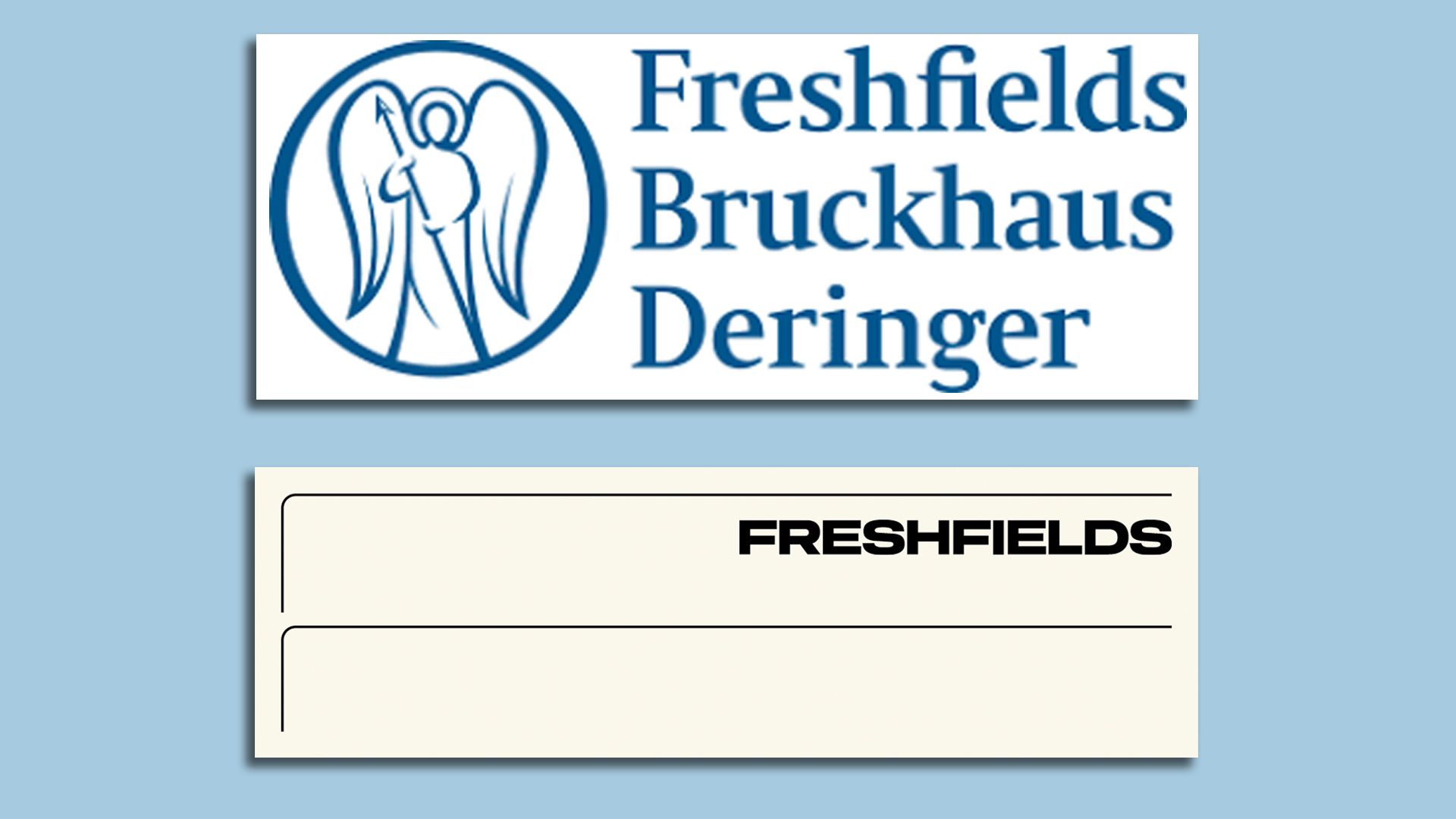
Why it matters: The venerable London law firm unveiled its new logo last week, along with the loss of Bruckhaus and Deringer from its name.
- Its new look is a prime example of blanding, an unmourned trend from the late teens wherein luxury goods companies including Burberry, Yves Saint Laurent, Fendi, and Chanel all found themselves sporting seemingly interchangeable bold black sans-serif all-caps logos.
- Fashion is now moving the other way β serifs are cool again, while sans-serif logos feel uninspired β but that hasn't stopped Freshfields from adopting a face that, according to senior partner Georgia Dawson, reflects "the dynamic and entrepreneurial spirit of the firm."
The bottom line: As one German lawyer noted on X, surely Freshfields could have come up with something "fresher" than this.
Thanks to Kate Marino for editing and Mickey Meece for copy editing.
Sign up for Axios Markets