Axios Markets

February 21, 2025


🌅 Happy Friday! Today we're taking a look at the auto industry, which is starting to feel the tariff chill and doesn't quite know what to do next.
- Plus: What happens when rich people aren't scared of the IRS, and the argument for renting chickens.
All in 1,050 words, a 4-minute read.
1 big thing: Tariff threats freeze automakers


President Trump hasn't implemented most of the tariffs he's announced, but the uncertainty over when — or even if — he'll do so is already hurting the auto industry.
Why it matters: It's a tumultuous time for automakers, which are already grappling with regulatory uncertainties and worries about consumer acceptance of electric vehicles.
- At the very moment they need to be placing huge, multibillion-dollar bets on the future, they're instead caught in a "will he or won't he" limbo over Trump's tariffs.
- As they await more clarity, they're pausing or delaying huge investment decisions, increasing the risk they'll fall behind faster-moving Chinese rivals.
The big picture: The auto industry, more than any other, is caught in the crosshairs of Trump's burgeoning trade war.
- Prolonged tariffs on trade with Canada and Mexico, plus additional levies on steel and aluminum imports, would deliver a multibillion-dollar hit to U.S. automakers, according to credit analysts at S&P Global Ratings.
- There's also an invisible cost: the risk of delayed development of future vehicle programs, "particularly in light of evolving emission and fuel economy regulations," the analysts wrote.
What they're saying: General Motors CFO Paul Jacobson said this week at a Barclays conference that if U.S. tariffs became permanent, the company would have to consider moving plants. But for now, it's holding off on such decisions until the macroeconomic picture is clearer.
- "Those are questions that just don't have an answer today, because (what) I can tell you is, as much as the market is pricing in a big impact of tariffs and lost profitability, we think about a world where on top of that, we're spending billions of dollars in capital. So we can't be whipsawing the business back and forth," Jacobson said.
Between the lines: Ford is delaying the launch of its next-generation F-150 pickup from 2027 until mid-2028, Crain's Detroit Business, an affiliate of Automotive News, scooped this week.
- Ford declined to comment on "speculation" about future products, but delaying a makeover of the F-150, its biggest money-maker, would be extraordinary.
- Ford has been tearing up its product plans, adding more hybrids and extended-range electric vehicles to its pipeline, while axing plans for a much-anticipated three-row electric SUV and delaying the launch of its next generation electric F-150 Lightning truck.
- A "skunkworks" team in California is developing more affordable EVs from the ground up, starting with a midsize electric pickup in 2027.
Reality check: Multiple factors are at play in Ford's product pivot, but CEO Jim Farley's frustration about recent policy swings — on top of everything else — boiled over last week at a Wolfe Research conference when he said Trump's tariffs threaten to "blow a hole" in the auto industry.
- "So far what we're seeing is a lot of costs and a lot of chaos."
Zoom in: As Erin Keating, an executive analyst at Cox Automotive, notes: "The delays and uncertainty are doing no one any favors, and there is little automakers can do in the near term, as changing sourcing and/or production sites is not an easy task and costly as well."
What to watch: The daily chaos from Washington seems to be negatively impacting consumer sentiment, per Cox Automotive's chief economist Jonathan Smoke.
- With tariffs likely to push up car prices, and lower auto loan rates looking less likely, he expects shoppers to buy sooner rather than later.
Disclosure: Cox Automotive and Axios are both owned by Cox Enterprises.
2. The IRS deterrence effect is under fire

DOGE has started firing thousands of IRS workers, right in the middle of tax season.
Why it matters: The move is likely to decrease the effect that restrains wealthier Americans from underreporting their taxable income.
The big picture: A new paper from Policy Impacts calculates that the government ends up receiving $12 in extra revenue for every $1 it spends auditing top-decile earners, thanks in large part to what the paper calls the "individual deterrence effect."
How it works: Enforcement actions from the IRS result in collections of about $63 billion, per the Bipartisan Policy Center, but end up increasing the total amount paid in tax by much more than that.
- Taxpayers are deterred from underreporting by the fear that they might face an audit.
- More importantly, taxpayers are significantly less likely to underreport in the years after receiving an audit.
- Effectively, the IRS collects extra money for many subsequent years even without doing any more audits.
- The deterrence effect, as Policy Impacts puts it, produces at least three times more revenue than the initial audit.
The intrigue: Most American households get a refund at tax time, which means they want the IRS to process their return and send out their refund as quickly as possible.
- Richer Americans, by contrast, including most of President Trump's billionaire-dominated Cabinet, generally have a much more adversarial relationship with the agency.
- Commerce Secretary Howard Lutnick said this week that Trump's goal is to "abolish" the IRS altogether.
The bottom line: If you're worried about being audited by the IRS, you're probably delighted by the prospect that its enforcement action is going to be curtailed.
3. Egg crisis solution: Rent a chicken


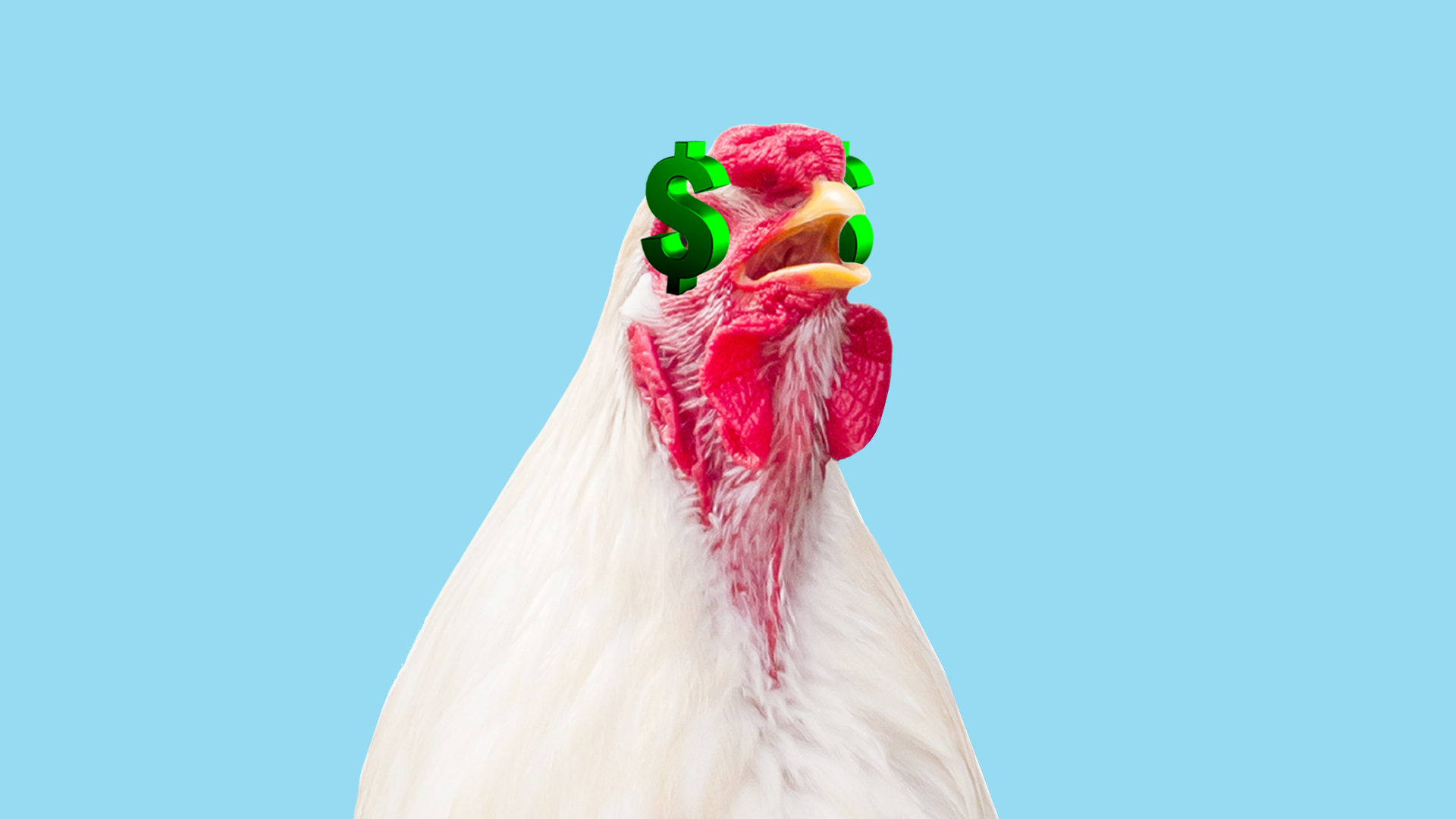
High egg prices and empty store shelves are leading many consumers to take matters into their own hands by hatching their own supply, even, as Axios Denver writes this week, if you have to borrow a chicken first.
State of play: New services make it easier than ever for residents to flock to backyard chicken-keeping.
- A company called Rent The Chicken offers delivery and setup of a coop on wheels, two or four young egg-laying hens, chicken feed, and food dishes for a five- to six-month rental period across the nation, including in Denver.
- The standard rental package locally runs $545.
Threat level: The continued spread of avian flu among wild birds, domestic flocks and even humans who work with poultry makes this a risky move right now.
The big picture: The hen habit is hatching nationwide.
- According to the latest data from the American Pet Products Association, backyard chicken keepers in the U.S. have nearly doubled in recent years, from 5.8 million in 2018 to 11 million.
Between the coops: If you can't buy the real thing, and you can't rent it either, there's always the egg substitute option, for which demand is soaring.
Want more local news from 30+ cities around the country? Sign up for Axios Local.
Thanks to Ben Berkowitz for editing and Anjelica Tan for copy editing. Have a great weekend!
Sign up for Axios Markets