Axios Markets

October 22, 2025

🏅 Tough day for gold as the precious metal suffered its biggest one-day selloff since 2013. More on what drove the selloff below.
- Today: Banks give assistance to federal workers affected by the shutdown.
- Plus: The hottest stocks right now are companies with negative earnings.
Let's get into it. All in 1,000 words in 4 minutes.
1 big thing: Banks offer aid to furloughed workers

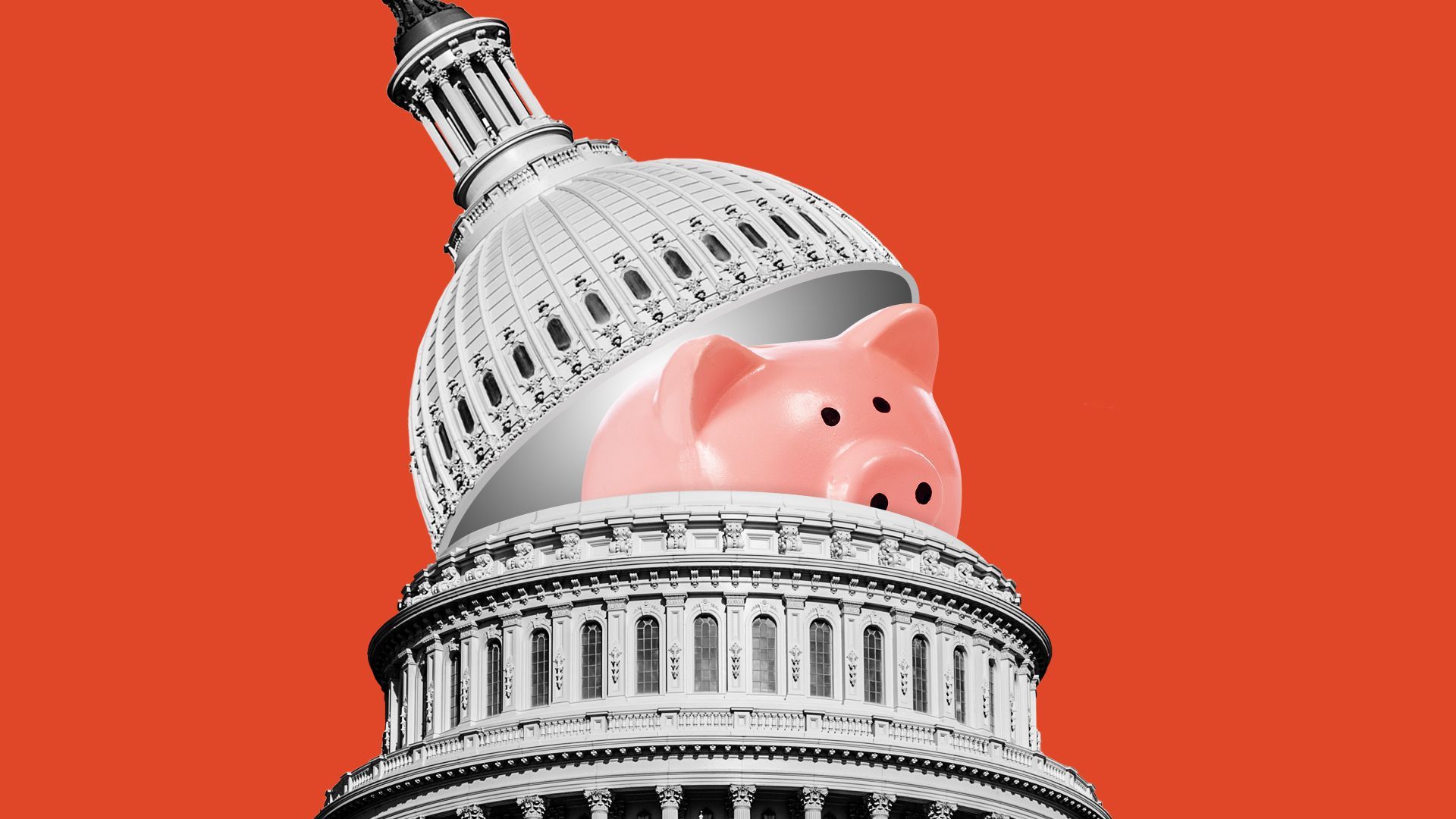
As the shutdown drags on, a number of banks are offering assistance to customers in the form of loan relief and refunds for missed payments.
Why it matters: Federal workers are about to miss their first paychecks and they're going to need money. These offers from banks could help keep them afloat.
Where it stands: Chase, Citi, Citizens and TD are among the banks that confirmed their assistance offers for federal workers to Axios.
- The experience of the pandemic, when banks doled out federal funds and made loans, prepared them to make a quick response.
- The pandemic "built a lot of muscle" for the industry, Mark Valentino, the president of business banking at Citizens, tells Axios.
- "You're probably seeing more of this advertised in the industry than you saw five or 10 years ago," he says of the bank offers.
The big picture: The assistance offers vary, with some banks capping loan amounts and others offering interest-free loans. But these aren't 0% loans forever. There are also credit score requirements.
- TD is offering loan assistance for those who are struggling to make auto or mortgage payments and for small-business and commercial clients.
- Chase is offering fee waivers and repayment plans for home lending and credit cards, proactively refunding monthly service and overdraft fees to customers with direct deposits tied to federal government accounts.
Zoom in: At least six regional banks are offering zero-rate loans, according to the American Bankers Association, which compiled a partial list of the steps that banks are taking for customers affected by the shutdown.
- The big banks are less likely to offer specific targeted loans and are more likely to tell customers they will work with them, says Stephen Kates, a financial analyst at Bankrate.
Between the lines: Banks are offering these programs in part out of self-interest, since it generates good will and new customers, Kates notes.
Reality check: If the shutdown lasts more than one or two pay periods, these programs may not be enough to help federal workers. The longer it drags, the more likely it is to become "more of a systemic issue," Valentino says.
What to watch: Kates says he hasn't seen any products with a "gotcha."
- "The hammer would come down on any legitimate institution that tried to pull that on the federal workforce," according to Kates.
- That said, any kind of situations where there is vulnerability — like hurricanes or a shutdown — brings out scammers, he says.
- "Federal workers should absolutely be on the lookout."
2. The hottest stocks are unprofitable companies
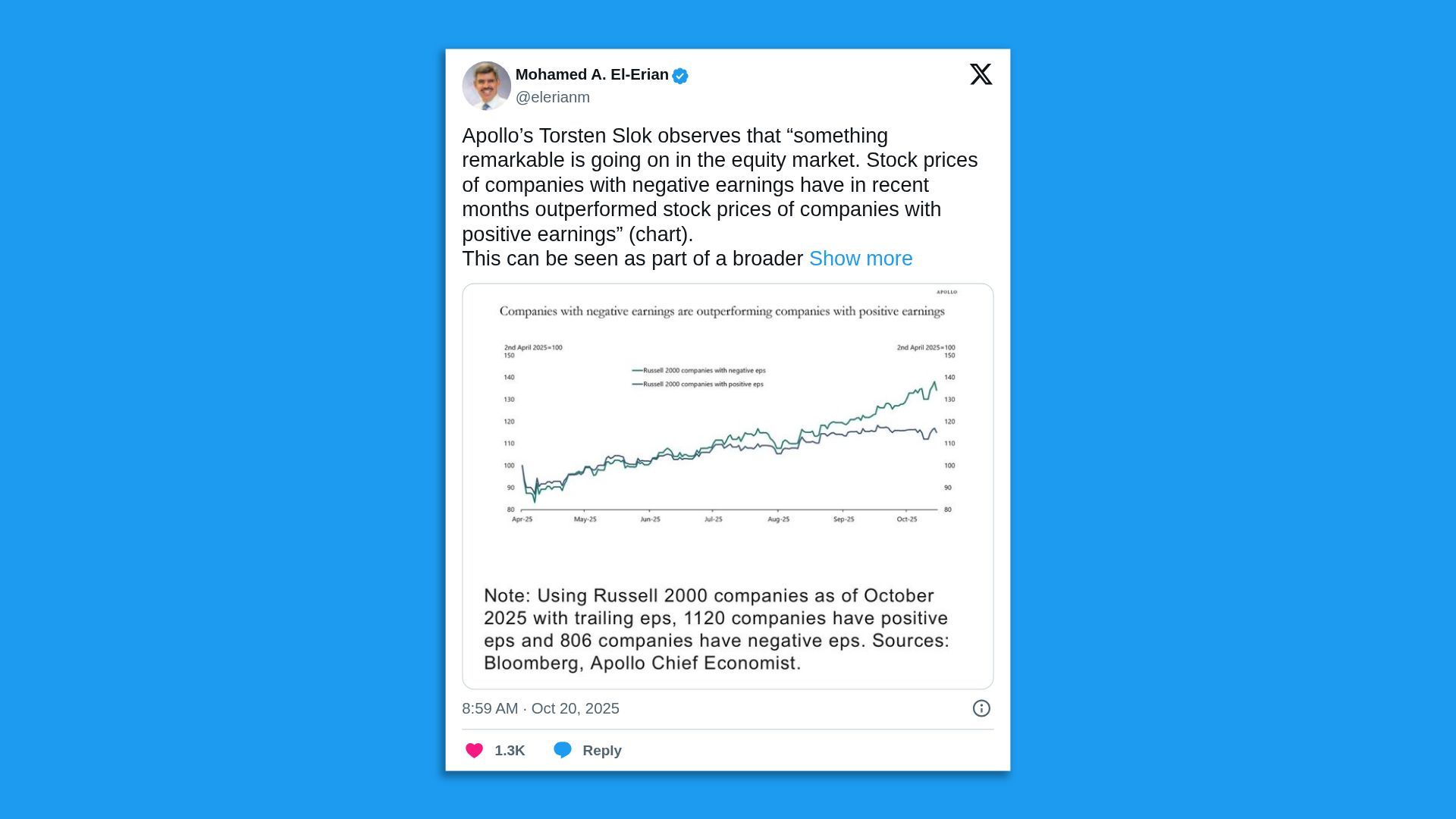
Companies with negative earnings, or losses, are outperforming firms with positive results, according to a chart from Apollo Global Management chief economist Torsten Slok. If you think that's unusual, it is, and it shows the lengths that investors will go to find greater returns.
Why it matters: Unloved corners of the market tend to be that way for a reason. Investors piling in there could signal froth in the market.
What they're saying: "Something remarkable is going on in the equity market," Slok wrote in a note, citing recent outperformance of stocks in the small-cap Russell 2000 index that have negative earnings per share.
- "Some investors are reaching further and further for returns, pushed there by the widespread compression in risk premiums," Mohamed El-Erian, former Pimco CEO and president of Queens College at University of Cambridge, wrote on X.
Between the lines: The surge in performance, which is not being driven by the fundamentals, seems to show investors are trying to find pockets of value in a heavily bought market.
- Morgan Stanley notes stock picking is back, with single-name activity seeing a significant rise in recent months. For newer retail investors, individual stocks are the most commonly held asset, a survey by the BlackRock Foundation and Commonwealth Research found.
Yes, but: Small-cap companies — often technology or biotech startups — are more likely to have losses than large-cap stocks as a feature rather than a bug.
- Their promise of growth may be more compelling than their current bottom lines. If and when these companies do grow, they are no longer small, and typically picked up by larger, more prominent indexes.
What to watch: Strength in riskier, speculative corners of the market.
- If the concentration of market gains has left investors looking to unprofitable companies, that could be a bubbly signal to watch.
3. Why investors should not fear the gold selloff

Gold had its worst day in more than 12 years just 24 hours after notching another record high.
Why it matters: Assets can't go up forever, and strategists tell Axios this pullback was perhaps necessary after a nearly 60% rally year-to-date.
What they're saying: The selling was driven by a combination of technicals and profit taking, Ryan McIntyre, senior managing partner at Sprott, which focuses on precious metals, tells Axios.
- "Nothing fundamentally has changed," he says, noting that geopolitical and economic uncertainty are fueling investor appetite for gold as a diversifying asset.
Zoom out: Still, the run-up in gold has been eye-popping.
- Earlier this month, Joe Tigay, portfolio manager of the Catalyst Hedged Equity Fund, told Axios that gold feels more like a bubble than the stock market right now given the uniform euphoria around its rally.
What to watch: The gold mining stocks.
- These companies have not seen a record rally this year alongside gold.
- McIntyre says that indicates gold isn't overly frothy just yet, adding that he would be more concerned if the mining stocks had enjoyed a strong run-up and were then also selling off alongside gold.
👀 Got tips? Email me at [email protected]. I would love to hear from you about anything that may be of interest for our investor audience.
Thanks to Jeffrey Cane for editing and to Anjelica Tan for copy editing. See you tomorrow!
Sign up for Axios Markets