Axios Markets

February 02, 2026

📉 Bitcoin is down 13% over the last five days, while the dollar had its biggest one-day gain since May as volatility is up across the board — and not just because of President Trump's Fed chair nominee, Kevin Warsh. More on that below, but first:
- Why the market could be at a turning point.
- And: Why Wall Street isn't pleased with the Warsh pick, even if the dollar is rising on the news.
Let's get into it. All in 1,064 words in 4 minutes.
1 big thing: Why the market suddenly got seasick

Prices for everything from gold and silver to bitcoin plunged starting Friday, in what Citi says was the biggest bout of market turbulence since November.
Why it matters: When investor vibes shift this quickly, it can be a turning point in the market. Prepare for unknown waters.
Catch up quick: Gold and silver were up double digits year-to-date, as retail investors chased the rally driven in part by central banks buying metals, the AI trade and a broader commodities spike.
- In what almost went unnoticed last Thursday, both metals fell by 10% before recovering, but then the subsequent downturn was even harsher: Silver plunged 30% in its worst day since 1980 on Friday, while gold was down 15% at one point that day.
- Market turbulence was more pronounced on Saturday, when bitcoin fell as much as 10%, crashing under $80,000 for the first time since last April.
- Over the last five days, bitcoin is down nearly 13%.
- Flows were broadly risk-off, according to Citi's Stuart Kaiser, and stock futures fell pre-market today.
What they're saying: "We're seeing a lot of big moves in single stocks and sectors," Steve Sosnick, chief strategist at Interactive Brokers, tells Axios.
- "Market volatility tends to increase around turning points," he adds, though he cautions that we won't know how much of this volatility will feed into the stock market until this week's trade kicks off.
Yes, but: The selloff in metals was the "natural outcome" of a parabolic advance.
- When you see that kind of rally, you know the party will end at some point. You don't know when, but "it ends painfully," Sosnick says.
- And: retail investors have already come in to buy the dip in metals, with gold and silver recovering over the weekend.
What we're watching: How assets that are typically correlated with drops in metals and so-called digital gold perform to kick off the week.
- That could help investors determine whether this volatility will be contained or whether it's the start of a spreading of choppiness.
2. Why Wall Street is unhappy with Trump's pick for Fed chair
Some investors aren't happy with President Trump's Federal Reserve chair nominee Kevin Warsh.
Why it matters: He hasn't even been confirmed for the job, and there's already tension in the market.
What they're saying: "I don't like the pick," Neil Dutta, chief economist at Renaissance Macro Research, wrote in a note to clients.
- Dutta tells Axios: "I don't think people should change their investment plans around Warsh. The Fed is bigger than any one person. At the margin, Warsh represents a bit of uncertainty."
- One concern is that Warsh will cut interest rates now to appease Trump even if lower rates aren't warranted, which could result in the need for increases later.
Between the lines: Investors may not be changing their portfolios to prepare for Warsh, but that doesn't mean they're happy about his nomination.
- But for clients who have concerns, "the hedge here is to diversify internationally," Thierry Wizman, Macquarie Group global rates and currency strategist, tells Axios.
- "Stay with U.S. growth, but you hedge out your dollar exposure," he says, adding that this can have a bonus effect since a weaker dollar benefits earnings of multinational companies like those in the Magnificent 7.
Catch up quick: Wall Street's concerns over Warsh go back to the financial crisis.
- As the country entered recession in the wake of the crisis, Warsh was the only Fed governor who continued to worry about inflation, so much so that he left the job due to his disagreement with fellow members.
- "He was a member of the Fed that increased rates 17 meetings in a row which precipitated the Great Financial Crisis," Jay Hatfield, chief investment officer at InfraCap, wrote in a note to clients.
- "Because Warsh has been a policy hawk his entire life, his newfound dovishness looks very suspect," Dutta added, which fuels uncertainty about what Warsh will do.
What we're watching: How Warsh approaches AI.
- He believes that AI advancement will power a productivity boom that gives the Fed room to cut interest rates without stoking inflation.
- If he keeps rates lower to account for that, tech companies may have more leeway to take on more debt to fund their AI buildouts.
- That's good if you're a believer that AI will make money someday. That's bad if you're worried about an AI bubble: Those bears would prefer a world where it's harder for tech companies to take on more debt.
The bottom line: Wall Street is uncomfortable because it's just been served its least favorite thing: uncertainty.
3. Anthropic brings AI to work
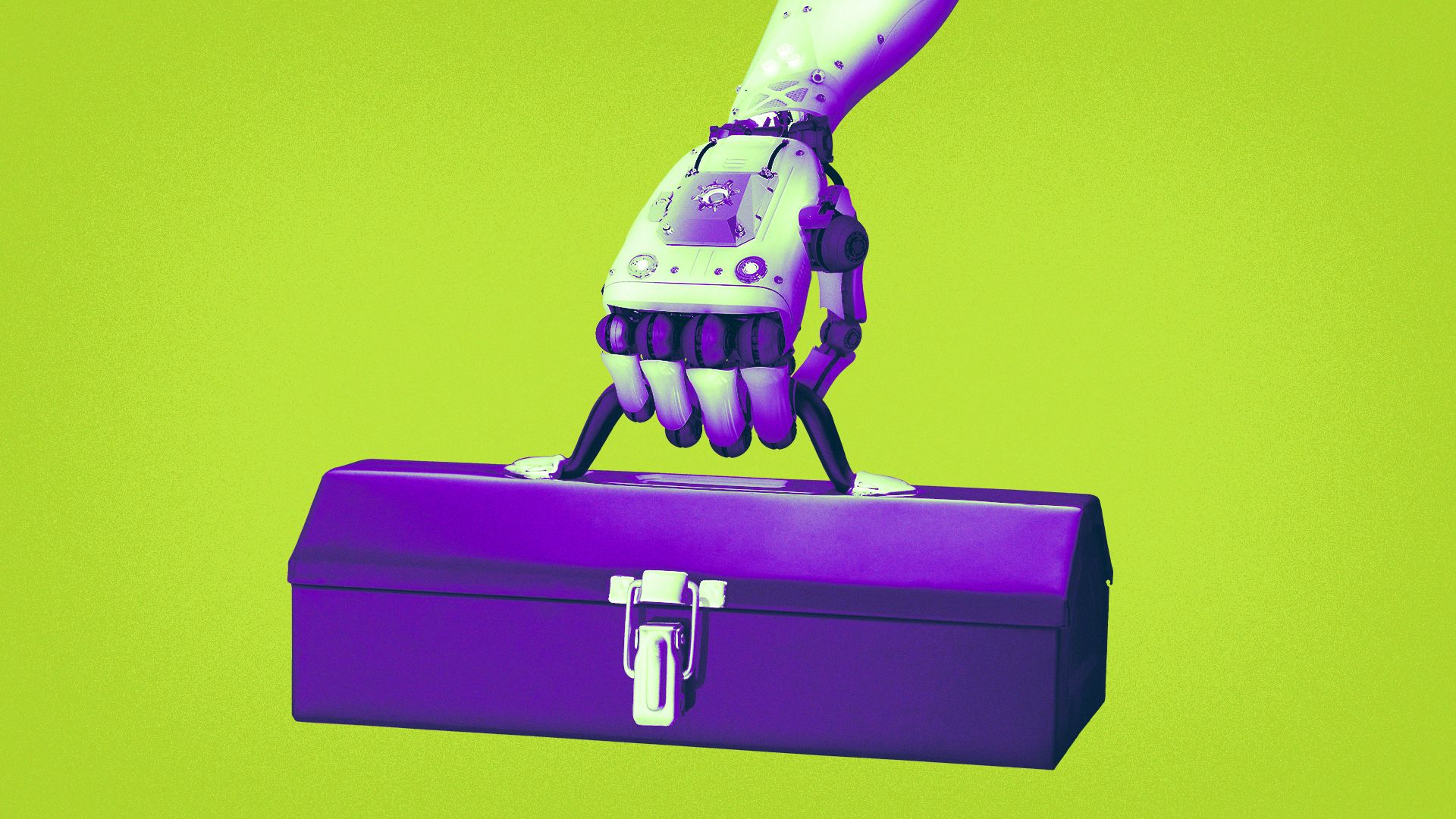
Anthropic is launching plugins for Cowork, its enterprise product built around Claude, according to materials shared with Axios.
Why it matters: Tools like these —which let companies customize AI agents for specific roles and workflows — will enable AI to be treated more like a full-time coworker, rather than a one-off tech fix.
What they're saying: This represents "a transition" for Claude from "being a helpful sort of assistant to a full collaborator," Scott White, head of product for enterprise at Anthropic, tells Axios.
- "You can delegate entire projects... that are hyper-specific to your company and your role at that company," he adds.
Between the lines: This is the latest example of why investors are excited about Anthropic: It's going after enterprise, which could create a revenue windfall.
- This announcement comes after the Claude Code launch, which resulted in $1 billion in revenue, the "fastest-growing product of all time," Anthropic's White says.
- It also comes as the company, valued at $500 billion, is looking to go public in the fourth quarter of this year, per the Wall Street Journal.
What we're watching: How quickly companies adopt plugins — and whether that use meaningfully accelerates Anthropic's enterprise revenue growth.
Got tips? Email me at [email protected]. I would love to hear from you about anything that may be of interest for our investor audience.
Thanks to Jeffrey Cane for editing and to Carolyn DiPaolo for copy editing. See you tomorrow!
Sign up for Axios Markets