
Axios Markets

June 25, 2024

We're dipping our toes gingerly into the world of politics today.
Don't worry, we'll be back to normal tomorrow, once you've got through the next 773 words (3 minutes).
1 big thing: Applying Pascal's Wager to Donald Trump
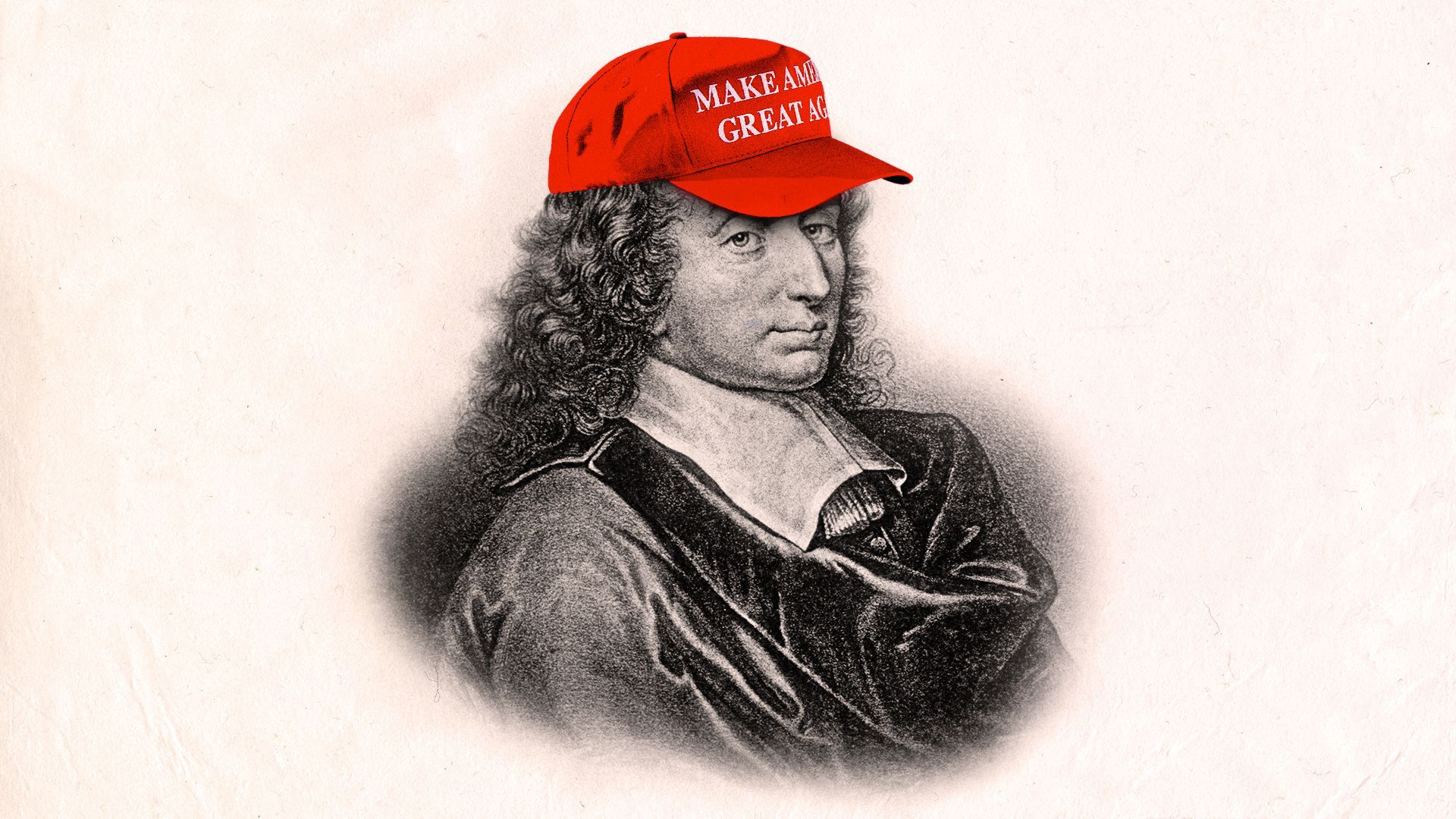
Business leaders who support Donald Trump for president might be doing so because they think he'd be better for business — or they might be supporting him because they want favorable treatment from any future Trump administration.
Why it matters: A key question in any presidential election is which candidate would be better for the economy. One problem with asking CEOs is that they have an incentive to support Trump even if they think Biden is the better candidate.
Between the lines: Trump, more than any other U.S. politician, is open about the way he favors individuals who publicly demonstrate personal loyalty to him, through statements, donations, fundraisers, and the like.
- Business leaders who support Trump do not need to fear being punished should Biden win in November. Biden's team of economic technocrats don't play favorites.
- Conversely, however, any leader who endorses Biden for president can reasonably assume that Trump might carry a grudge against them into the White House.
How it works: Trump has not laid out detailed economic policies, but tariffs in general, and much higher tariffs on China in particular, are emerging as a central part of his vision.
- Because tariffs can differ markedly between industries and even between products within an industry, CEOs with the ear of the president would be well placed to garner a competitive advantage by lobbying to minimize the adverse effects on their own companies.
Flashback: Pascal's Wager, developed by 17th-century French philosopher Blaise Pascal, is an argument for believing in God because (oversimplifying massively) believing in God is a good thing if God exists, and makes no difference if God doesn't exist.
- A similar argument exists for supporting Trump: that it will prove helpful if he's elected, and it won't be harmful if he isn't.
Zoom out: Trump's first term in office was, broadly, good for business and for markets. So was Biden's.
- There's a lot more uncertainty surrounding a possible second Trump term, however, than there is surrounding a possible second Biden term — and business generally likes certainty and predictability.
For the record: "President Trump is focused on rebuilding an economy where hardworking Americans can once again live the American Dream, and he understands business leaders have an important role to play in that effort," said the Trump campaign in a statement to Axios.
- "Business leaders and working families alike are eager for the return of common-sense policies that will lift up all Americans."
The bottom line: When a business leader says that they're supporting Trump because he'd be good for business, it's not easy to tell whether they're saying that because they believe it — or whether they're saying that because they want to be able to cozy up to Trump in the event he's elected.
2. Trump's underwhelming business support


It's very easy to overstate the degree to which Donald Trump is supported by America's business establishment.
Why it matters: Just because corporate America has serious issues with Joe Biden doesn't mean they are in Trump's camp.
By the numbers: Data compiled by Yale's Jeffrey Sonnenfeld show that zero Fortune 100 CEOs have donated to Trump this election cycle.
- That's the same amount of support he had when he opposed Hillary Clinton in 2016.
- In 2020, when he was running as the incumbent, Trump managed to pick up the support of two Fortune 100 CEOs. The previous time a Republican incumbent was running for president, in 2004, George W. Bush picked up the support of 42 such CEOs.
Between the lines: Roughly two-thirds of CEOs are registered Republicans, but they're not MAGA.
- "The top corporate leaders working today, like many Americans, aren't entirely comfortable with either Mr. Trump or President Biden," writes Sonnenfeld in a NYT op-ed. "They largely like — or at least can tolerate — one of them. They truly fear the other."
The other side: Big-name investors seem more likely to support Trump than big-name CEOs.
- Steve Schwarzman of Blackstone is probably Trump's most prominent investment world supporter. Susquehanna's Jeff Yass was described recently by Bloomberg as "a former Never Trumper who's recently softened to become an OK-Fine-Might-As-Well-Be Trumper."
The bottom line: "Mr. Trump continues to suffer from the lowest level of corporate support in the history of the Republican Party," writes Sonnenfeld.
3. The Biden pay rise


If CEOs just wanted to vote their pocketbook, they'd be voting for Joe Biden.
By the numbers: In 2020, Trump's last year in office, the median S&P 500 CEO took home $12.7 million, per Equilar. That was a 10% rise over 2016, or 2.3% after adjusting for inflation.
- Under Biden, CEO pay rose to $16.3 million in 2023, a 28% rise in three years, or 8.9% in real terms.
Thanks to Kate Marino for editing this newsletter and to Mickey Meece for copy editing it.
Sign up for Axios Markets