Axios Markets

May 19, 2026

🌅 Hello there! Stock futures are falling this morning after yesterday's roller coaster on the war left the S&P 500 down for a second consecutive trading session.
Today, a look at President Trump's extraordinary trading disclosures. And, yet more evidence that the stock market is not the economy.
Let's go! In 891 words, a 3.5-minute read.
1 big thing: Trader in chief
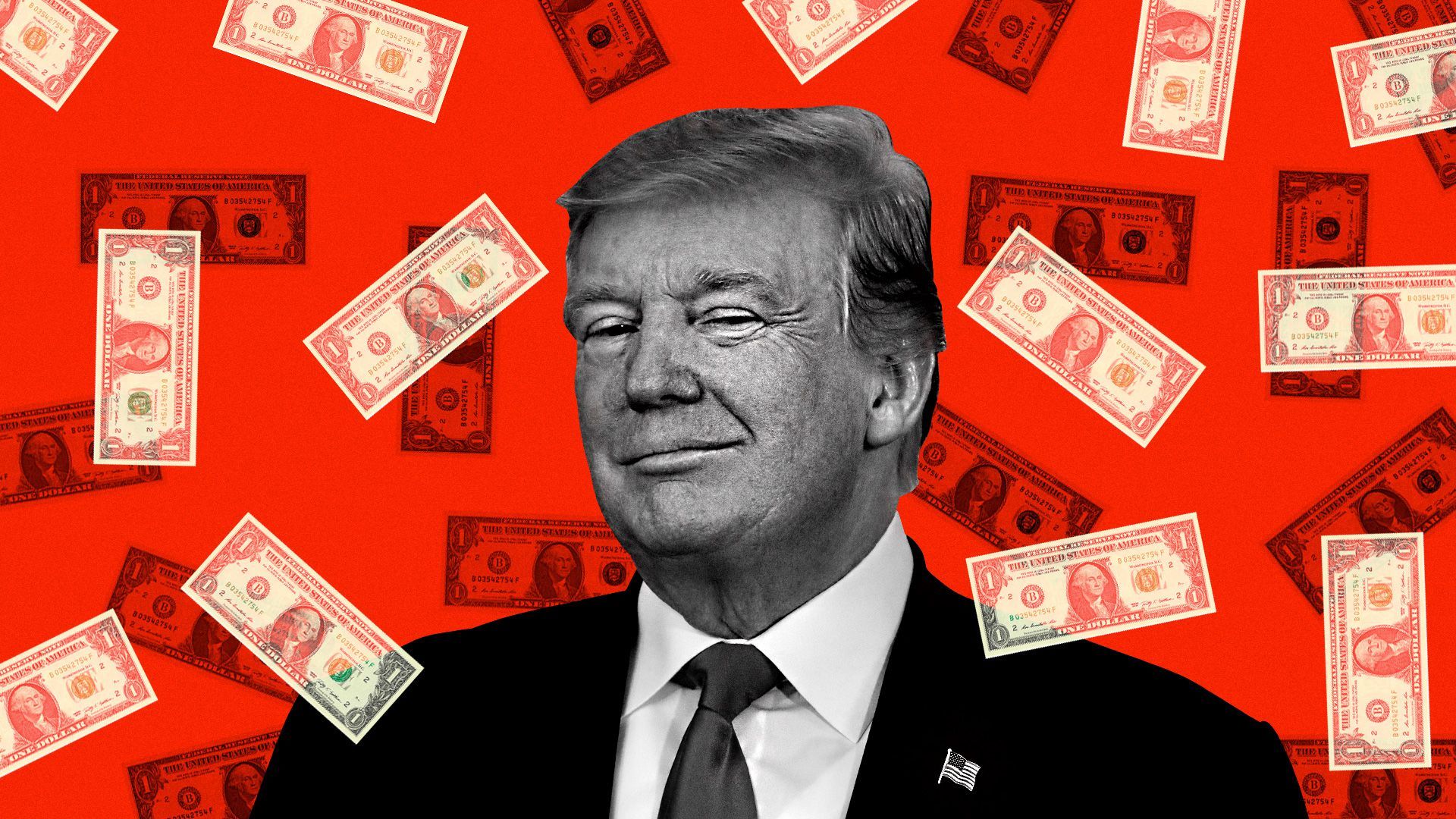
In a government filing late last week, Trump disclosed more than 3,500 stock trades on his behalf in the first quarter — at least $1 million each was purchased in shares of Nvidia, Oracle, Microsoft, Boeing and more.
- The trading included sales of holdings in Meta, Amazon and Walt Disney, among others.
- All told, there were hundreds of millions of dollars worth of transactions, per the Financial Times, although it is not known how much money the president earned (or lost) as a result.
Why it matters: In modern history, no president has had an active investment portfolio quite like this.
- "We've never seen a president trading actively in the stock market before," says Richard Painter, who served as the chief White House ethics counsel under former President George W. Bush and is a critic of Trump.
- The Trump Organization says the president's accounts are independently managed by third-party financial institutions without his input.
Between the lines: The number of trades during the first quarter was enormous — an average of about 60 a day.
- "Other than someone who is plugged into the markets full time, it's essentially impossible to do that," says Steve Sosnick, chief strategist at Interactive Brokers.
- Many of the ultrarich prefer to buy and hold — preferring not to sell assets, which would raise their tax bills, says Ray Madoff, a professor at Boston College Law School, who studies the tax code.
Zoom in: Investors and traders were also surprised by the sheer volume of transactions.
- "In the 40-plus years of my time on Wall Street, this is an unusual amount of trading by any standards," Eric Diton, president and managing director at The Wealth Alliance, told Bloomberg.
- The pace of trading looks close to something an algorithm would pull off, Sosnick tells Axios.
Friction point: Trump critics were quick to pounce on the disclosure as indications of wrongdoing — pointing to the timing of certain trades made before or after key announcements or social media posts.
The other side: "President Trump's investment holdings are maintained exclusively through fully discretionary accounts independently managed by third-party financial institutions with sole and exclusive authority over all investment decisions," a spokesperson for the Trump Organization said.
- "Trades are executed and portfolios are balanced through automated investment processes and systems administered by those institutions."
- "Neither President Trump, his family, nor The Trump Organization plays any role in selecting, directing, or approving specific investments. They receive no advance notice of trading activity and provide no input regarding investment decisions or portfolio management of any kind."
Context: Presidents have enormous sway over the markets and private sector. As a result, modern-day presidents have put their investments in blind trusts, broad-based mutual funds or Treasury bonds.
- Former President Jimmy Carter famously decided to sell his personal stock holdings upon taking office. He placed his peanut farm in a blind trust — though it wasn't without controversy.
What to watch: Separately, while there is no indication that Trump or administration insiders were involved in any way, there have been a number of unusual trades in oil futures and prediction markets just before announcements on the Iran war.
- Still, those trades "have emerged as one of the most politically dangerous storylines of Trump's second term," Axios' Zachary Basu writes.
- The trades have helped fuel suspicions that the rules are different for the powerful in Washington — and in the markets.
- "One of the strong takeaways by the public is a growing conclusion that financial markets are fixed," RSM chief economist Joseph Brusuelas says.
Go deeper: Trumpworld's presidential gold rush
2. The stock market isn't much concerned with regular folks right now

We'll get a consumer vibe check as Home Depot, Walmart, Target and a few other major retailers report earnings this week.
Why it matters: These reports will offer a glimpse into how rising inflation and higher gas prices are pinching American wallets.
The intrigue: Those pressures matter a lot to real people trying to get by and to lawmakers heading into midterm elections.
- Yet, for stock investors overall, these companies simply don't matter that much.
The big picture: Right now, AI is the force driving the S&P 500 and Nasdaq, and even the country's largest retailers are sitting in the back seat.
Zoom in: Energy and the oil-sensitive consumer discretionary and consumer staples sectors account for just 18% of collective S&P 500 earnings compared with 38% for information technology and communication services, Goldman Sachs analysts pointed out in a note earlier this year.
- "What's happening in AI is easily outweighing at the moment what's happening with energy prices," Ben Snider, chief U.S. equity strategist at Goldman Sachs, told Axios last week.
Reality check: Dynamics can always change.
What to watch: The big AI vibe check — otherwise known as Nvidia's earnings report — is the one investors are awaiting this week, and that drops tomorrow.
Send me tips and story ideas: [email protected] or reply to this email.
Thanks to Jeffrey Cane for editing and Carlin Becker for copy editing this edition.
Tell your friends to sign up here. You can also hit me up on X.com or Bluesky at EmilyRPeck.
Sign up for Axios Markets