Axios Markets

May 09, 2024

👋 Welcome back. President Biden is boosting his outreach to America's CEOs. Axios' Hans Nichols outlines the administration's charm offensive.
- Plus, Peacock is rebooting "The Office," which was a great TV show. Do we need a new one?
Today's newsletter is 969 words, 4 minutes.
1 big thing: Financial bankruptcies are ... different
FTX has now officially joined the ranks of dramatic financial bankruptcies — including Lehman Brothers and MF Global — in which customers actually get paid back in full.
Why it matters: Such outcomes are more common than you might think, largely because financial bankruptcies are a unique animal where the ultimate losses borne by creditors are rarely a good guide to the magnitude of the damage caused.
How it works: Financial companies tend to have large balance sheets, filled with assets that can often be hard to value or sell. Their liabilities, however, are generally unambiguous: Depositors and other creditors know exactly what they are owed.
- When the market worries that the assets are worth less than the liabilities, it tends to lose trust in the creditworthiness of the institution and a bank run results.
- Creditors pull their deposits en masse, forcing the company into a fire sale of its assets to meet its obligations. That fire sale in turn drives the price of the assets down even further, making the company clearly insolvent. Bankruptcy tends to arrive very quickly.
Between the lines: The minute the bankruptcy filing goes into effect, the whole dynamic changes. Creditors have no choice but to sit and wait to see how much they get paid out, and it's the administrator of the estate who has a large degree of freedom in terms of when and how to sell the remaining assets.
- By waiting until those assets rise in value and then selling them expertly, the total amount realized can often exceed the value of the liabilities.
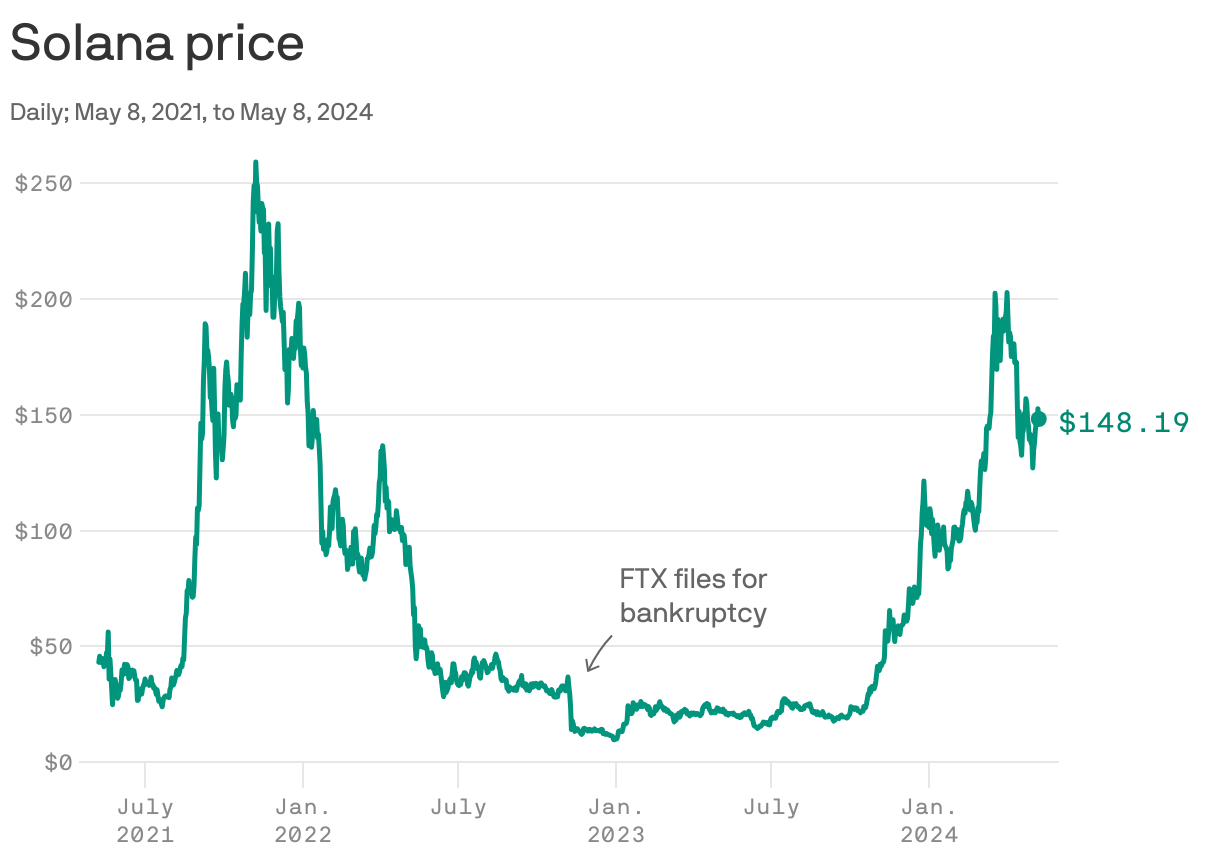
- That's what happened at FTX, where the rise in value of cryptocurrency Solana (SOL) in particular helped to increase the value of the company's assets by billions of dollars.
- FTX held more than 60 million SOL, which were worth about $1 billion when the company filed for bankruptcy in November 2022. By March 2024, the value of SOL had risen tenfold.
Flashback: Something very similar happened with the bankruptcies of Lehman Brothers and MF Global. In both cases, customers ended up being paid out in full after asset prices recovered, although the process took many years.
- During the financial crisis, Citigroup split itself into a "good bank" and a "bad bank," with the intention of selling off the assets in the bad bank, Citi Holdings, while losing as little money as possible. In the end, Citi Holdings turned out to be a surprise success.
The other side: Even when customers get paid back in full, equity holders and unsecured creditors are often wiped out. And as anybody who remembers the Lehman bankruptcy knows, financial bankruptcies tend to have huge ramifications far beyond the narrow confines of the creditor committee.
The bottom line: In most bankruptcies, creditors get zeroed so that the underlying business can end up continuing unencumbered by large debt service obligations.
- In financial bankruptcies, the value of the assets is normally much greater than the value of the underlying business. That's why volatile market valuations become crucially important.
2. Another kind of gender gap


For the seventh consecutive year, women reported being less satisfied with their jobs than men, according to a survey from the Conference Board out this week.
Why it matters: Women make up nearly half the workforce, and employers need to attract, hire and retain them.
Zoom in: In almost every aspect of work the Conference Board asked about, from pay to quality of leadership and benefits, women were less happy.
- The biggest divergences were in their feelings about the company bonus plan, opportunities for future growth and health benefits.
The big picture: Considering the long-standing gender gap in pay and other inequities at work, perhaps it's not shocking that there's also a difference in the way men and women feel about their jobs.
Zoom in: The gap between men and women wasn't very wide, and sometimes didn't exist at all, in the first few years after the Conference Board started tracking this in 2011.
- But in 2017 it broadened out. That coincides with the emergence of #MeToo, effectively a nationwide feminist consciousness-raising.
- In the wake of the sexual assault revelations about Hollywood producer Harvey Weinstein, women started speaking up about discrimination and harassment in the workplace — with stories in the press emerging seemingly every day.
Between the lines: With more conversation and attention paid to gender inequality, women were perhaps more likely to see and recognize the sexism they'd previously written off.
Women are also more likely to be juggling family and care responsibilities, too, also dragging down workplace satisfaction.
- The satisfaction gap widened again in 2020 when schools and day cares were closed and many women were taking on even more of this work.
- Even now, women are working longer hours outside their paying jobs on housework and child care, the Department of Labor's deputy director Tiffany Boiman told Axios recently, pointing to data from the American Time Use Survey.
- "This is definitely making them feel squeezed," she said.
3. Speaking of job satisfaction...
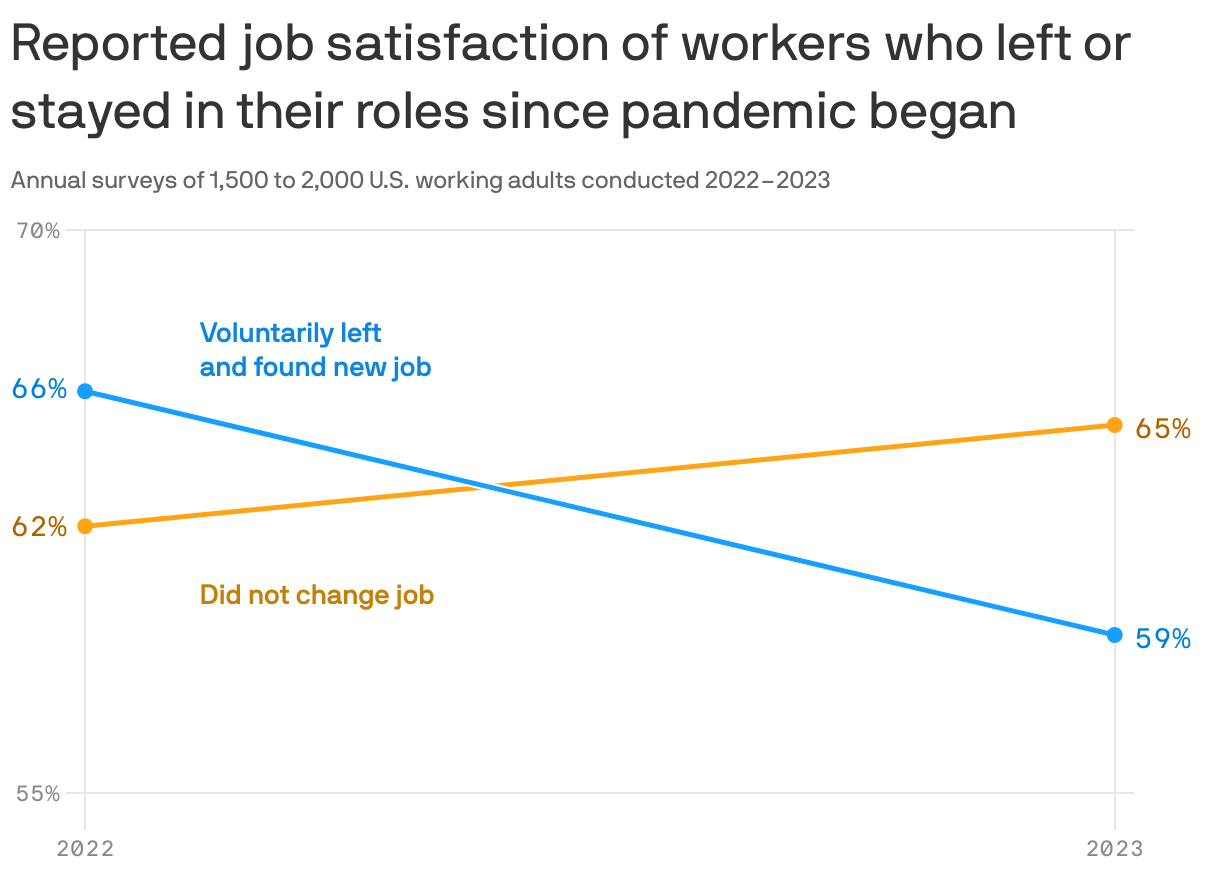
Call it Great Resignation regrets: Workers who switched employers after the pandemic hit were less satisfied with their jobs last year than those who stuck around, per a new survey from the Conference Board.
Why it matters: It's a big change from 2022 when job switchers were more satisfied and may indicate some other simmering issues in the labor market.
Zoom in: Workers who switched jobs after the pandemic were more likely to say they weren't satisfied with their job security.
- Insecurity about employment status is likely more of a concern in 2023, as the frenzy of hiring that spurred the Great Resignation died down.
- And firms are more apt to let go of recently hired workers. As the adage goes: Last in, first out.
The bottom line: The grass isn't necessarily greener on the other side, the Conference Board notes in its report.
Did someone send this newsletter to you? Tell them thank you from us, and please subscribe here.
Axios Markets is edited by Kate Marino and Mickey Meece.
Sign up for Axios Markets