Axios Markets

April 30, 2024
Welcome back. It's a big day for CEO departures: Noel Quinn, the HSBC CEO who oversaw the bank's decision to focus on China, is out. So is Paramount's Bob Bakish. More on that below.
OK, let's do this. Today's newsletter is 924 words, 3.5 minutes.
1 big thing: Free tax prep is a hit
Illustration: Natalie Peeples/Axios
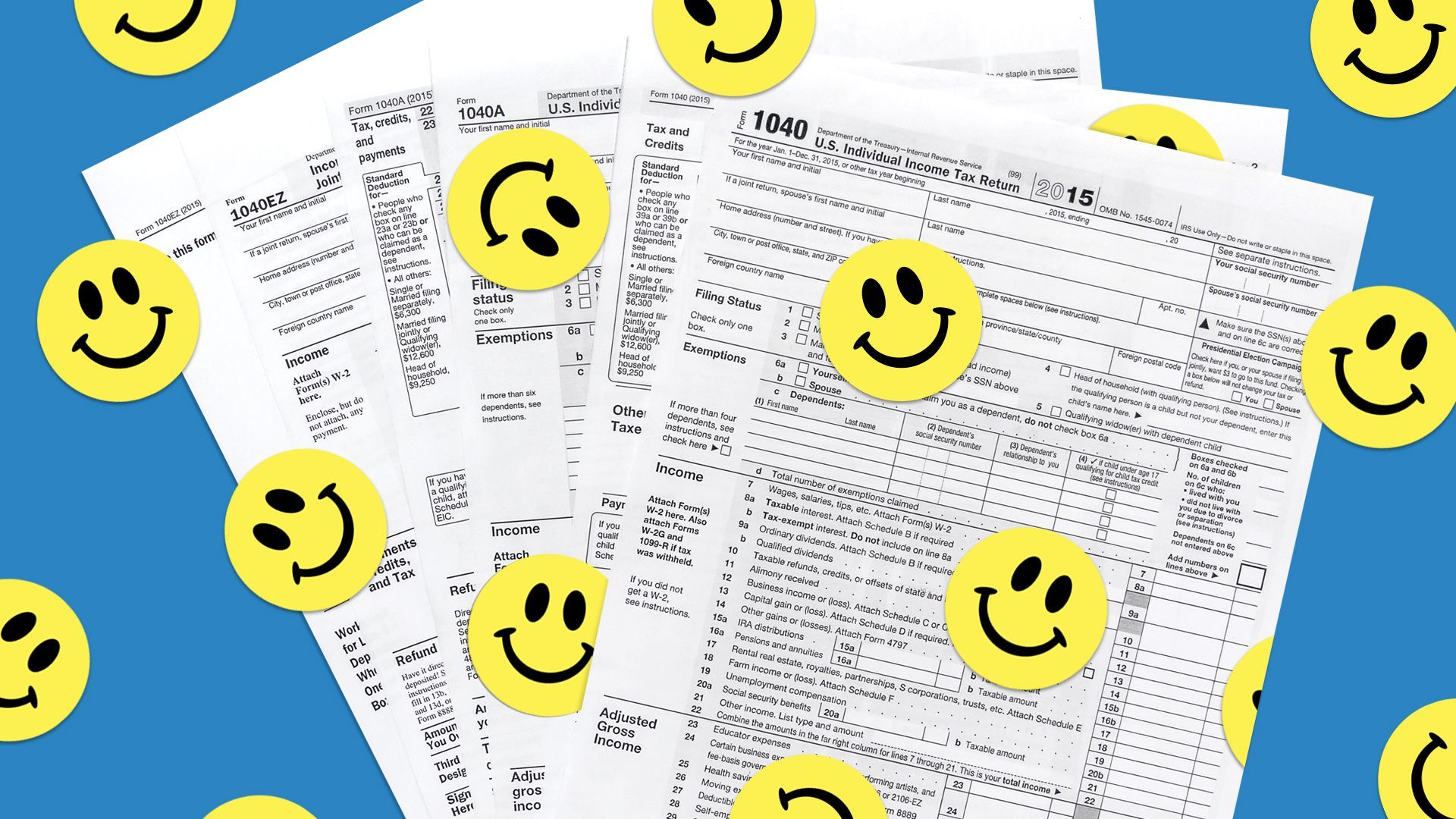
The Biden administration says that the IRS' Direct File program, which allowed folks to file their taxes directly online, was a hit โ with use exceeding the agency's expectations and overwhelmingly positive reviews, Emily writes.
Why it matters: This could mark a turning point in the way millions of Americans pay their taxes.
- It could also spell trouble for the two big tax prep companies: Intuit, which owns TurboTax, and H&R Block.
Catch up fast: The IRS launched the Direct File pilot program this year in 12 states, targeting folks with simple tax returns based on W-2 forms.
State of play: More than 140,000 taxpayers used Direct File, surpassing the agency's goal of 100,000.
- Direct File users saved an estimated $5.6 million in tax prep fees, the Treasury Department said in a release late last week
- And 90% of Direct File users rated their experience as "excellent" or "above average," according to a survey of about 11,000 conducted by the General Services Administration.
Zoom out: The idea for a free tax filing system isn't new โ there were efforts going back decades, but the tax prep industry fought them off, as reported exhaustively by ProPublica.
The big picture: The U.S. is an outlier when it comes to taxes. While other nations also require people to self-report their financial information annually, most of them do some of the work to make that easier.
- For example, 83% of advanced and emerging economies pre-fill some part of the tax return with information reported by third parties, including wages and investment profits, according to a report from the IRS.
- Many have systems where you can file for free directly with the tax agency.
- In the U.S., of course, things are more complicated. Americans spend, on average, about nine hours and $150 a year doing their taxes, according to IRS data from last year.
It took just a half-hour to file taxes using Direct File for Marina Garcia, a project manager at a nonprofit in Texas that advocated for the free file program. That's quicker than it's taken in the past with H&R Block, her typical go-to, she tells Axios.
The other side: Intuit doesn't see a success story here, arguing that the Direct File program is costly for taxpayers and unnecessary.
- Some Republicans are also against the idea of a free tax filing system, viewing it as a waste of taxpayer money since there are private sector options that are better, the WashPost reports.
What's next: The IRS said it still needs to analyze the data from this tax season to decide its next moves. Advocates for the program hope to see it expanded.
2. Why Paramount's CEO lost his job
Illustration: Natalie Peeples/Axios
The difference between running a company and controlling a company was made starkly apparent yesterday when Bob Bakish, the CEO of Paramount, was unceremoniously ejected from his position, in a move that brings a sale one step closer, Felix writes.
Why it matters: Bakish had a fiduciary responsibility to all shareholders โ not just Shari Redstone, who has a roughly 10% stake in the company. As such he opposed plans to cash Redstone out while massively diluting the rest of the shareholder base.
- Redstone, however, controls Paramount through her ownership of National Amusements, which in turn owns most of Paramount's Class A voting shares.
Where it stands: Paramount is in exclusive talks with David Ellison's Skydance, which reportedly wants to buy National Amusements. Once he owns National Amusements, Ellison would then force Paramount to buy Skydance itself at a $5 billion valuation.
Our thought bubble: Bakish, representing all Paramount shareholders equally, couldn't get behind such a deal. Now he's out.
- In his place is a triumvirate "Office of the CEO" with no real ability to influence negotiations.
The bottom line: Stock analysts didn't get to ask any questions on Paramount's earnings call yesterday. That's probably because at this point no one really cares what they think.
3. Young America's wealth boom


Household wealth for those under 40 in the U.S. is up 49% from its pre-pandemic level, according to a new analysis from the left-leaning Center for American Progress, Emily writes.
Why it matters: Young households haven't seen wealth growth like this since the Federal Reserve first started tracking this data in 1989.
Stunning stat: Millennials โย born between 1981 and 1996 โย saw their wealth double over this period, per CAP.
Zoom in: Wealth includes the value of a household's assets, including stocks, bank accounts, and real estate, minus its liabilities, such as mortgages and student loan debt.
How it works: Those under 40 have seen big asset gains and have been able to reduce some liabilities, CAP points out.
- Average housing wealth rose $22,000 โย as homeownership rose and home prices soared. Liquid assets climbed, courtesy of leftover savings from pandemic relief and higher wages.
- And the value of the group's financial assets, mostly stocks and mutual funds, increased by $31,000.
- Meanwhile, nonhousing debt fell by $5,000. With more money in their pockets, people could pay off credit cards (the student loan moratorium helped), or not take that debt on at all.
For the record: The Federal Reserve data looks at average wealth, which raises the question: Are these gains widely distributed?
- CAP says these gains are broad-based, pointing to separate (but less timely) data from the Fed's survey of consumer finances that show a 140% increase in median wealth for households under 35 from 2019 to 2022.
Reality check: Older Americans are still far wealthier.
The bottom line: Without any apparent dip in their avocado toast consumption, young Americans have managed to increase their financial security.
Axios Markets is edited by Kate Marino and copy edited by Mickey Meece.

Sign up for Axios Markets

Stay on top of the latest market trends and economic insights