Axios Markets

April 18, 2025

🐰 Happy Easter! Economists may not love the idea of a massive hike in tariffs, but they still agree that a large and persistent trade deficit is problematic. More on that below.
- Plus: Dow idiosyncrasies, and what happens when your boss gets fired.
All in 870 words, a 3-minute read.
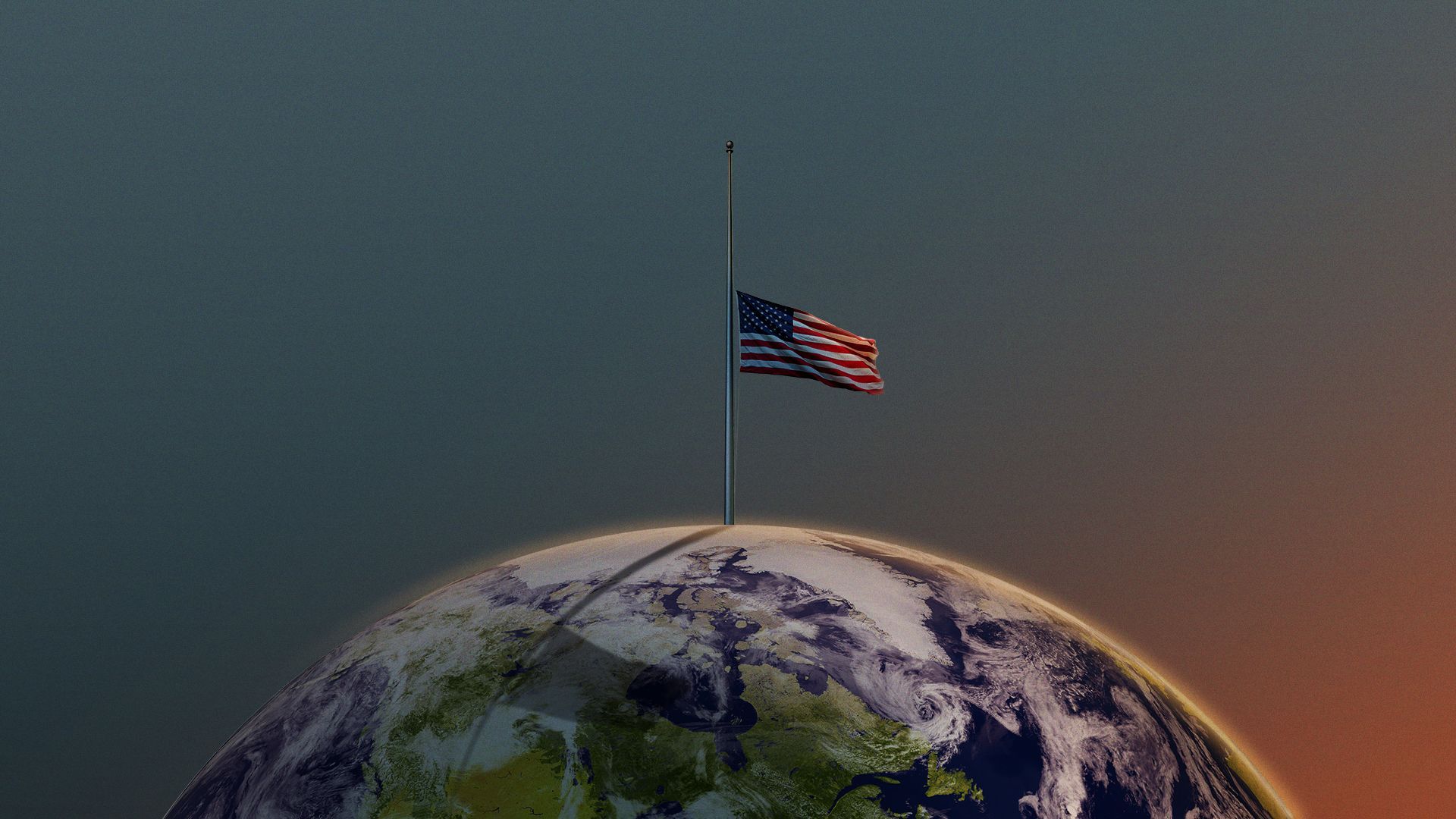
1 big thing: The end of the American world
Pro-globalist, free trade institutions have an awkward admission: President Trump is right.
Why it matters: The era of America as the world's biggest customer looks like it might be over.
- The leaders of major international organizations now warn the world has relied too much on the U.S. for economic growth, echoing White House calls for the rest of the globe to pick up the slack.
What they're saying: "Countries should renew their focus on internal and external macroeconomic imbalances," Kristalina Georgieva, the head of the International Monetary Fund, said yesterday.
- "External surpluses and deficits can create fertile ground for trade tensions," she said in a speech entitled "Toward a Better Balanced and More Resilient World Economy."
The World Trade Organization had a similar message this week.
- "Over-concentration, whether it's where we buy from or where we sell to, leads to over-dependence, making economies more vulnerable to shocks and fostering a sense of unfair burden sharing," Ngozi Okonjo-Iweala, the group's director, told reporters on Wednesday.
- "The U.S. has a point when it says too many countries are dependent on its market or the production of some critical inputs are too concentrated in certain sectors and geographies," she added.
The big picture: That is a nod to countries that sell far more goods and services abroad than they buy from others.
- In the current protectionist era, that creates a huge new risk. Never before has the U.S. — the world's biggest consumer — threatened such a sudden withdrawal from the global stage.
Between the lines: Trump and some top economic advisors believe that America has footed the global bill for too long.
- But the U.S. imports only what there is demand for. Domestic consumers get low-cost goods, while manufacturers can source cheap inputs as they focus on producing more complex products. Tariffs threaten those benefits.
"Horrendous imbalances have devastated our industrial base and put our national security at risk," Trump said before announcing the reciprocal tariffs that were paused exactly one week later.
- Stephen Miran, the chair of the Council of Economic Advisors, called for "improved burden-sharing at the global level" in a recent speech.
Threat level: The rapid unraveling of the global trading system will be painful, with no time for the most vulnerable nations to adjust.
- The WTO forecast this week that global trade will plummet this year and weigh on economic growth as a result of Trump's tariffs.
- The IMF will release its latest economic forecasts next week, which Georgieva said will include "notable markdowns."
The bottom line: "Smaller advanced economies and most emerging markets rely more on trade for their growth, and are thus more exposed," Georgieva said.
2. Why the Dow Jones tumbled yesterday

The Dow Jones Industrial Average fell 527 points yesterday, despite the fact that 20 of its 30 components actually rose in price. The culprit: UnitedHealth Group, whose $131 decline was singlehandedly responsible for an 805-point decline.
Why it matters: A single highly-priced stock, if it drops far enough, can now create a greater point drop in the Dow today than the 508-point plunge that triggered panicked headlines around the world in 1987.
Follow the money: S&P Dow Jones Indices confirmed to Axios that the fall yesterday represents the largest point impact for the Dow on record.
Between the lines: The Dow is a weird beast, because it's an average and not an index. And as such, a stock like UnitedHealth, which trades for more than $400 per share, has a significantly higher weighting in the average than far more valuable companies like Apple or Nvidia.
The bottom line: If you care about what the stock market did yesterday, look to the S&P 500 (+0.1%), and not to the Dow (–1.3%).
3. Companies are cutting more managers
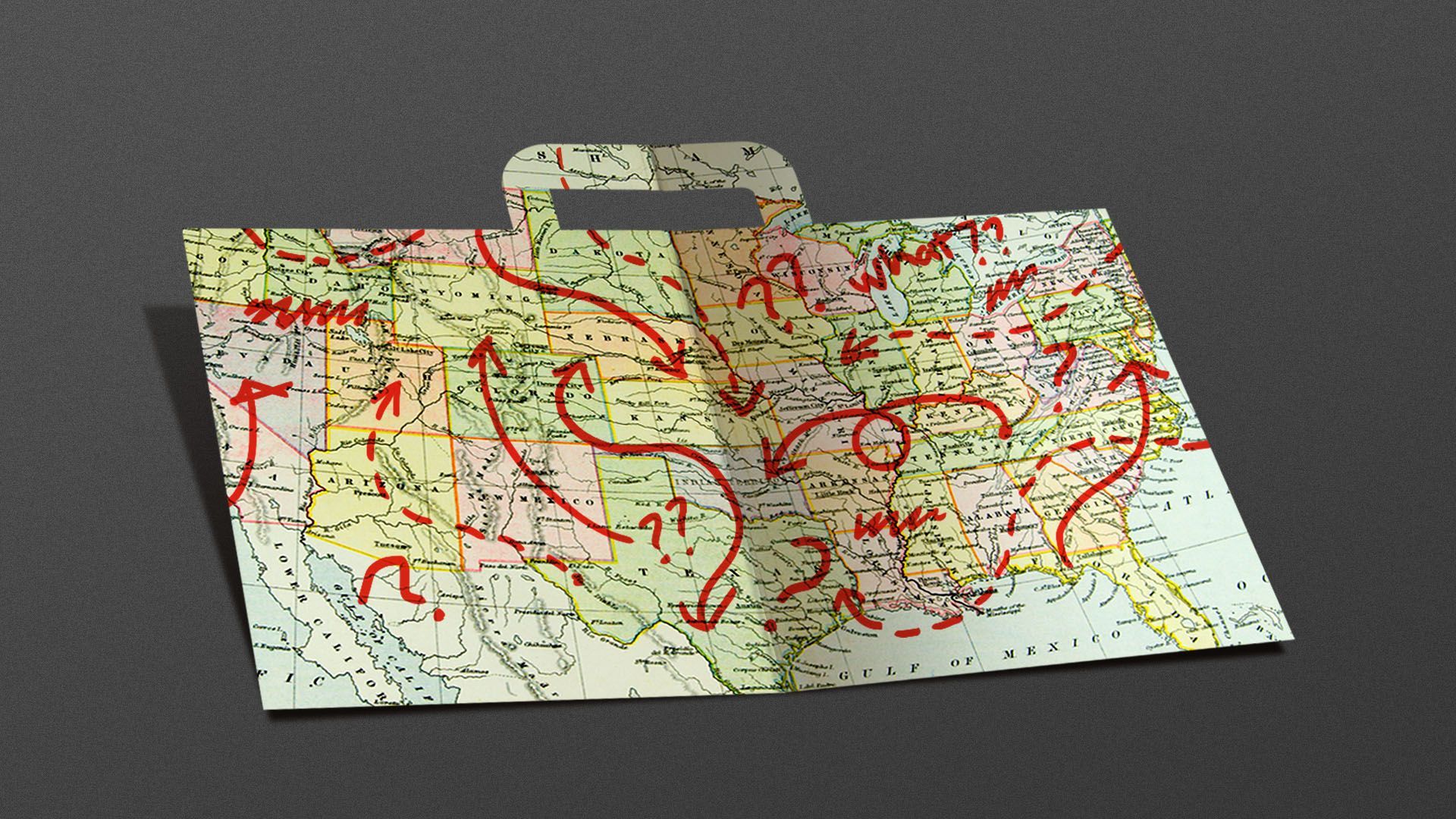
Firms looking for ways to hold down costs in the wake of Trump's tariffs have a new target in their crosshairs: managers.
Why it matters: The "unbossing" trend is accelerating, per a new survey out yesterday from Korn Ferry, a global consulting firm.
Zoom out: The trend can be traced back to the tech layoffs in 2022 and 2023, perhaps most famously at Meta.
- "I don't think you want a management structure that's just managers managing managers, managing managers, managing managers, managing the people who are doing the work," CEO Mark Zuckerberg reportedly said at a meeting during his 2023 "year of efficiency" push.
Zoom in: Sometimes there are too many layers in an organization, but often people need managers.
- Losing them often leaves employees directionless and unmoored, said Maria Amato, a senior client partner at Korn Ferry who specializes in employee experience.
- 44% of 2,000 professionals in the U.S. surveyed by Korn Ferry said their company has cut back at the manager level, and about 40% of them said they feel "directionless" as a result.
- It's kind of like a rowing team, if everyone is rowing their hardest, but going in different directions, then that's "not useful," Amato said. The manager is supposed to all get them moving the same way.
Between the lines: Because managers typically cost more than individual contributors, or ICs, plenty of firms see getting rid of them as an easy way to get rid of an expensive line item.
The bottom line: Be nice to your boss. She might be on her way out.
Thanks to Pete Gannon for editing and Anjelica Tan for copy editing. And if you're a stock trader, enjoy your Friday off!
Sign up for Axios Markets