Axios Markets

June 28, 2024

Good morning! If you missed last night's debate you can catch up fast with Axios coverage. Today we're tackling other stuff, including two kinds of Japanese currency — the yen and Pokémon cards.
- But first, the Supreme Court's latest hit to the power of the executive branch. Let's go! Today's newsletter is 792 words, 3 minutes.
1 big thing: Supreme Court curbs the SEC's power
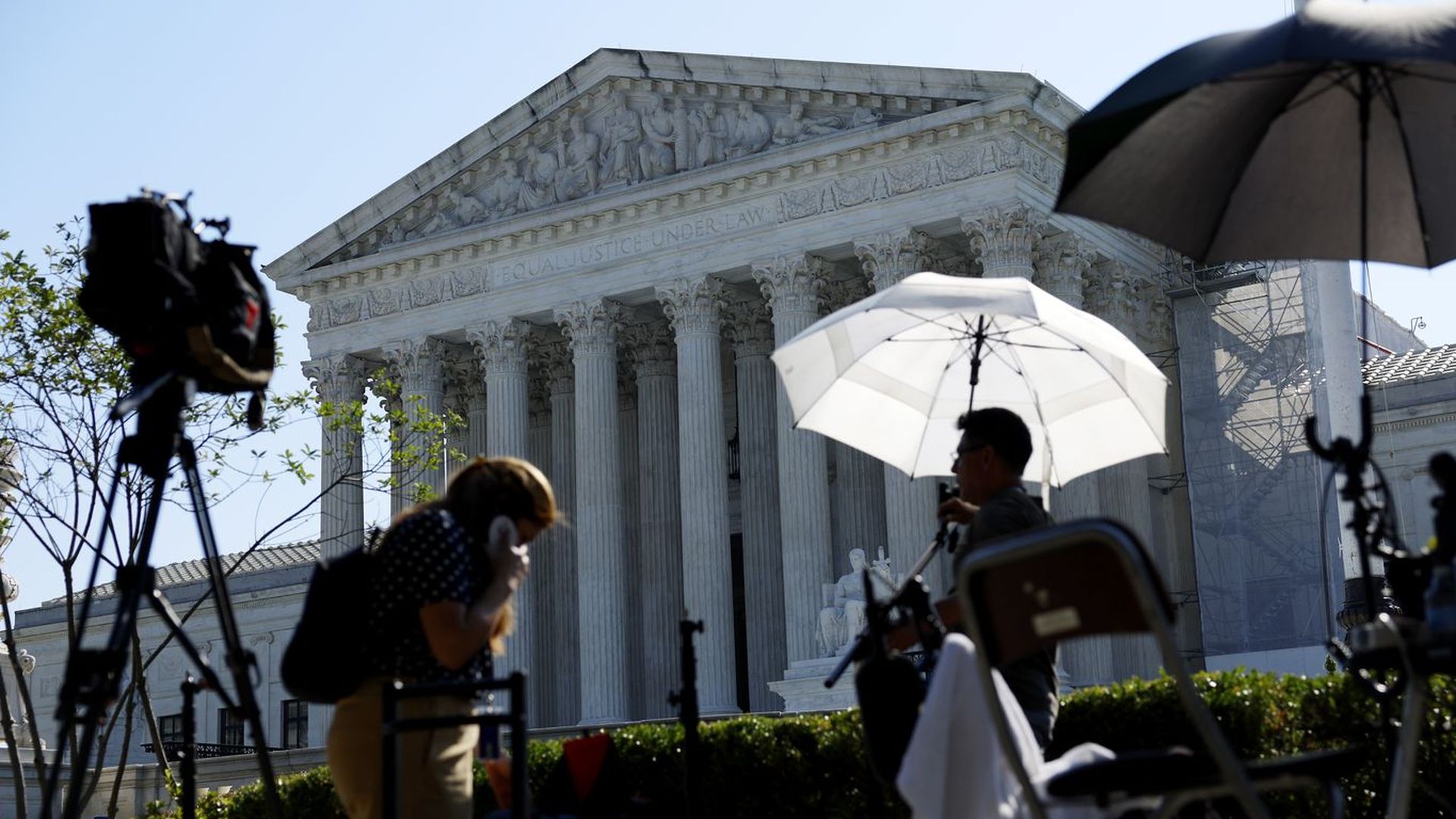
If the Securities and Exchange Commission wants to fine a fraudster, they'll likely need to take it to the courts, per a U.S. Supreme Court ruling issued yesterday.
Why it matters: The ruling could slow the agency's roll, making it more costly and time-consuming to pursue individuals for violating securities law.
- It's part of the court's larger project to curb the so-called administrative state, the federal regulators that enforce laws in the public's interest. It could affect a host of other agencies, including the EPA and OSHA.
Zoom in: In SEC v. Jarkesy the court curbed the agency's ability to use its internal court system to levy fines. Defendants in those cases have a right to a jury trial, Chief Justice John Roberts wrote for the 6-3 majority.
Catch up fast: George Jarkesy ran two hedge funds that the SEC said were a fraud. The agency brought a case against him before an administrative law judge.
- The judge ordered Jarkesy to pay a penalty of $300,000 and disgorge $685,000 in illicit profits — the SEC board signed off.
- Jarkesy appealed to the conservative 5th Circuit, which ruled that, under the 7th Amendment, he was entitled to a trial by jury.
State of play: The SEC already took the hint from a 2018 decision that the Supreme Court wasn't thrilled with the in-house system, and was bringing its bigger cases to the courts, says James Tierney, a former agency staff attorney.
- The new ruling could mean that even run-of-the-mill actions go to court — for example, a case where a defendant agrees to pay a penalty and settles.
"The SEC doesn't have infinite resources, and so if the cost of settlement goes up, it means they're going to have fewer resources to bring enforcement actions," says Tierney, now an assistant professor at Chicago-Kent College of Law.
- That's good news for the financial industry, which has long pushed back on the agency's actions.
For the record: Until the passage of Dodd-Frank, the SEC had to go to the courts to levy fines — unless the defendant agreed to bypass them.
- The practice of imposing monetary penalties outside of court has been criticized not only by the finance industry but also by legal experts for eroding the power of the courts, as Bloomberg columnist and Harvard Law professor Noah Feldman wrote about this case in 2015.
What's next: The decision may also have some implications for private market regulators that issue penalties against their members, like the Financial Industry Regulatory Authority, says Tierney. They could see their power eroded, too.
The bottom line: The Supreme Court is growing increasingly skeptical of SEC enforcement, Tierney says. "I don't see it stopping there."
- "I see this going to the heart of how securities markets have been regulated for the last century."
2. The Pokémon trading card boom

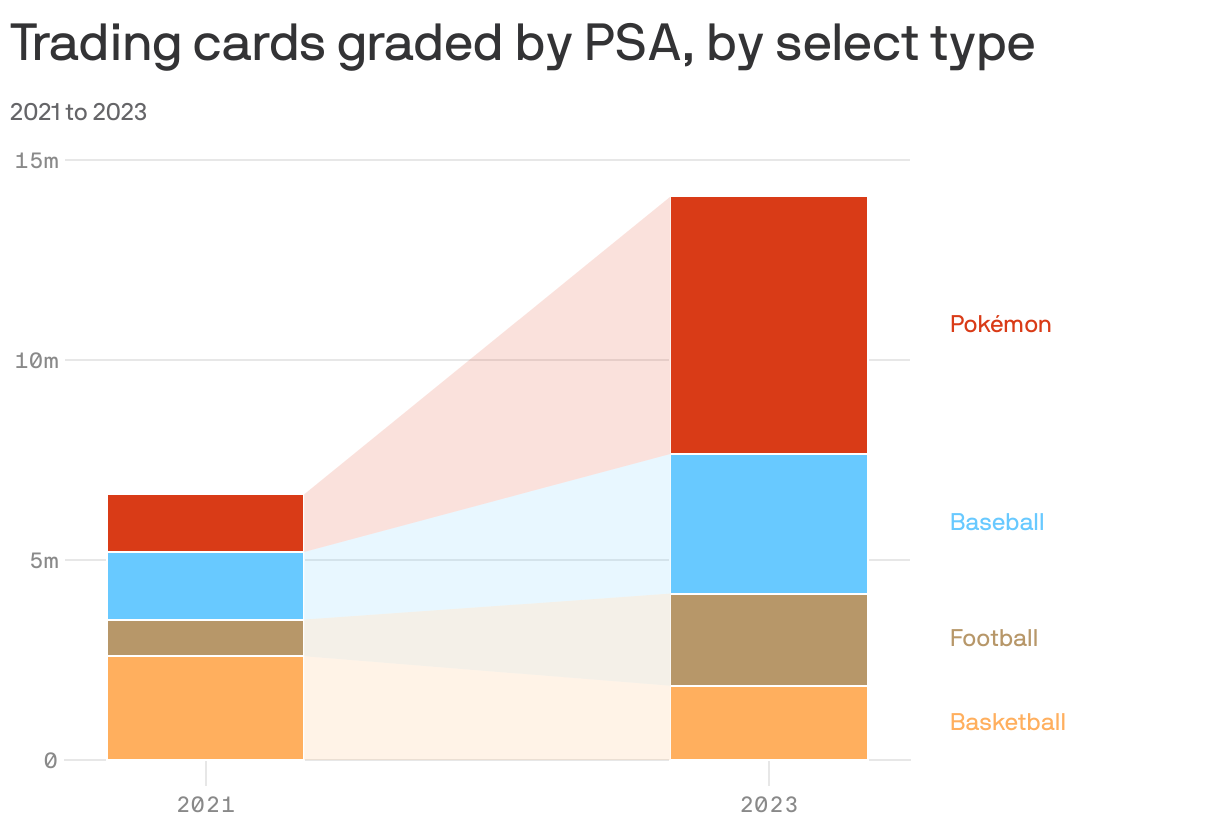
Pokémon cards are surging in popularity, with collectors getting millions of them professionally graded per year.
Why it matters: Pokémon is emerging as the next big asset class in the trading card world.
By the numbers: Professional Sports Authenticator (PSA) — the world's leading certifier of trading cards — says 43% of the cards it graded in 2023 were Pokémon, up from 17% in 2018.
- Each card costs a minimum of $15 to grade, rising to as much as $8,000 for cards worth more than $250,000.
The big picture: The Pokémon boom stems from a new generation of collectors — people who were kids when the cards debuted in the late 1990s and thereafter — becoming serious about the hobby, PSA president Ryan Hoge tells Axios.
- "That was their childhood," Hoge says. "They're in their early 30s now, they have some disposable income, and they're going back and wanting to reconnect with that and find their favorite characters — the same way somebody might have gone back and collected Michael Jordan rookie cards."
Between the lines: A Pokémon representative said the company's officials were not available to comment, but outside experts say the new wave of interest also portends an uptick in values.
Follow the money: Social media influencer and wrestler Logan Paul spent $5,275,000 to acquire a PSA Grade 10 Pikachu Illustrator card in 2021, setting a record for the "most expensive Pokémon trading card sold at a private sale," per the Guinness Book of World Records.
The bottom line: The surge in Pokémon card grading requests is likely to be mirrored by a similar increase in trading volumes. What that means for valuations remains unclear.
3. Japan gets even cheaper


The value of one Japanese yen has fallen in half, in dollar terms, since early 2012.
Why it matters: The ever-weakening yen has driven tourism in the country to record highs. It has also prompted both businesses and local officials to start experimenting with charging higher prices to tourists.
Thanks to Kate Marino for editing this newsletter and to Mickey Meece for copy editing it.
Sign up for Axios Markets