Axios Markets

May 28, 2025


🐪 Good morning! Today we're digging into sweeping spending changes coming out of Washington, which will significantly impact services and benefits for the unemployed and single parents.
- Plus: Exclusive new data on how tariffs are affecting smaller companies.
All in 1.090 words, a 4-minute read.
1 big thing: Breaking the fixing funds for states
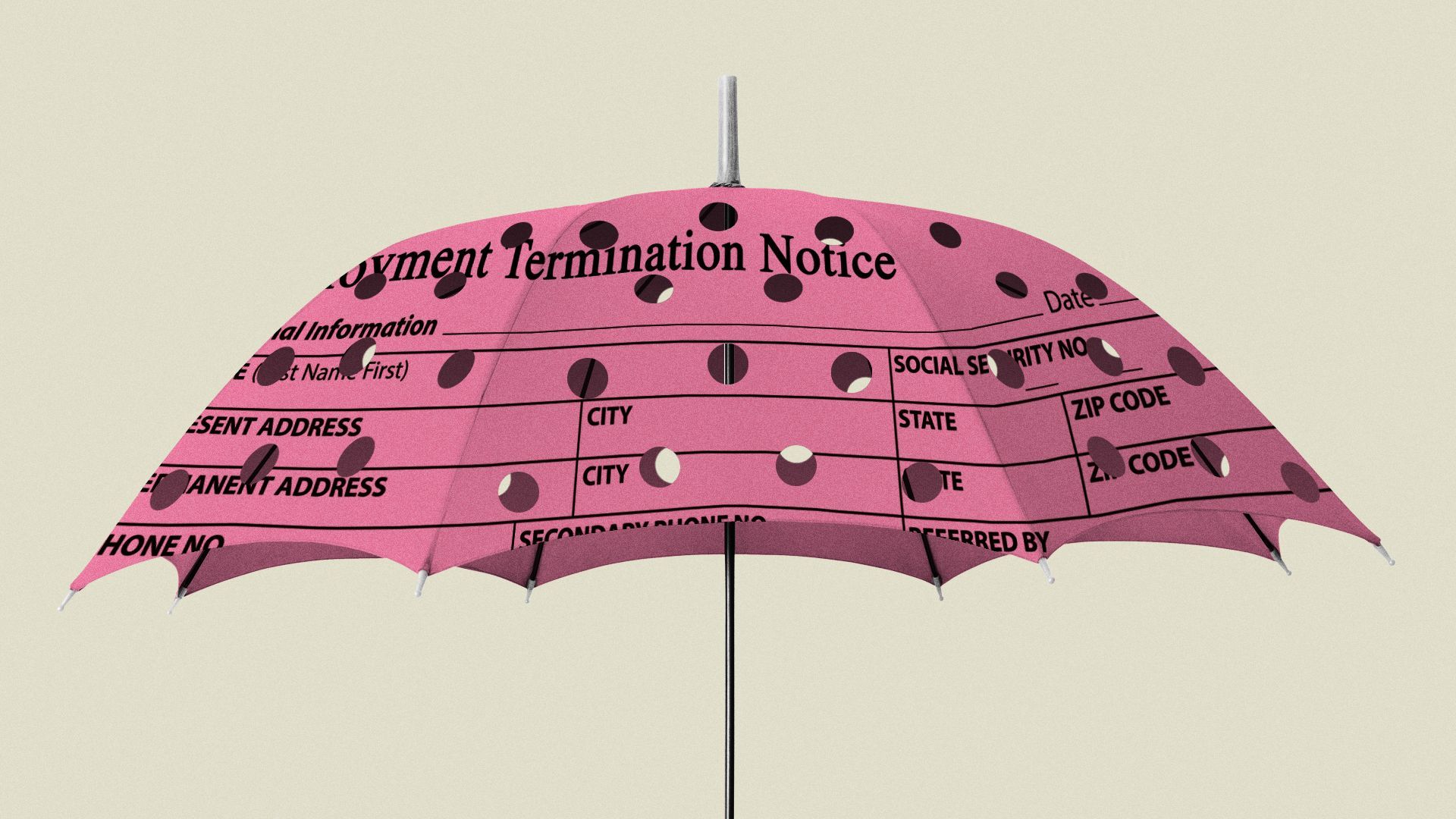
The White House is terminating $400 million in funds for states meant to modernize their unemployment insurance systems.
Why it matters: These systems fell apart when unemployment soared in the pandemic, leading to rampant fraud and delays for beneficiaries.
- Without updates, similar problems could be on tap for the next recession.
Zoom out: Congress authorized the money in the $1.9 trillion coronavirus relief bill passed in 2021. Congress allocated $2 billion for the efforts, later cutting that aid in half.
- The funds were wasted on equity projects, but only a fraction of the money appears to have been devoted to such measures, per the Labor Department, which sent a letter to Congress last week letting lawmakers know "these grants are being terminated."
- About 28% of the funds granted to states, $219 million, were used specifically for equity, as outlined in a Labor Department report.
- In this case, "equity" is a term meant to describe efforts to make the unemployment insurance system easier for people to use and access, perhaps not what is typically considered DEI.
Follow the money: $204 million was awarded for IT modernization, $134 million for fraud detection, and $93 million for system integrity, such as combating fraud and strengthening ID verification.
- The IT funds have been spent more slowly as states get projects underway, says Andrew Stettner, who led the modernization efforts during the Biden administration.
- "When I left in December, states had spent about $100 million of the $219 million specifically for equity but only $2 million of the $204 million for IT," says Stettner, who is now the director of economy and jobs at the Century Foundation. 18 states are working on updates to their systems, he says.
Pulling this aid will be devastating for the states just getting started on these projects. "States were in the middle of all the planning and procurement. Now they're really holding the bag for finishing," Stettner says.
The other side: These grants were "squandered" on "bureaucratic and wasteful projects that focused on equitable access rather than advancing access for all Americans in need," the Labor Department says in a statement to Axios.
- "We're committed to ensuring our unemployment system is free from fraud and abuse, and we look forward to partnering with state workforce agencies on real solutions that meet the needs of American workers."
The bottom line: In an effort to combat fraud, the Labor Department has pulled back money from states meant to help combat fraud.
2. "Big beautiful bill" penalizes single parents

A buried provision in the "big beautiful bill" effectively penalizes single parents who receive SNAP, or food stamps, as compared with households headed by married couples.
Why it matters: The provision is part of stricter SNAP work requirements included in the bill, which are the first of their kind.
- Advocates for the disadvantaged say these proposed changes to the program will result in millions of Americans losing vital assistance.
How it works: Parents of children ages 7 to 17 must work 80 hours a month in order to qualify for SNAP benefits.
- But in households where parents are married, only one must work.
- That means single parents with kids as young as 8 must work, while people who are married to a working adult don't have to under the provision.
- 80% of single-parent households are headed by mothers, per census data.
- Homeless people, veterans, pregnant women and those under 18 or over 64 are also exempt from the work requirements.
What they're saying: "Subjecting a single mom to having to go work while the mom who's married down the street doesn't have to, really shines the light on how inequitable and unfair this is," says Ed Bolen, a senior policy analyst at the Center on Budget and Policy Priorities.
- The provision seems to recognize that some parents are not able to work while taking care of school-age kids, according to Carolyn Vega, associate director of policy at nonprofit Share Our Strength, but only extends that understanding to a certain type of parent.
- "If you're married, then you could have one person in the couple as a stay-at-home parent, and only one person has to work," she says. "But if you're in any other kind of household arrangement, then everyone needs to be meeting the work requirements."
Between the lines: The White House is trying to find ways to encourage more parents to stay home to raise children. The vast majority of parents who stay home are women.
- It's easier said than done for many, as in most families these days, both parents need to work to make ends meet amid rising child care costs.
For the record: "By restoring commonsense work requirements and implementing cost-sharing measures with states, the One, Big, Beautiful Bill is saving over $300 million to strengthen SNAP for all families who need it," White House spokeswoman Anna Kelly said in an email.
- "President Trump is also delivering tax cuts for families, raising the child tax credit, and creating savings account for babies."
The bottom line: Single parents will have to work to receive food benefits under the "big beautiful bill" while some married parents won't.
3. Tariff costs rise while companies stay upbeat

More than 70% of U.S. small and midsize businesses say tariffs have already increased their operating costs, but almost all still expect to be able to grow internationally in coming years, per a new HSBC survey shared exclusively with Axios.
Why it matters: Amid an increasingly volatile and uncertain environment, corporate leaders are staying optimistic, even while they concede it's been getting more expensive to do business.
The details: The HSBC Trade Pulse survey gathered responses from more than 5,700 companies in 13 countries between April 30 and May 12, including about 1,000 U.S. businesses.
- Respondents all had international operations and annual revenue between $50 million and $2 billion.
By the numbers: 72% of U.S. companies say tariffs have already increased their costs, and 77% expect such costs to rise further by the end of the year.
Yes, but: That's not stopping companies from growing, they say.
- While over 70% of U.S. companies say they're trying to increase domestic reliance in the face of trade pressure, more than 90% say they still expect to be able to grow internationally over the next two years. That's something HSBC found broadly in U.S. companies, but much less so internationally.
- "This optimism, and the fact they are really looking to see how creatively they can grow and pivot, is really unique, and this is something unique in the data," Marissa Adams, head of global trade solutions for Americas and Europe at HSBC, tells Axios.
The bottom line: It's still early in the tariff game, and no one's making major long-term decisions just yet, Adams says, but they are thinking about things like the structure and efficiency of their supply chains.
- "They're taking a look again, even those companies that perhaps are cash rich."
Thanks to Ben Berkowitz for editing and Anjelica Tan for copy editing. See you tomorrow!
Sign up for Axios Markets
