Axios Markets

March 24, 2025

👋 Welcome back!
Today we're taking a deep dive into the impacts of DOGE: how it's changing the way Social Security serves the public, what its cuts are doing to bank supervision, and what those cuts mean for the lucrative government consulting industry. 📉
All in 1,167 words, a 4-minute read.
1 big thing: Social Security's core mission at stake
The Trump administration's drive to eradicate a small amount of fraud in Social Security is risking the agency's longstanding mission to serve the public, current and former officials at the Social Security Administration tell Axios.
Why it matters: The DOGE-led effort threatens a system that provides critical benefits to more than 74 million Americans — and it's also starting to garner some political blowback for the Trump administration.
The big picture: "Social Security has always talked about its twin missions of stewardship and service," says someone familiar with the agency's longstanding effort to combat fraud. But now, we're in a moment where fighting fraud is in the driver's seat.
- "That's probably going to be bad for a lot of people around the edges," this person said.
Catch up quick: With the agency's most recent cuts to phone services, experts say field offices could flood with people, who will see delays in getting service or may not be able to access benefits at all.
- "It's always a trade-off," says a former employee at the U.S. Digital Service (now renamed the U.S. DOGE Service), who worked at the Social Security Administration.
- "Preventing every possible case of fraud often places an undue burden on legitimate users trying to access what they need."
Zoom out: The stakes with Social Security are higher than in the private sector.
- "The trade-off isn't just efficiency — it's life or death," the former USDS worker said. "Many rely on these benefits for food, shelter, and health care. If the system is too strict and prevents legitimate access, people can literally die."
Reality check: Former SSA officials are clear-eyed that the agency can be a very slow-moving, inefficient bureaucracy, which also doesn't necessarily have the same strict identity controls as a bank.
- However, they say DOGE's efforts are counterproductive to fixing those problems.
The other side: The Trump administration says it won't touch Social Security. "Any American receiving Social Security benefits will continue to receive them," White House press secretary Karoline Leavitt told Axios last week. "The sole mission of DOGE is to identify waste, fraud and abuse only."
- The administration insists the fraud is much larger than the $100 million per year acting commissioner Lee Dudek cited last week at a press conference — into the billions of dollars, instead.
- The White House said yesterday that more changes are coming.
- "President Trump has consistently pledged to ensure the federal government is a responsible steward of taxpayers' dollars," spokesperson Liz Huston said. "The previous fraud strategy has failed, and as a result, necessary changes are coming."
Where it stands: Comments from those in the administration — particularly from Elon Musk, who's called Social Security a "Ponzi scheme" — have even some Trump allies on edge, per reporting from NBC.
- Commerce Secretary Howard Lutnick touched off a frenzy last week when he suggested seniors wouldn't complain if they missed a check, and the only people who would complain were fraudsters. (His spokesperson told Axios over the weekend that Lutnick "is committed to protecting Social Security for all eligible Americans.")
- Dudek sparked concerns Thursday when he claimed a court order restricting DOGE access to sensitive data left him no choice but to cut IT access for almost all his employees. (That interpretation was incorrect, a federal judge repeatedly told him Friday.) Dudek later backed down.
"There's gonna be a slowdown, a complete slowdown, in people getting any of the services they need," says a current employee, who requested anonymity because they're not authorized to speak to the press and are fearful of retaliation.
- "People who actually are qualified for disability benefits will not get them in any kind of timely manner," they said. "It feels like we don't serve the public anymore."
2. Watchdog: DOGE cuts threaten financial system
A government watchdog has a new warning about DOGE personnel cuts at a key regulatory agency: Fewer workers could jeopardize bank oversight.
Why it matters: It's an example of how DOGE cost-cutting could have consequences beyond the targeted agency. In this case, the effects could ripple across the financial system.
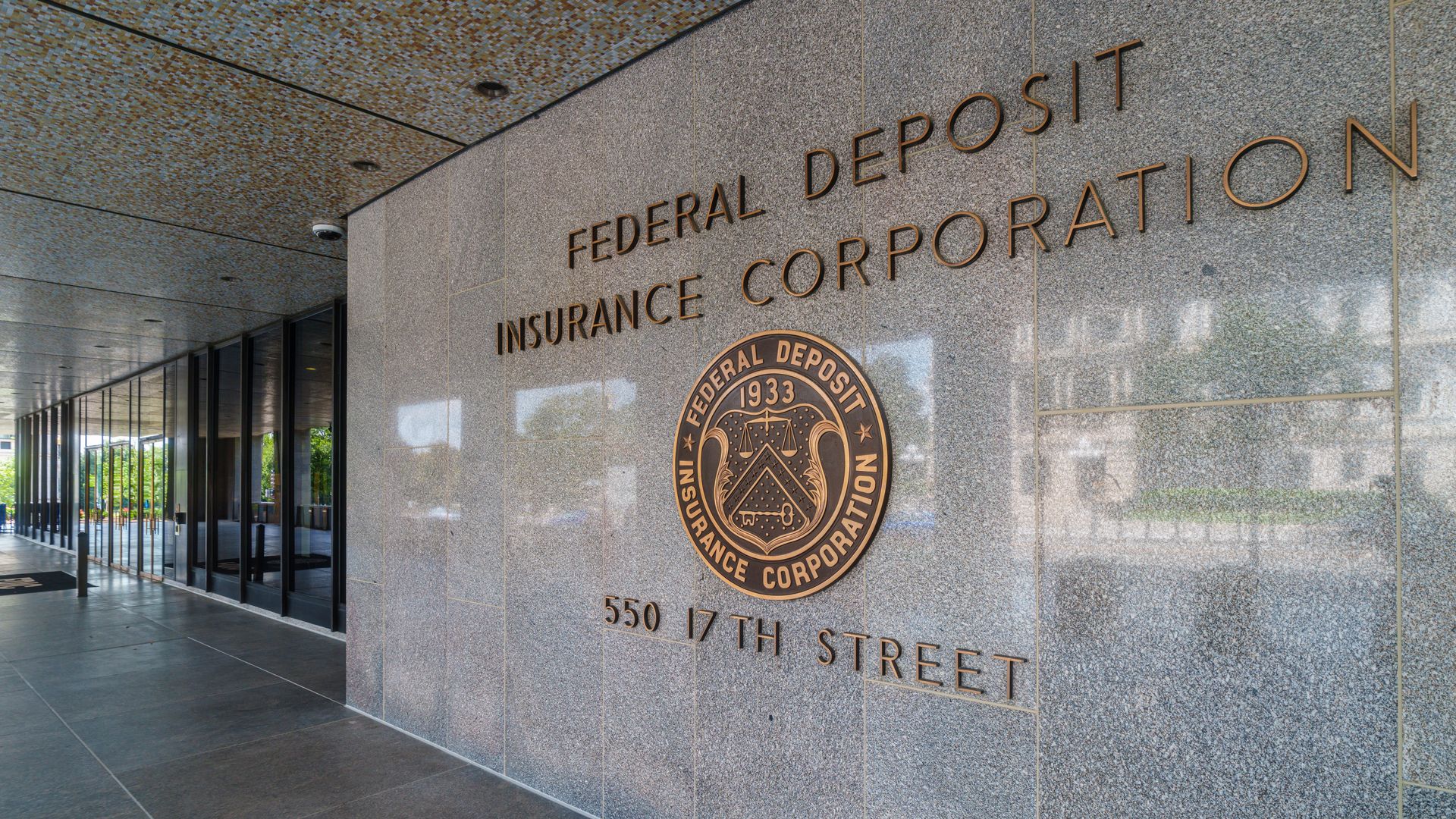
What they're saying: The inspector general for the Federal Deposit Insurance Corporation — one of the nation's main bank regulators and the body that insures depositors' funds — said a smaller agency will have to contend with the same duties of a larger one: examining the health of 4,500 banks under its purview.
- "With fewer examiners but the same responsibility to conduct statutorily required exams in 2025, it may be difficult for the FDIC to complete these examinations by the end of the year," the inspector general said in a new report.
- "Safety and soundness examinations are especially important given potential risks in the banking sector," the report notes — calling out banks sitting on huge unrealized losses, which sparked the 2023 banking crisis (that, and a concentration of uninsured deposits).
- The report cites an FDIC manual that says its examinations are key to "ensure public confidence in the banking system."
- In December, the inspector general warned about insufficient staffing for the FDIC to adequately carry out another of its key duties: taking over a failed bank's operations and assets.
By the numbers: The FDIC reduced staffing by 9% to less than 5,950 workers since January.
- Additionally, about 450 employees — or 7% of all FDIC employees — accepted the administration's "deferred resignation" offer.
- About 160 probationary workers were dismissed, while roughly 103 employees left for reasons unrelated to DOGE.
The inspector general says that as of February, nearly 17% of remaining staff are eligible for retirement this year.
- It takes three years of training for new commissioners to be qualified to lead bank examinations.
The other side: The FDIC did not respond to a request for comment.
Flashback: Musk's DOGE is not creating a new problem for the FDIC. Instead, the cuts add to a longtime staffing issue.
- By the agency's own admission, more bank examiners might have helped identify the weaknesses at Signature Bank that led to its failure in March 2023.
The bottom line: The staff cuts are the near-term problem for the FDIC.
- The agency's fate is in flux, with recent reports suggesting the Trump administration might collapse the agency into other bank regulators.
3. Charted: DOGE's consulting cuts


Consultants make a lot of money telling government agencies what to do. DOGE thinks it has a simpler solution: Just fire the consultants.
Why it matters: It's an existential threat to some of the largest firms, whose revenue depends to varying degrees on government contracts.
The big picture: Shares of the big publicly traded consultants, like Accenture and Booz Allen Hamilton, have fallen sharply as DOGE pushes to cut costs.
- Federal News Network reported in late February that those firms, and eight others, were on a list issued by the General Services Administration, targeting contract cuts this month.
- Accenture shares sank last week after the company acknowledged DOGE's efforts were hurting sales.
Of note: Accenture's federal services business, together with Booz Allen (which gets almost all of its revenue from government contracts), collectively employ more than 40,000 people.
Thanks to Ben Berkowitz for editing and Katie Lewis for copy editing. See you tomorrow!
Sign up for Axios Markets