Axios Markets

October 11, 2024


1 big thing: The bifurcated diamond market


If you bought a diamond this year, there's a very high chance you just got engaged, so congratulations!
- There's also a roughly 50% chance the diamond you bought was manufactured in a laboratory.
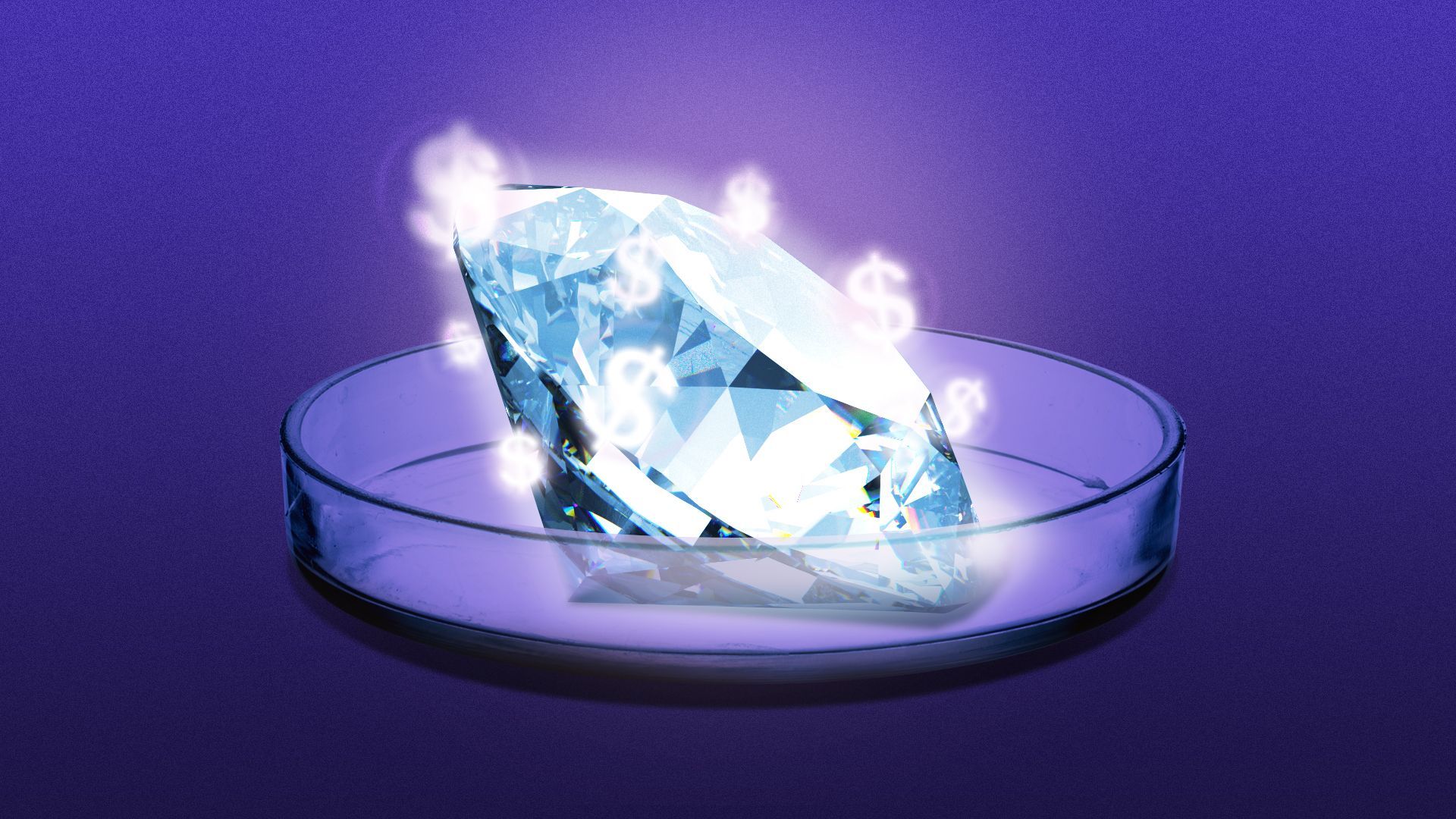
Why it matters: Lab-grown diamonds have radically transformed the jewelry market.
The big picture: Two things are happening at once: Lab-grown diamonds are getting more popular as they get cheaper, while people are spending more than ever on natural diamonds.
- On average, the amount being paid for diamonds is higher than it's ever been — and the stones are larger than they've ever been.
By the numbers: For many years pre-pandemic (and pre-lab-grown diamonds), the average engagement ring cost somewhere between $3,200 and $3,600, per Edahn Golan, the managing partner at Tenoris, a diamond industry data company.
- Today, while lab-grown diamonds are cheaper than that, natural diamonds are getting bigger and more expensive, with the average such stone so far this year selling for $6,628. As a result, the average diamond overall sells for about $4,600 — well above the normal level before lab-grown diamonds appeared on the scene.
Where it stands: Because lab-grown diamonds are getting so cheap, buyers are no longer picking out the largest stone they can afford.
- There are lab-grown diamonds as large as 10 carats, but after a certain point they become unwieldy and impractical. Plus, when a middle-class person sports a truly enormous rock, no one will think it's a rare and valuable natural gem, and will have less show-off value as a result.
- The revealed preference in the lab-grown market seems to be converging on diamonds just under 2 carats as the size buyers like the most. The average size for natural diamond engagement rings was 1.4 carats last month, Golan says — about 50% larger than before lab-grown diamonds appeared.
Between the lines: Because lab-grown diamonds are so cheap to manufacture, they have essentially no secondary-market value. Which is to say, once you've bought one, you won't be able to sell it.
- For that reason, most other countries with a culture of buying diamond engagement rings still buy natural diamonds. They might not retain all their value, but at least they'll retain some of it.
The bottom line: Lab-grown diamonds are just as real as natural diamonds. They're just not as rare or unique. So the market has bifurcated, with roughly half of buyers preferring something perfect from a lab, and the other half still preferring something that maybe has romantic flaws.
3. There's a CEO gender pay gap


There's a gender pay gap at the top, but it's flipped. Women CEOs are out-earning their male peers.
Why it matters: Typically, men make more than women.
State of play: Before you start proclaiming that yes, indeed, women can have it all. Becalm yourself.
- This is likely a matter of sample size. There are only about 40 women chief execs in this group — just 7.9% of all CEOs in the index.
By the numbers: Median total compensation for women CEOs at S&P 500 companies was $16.5 million in 2024, compared to $15.6 million for men, per an analysis released Friday of publicly disclosed data.
- There is a similar gap for CEOs at Russell 3000 firms — women's median pay is $6.7 million, compared to $6.1 million for men.
Zoom out: On the whole, men still earn more. The median woman working full-time earned 83% of what the median guy made in 2023, per Census data.
4. Gone fishin'
Axios Markets