Axios Markets

April 28, 2025


⚠️ Back at it for another week. We're digging into fresh warnings about how quickly tariffs could empty shelves (soon) and lead to a recession.
- Plus: What becomes of the Consumer Financial Protection Bureau? It's not entirely clear.
All in 740 words, a 3-minute read.
1 big thing: How a recession can play out
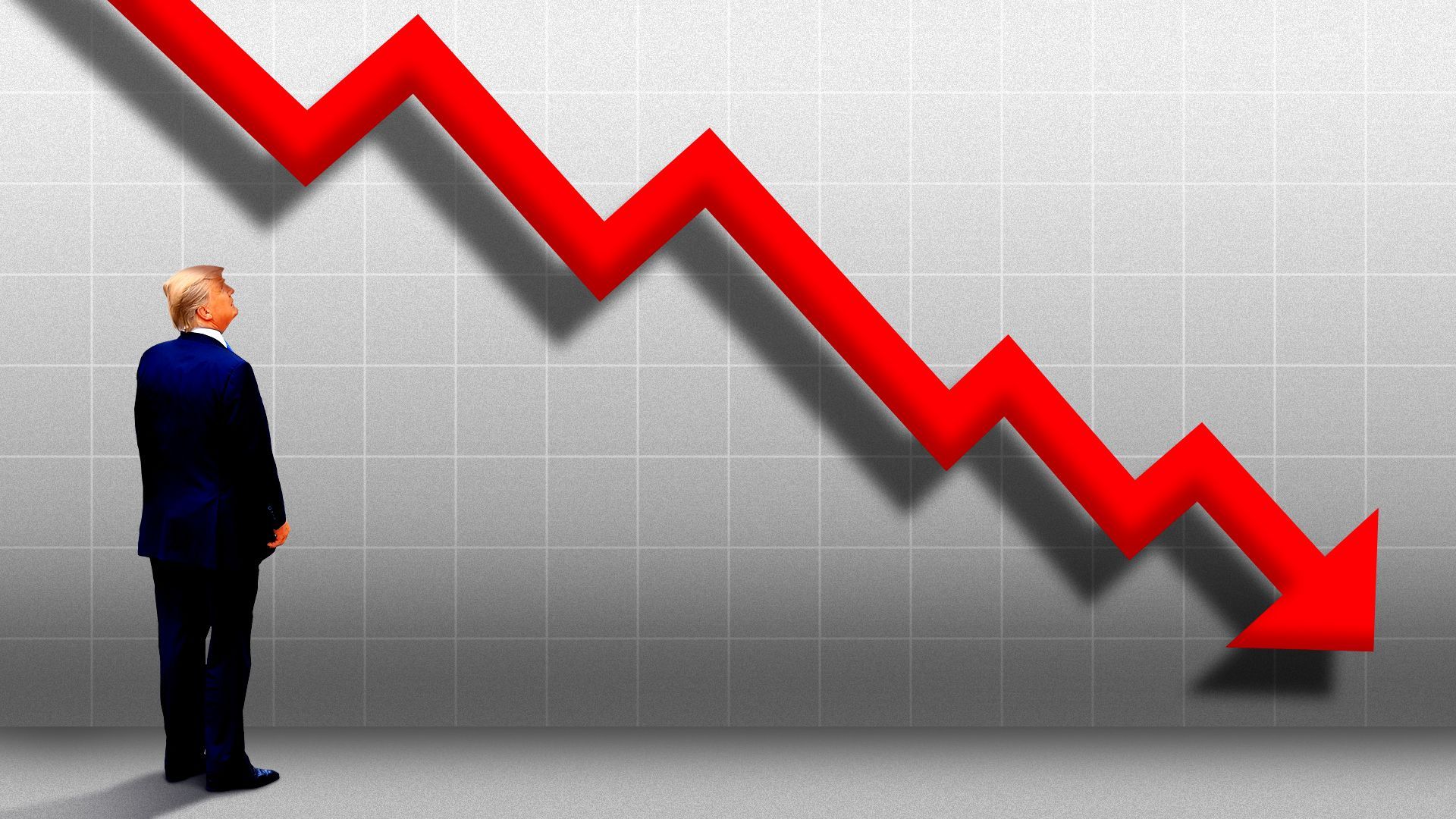
If you were president of the United States and wanted to engineer a recession by summer, at least one economist says a very effective way of doing that would be to announce sweeping "Liberation Day" tariffs in April.
Why it matters: That's the message of a new 40-page slide deck from Apollo chief economist Torsten Slok, entitled "The Voluntary Trade Reset Recession," the probability of which he now puts at 90%.
- Slok was correctly bullish in 2022, when many other analysts were forecasting a recession, giving extra weight to his bearishness now.
The big picture: The flow of container ships from China to the U.S. is likely to "come to a stop" in the next few weeks, by the middle of May, Slok says, thanks to the punitive tariffs President Trump placed on Chinese imports.
- By the end of May, trucking demand will have come to a halt, he writes, with layoffs in both trucking and retail coming in late May or early June.
- A recession then follows. "Expect well-run generational retailers to file for bankruptcy," he writes.
Where it stands: U.S. firms are revising down their expected profits, placing fewer new orders, and investing less money in new equipment.
- Heavy truck sales in March were at the lowest level since the pandemic, and CEO confidence is now at the lowest level since the global financial crisis of 2009.
- Consumer confidence is also hitting new lows, along with international tourism. Americans are "very worried" about losing their jobs, Slok writes.
- Americans now expect higher unemployment exceeding even pandemic levels, and a record-high number expect economic conditions to worsen over the coming year, Slok adds.
The bottom line: "A trade war is a stagflation shock," according to Slok.
- So long as the trade war is being waged, stagflation seems highly likely.
2. Quoted: Who pays the cost of tariffs
"Tariffs are highly regressive, meaning that poorer people end up paying a disproportionate percentage of the tariffs, because they spend 100% of their paychecks on goods."
— Gary Cohn, former director of the National Economic Council in the first Trump administration, to CBS "Face the Nation" yesterday
- He also projected retail shelves would start to empty in the next few weeks, echoing Slok's forecast, as well as what top retail CEOs told Trump a week ago about the looming shortages.
3. The CFPB's life is on the line (again)
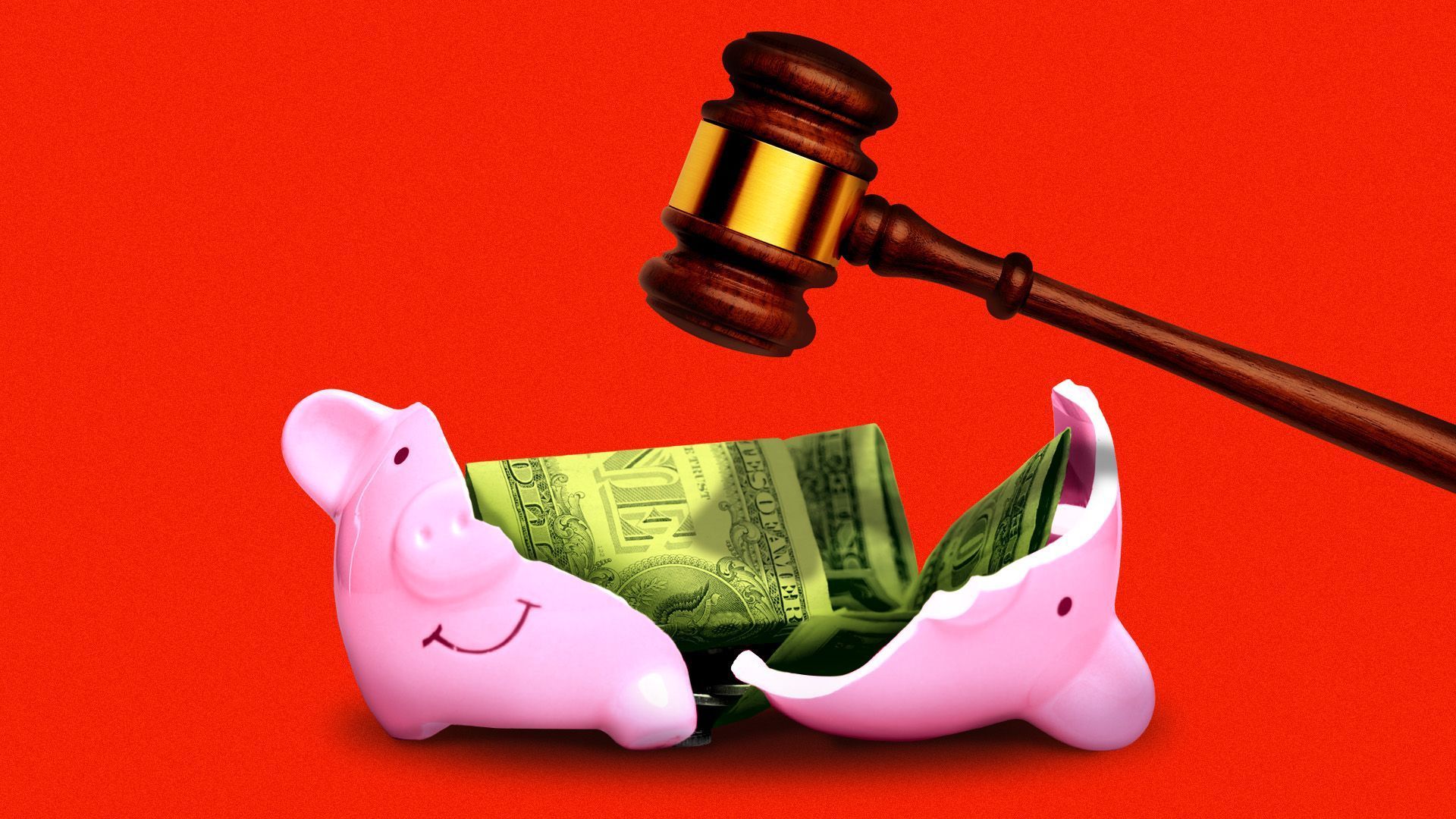
A hearing tomorrow in federal court in Washington could determine the fate of the embattled Consumer Financial Protection Bureau.
The big picture: Dismantling the agency puts the stability of the financial system at stake, former officials and consumer advocates say.
- The CFPB is responsible for key pieces of the mortgage lending process, which ensure the smooth functioning of the housing market.
- Without the agency, Americans will have less protection from financial fraud.
Catch up quick: Earlier this month, the White House fired about 90% of the agency's workforce, effectively gutting it.
- The move was challenged in federal court, and Judge Amy Berman Jackson blocked layoffs ahead of the hearing.
- Some of the Trump administration's other actions targeting the CFPB had already been knocked back by Jackson.
Where it stands: Both sides of this case filed a flood of documents over the weekend that led her to postpone the hearing to tomorrow from today.
- Mark Paoletta, chief legal officer at the CFPB, defended the administration's actions: "An approximately 200 person agency allows the Bureau to fulfill its statutory duties."
The other side: The plaintiffs, who are represented by the National Treasury Employees Union, filed 19 declarations from CFPB employees, who say it is not possible for 200 people to fulfill the agency's statutory duties.
- They argue the White House and DOGE did not take care in engineering these cuts, that senior leaders were not consulted about the impact of terminations, and that if the job cuts had not been paused their offices would not have been able to do their work.
Zoom out: Eliminating the bureau has been a goal of conservatives for some time, explicitly delineated in Project 2025.
- The principal author of that plan, Russell Vought, heads the Office of Management and Budget and serves as the CFPB's acting director.
- The agency's legitimacy was upheld by the Supreme Court in a case decided a little less than a year ago.
What to watch: The Senate has put off a vote to confirm President Trump's nominee to lead the agency, Jonathan McKernan.
- By the time he takes that role, there may be a lot less work for him to do.
Thanks to Ben Berkowitz for editing and Anjelica Tan for copy editing. See you tomorrow!
Sign up for Axios Markets