Axios Markets

March 13, 2025

💳 Good morning. We're back today with a deep look at Social Security: what DOGE is doing, what it means for your benefits, and who's most vulnerable to the changes.
- Plus: Who loses most in a cutback at FEMA.
All in 960 words, a 4-minute read.
1 big thing: Who loses if Social Security breaks
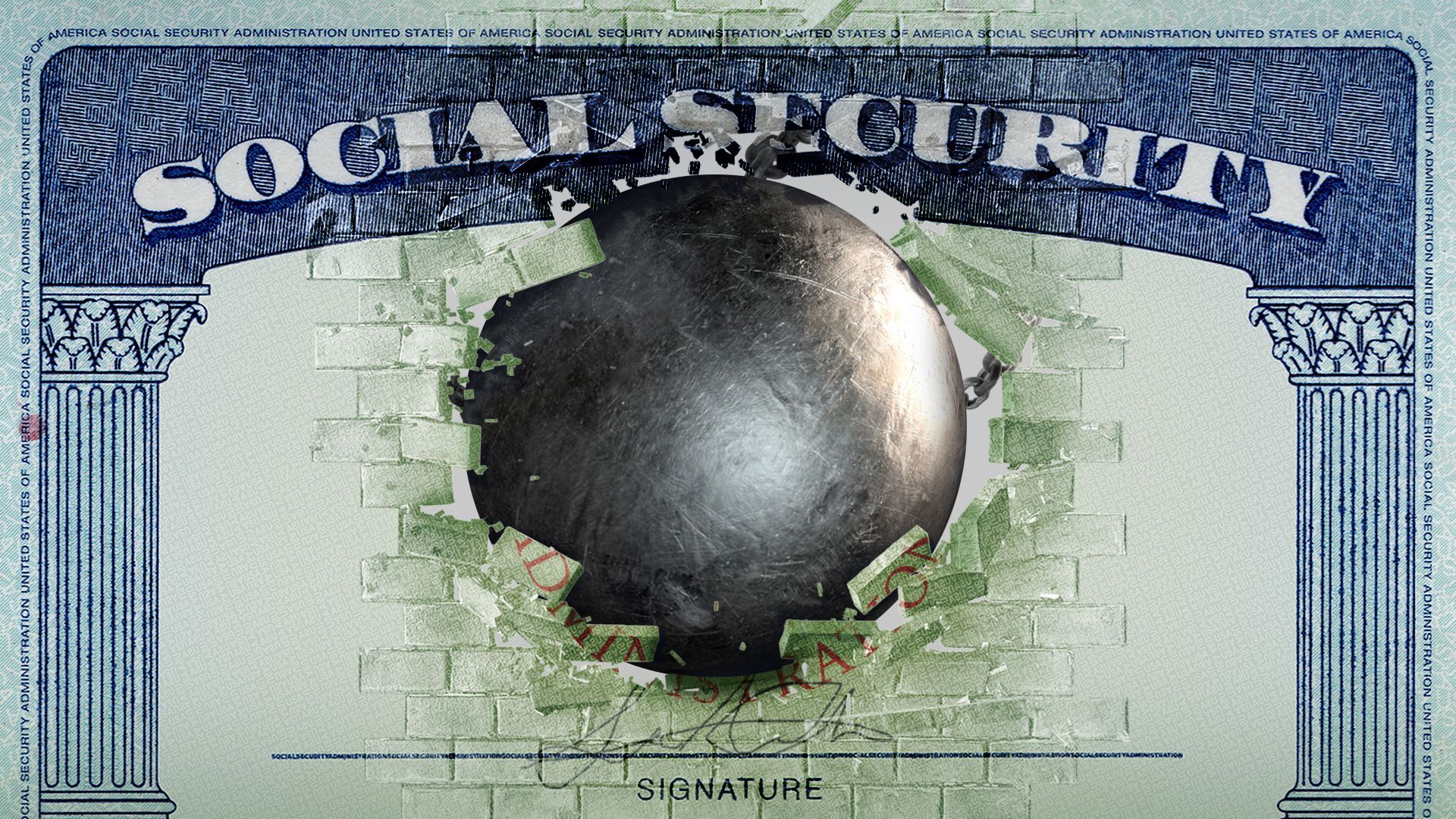
DOGE is taking its wrecking ball to the Social Security Administration, the agency responsible for overseeing retirement and disability benefits for 73 million Americans.
Why it matters: The cuts underway could wind up breaking critical parts of a system that millions of the nation's most vulnerable citizens rely on, including nearly 90% of Americans over age 65.
The big picture: Monkeying with Social Security was always viewed as a "third rail" in politics, even before an aide to House Speaker Tip O'Neill coined the phrase in the early 1980s.
- Many presidents have tried to reform the system in ambitious ways, but the costs were always too great, perhaps until now.
State of play: The agency announced last month it seeks to cut about 7,000 employees, or 12% of staff, through voluntary resignations and a reduction-in-force plan due Thursday.
- Employees have been fleeing, resulting in "a significant loss of expertise," former staffer Tiffany Flick said in an affidavit filed late last week.
The agency also announced plans to shutter six of 10 regional offices.
- Also closed? The office inside the agency that had been tasked with moving some of these processes online, the Office of Transformation.
- "That office was doing what DOGE purports to do," said Kathleen Romig, director of Social Security and disability policy at the Center on Budget and Policy Priorities, who worked at the agency for years under different administrations, most recently in the Biden administration.
Between the lines: Most federal agencies operate largely outside of view of everyday Americans.
- The Social Security Administration is different. Its staff primarily handle customer service, connecting with the public at vulnerable life moments — the decision to retire, or when you can't work because of illness or injury, or when your spouse or parent has died.
Context: There's no doubt there are ways the agency could be made more productive and efficient, according to Andrew Biggs, a senior fellow at the conservative American Enterprise Institute, who has long pushed to overhaul the system, dating back to his time working in the Bush administration.
- "I just find it hard to accept that you can go in there having been there just a few weeks, and do these far reaching changes, having fully thought out the consequences of them," he said.
- That doesn't mean benefits will be disrupted, he said. Those checks are handled by automation. Claims to the contrary are likely overblown.
- That said, disruptions to customer service are still possible. "It's kind of a foot race between whether they can improve service before these cuts are impacting service," Biggs said.
The White House said it wants to root out "waste, fraud and abuse" in Social Security. Other than that, Social Security won't be touched, the administration reiterated in a press release Tuesday.
- "Any American receiving Social Security benefits will continue to receive them. The sole mission of DOGE is to identify waste, fraud, and abuse only," White House press secretary Karoline Leavitt said in a statement to Axios.
- Elon Musk and President Trump have both made repeated debunked claims that droves of dead people are getting checks.
- Musk has described the program as a Ponzi scheme lousy with fraud, and has repeated a conspiracy theory that undocumented immigrants receive payments. In fact, they pay Social Security taxes — more than $25 billion in 2022, according to one estimate — but do not collect benefits.
The bottom line: Moving fast and breaking things isn't a huge deal when the thing is a social media site. Social Security is a whole other story.
2. Americans wait months to hear on benefits


The Social Security Administration was already struggling to provide customer service to Americans before these recent cuts.
Why it matters: The worry now is these changes will worsen the situation, though the administration said its intent is the opposite.
By the numbers: Amid staffing shortages, it's taking the agency longer to make decisions on disability benefit applications.
- This year, folks are waiting an average of 240 days to hear back, up from 120 days before the pandemic, according to Social Security data analyzed by the Urban Institute.
What they're saying: "You pay into the system, you become disabled and it's time to get your benefit, but you have to wait eight months at best or possibly years," said former official Romig.
- "What good is it? Do you lose your house in the meantime? What good is a benefit you can't access. That's a major problem."
3. States that could suffer most without FEMA

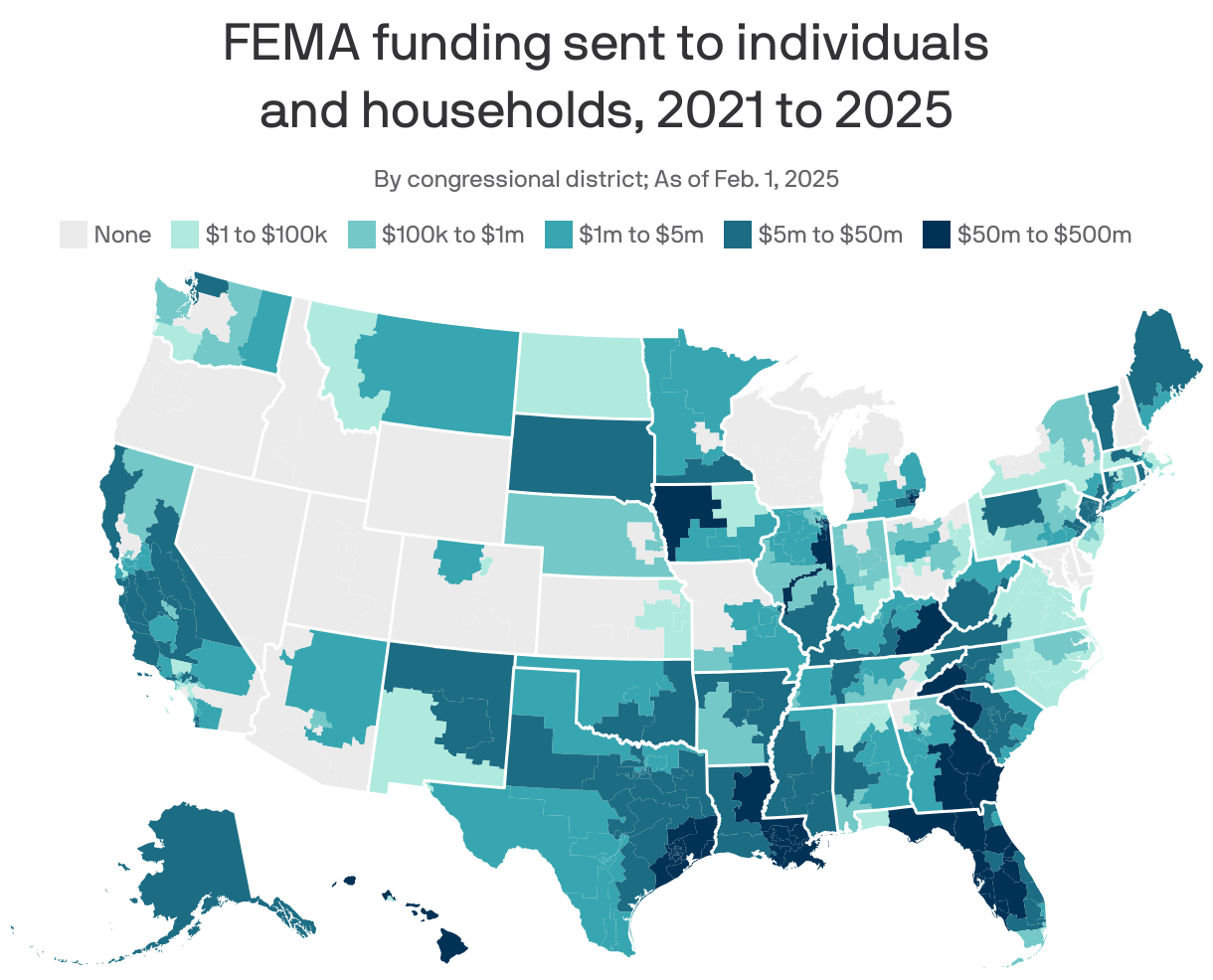
Some of the most disaster-prone states could face the greatest financial burdens in a world with less federal relief assistance, a new analysis finds.
Why it matters: Trump earlier this year floated the idea of "fundamentally overhauling or reforming" FEMA or "maybe getting rid" of it entirely, fueling concerns that federal disaster relief could be thrown into chaos just a few months before another hurricane season spins up.
Driving the news: Trump is mulling an executive order that empowers state and local governments to handle disaster readiness and relief, and previously created a "FEMA review council."
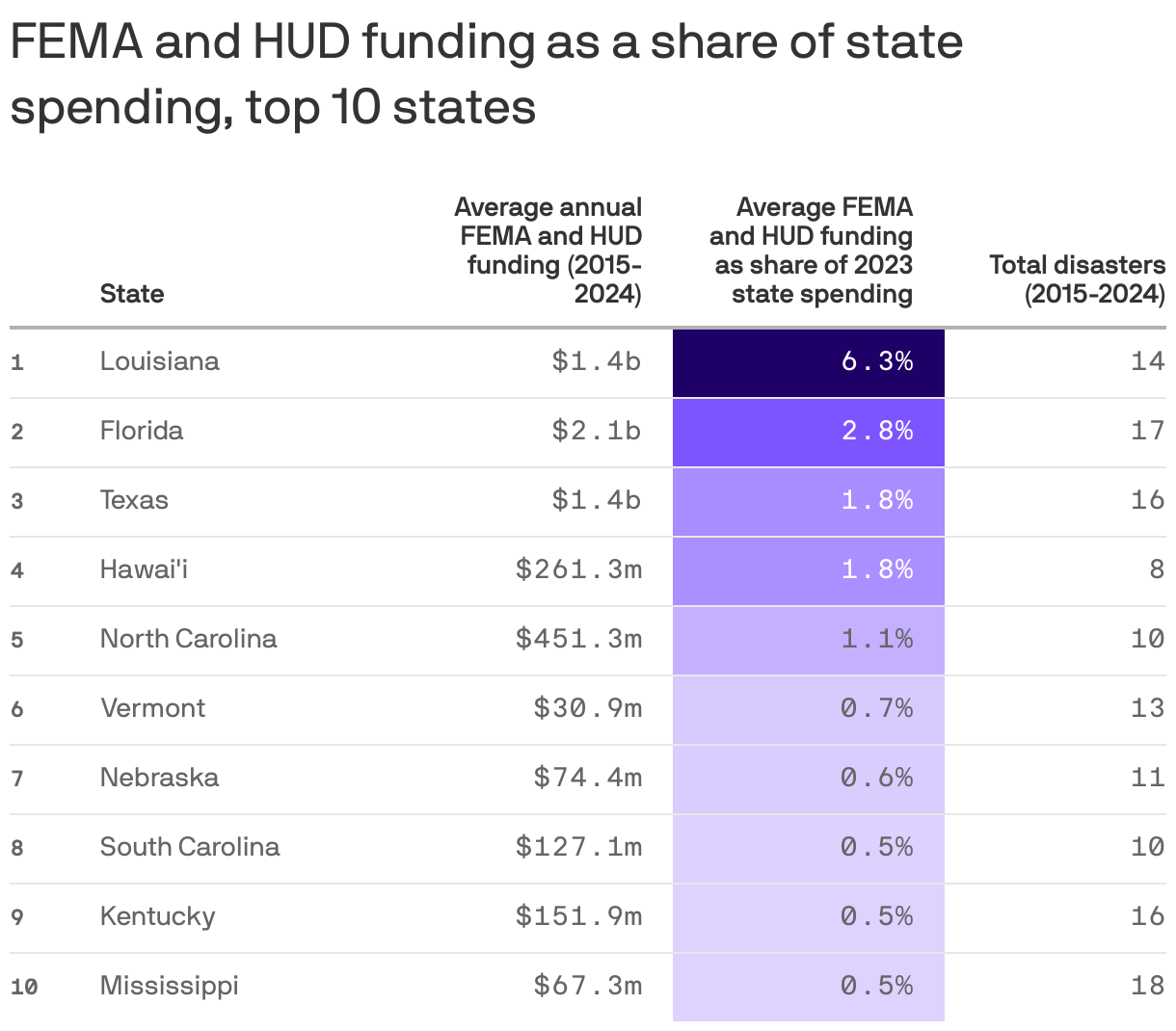
By the numbers: Certain states — many of them red — would be hit especially hard by reductions in federal relief funding, per a new analysis by the Carnegie Disaster Dollar Database.
What they're saying: "Up to now, when there is a disaster, the government responds. They clean up the debris, they rebuild the schools, they run shelters, they clean the drinking water," said Sarah Labowitz, a scholar at the Carnegie Endowment for International Peace who led the analysis.
- "All of that is supported by a federal disaster relief ecosystem that spreads the risk around the country, spreads the costs around the country. And if we stop spreading the costs around the country, then it's going to fall on states, and it's going to fall on states really unevenly."
Thanks to Ben Berkowitz for editing and Anjelica Tan for copy editing. See you tomorrow!
Sign up for Axios Markets