Axios Markets

July 28, 2025

🤝 The U.S. and European Union have a deal. President Trump announced a 15% tariff on all E.U. imports Sunday. Futures are up as one more potential headwind is gone for investors.
- Today: As tariff deals roll in, revenue keeps climbing. Who's paying up?
- Plus: Mark Cuban tells Axios what he thinks about meme stocks and whether this bull market has bubble vibes.
All in 1,150 words and 4 minutes.
1 big thing: Investors celebrate the clarity on tariffs
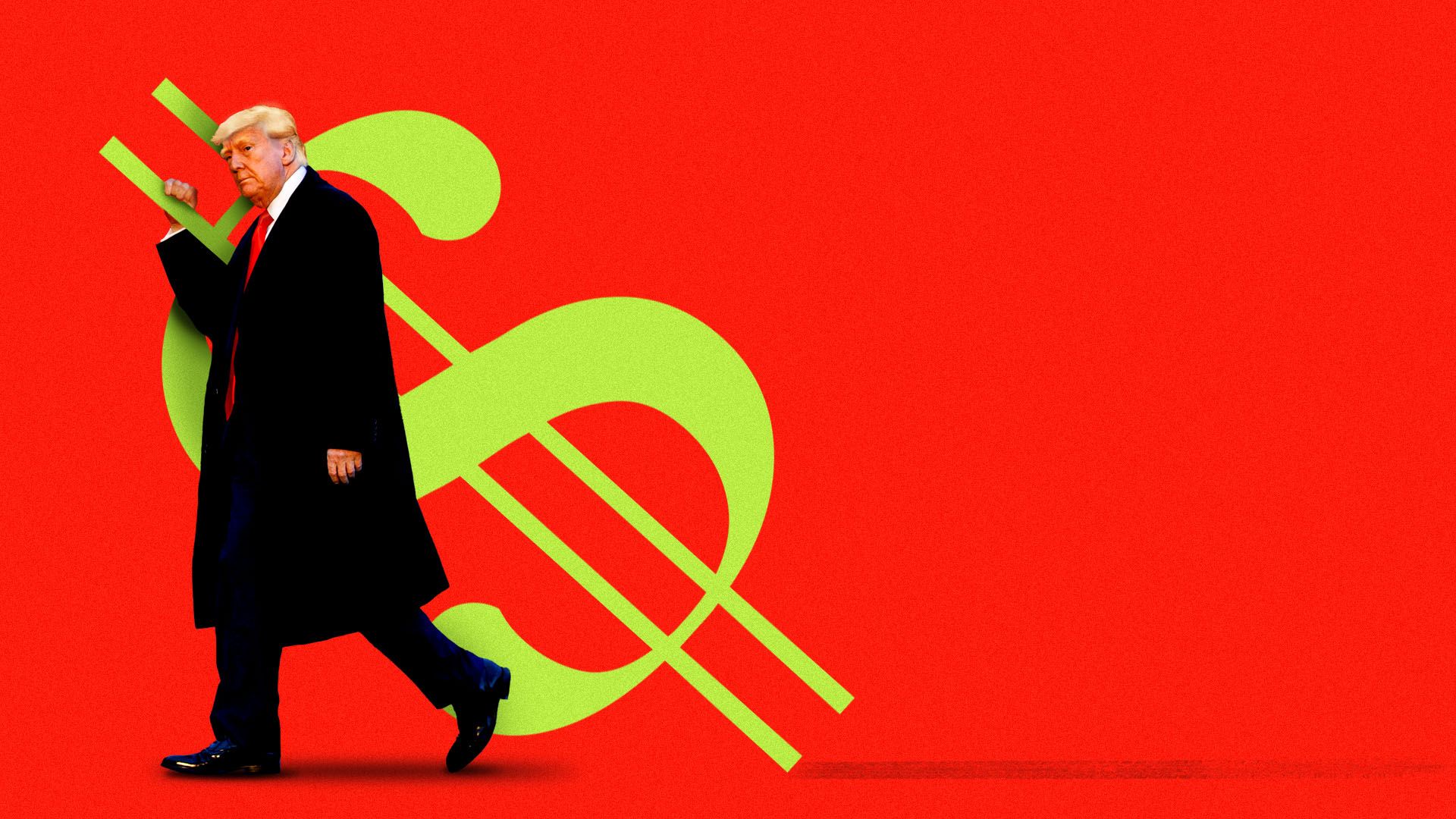
President Trump announced a 15% tariff on the European Union yesterday. Stocks edged higher on the news, as investors see the deal easing the risk of even steeper tariffs.
Why it matters: While investors cheer the short-term clarity, they could be underestimating the long-term drag of higher tariffs on corporate earnings.
Driving the news: The 15% tariff on E.U. goods comes along with a 0% tariff rate on American exports to Europe.
- The deal also includes pledges from the E.U. to buy over $750 billion in U.S. energy, invest $600 billion more in the U.S. economy, and open markets to American manufacturers and defense firms.
- Meanwhile, Commerce Secretary Howard Lutnick said tariff deadlines more broadly are firm, which means they will go into effect August 1.
Zoom in: The euro reversed initial strength against the dollar as investors cheered the U.S. side of the deal, while risk assets like bitcoin rallied.
- Safe-haven assets like gold and the dollar also strengthened.
What they're saying: "The biggest piece in the trade deal puzzle still remains, and the Chinese are unlikely to be as willing to fold," Jamie Cox, a managing partner at Harris Financial Group, wrote in a note.
- China is now the biggest focus for investors, as Axios Markets reported.
- Public companies rely on China for access to lower priced goods and labor.
- Chinese consumers also prop up U.S. companies, with 7% of the S&P 500's annual revenue coming from China, according to Apollo chief economist Torsten Slok.
Be smart: While tariff rates on China are the biggest country-specific tariff risk for investors, sector-specific levies are also of concern.
- Lutnick said sector tariffs would become clear over roughly the next two weeks. Any clarity on sector tariffs could move stocks in those baskets.
The bottom line: All eyes may be on the China trade deal, but in the interim, investors are learning that deals are better than no deals, and the removal of a larger risk is enough to rally on.
2. Tariff revenue is spiking. Who exactly is paying?


Tariffs are making money for the U.S. government, but it remains hard to tell who is footing the bill.
Why it matters: Knowing who is paying the tariffs will help investors gauge which companies will see profits squeezed — or protected — as trade tensions continue.
By the numbers: The government generated an extra $20 billion for each of the past two months, which could total $240 billion in additional revenue this year, according to Peter Tchir, head of macro strategy at Academy Securities.
Where it's from: Motor vehicles brought in $3.4 billion, or over 14% of the $24.2 billion in total tariff revenue for May, according to data reviewed by Jason Miller, interim chair of supply chain management at Michigan State University.
- Vehicle parts added $1.2 billion in tariff revenue, while lithium-ion electric vehicle batteries contributed nearly $480 million.
Case in point: GM disclosed $1.1 billion in tariff costs for the second quarter, which aligns with government data, Miller noted.
- European automaker Volkswagen reported a $1.5 billion tariff hit and cut its outlook, citing fallout from Trump's trade war.
Zoom out: What matters isn't just the tariff rate, but who pays along the chain: a foreign exporter, a U.S. importer, the distributor, or ultimately, the American consumer.
- Within autos, "there just isn't the demand right now in order to justify essentially charging higher rates," Miller told Axios, which means that companies like GM and Ford may struggle to pass costs to consumers.
Zoom in: There are potential winners and losers in this trade war.
- Industrials are exposed, said David Bianco, chief investment officer for the Americas at DWS, with $1 trillion in managed assets.
- The biggest retailers will "gain market share" because they can negotiate favorable terms with suppliers, while smaller firms will struggle, he told Axios.
- Health care, the worst-performing sector year-to-date, may continue lagging as inflation weighs on consumers.
- Nvidia and other high-margin technology companies with carveouts are less vulnerable, according to Miller.
How it works: Who ultimately pays for the tariffs depends on supply and demand dynamics. There are two key factors.
- Consumer demand: Weak demand means less pricing power, and companies may have to absorb the cost or risk losing customers.
- Exporter supply: Retailers have more flexibility to shift supply chains, while manufacturers of complex goods are often locked in. Data show retailers more often eat tariff costs than exporters of machines, which require more intricate work and quality control, leaving exporters in a power position on pricing.
Yes, but: Pricing isn't static. Many companies set prices annually, which means the full effect may not be clear until next year.
- "Just like the tariff revenue will accumulate over time, and become a large number, the impact on the economy is likely to be felt over time," Tchir noted.
The bottom line: Full clarity on who is paying what for tariffs could take a while, but in the near term, it's clear the automakers are taking a hit.
3. Mark Cuban: "Everything is a meme" for traders
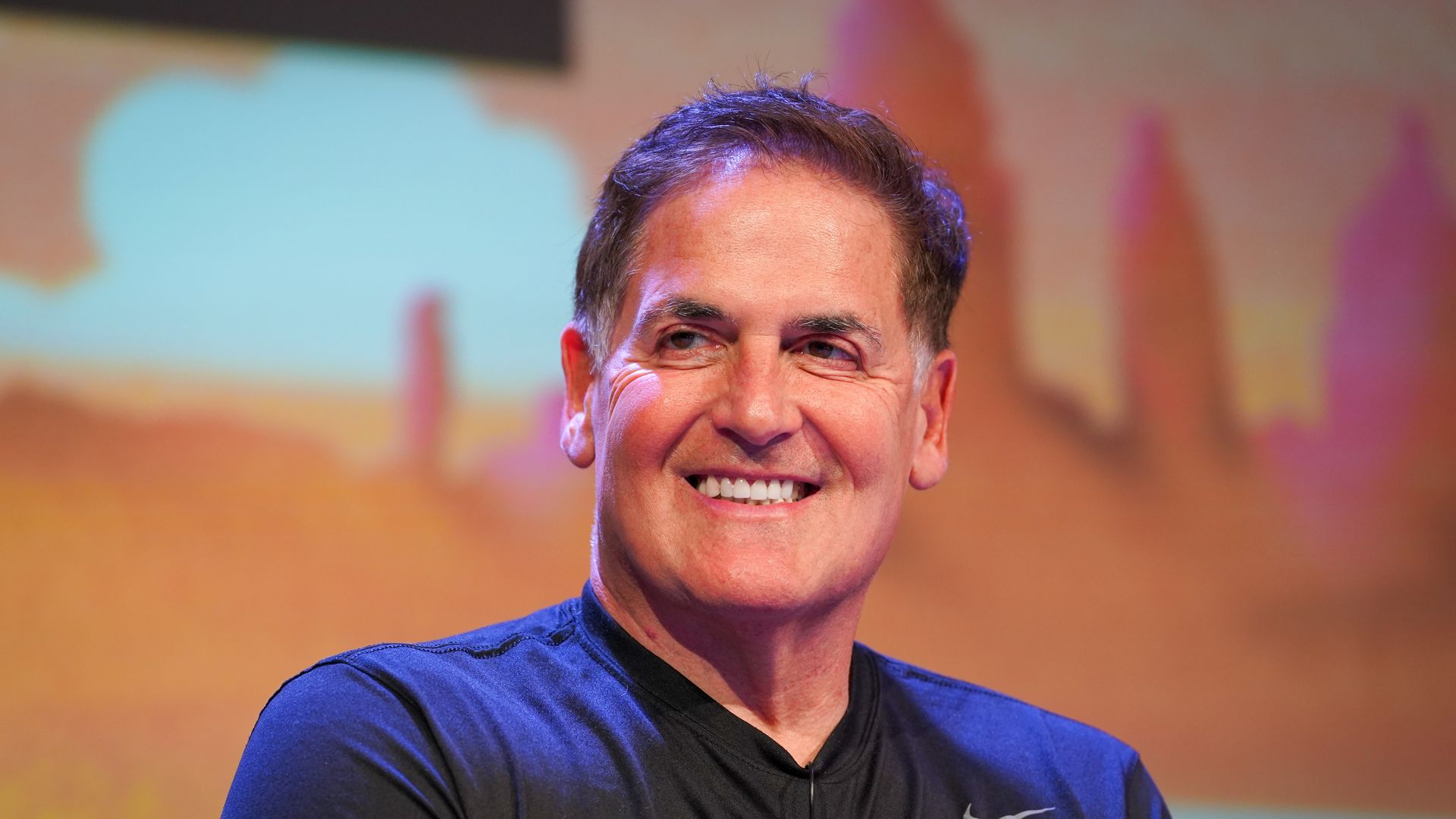
Billionaire investor Mark Cuban says today's market mania is a far cry from the dotcom bubble he navigated, and given retail trader behavior, it could be even riskier.
Why it matters: As strategists continue to raise concerns about a new market bubble, Cuban points out a different concern: that individual traders can "move stocks more than analysts can," he wrote in an email to Axios.
What he's saying: "Back then day traders hade minimal online resources," Cuban noted.
- But now "younger traders are far more risk tolerant than before. They see the volatility of crypto, particularly meme coins and see stocks as just one more version of meme coins."
- "Back then it was anyone with a .com could go public but there were still limits on going public. Now anyone can issue a meme coin."
Catch up quick: Ahead of the dotcom bubble, Cuban made what has been called one of the "top 10 trades on Wall Street."
- Cuban and his business partner sold their company Broadcast.com to Yahoo for $5.7 billion in stock in 1999, months before the dotcom bubble burst.
- He sold calls and bought puts on his holdings, in a hedge that insulated him from the eventual decline of Yahoo, which was later sold off into pieces.
Zoom out: "From the kids I talk to, they see (Nvidia) and the big 7 the same way. Everything is a meme to individual traders these days," Cuban wrote.
- His take underscores a generational shift in market psychology driven by social media, crypto culture, risk taking, and retail traders.
Case in point: Technology stocks have outpaced the S&P 500 for the last two decades. Meanwhile, bitcoin has reached all-time highs.
- GameStop stock is also up over 2,000% in the last five years.
The bottom line: With the democratization of access to information and trading platforms, retail trading will only grow from here.
- Given their rising influence on the market, institutional investors will also start paying more attention to retail activity.
1 big date: Apple reports earnings July 30. The stock is down over 12% this year, with investors concerned about tariff exposure and AI weakness.
Thanks to Ben Berkowitz for editing and Anjelica Tan for copy editing. See you tomorrow!
Sign up for Axios Markets