Axios Macro

July 29, 2026


It's Fed day, and potentially the most interesting one in years.
- The most likely outcome of the Federal Open Market Committee's interest rate decision due at 2pm ET is no change in interest rates. But markets assign roughly 1-in-3 odds that there will be a rate hike.
- If that happens, it would be the first time in recent memory that the Federal Reserve has made such a move without signaling it in advance. Regardless of the outcome, Neil will be in the room for chairman Kevin Warsh's news conference at 2:30.
In today's Macro, we look at how AI makes central banks' usual signals blurrier, and preview tomorrow's second quarter GDP report.
Today's newsletter, edited by Jeffrey Cane and copy edited by Katie Lewis, is 868 words, a 3.5-minute read.
1 big thing: Why AI makes central banking tougher

Central bankers, as a rule, try to maintain stable prices, a strong job market and a sound financial system. The AI boom is a complexifier on all three fronts.
The big picture: AI is blurring the usual indicators that central bankers rely upon to set policy, a new paper from a leading international body finds, simultaneously affecting the supply and demand sides of the economy and driving both structural and cyclical change.
- The upshot, per the Bank for International Settlements — the Basel, Switzerland-based central bank for central banks — is that the rules of thumb on which policymakers have long relied are all being shuffled at once.
State of play: In the U.S. and other hotbeds of AI innovation, an investment boom in the near term is creating a surge in demand, especially for semiconductors and other components of data centers.
- A stock market boom, meanwhile, is creating more consumer demand by increasing paper wealth. There are concerns that some of this wealth is illusory, however, and that there is an AI bubble that will eventually pop.
- There are risks that AI will result in large-scale job losses in the medium term, though there is only murky evidence of whether it's starting to happen.
- And a world in which AI advances create much more productivity growth implies a positive supply shock, which should bring down inflation.
What they're saying: "The considerable uncertainty surrounding the effects of AI raises several challenges for monetary policy and financial stability," wrote BIS economists Iñaki Aldasoro, Leonardo Gambacorta, Enisse Kharroubi and Matthias Rottner.
- "For one, AI simultaneously affects demand and supply, in both cyclical and structural ways," they wrote. "Moreover, the effects differ across sectors, complicating the assessment of underlying trends."
- "Greater uncertainty increases the risk of policy miscalibration."
Zoom in: AI is likely to have varied economic effects on unobservable variables that are keys to modern macroeconomic policy, like the natural rates of interest and unemployment.
- Central banks, including the Fed in its policy meeting ending today, and the Bank of England and Bank of Japan both meeting tomorrow, essentially must make real-time decisions on what direction the AI boom is shifting those variables, in what magnitude, and on what timeline.
- If they overestimate supply gains or underestimate the demand pressures created by AI investment and wealth effects, they could leave rates too low and stoke inflation, or make the opposite mistake and accidentally engineer a recession.
Of note: Warsh has formed task forces to study the Fed's strategy — one explicitly focused on the impact of AI on the labor market and productivity, and others that relate to these issues like inflation measurement and economic data collection.
- Their conclusions and recommendations are due by year-end.
2. Big data day ahead
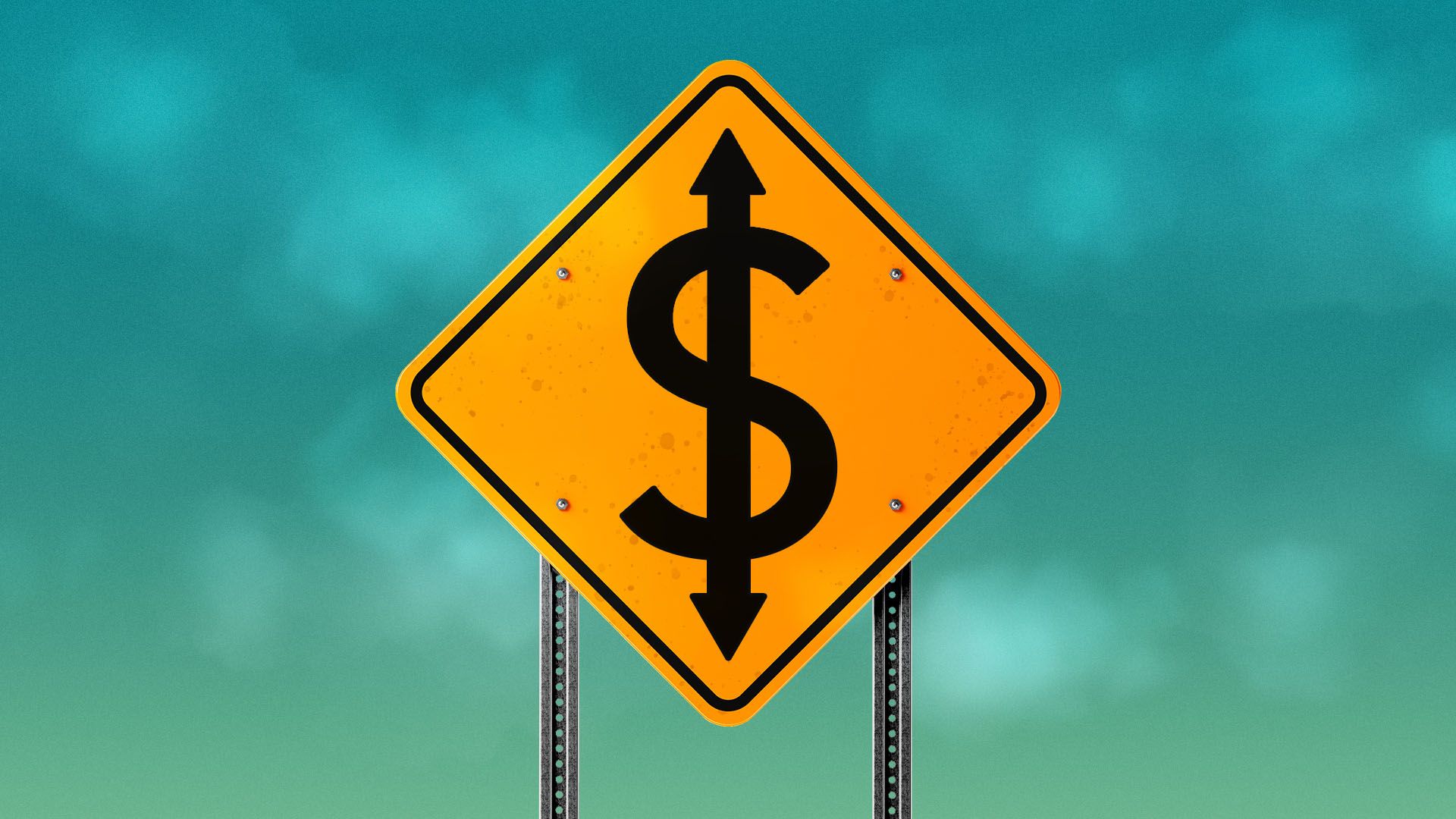
Tomorrow's GDP and inflation reports are expected to reinforce the Fed's dilemma: Economic growth is holding up, while inflation remains too hot for comfort.
Why it matters: Growth that's resilient enough to withstand high borrowing costs, paired with inflation that remains above target, would reinforce the case for keeping monetary policy restrictive.
What to watch: Economists forecast that the U.S. economy grew at a 1.8% annualized pace in the second quarter, slowing modestly from the 2.1% rate in the January-March period.
- They also expect the Personal Consumption Expenditures (PCE) Price Index — the Fed's preferred inflation gauge — to decline 0.1% in June from the prior month as gasoline prices declined, leaving the annual inflation rate at 3.7%.
- Excluding the more volatile food and energy categories, core PCE is expected to rise 0.2% for the second straight month, with the year-over-year rate easing slightly to 3.3%.
What they're saying: "GDP will likely show stable underlying growth," TD Securities economists wrote in a note this week.
- The economists anticipate strong AI-related investment and a rebound in consumer spending, even if the headline figure slows amid drags from trade and inventories.
- They add that inflation should look comparatively benign because of lower gas prices, but the energy backdrop has since worsened as Middle East fighting resumed.
Friction point: June's inflation report captured a brief lull in energy prices after Middle East tensions temporarily eased.
- Since then, fighting has resumed and oil prices have climbed again, meaning that the headline data may already feel somewhat stale by the time it's released.
The bottom line: If the consensus is right, the U.S. economy will have entered the second half of the year looking remarkably similar to the first, with resilient growth and stubborn inflation.
Sign up for Axios Macro