Hot inflation, strong economy: the Fed's new test

Add Axios as your preferred source to
see more of our stories on Google.
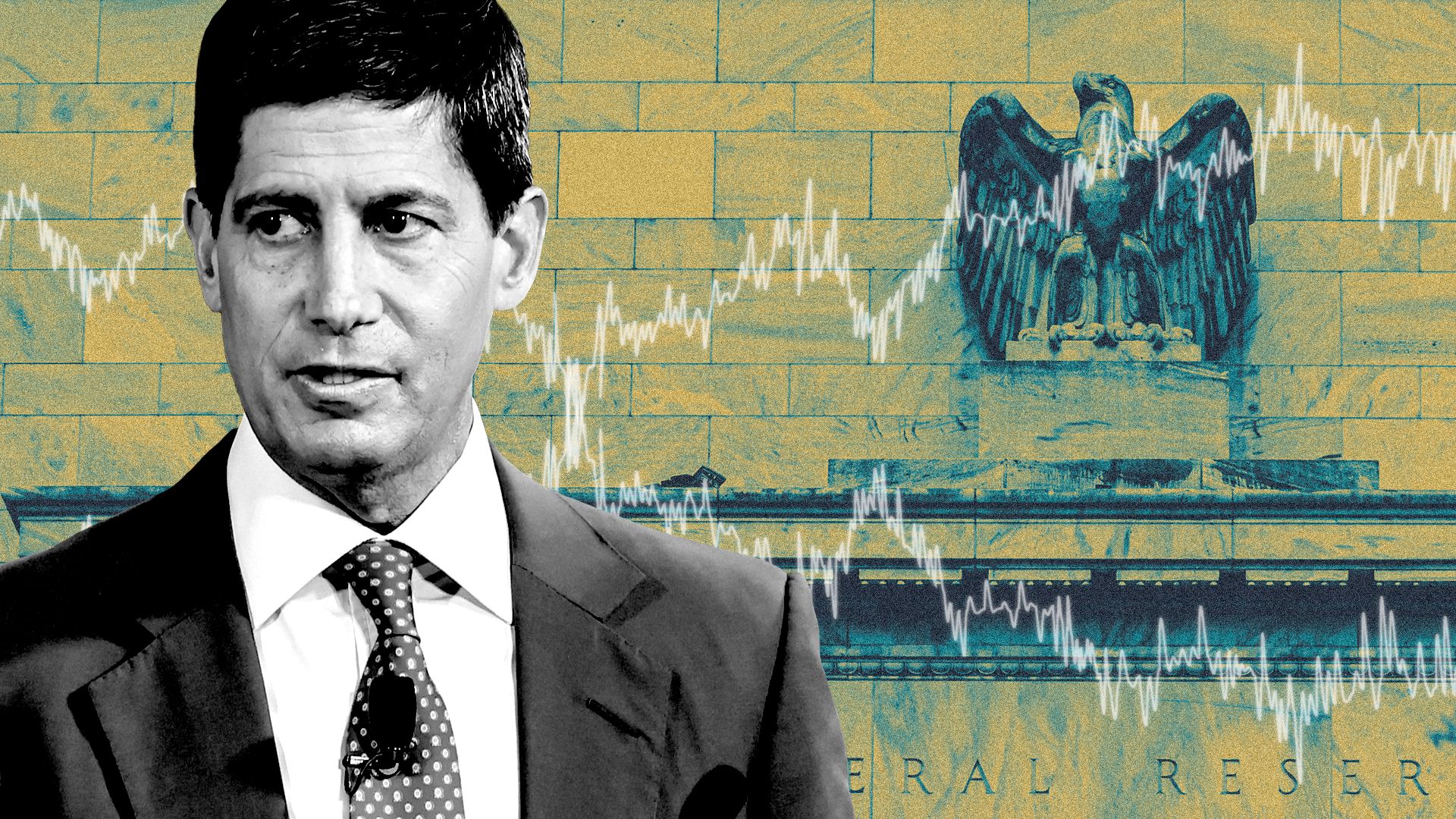
Federal Reserve chairman Kevin Warsh. Photo illustration: Brendan Lynch/Axios. Photo: Tierney L. Cross/Bloomberg via Getty Images
Income growth is accelerating — supporting consumer spending — while inflation is rising even beyond the energy-price shock.
Why it matters: That combination, shown in new data out Thursday morning, creates a complex reality for Kevin Warsh's young Federal Reserve chairmanship.
- It's good news for the economy's underlying resilience, but it raises fresh questions about whether interest rates are exerting as much downward pressure on demand as Fed officials may believe.
What they're saying: "The U.S. consumer is not cracking," Olu Sonola, an economist at Fitch Ratings, wrote Thursday morning, adding that the oil price shock has not derailed consumer spending.
- "Headline inflation may be nearing a peak as energy prices fall, but the underlying details are still too firm for the Fed to ignore."
- "For markets hoping the Fed can avoid raising rates in 2026, the data are moving in the wrong direction."
By the numbers: The Personal Consumption Expenditures Index — the Fed's preferred inflation gauge — rose 0.4% in May and 4.1% from a year earlier. The core measure, which excludes food and energy prices, climbed 3.4% from the same period a year ago.
- Both headline and core PCE reached their highest year-over-year readings in about three years.
- Core PCE has eased to a 3.5% three-month annualized pace in May from a 4.4% pace as of February, but that still leaves underlying inflation well above the Fed's target.
Zoom in: Personal income, disposable income and consumer spending each increased 0.7%, with inflation-adjusted spending also rising from April.
- Spending spanned both goods and services, a sign that household spending remained broadly resilient even as energy costs continued to climb.
The big picture: Until now, policymakers could argue that inflation largely reflected the Iran war and other temporary supply disruptions that would fade without requiring tighter monetary policy.
- The data captured the economy before the ceasefire, the reopening of the Strait of Hormuz and the subsequent drop in oil prices, giving the Fed reason to expect some relief in the months ahead.
Yes, but: Strong household income growth and resilient consumer spending suggest that inflationary pressure isn't coming exclusively from the recent energy shock.
- Apple said it will raise prices on MacBooks and iPads as soaring memory chip costs push up its own expenses.
- The announcement came hours after memory chip maker Micron Technology reported another blockbuster quarter and signaled that AI-driven demand for memory continues to outstrip supply, reinforcing expectations that the shortage could persist.
- Even as falling oil prices ease one source of inflation, AI-related supply constraints are creating new ones. Some companies appear confident that they have the pricing power to pass those costs on to consumers.
The intrigue: Financial markets increasingly expect the Fed's next move to be a rate hike, with CME FedWatch implying about an 80% chance that rates will be higher by year-end.
- But the Fed may already be easing policy by standing still.
- As inflation rises while nominal rates remain unchanged, "both realized and ex-ante real interest rates are falling," Bank of America wrote in a note this week. "By not hiking rates, the Fed may effectively be easing monetary policy."
