Axios Macro

July 03, 2025


Jobs day came earlier than usual, thanks to the July 4 holiday tomorrow.
- Before you log off for the long weekend, we dig into the better-than-expected report — and the worrisome indicators beyond the headline.
- Plus, what the data means for a Federal Reserve that faces immense White House pressure to cut rates. 🇺🇸
Today's newsletter, edited by Ben Berkowitz and copy edited by Katie Lewis, is 735 words, a 3-minute read.
1 big thing: Steady jobs market for now

The American labor market keeps hanging on, even as signs of weakness crop up.
Why it matters: Hiring is solid, defying expectations that the worrisome macroeconomic backdrop — huge uncertainty about trade, immigration, and the fiscal outlook — would keep more employers on the sidelines.
- But today's Bureau of Labor Statistics report stops well short of giving an "all-clear" for the economy.
- Beyond the headline, labor supply is dwindling and demand for workers is narrowing. These issues could plague the labor market in the months ahead.
By the numbers: Employment increased by 147,000 last month, surpassing the gain of 115,000 jobs forecasters anticipated. The unemployment rate edged down a tick to 4.1%.
- The government revised up payroll figures for April and May, noting that employment in the prior two months was higher by a combined 16,000 than initially forecast.
- The report showed that 80.7% of the prime-age population — those aged 25-54 — was employed, just 0.2 percentage point shy of the peak seen in this economic cycle.
Zoom in: Conditions look less cheery beneath the surface. The private sector added just 74,000 jobs in June, almost half as many as the previous month.
- Jobs growth was overwhelmingly concentrated in state and local government, with less impressive gains in the most cyclical sectors — that is, those most exposed to the weakening economy.
- State and local government added 73,000 jobs, offsetting the continued declines in federal government (-7,000) from DOGE-related layoffs. The other big gainer was health care, which added 39,000 jobs.
- While the number of unemployed Americans fell, the labor force also continued to shrink for the second consecutive month, helping keep downward pressure on the unemployment rate. Another 130,000 workers exited the workforce in June.
What they're saying: "There are real weaknesses in the market — including concentrated job gains, slowing wage growth, and falling participation — that have persisted for months, and there are scant signs of those concerns fading anytime soon," Indeed economist Cory Stahle wrote this morning.
The big picture: Stahle compared the current labor market to a sturdy tent, but one that is "increasingly held up by fewer poles."
- Among those poles are structural forces, including a shortage of workers from America's aging population and the immigration crackdown.
- There is also an "ongoing reluctance among employers so far" to layoff workers in masse, a scarring effect of the pandemic when it was impossible to find and train staff.
Yes, but: There are profound economic changes underway that look set to supersede those factors; the adoption of AI is already shifting employers' hiring plans.
- President Trump is ending the era of free trade, making it more costly for businesses to get goods from overseas — a dynamic that will force a reckoning among companies about their other expenses, including labor.
The bottom line: "Even well-staked tents can collapse when the wind shifts hard enough," Stahle says.
2. What it means for Trump's Fed feud
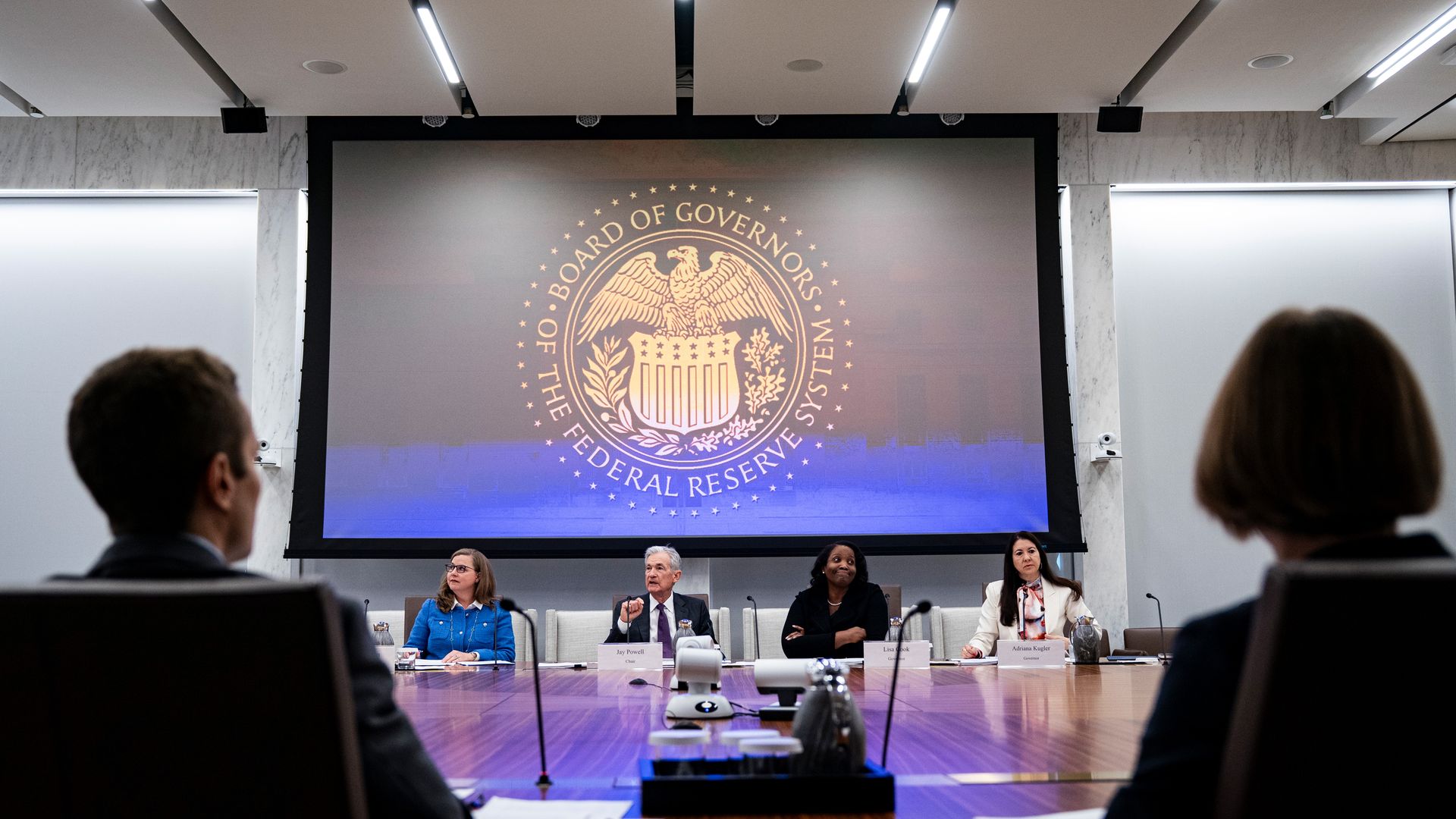
Good news for the White House: The better-than-expected job gains hand them an economic bragging point.
- The bad news is it likely puts the rate cut that officials — and the president — desperately crave further out of reach.
Why it matters: The report confirmed Fed chair Jerome Powell's wait-and-see stance.
- It was not weak enough to warrant an immediate rate cut later this month, nor was it strong enough to dismiss the idea that policy is hurting employment.
- The jobs report came out alongside the Department of Labor's weekly jobless claims, which showed applications for unemployment benefits fell by 4,000 last week, to 233,000 — the fewest since May.
- Continuing claims — that is, the number of repeat filers — held steady, though the level remains at multiyear highs.
What they're saying: "A stronger than expected June jobs report means no Federal Reserve rate cut before September despite the President's demands," ING economist James Knightley wrote in a note.
- "Nonetheless, households are becoming more pessimistic on employment prospects with the risk of lay-offs rising in the second half of the year."
The intrigue: Fed governors Christopher Waller and Michelle Bowman last week suggested a rate cut could be appropriate — possibly as soon as the next two-day policy meeting that ends on July 30.
- Chances were already slim that would be the case, with most on Wall Street expecting cuts to manifest later this year.
- They became even slimmer after the release of the jobs data: Futures now put 5% odds on a rate cut in July, per CME's FedWatch tool, down from the roughly 24% yesterday.
Sign up for Axios Macro