Axios Macro

May 27, 2026


What would it take to build the American industrial capacity to replace importing strategic goods? We work through the math of a manufacturing ramp-up in a new study.
- Plus, how the Trump administration's top trade chief sees the future of global trade with China and key allies.
Today's newsletter, edited by Jeffrey Cane and copy edited by Katie Lewis, is 893 words, a 3.5-minute read.
1 big thing: What it would take to rebuild U.S. manufacturing might
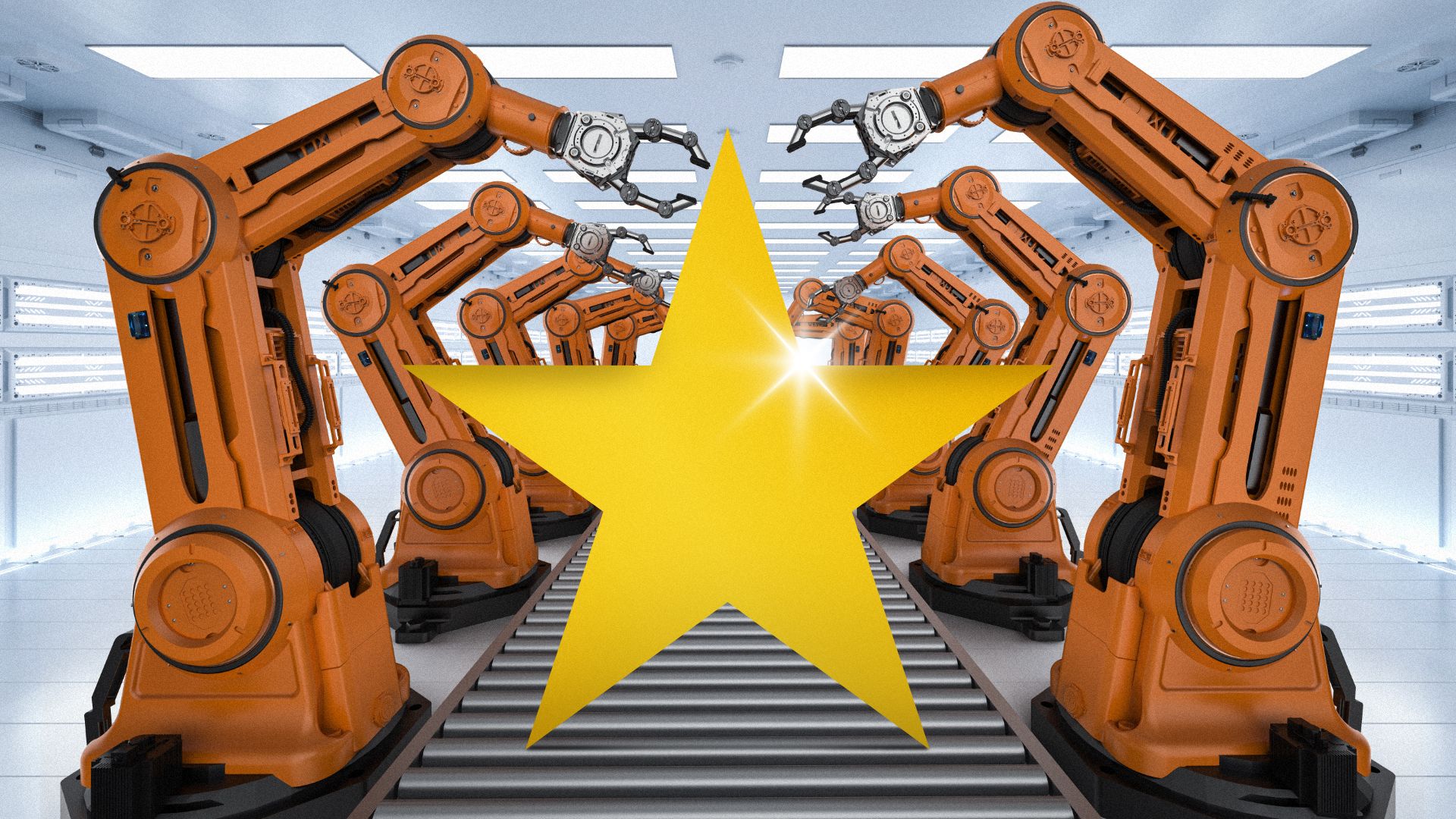
America's dependence on imported manufactured goods looks like a vulnerability in a world of widening geopolitical fractures. Fixing it won't come cheap.
The big picture: New research from McKinsey, the global consulting firm, estimates that it would take $2 trillion, or about 6% of U.S. GDP, to build the industrial capacity needed to replace imports of key strategic goods.
- That's the equivalent of two years' worth of the current annual defense budget — and doesn't even include the investment needed to cultivate the workers' skills, infrastructure and energy needs.
- There is a particular dearth of American manufacturing capacity for advanced electronics, particularly AI servers, and key chemicals, the study finds.
State of play: The U.S. imports $3 trillion in manufactured goods each year. But only about a quarter of that is what the researchers classify as "Achilles' heels" because those goods are essential to national security, involve highly concentrated supply chains, and/or are imported from geopolitical rivals.
- For dozens of goods, McKinsey calculated a "ramp-up" index for each, meaning how much new industrial capacity the U.S. would need to fully replace overseas importing.
- The numbers range widely. America is nowhere near having enough capacity to replace its imports of textiles and apparel, for example, but is in much better shape on fossil fuels and transportation equipment.
Zoom out: Foreign direct investment into the U.S. has been surging, the 2022 CHIPS and Science Act and other measures have fueled expansion of domestic industrial capacity in key industries, and the Trump administration has made reindustrialization a front-burner priority.
- The McKinsey data shows that the U.S. still has a way to go to be insulated in the event of, say, a further breakdown of trade flows with China or other major partners.
What they're saying: "There have been pockets, including anything related to AI, especially with the big tech firms, where there has been a pretty dramatic scaling up of capital expenditures in those domains," Shubham Singhal, an author of the study, tells Axios.
- "But more broadly, if you look at the overall capital expenditure statistics, there hasn't been a dramatic tick up," says Singhal, who chairs the McKinsey Global Institute in-house think tank.
Zoom in: The raw dollars of capital spending needed to ramp up U.S. manufacturing capacity in these sensitive areas is only part of the story, the authors add. There's also work to be done building the talent pipelines and infrastructure to make that spending pay off.
- While investment in AI-related goods has been massive in recent years, things are not booming the same way in some other areas.
- "Everything related to AI is moving fast because investors believe the reward is there," Singhal says. "Whether that is there in every other place — metals, chemicals, etc. — is a bit of a question mark."
Between the lines: If some future global conflict or trade breakdown chokes off access to key supplies, the ramp-up to replace them is no easy feat, the efforts of the last two presidential administrations notwithstanding.
2. Big China trade bet is over
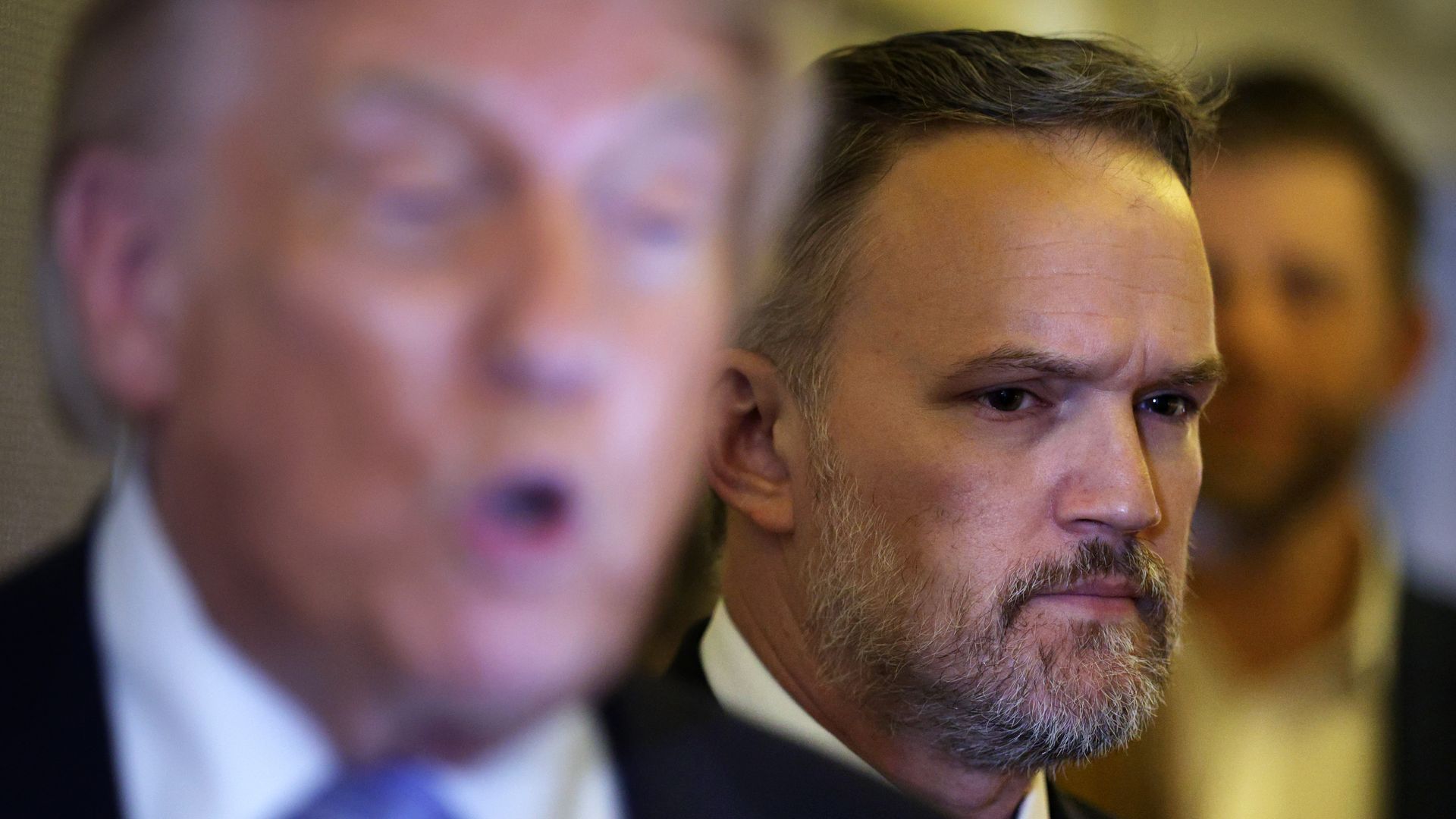
For decades, Washington bet that trade and economic integration would push Beijing toward reform.
- President Trump's top trade chief says that bet is all but over — a key insight into how the administration plans to engage with the world's second-largest economy in a new global trade era.
What they're saying: "We've just come to terms with the fact that there is not going to be some giant comprehensive reform of the way the Chinese political system works," U.S. Trade Representative Jamieson Greer said last night at the Council on Foreign Relations.
- Greer said that asking China to pivot from an export-driven economy would be like China asking the U.S. to dissolve the Republican Party: "Some of these things we've been asking them for decades are in fact part and parcel of their political system."
- It's a shift from previous administrations, including most recently Biden administration officials who pressed that an economic rebalancing — more domestic consumption, less export-driven growth — was in China's own interest.
- Asked by the Council on Foreign Relations' Michael Froman, who served as President Obama's trade chief, whether the U.S. was done with that approach, Greer said: "I would say, mostly."
The intrigue: Following Trump's visit to China earlier this month, Greer said the administration will request public input on which "non-strategic" Chinese goods should see lower tariffs. It will also ask which American goods China should buy more of.
What to watch: The deadline to renew the North American trade deal —renegotiated and rebranded during Trump's first term — is five weeks away. Greer offered little optimism about Canada's place in the deal.
- U.S. officials head to Mexico this week to begin the first round of talks, without our neighbor to the north at the table.
- "Canada's approach has been different. They, like China, retaliated against the United States. ... They're just in a different spot, and it's hard to see necessarily where that ends," Greer said.
Go deeper: New trade risk: North American trade deal could fall apart
Sign up for Axios Macro