Axios Macro

February 03, 2025


It's a fast-moving situation with the 25% tariffs on North American neighbors that President Trump announced over the weekend.
- As we send this newsletter, Trump has delayed the Mexican tariffs by a month (your Super Bowl guacamole budget is safe for now). 🥑
- The Canadian tariffs are still scheduled to go into effect at midnight tonight, pending an afternoon call between Trump and Canadian Prime Minister Justin Trudeau. 🇨🇦
In today's Macro, we unpack a dizzying weekend of economic news out of the administration.
Today's newsletter, edited by Ben Berkowitz and copy edited by Katie Lewis, is 755 words, a 3-minute read.
1 big thing: Friendshoring, RIP

Canadian hockey and basketball fans are booing the U.S. national anthem at games. Liquor stores in Ontario are taking American booze off their shelves. Do you know what it takes to make Canadians this mad at you?
Why it matters: It takes a trade war, apparently. And regardless of whether Trump's promised tariffs go into effect, Canadians' newfound open hostility to the United States is an example of the longer-term economic risks at play.
- There are estimates floating around on what the new import taxes mean for GDP and inflation, but the numerical details miss the point.
- This will prove a very difficult bell to unring and points to a new era in which businesses cannot count on any country to be a permanent partner of the United States.
By the numbers: If promised 25% tariffs on Mexico and Canada (10% on Canadian energy) are implemented and the countries retaliate as they promise to do, it would add 0.76 percentage point to U.S. inflation and subtract 0.4 percentage point from U.S. GDP growth, estimates the Yale Budget Lab.
- An extended trade war would prove costly for specific sectors, including U.S. automakers (who rely on supply chains that crisscross North American borders), homebuilders (who use Canadian lumber and gypsum) and agriculture (fertilizer).
Yes, but: The United States is a large, resource-rich, geographically diverse nation that relies less on imports than smaller countries. That's why neither forecasters nor financial markets are betting that aggressive trade measures will cause recession.
Between the lines: As the U.S.-China relationship has become more hostile over the past decade, Western companies have looked for ways to decrease dependence on China. A frequent solution offered by the corporate class was "friendshoring."
- The idea is to shift supply chains toward countries with deep, stable relationships with the United States.
- The trade relationships with Canada and Mexico have been viewed as the most stable of all, built upon the North American Free Trade Agreement enacted in 1993 and an update of it, the U.S.-Mexico-Canada Agreement, signed by Trump five years ago.
Flashback: "The USMCA is the largest, fairest, most balanced, and modern trade agreement ever achieved," Trump said then.
- That embrace of North American trade, combined with the Biden administration's emphasis on friendshoring and deepening relationships with allies, gave a green light to companies looking to invest further in a North American supply chain.
- But now, Trump has pushed toward higher tariffs on imports from Canada and Mexico than from China.
What we're watching: Does the cross-border hostility created by the possible trade war between neighbors with a three-decade-old free trade deal — symbolized by those boos at an Ottawa hockey arena — portend a broader breakdown in this economic interconnection?
The bottom line: There's no such thing as friendshoring if you don't have any true friends.
2. Musk and Trump's wild weekend of econ news
The second week of the Trump presidency was packed with more intrigue on the global macroeconomic front than you might see over a monthslong stretch. And not just on trade.
Driving the news: Elon Musk said late last night that he will take his Department of Government Efficiency pitch on the road, in part to convince bond investors of his ambitions to scale back budget spending.
- "The bond markets do not currently reflect the [budget] savings that I am confident we can achieve," Musk said in a talk hosted on X in the wee hours of this morning.
- "If you are shorting bonds, I think you are on the wrong side of the bet," he added. "There will be less debt needed as we stop wasting taxpayer money on crazy things."
- Musk said he will speak at an event alongside JPMorgan Chase CEO Jamie Dimon. JPMorgan did not immediately respond to a request for comment.
Of note: Media outlets over the weekend reported that deputies of Musk's DOGE gained control of a powerful Treasury Department system that distributes money on behalf of the federal government.
- That system has typically been in the hands of civil servants, not any politically affiliated officials. The story was first reported by the Washington Post last week.
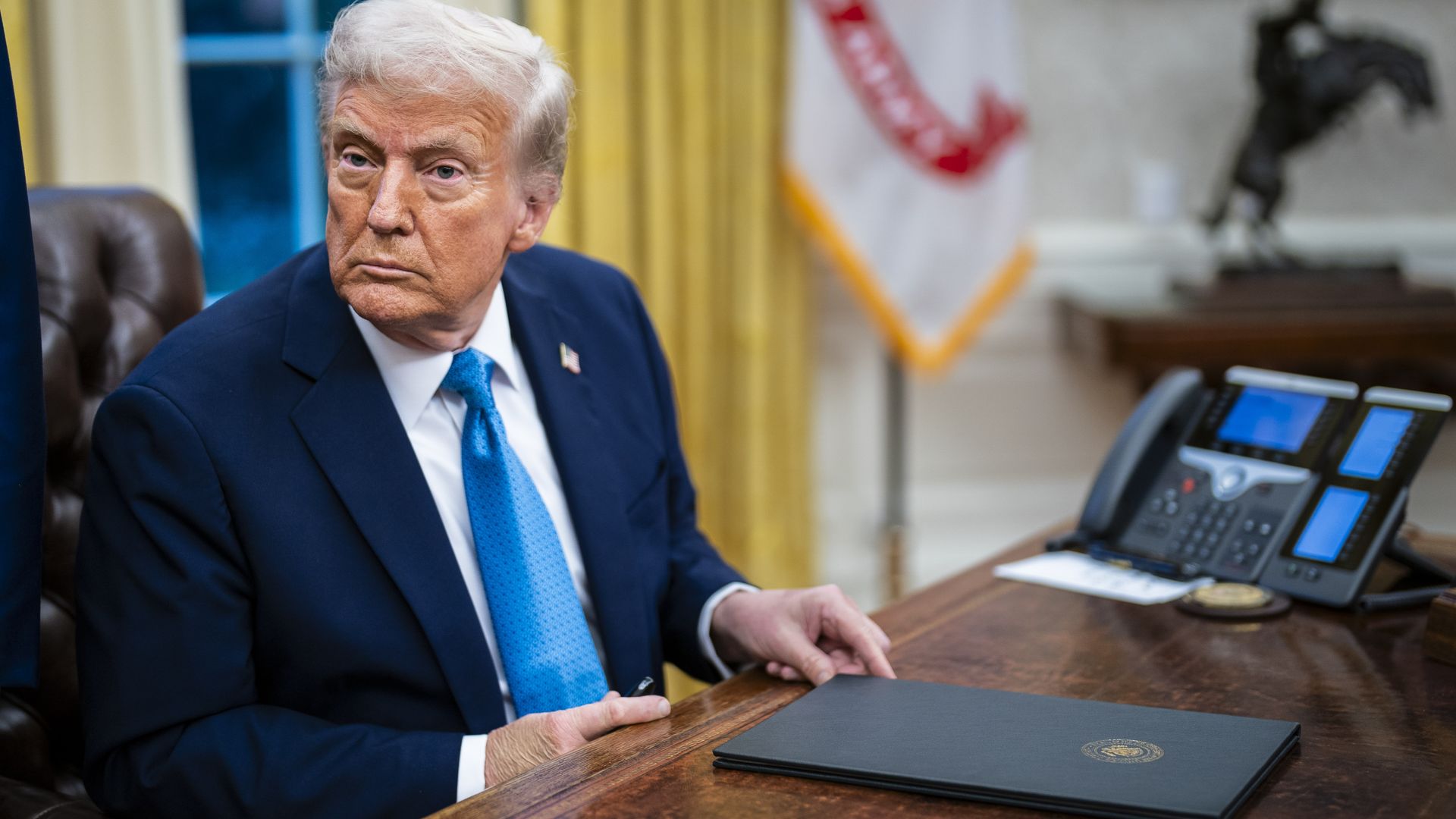
There was an interesting shift in Trump's long-running criticism of the Federal Reserve. Speaking in the Oval Office, Trump praised the central bank for keeping interest rates on hold last week.
- "Holding the rates at this point was the right thing to do," Trump said.
- After the Fed's decision last week, he blamed the Fed for creating inflation in a social media post. He had earlier said he would demand that the Fed lower interest rates.
Sign up for Axios Macro