Axios Macro
June 25, 2025


The White House is out with sunny new projections for how its full mix of policies will affect growth and deficits. But mainstream modelers aren't buying what the administration is selling. 🤔
- Plus, Republicans' new line of attack on the alleged politicization of the Federal Reserve.
Today's newsletter, edited by Ben Berkowitz and copy edited by Katie Lewis, is 817 words, a 3-minute read.
1 big thing: Big, beautiful White House projections
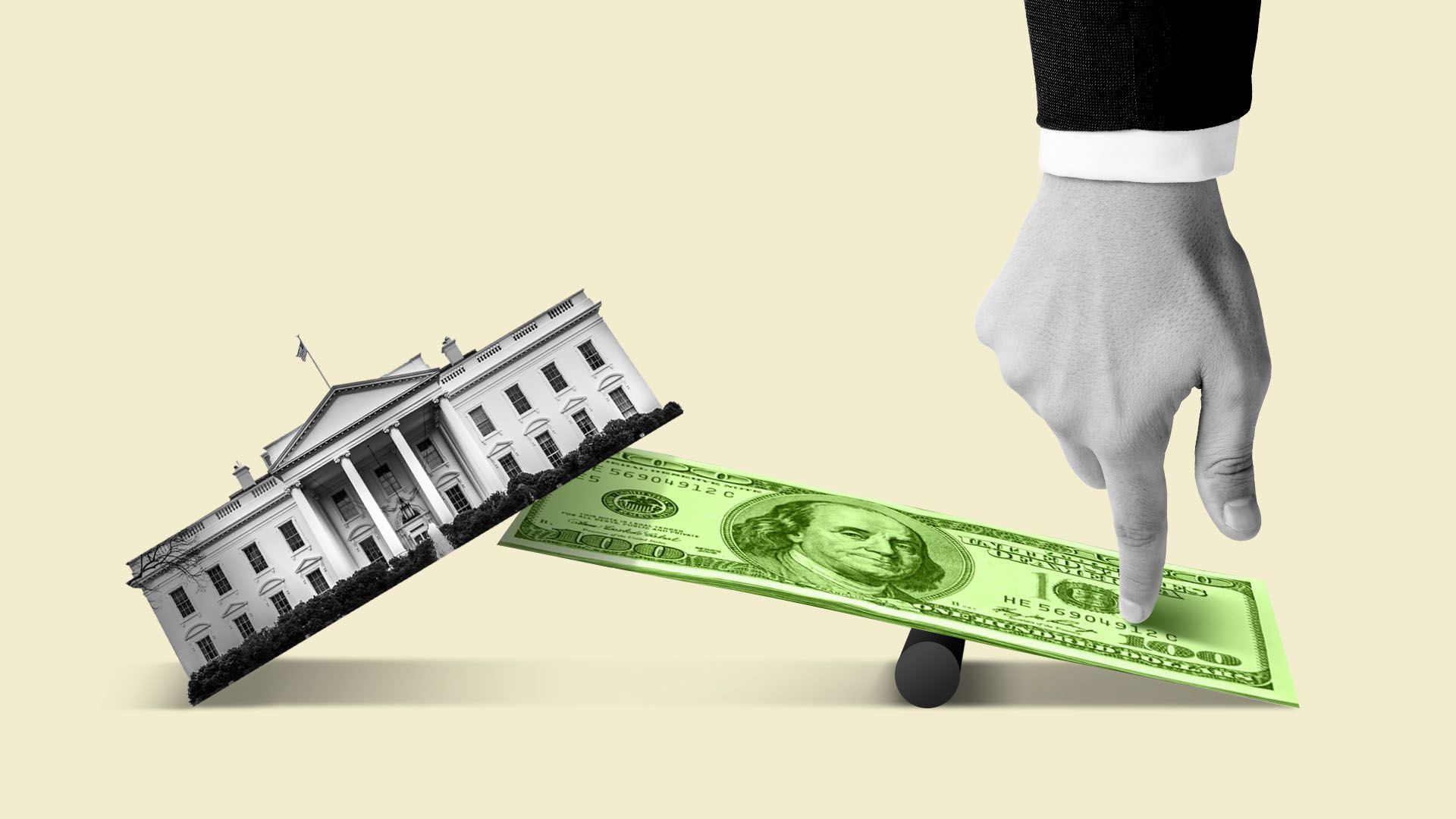
Tax legislation moving through Congress, paired with other Trump administration policies, will create an economic growth surge that puts the national debt on a downward path, White House economists project in a report out this morning.
The big picture: The new projections are wildly at odds with estimates generated from mainstream models, including from the Congressional Budget Office and top universities, which see wider fiscal deficits and more modest growth impacts.
- The new White House analysis models the One Big, Beautiful Bill Act — a combination of tax and spending cuts that has passed the House and is pending before the Senate — along with other aspects of the Trump agenda, including deregulation and tariffs.
By the numbers: The Council of Economic Advisers' projections find that the full constellation of Trump policies will cause the U.S. debt-to-GDP ratio to fall to 94% over the next decade, from its current levels around 98%.
- The CBO projects that the tax legislation would push that ratio up to 124%, or 117% after accounting for growth benefits.
- The White House analysis projects that the cumulative deficit over the next decade will be $5.5 trillion lower than under current law, once the tax bill is combined with a growth boost from deregulation and energy policy, unspecified future spending cuts, and tariff revenue.
What they're saying: "The CBO score isn't intended to be an overall, holistic view of where the deficit is going," CEA chair Stephen Miran said on a call with reporters this morning.
- "It doesn't include things like tariff revenue, it doesn't include things like discretionary spending reductions, it doesn't include things like the much bigger economic growth we'll have."
Reality check: The deficit widened following the original 2017 Trump tax cuts, which the "big, beautiful bill" would extend.
- The deficit was 3.1% of GDP in 2016, before President Trump took office, and 4.6% of GDP in 2019, just before the COVID-19 pandemic.
Zoom in: Unsurprisingly, the private-sector modelers whose projections are more in line with the CBO numbers find the CEA's assumptions and conclusions to be unrealistic.
- "With this report, the CEA claims that these tax cuts will not only pay for themselves, the tax cuts will also pay down the growing debt that exists under current law even without the tax bill," Kent Smetters, director of The Penn-Wharton Budget Model, tells Axios.
- "It is a truly fantastical claim," adds Smetters. His group's modeling estimates that the version of the legislation that passed the House would increase cumulative deficits by $2.8 trillion over the next decade.
- "We would love to better understand how they are coming to a conclusion that is so out of line with all the other modeling done by economists across the ideological spectrum," Martha Gimbel, executive director of the Yale Budget Lab, tells Axios.
The bottom line: The White House is premising its projections on its policies delivering much faster growth than outside analysts believe is likely, paired with future deficit-reducing policies whose composition is uncertain.
2. What's different for the Fed now
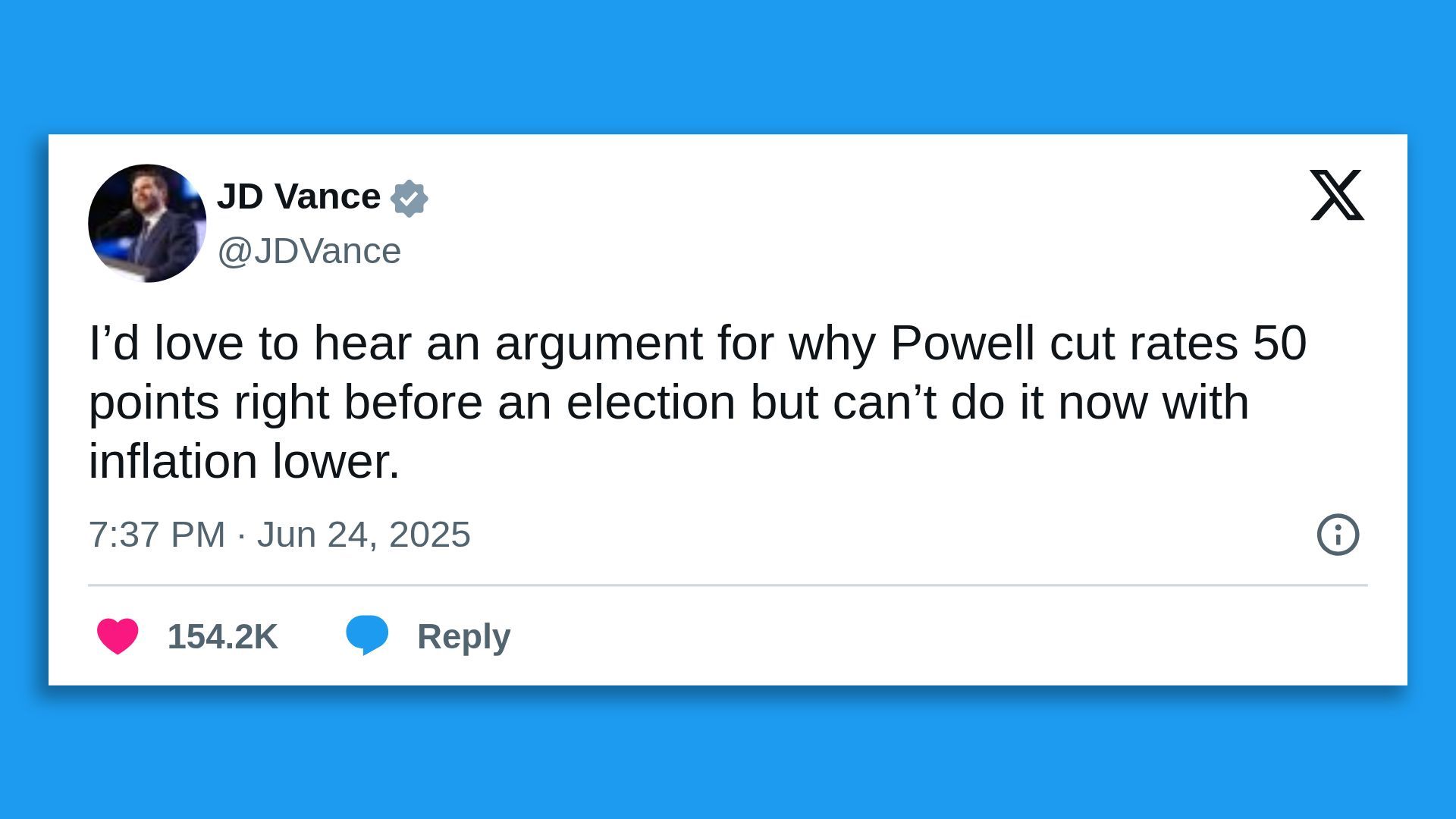
Republicans who want lower rates want to know why the Fed slashed rates last year but won't do so now, even though inflation is lower.
Why it matters: It's a new attack line from GOP leaders, including Vice President JD Vance, who are seeking to jawbone the Fed into cutting rates and believe the central bank has had a pro-Democrat political bias.
Zoom out: Rep. Scott Fitzgerald (R-Wis.) asked Powell yesterday why the Fed would not consider a cut soon, arguing the economic data pointed to similar conditions as last year, when the Fed was cutting rates.
- "It seems like everything is in place right now to kind of do the same thing, make the same move," Fitzgerald said.
- Powell's reply? "If you just look at the basic data and don't look at the forecast, you would say that we would have continued cutting."
- "The difference, of course, is at this time, all forecasters are expecting pretty soon that some significant inflation will show up from tariffs, and we can't just ignore that," he added.
Flashback: The Fed cut rates by a total of 1 percentage point over the final three months of 2024, including a half-percentage point decrease in September alone.
- The supersized half-point cut was indeed a close call, officials said at the time, and the optics of making the move in the last policy meeting before the presidential election were seen as less than ideal.
Between the lines: The biggest difference between then and now was that the labor market was showing major cracks that aren't evident in current data.
- The unemployment rate had risen by 0.5 percentage point to the highest since 2021. The jump triggered the Sahm Rule, signaling a recession might be ahead.
- Inflation looked to be on a downward trajectory, with projections that it would continue on that path. Now, Fed officials and most private-sector forecasters anticipate a price surge this year due to tariffs.
Sign up for Axios Macro