Axios Macro
March 12, 2026


The risks of a prolonged blockade of the Strait of Hormuz have increased in the last 48 hours, and so has the global price of oil. Today, we look at some modeling of the likely global economic effects if no Iran war off-ramp is found soon.
- Plus, reading between the lines of the Trump administration's new tariff strategy.
Situational awareness: Initial jobless claims remained low last week at 213,000.
- Separately, housing starts unexpectedly surged 7.2% in January, the Census Bureau said — but the gain was driven entirely by multifamily construction. Single-family home starts fell. 🏠
Today's newsletter, edited by Jeffrey Cane and copy edited by Katie Lewis, is 1,002 words, a 4-minute read.
1 big thing: What it will mean if the Strait of Hormuz stays closed
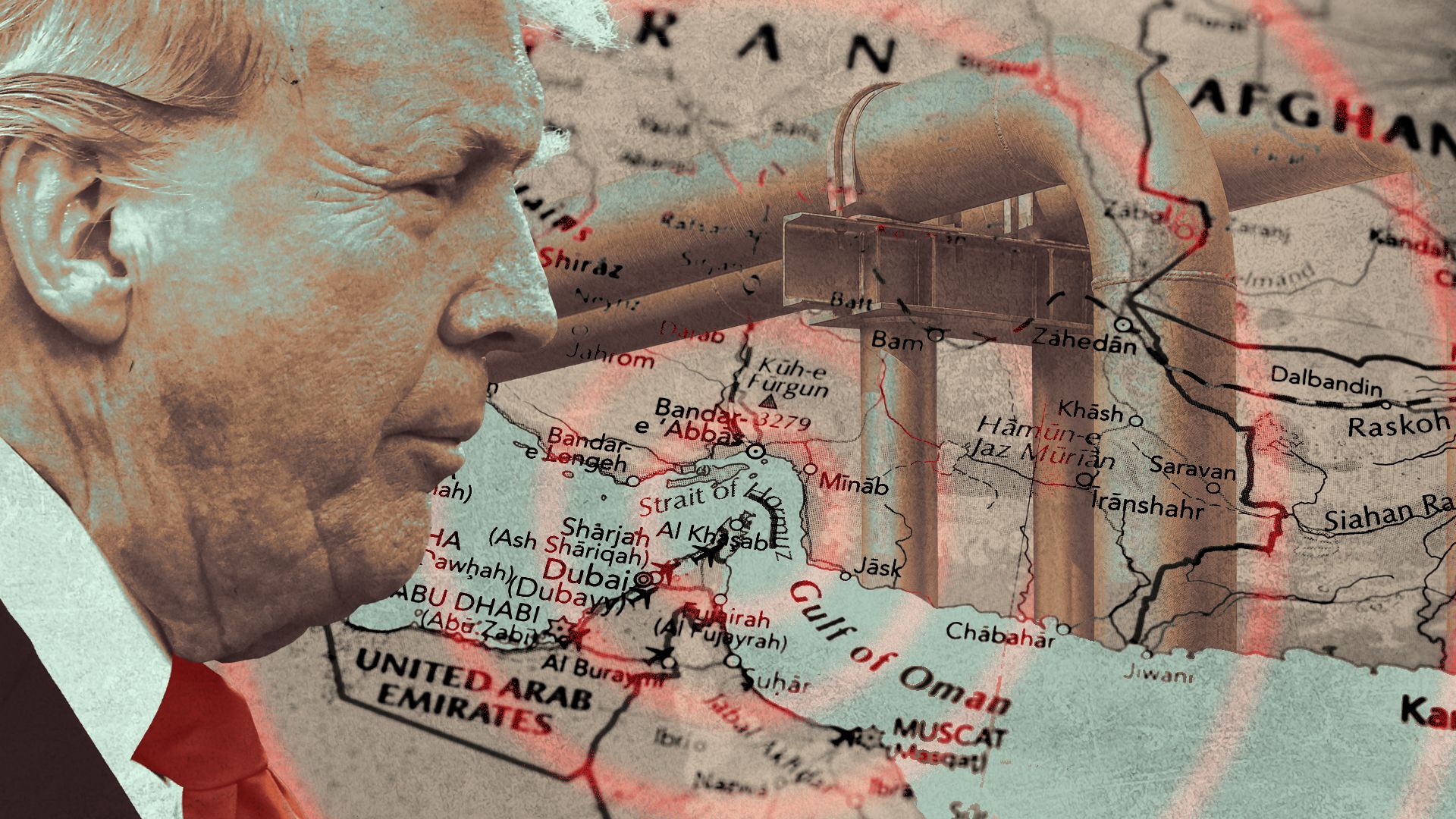
With shipping traffic at a near halt at the Strait of Hormuz, the possibility of prolonged disruption to supplies of oil and other important commodities has grown.
The big picture: If the military situation doesn't change soon, it will create a moderate stagflationary drag on the U.S. economy and a substantial one on Europe and East Asia.
- If oil prices spike substantially further, it would likely create a recession in major oil importers and do meaningful damage to U.S. economic prospects.
- Those are the implications of forecasters modeling a more sustained period of elevated prices.
State of play: Iran is prepared to attack commercial ships that try to pass through the strait, 21 miles wide at its narrowest point and surrounded on three sides by Iranian territory.
- Besides oil shipments, that means disruption to supplies of liquefied natural gas, raw materials for agricultural fertilizer, aluminum, steel and more.
- Efforts by American and other forces to overcome the blockade — including offering insurance where private insurers are unwilling and raising the prospect of U.S. Navy escorts — haven't yet proven workable.
- Oil markets have been exceptionally volatile this week, soaring and swooning based on the latest headlines.
By the numbers: Brent crude oil, the global benchmark, is up almost 10% today, to $101 a barrel, as of 11:30am ET. It was $72.48 before the war began.
- Notably, the futures curve — the price of Brent crude in future months — remains highly elevated, indicating that traders view ongoing supply problems as more likely than not.
- Brent crude for delivery in July 2025 was at $91.60.
- It did not fall under $80 until December.
Zoom in: The U.S. economy has some degree of insulation from the crisis, not least because of high domestic oil output. But oil trades in a global market, so the pain can't be avoided.
- Goldman Sachs economists, in a report published late yesterday, modeled a scenario where Brent averages $98 in March and April and then declines for the remainder of the year.
- That prompted them to raise their 2026 U.S. inflation forecast by 0.8 percentage point, to 2.9%. It trims their 2026 GDP growth forecast by 0.3 percentage point, to 2.2%.
- In a more extreme scenario, in which oil flows are disrupted for a full month and crude averages $110 in March and April, they see inflation at 3.3% and GDP at 2.1%.
Given those risks, Goldman economists Manuel Abecasis and David Mericle raised their odds of a recession this year by 5 percentage points, to 25%.
Zoom out: There are more extreme scenarios at play. Oxford Economics modeled a scenario in which global oil prices average $140 a barrel for two months — what they characterize as a "breaking point" for the world economy.
- That, they find, would be enough to push the eurozone, the U.K. and Japan into economic contraction. It would create an economic standstill in the U.S.
- "Oil prices at that level become economically overwhelming because the transmission to the economy broadens as financial market conditions tighten significantly," wrote Ryan Sweet and Ben May with Oxford Economics.
- It would cause global GDP to fall 0.7% and push global inflation to 5.1% this year, 1.7 percentage point higher than their March forecast.
Of note: "The rebound in financial markets has been quick following past major military conflicts in the Middle East since the 1990s, but this time could be more gradual," Sweet and May added.
2. Trying again on tariffs
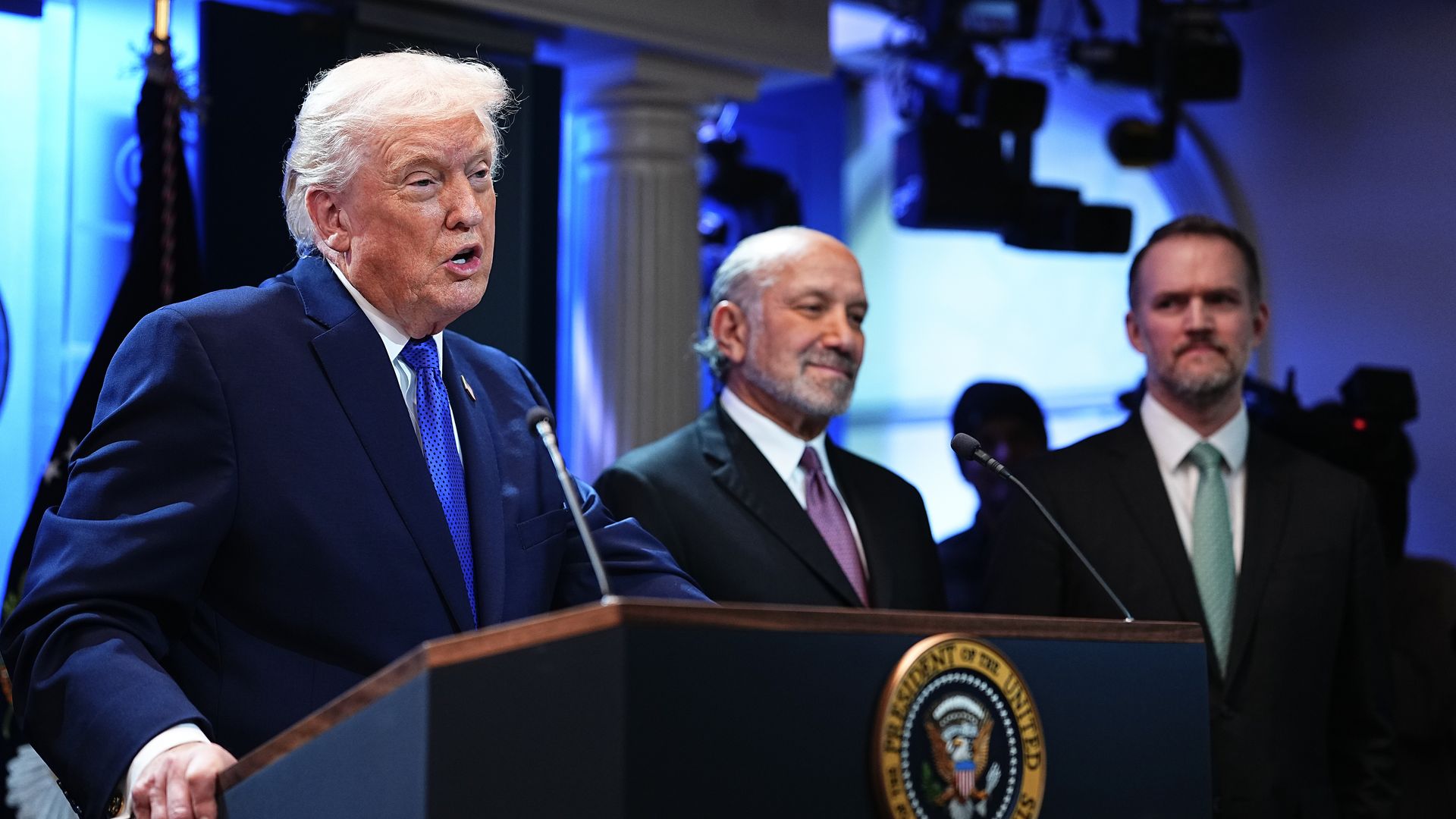
In the background of war-related economic turmoil, President Trump is moving forward to replace the tariffs upended by the Supreme Court.
- We learned last night that Trump's top trade official, Jamieson Greer, is initiating new trade investigations, kickstarting a process that is likely to end with higher tariff rates on global trading partners.
Why it matters: Trump's "move-fast-and-tariff-everything" strategy backfired. He is returning to the lengthy, more bureaucratic trade tools that dominated his first term.
Driving the news: Greer told reporters that his office initiated a trade investigation under Section 301 of the Trade Act of 1974 into countries that exhibit signs of excess manufacturing capacity.
- It will cover more than a dozen nations, including China, the European Union, Mexico, Japan and India.
- Greer said more investigations, including a separate query into forced labor issues, are on the way.
Between the lines: These investigations can take as long as a year, although Greer suggested the process would be fast-tracked and done in time to replace the global 10% tariff — enacted under a separate trade authority after the Supreme Court decision — that expires at the end of July.
- The inquiries are process-heavy, with public comment periods and hearings. It is the opposite of how Trump wielded tariffs with the International Emergency Economic Powers Act, which was akin to an immediate "on/off" switch for import taxes.
The intrigue: The Supreme Court decision offered Trump an off-ramp to ease global tariffs and offset inflationary pressures now that energy prices are soaring. It would also tamp down tensions with the same allies who could get dragged into the Iran war.
- Greer told reporters he would not "pre-judge" the investigations. But the White House has made it clear that wide-ranging tariffs will return, even if the laws that implement them are different.
The bottom line: "Section 301 is the means to the IEEPA end ... there will be tariffs," TD Cowen's Chris Krueger wrote in a note this morning.
Sign up for Axios Macro