Axios Macro
July 31, 2026


We finish an extraordinary week for financial markets and monetary policy with new comments from the hawkish wing of the Federal Reserve.
- Their case: Raise interest rates a little bit now to avoid potentially more damaging moves down the line. More below, plus the latest rates (non-)move from the Bank of Japan. 🇯🇵
Situational awareness: Consumer sentiment surged this month, according to the University of Michigan's long-running survey, as Americans enjoyed some relief on gasoline prices from an (off-again, on-again) de-escalation of the Iran war.
Today's newsletter, edited by Jeffrey Cane and copy edited by Katie Lewis, is 958 words, a 3.5-minute read.
1 big thing: The case for higher rates
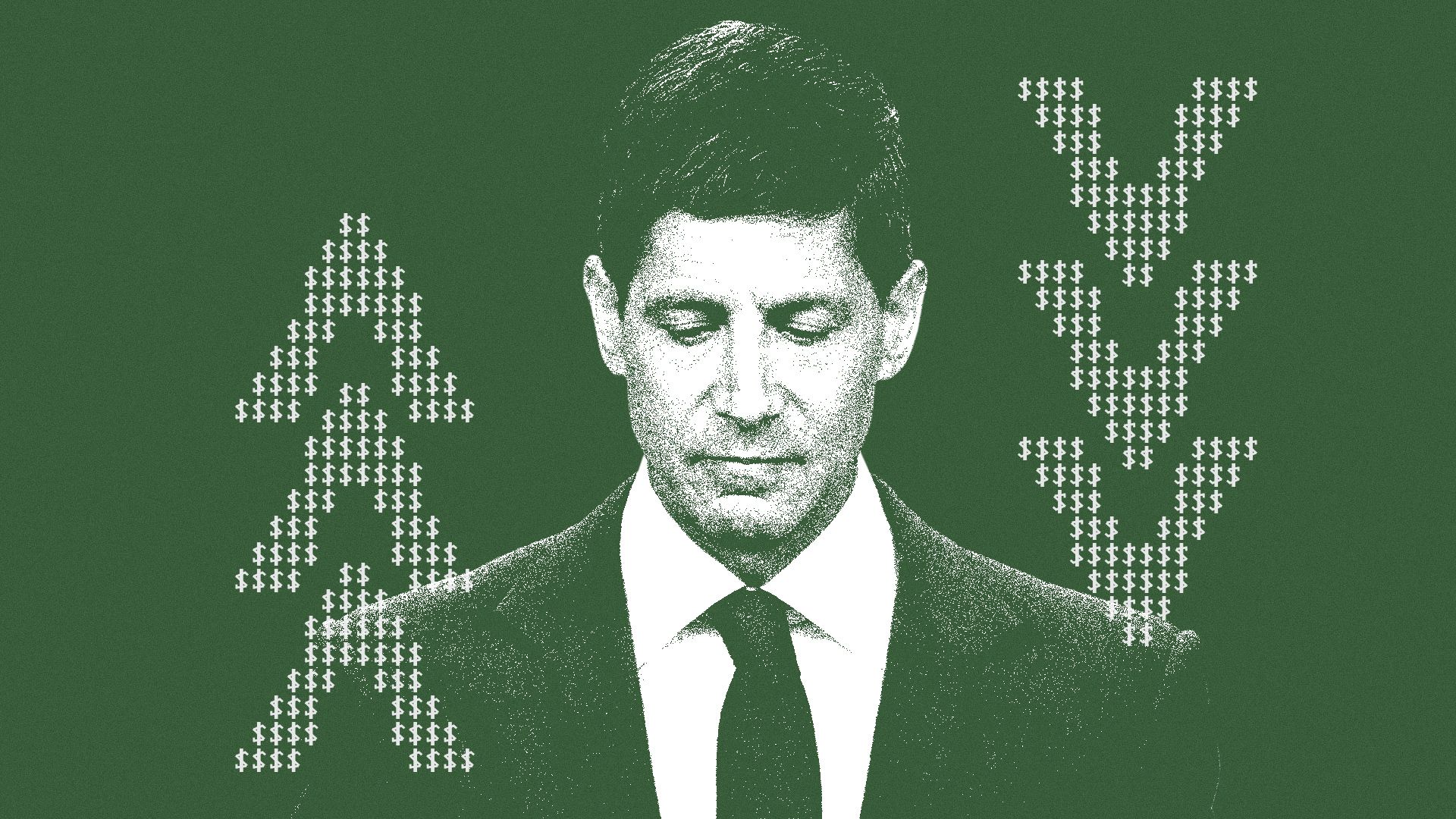
Inflation has been too high for too long, and the Fed should not count on it fading without further action.
- That is the argument from the three Fed officials who dissented from the decision led by chairman Kevin Warsh to leave interest rates unchanged this week, preferring instead to raise them.
Why it matters: Together, the dissents lay out a blueprint for the Fed's hawkish wing, arguing that repeated supply shocks paired with resilient demand have made inflation too persistent to fade on its own without tighter monetary policy.
- The question in the months ahead is whether that argument persuades more policymakers, especially if inflation remains stubborn.
- It is worth watching whether they turn out to have momentum persuading other voting members of the Fed's policy committee in the weeks ahead.
What they're saying: "I increasingly believe that monetary policy does have an important role to play in addressing a series of successive supply shocks that might lead to entrenched higher inflation," Minneapolis Fed president Neel Kashkari said in a statement this morning.
- In a separate statement, Cleveland Fed President Beth Hammack said she is "not confident" that inflation will return to the Fed's 2% target on its own.
The big picture: The three dissenters broke with the majority by voting for a quarter-point rate increase. They emphasized different concerns but reached the same conclusion: Rates are not holding back the economy enough to bring down inflation.
- "Labor, consumption and financial market conditions indicate that monetary policy is not restraining the economy," Dallas Fed president Lorie Logan wrote in a statement. "Without any policy restraint, inflation will likely continue to trend above target until there's an unanticipated shock."
Between the lines: Kashkari said the Fed should usually look through temporary supply shocks.
- But he said that after years of disruptions — from the pandemic and Ukraine to tariffs and the Middle East conflict — inflation risks becoming entrenched.
- Kashkari invoked a parallel to the 1970s as a reminder that successive shocks can ultimately require tighter policy.
Zoom in: Kashkari pointed to one additional factor — the "massive investment in data centers," which he said has added a new demand element to the inflation outlook.
- Hammack said she was seeing "inflationary pressures coming from the demand side of the economy, as well."
- Businesses across the Cleveland Fed district told Hammack that pricing pressures are broadening rather than fading, while consumers are "expressing despair over persistently higher prices."
- "A higher federal funds rate would help restrain economic activity and reduce inflationary pressures," Hammack said.
What to watch: The officials are not calling for an aggressive tightening campaign. Instead, they said small moves now while the labor market remains healthy would reduce the risk of larger moves later.
- "[A] potential series of small policy moves would be better than waiting and eventually concluding that even bolder actions were necessary," Kashkari wrote.
- "Modest action in the near term would reduce the likelihood of needing to take sharper action later," Logan wrote.
The bottom line: The coming months will determine whether these arguments become the consensus inside the Warsh Fed.
2. The Bank of Japan's hawkish hold
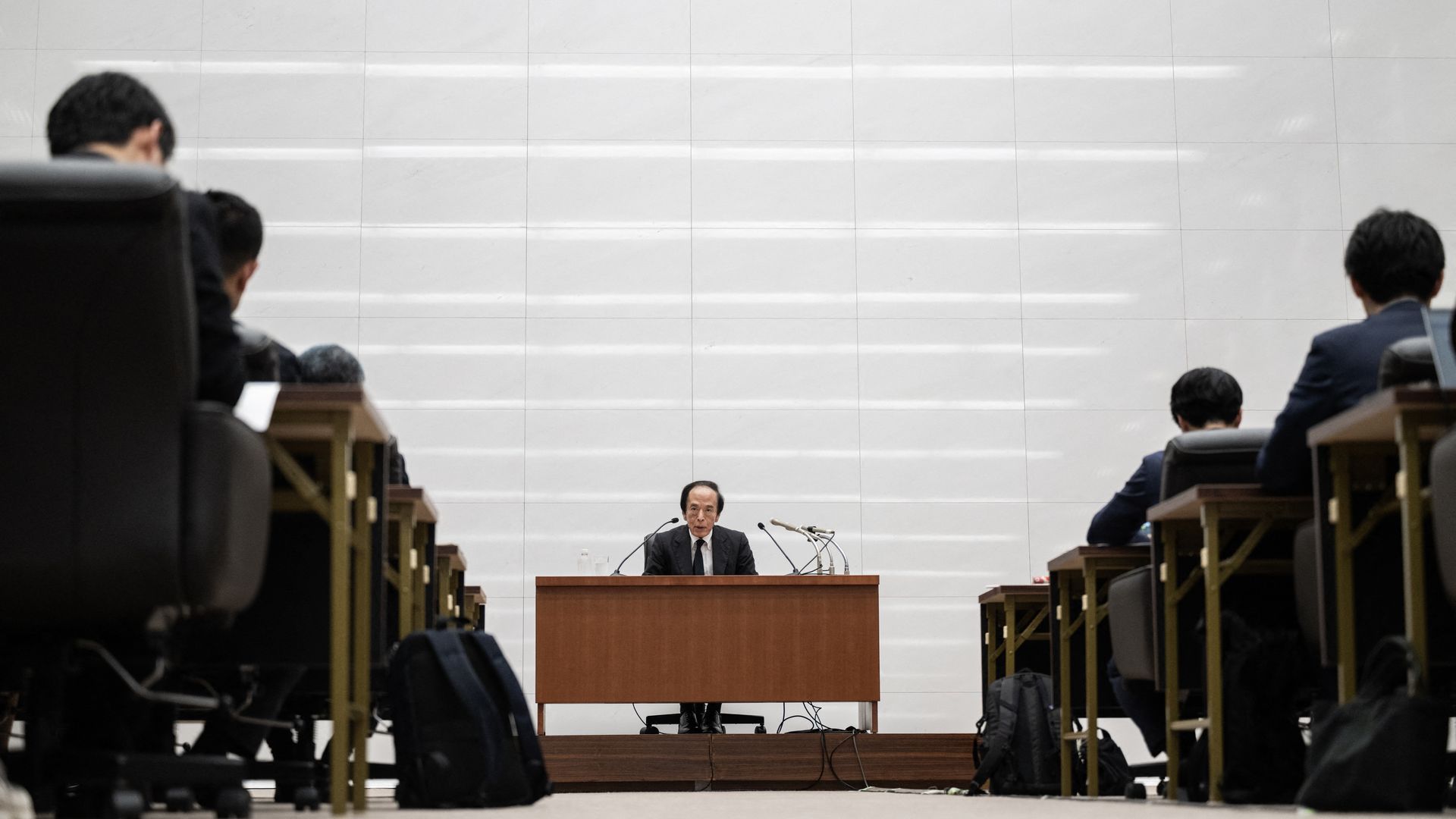
Concluding a busy week in central bank land, the Bank of Japan elected to leave interest rates unchanged overnight. But its communications were in sharp contrast to the Fed's from Wednesday.
Driving the news: The bank left its target policy rate at 1% as Bank of Japan governor Kazuo Ueda pledged that it will not fall behind the curve on its interest rate policy, one of several comments that signal more interest rate increases might be on the way.
- It adds up to a sign that a rate hike in the months ahead is more likely.
What they're saying: "Given that underlying inflation is approaching our 2% target, we must scrutinize upside price risks more than ever," Ueda said, according to Reuters' translation.
- "Many of our board members' inflation forecasts are fairly high and they see risks skewed to the upside," he said in the post-meeting press conference. "I would like to take that into account in chairing future policy meetings."
Of note: Like his hawkish American counterparts, Ueda warned that the alternative to small rate increases in response to inflation pressure could be much more disruptive moves later.
- "If we fail in our pursuit of stable price growth, we could be forced to raise rates rapidly," Ueda said. "That would cause nominal rates to rise significantly and destabilize markets. That would be negative for sound economic growth."
The intrigue: It comes amid hints that Japan's Ministry of Finance is intervening in currency markets to try to strengthen the yen, which both Tokyo and Washington have seen as undervalued.
The latest: The Financial Times reported this morning that the U.S. Treasury has informed major banks it may intervene to prop up the value of the yen today.
- A social media post from Treasury Secretary Scott Bessent, while not explicitly confirming those plans, was very much a non-denial, referencing Ueda as a "longtime friend" and saying he looked forward to meeting Japanese officials at a gathering in North Carolina next month.
- "We continue to enjoy a strong relationship and close coordination," Bessent wrote on X.
Sign up for Axios Macro