Axios Macro
July 18, 2025


Today, we look at a common thread in Trump administration economic policy: that fiscal concerns should shape other policy areas — monetary and trade.
- Plus, Federal Reserve governor Christopher Waller makes the case for a rate cut 11 days from now.
👀 Situational awareness: The University of Michigan consumer confidence index edged up by 1 point to the highest in five months in early July. Still, the index remains well below its historical average — a sign that trade concerns are still weighing on Americans.
Today's newsletter, edited by Ben Berkowitz and copy edited by Katie Lewis, is 959 words, a 3½-minute read.
1 big thing: Trump's fiscal dominance risk
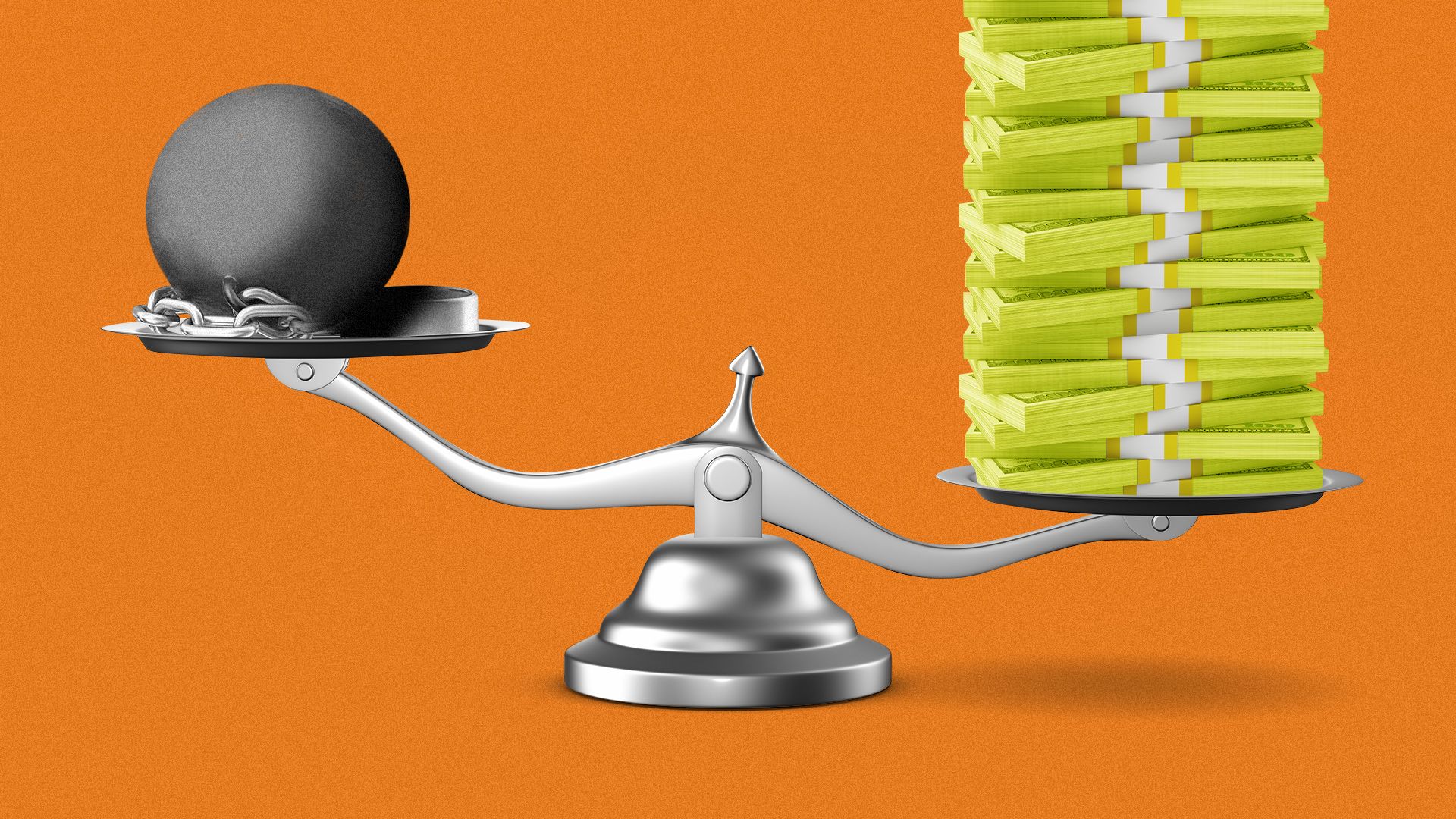
President Trump seeks to use both monetary policy and trade policy to help the U.S. government reduce the burden of its debt. It's a major departure from what has long been considered best practice for economic policy.
Why it matters: The president's arguments for interest rate cuts suggest he seeks "fiscal capture," where monetary policy is set not based on economic conditions, but on what will be most helpful for the government as it seeks to manage its interest costs.
- That can lead to "fiscal dominance," where debt service needs become the core focus of a central bank, rather than economic stabilization. This tends to cause higher inflation and higher long-term interest rates.
- Similarly, the desire to use tariff revenue as a major ongoing funding source for the U.S. government is at odds with other goals of trade policy, like re-shoring manufacturing and negotiating concessions with trade partners.
The big picture: Traditionally, the job of monetary policy is economic stabilization — trying to keep inflation and the labor market on an even keel. Whether the interest rate policies meant to achieve that make things harder or easier for fiscal policymakers is not supposed to be the Fed's concern.
- Trump doesn't see it that way. The U.S. deserves rates "to be at 1%, saving One Trillion Dollars a year on Interest Costs," he posted this morning on Truth Social.
- The Fed has net losses in the last couple of years, which Trump's budget director, Russ Vought, has cited as evidence of mismanagement.
- Fed leadership has viewed the central bank's profits (which are passed on to the Treasury) or losses not as a goal, but as a downstream effect of the policies it sets in service of its economic goals.
Of note: In moments of emergency, it can make sense for the Fed to make funding the government on favorable terms its primary goal.
- The Treasury and Fed worked in lockstep during World War II to fund the war effort, for example, and arguably something similar occurred during the COVID-19 pandemic.
- But in normal times, it's a recipe for muddled policy, or worse.
- "The Fed controls interest rates to manage the business cycle," wrote Mike Konczal with the Economic Security Project. "[A]dding a second objective, managing the debt load, requires a second independent tool, or else the Fed will fail at both."
State of play: Similarly, the traditional aims of trade policy tend to include geopolitical strategy, defending domestic industries and gaining access to foreign markets.
- Whatever revenue that tariffs happen to raise has been viewed as a fortunate side effect, not the reason for acting.
- Now, White House economists project that tariffs will raise about $2.8 trillion over the next decade, a key factor in their deficit projections that are far sunnier than those of outside forecasters.
What they're saying: "This 'fiscal capture' of tariff policy shouldn't seem peculiar," wrote Macquarie strategists Thierry Wizman and Gareth Berry in a note this week.
- "After all, there are a myriad of reports that Trump's desire to replace the Fed's Chair also comes from a need to 'fiscally capture' monetary policy, thus reducing the federal government's interest burden should debt levels rise," they added.
- This creates a risk of higher long-term interest rates. "As markets uncover the 'fiscal capture' narrative," they wrote, "the US yield curve may steepen further, with the 30-year yield rising relative to short-term yields."
The bottom line: High tariffs could stick around longer and long-term interest rates might spike higher if fiscal dominance prevails.
2. Fed rate division
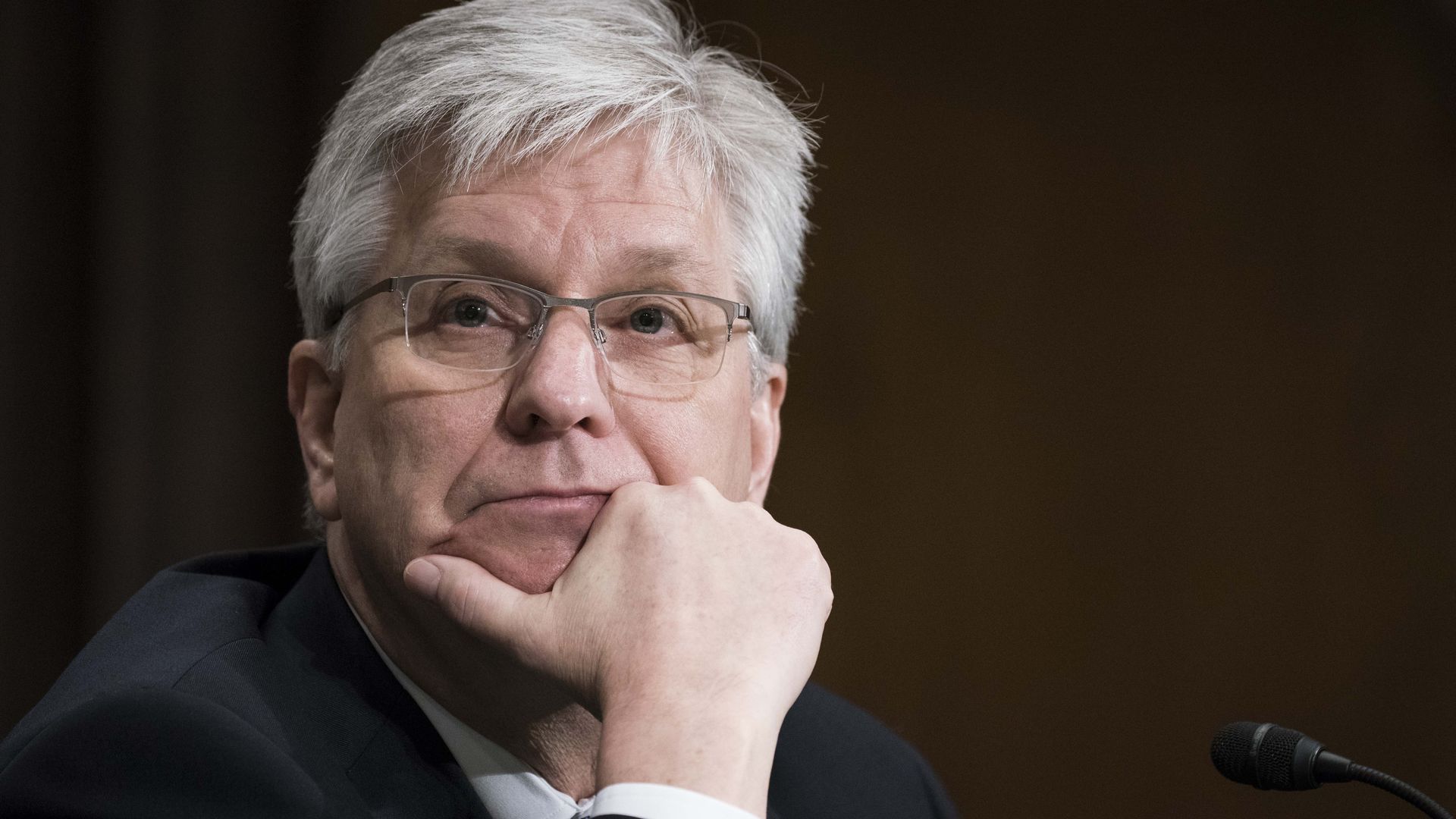
Fed governor Christopher Waller explicitly called for cutting interest rates at the end of this month.
Why it matters: That view is not widely shared among his colleagues, raising the likelihood of rare governor dissents at the upcoming policy meeting.
- Vice chair for supervision Michelle Bowman — appointed by Trump, like Waller — is the only other Fed policymaker who has publicly supported a July rate cut.
- If Waller and Bowman both dissent from what is likely to be a committee decision to leave rates steady, it would be the first time two governors have dissented at a meeting since 1993.
What they're saying: "I believe it makes sense to cut the [Federal Open Market Committee's] policy rate by 25 basis points two weeks from now," Waller said, with bluntness that is uncommon among central bankers, in a speech titled "The Case for Cutting Now" last night in New York.
- Waller said he would support "further 25 basis point cuts" later this year.
The big picture: Waller said tariff-related price increases will be temporary and that the Fed should "look through" any related effects.
- [I]f I subtract estimated tariff effects from the reported inflation data, I find the inflation numbers for the past few months would have been quite close to our 2 percent goal," Waller said.
Of note: Waller said that while inflation looks OK, the labor market is weakening. "[P]rivate-sector payroll gains are near stall speed and flashing red," Waller said.
The intrigue: Waller is a potential Fed chair appointee.
- "If he says, 'Chris, I want you to do the job,' I'll say 'yes'. But he's not talking to me. ... It's a hypothetical that isn't relevant," Waller told Bloomberg of a potential request from Trump to be Fed chair.
The other side: In a speech earlier yesterday, Fed governor Adriana Kugler said that she thought it appropriate "to hold our policy rate at the current level for some time," citing the stability in the labor market.
The bottom line: Trump has lambasted Fed chair Jerome Powell — and more recently, the entire board — for keeping rates elevated.
- None support the type of drastic cuts Trump wants, but at least two top officials are set to make the case for a rate cut at the July meeting.
Sign up for Axios Macro