
Axios Macro

April 09, 2026

We're gearing up to cover the spring meetings of the International Monetary Fund and World Bank next week — and the impact of the Iran war and global energy shock is top of mind for the finance ministers, central bankers and other world leaders who will assemble in Washington, D.C. 🌏
- Below, we look at how the head of the IMF is framing that discussion. Plus, the latest U.S. inflation and spending data.
Today's newsletter, edited by Jeffrey Cane and copy edited by Katie Lewis, is 872 words, a 3.5-minute read.
1 big thing: IMF's energy shock pain warning
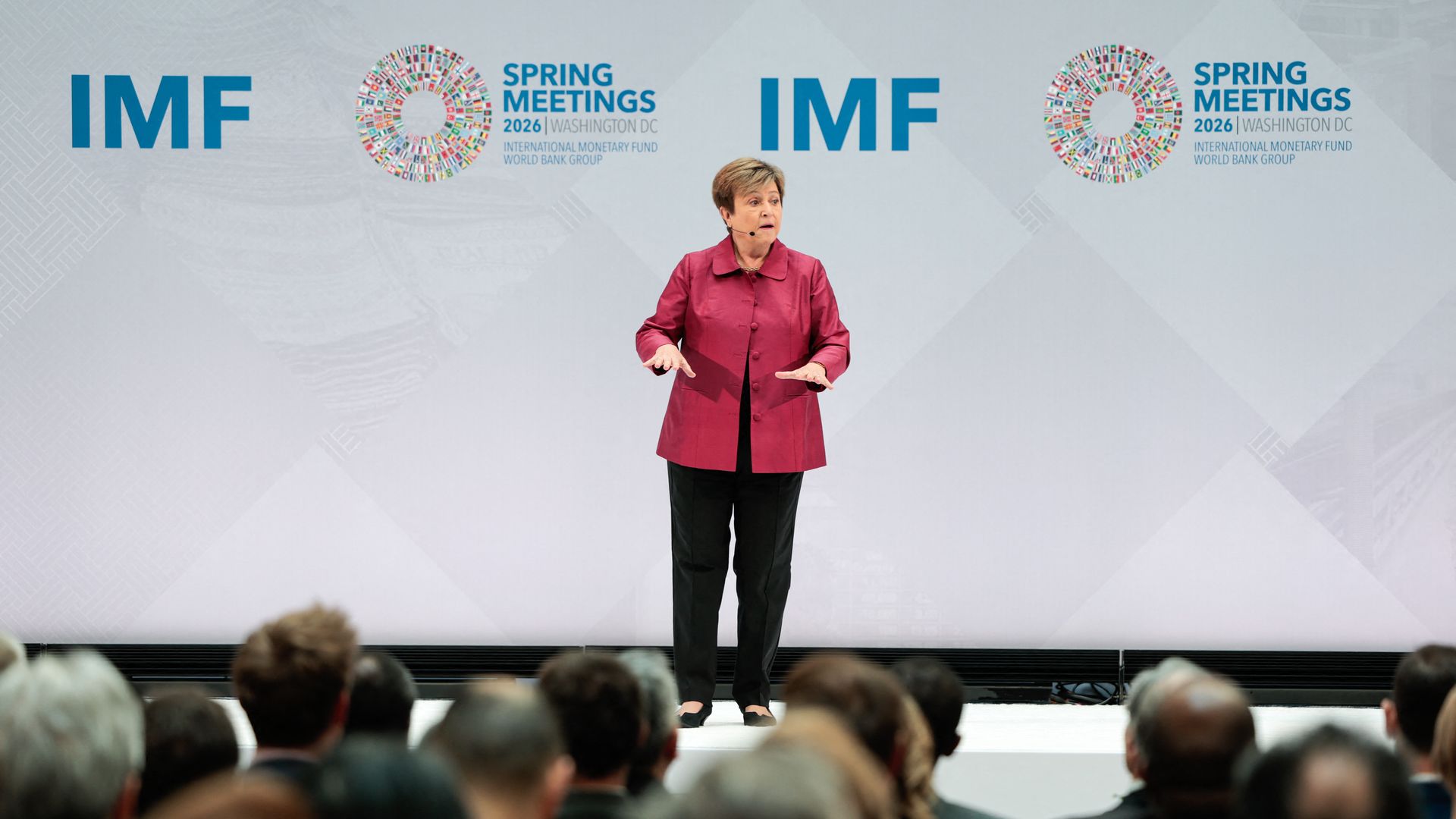
You can't fix a supply problem by boosting demand — and it would be counterproductive for countries to try to stimulate their way out of the pain of the Iran war's energy shock.
The big picture: That is a key message from Kristalina Georgieva, the IMF managing director, in a curtain-raiser this morning ahead of the spring meetings of the fund and World Bank next week.
- The blockage of the Strait of Hormuz means less oil and fewer other commodities flooding the world economy.
- It implies fiscal restraint, energy-efficiency efforts and potential monetary tightening in a world again beset by a negative supply shock.
State of play: Even with the ceasefire between Iran and the U.S., the flow of oil, natural gas, fertilizer and other products from the Persian Gulf is being throttled — and may face new Iranian tolls indefinitely.
- The blockage has driven up global interest rates, reflecting the possibility that central banks will need to maintain tighter policy to keep inflation in check.
- Georgieva endorsed the possibility of a hawkish pivot by central banks, saying that "if inflation expectations threaten to break anchor and ignite a costly inflation spiral, then central banks should step in firmly with rate hikes."
- Rate hikes, she acknowledged, "would further dampen growth — that's how they work. ... Fiscal support should remain targeted and temporary," she said.
What they're saying: "[T]his being a classic negative supply shock, demand adjustment is unavoidable," Georgieva said. "To put it in non-technical language, we cannot go through it without some pain."
- Policymakers must be careful not to make things worse, such as through "go-it-alone actions — export controls, price controls and so on."
- She warned against "untargeted tax cuts, energy subsidies, and price-based measures," saying that most countries have held the line against them, "although a few have chosen to deliver broad-based support."
- More constructive, in her telling, are energy conservation measures that restrain demand.
Zoom in: In particular, she warned against policies that would pit fiscal and monetary policy against each other.
- At a time of already rising global interest rates, "adding deficit-financed stimulus to this mix at this moment would increase the burden on monetary policy," she said, "like driving with one foot on the accelerator and one on the brake — not good."
Yes, but: Policies to cushion the blow of higher energy and food prices for the poorest citizens can coincide with efforts to curtail overall demand.
- Georgieva spoke of "targeted and temporary support to the vulnerable."
The bottom line: "Don't pour gasoline on the fire," Georgieva said, before quipping: "You need this gasoline to drive your cars."
2. Pre-war inflation stays hot


Inflation was already firming before the Iran war, the effects of which are piling on new price pressures.
Why it matters: The Fed's go-to inflation gauge is the latest to show that the energy shock from the Middle East conflict is landing atop a preexisting problem, a backdrop that makes imminent interest rate cuts difficult to justify.
By the numbers: The core Personal Consumption Expenditures Price Index rose 3% in the 12 months through February, as expected.
- Core PCE again rose 0.4% on a monthly basis. Core PCE was running at an annualized rate of 4.4% over the last three months, notably above the Fed's 2% target.
- Economists noted that February inflation was driven by higher goods prices, perhaps reflecting pass-throughs from tariffs.
What they're saying: Inflation is "hot, and it cannot dismissed as temporary distortion driven solely by tariff-impacted goods," wrote Sonu Varghese, chief macro strategist at the Carson Group.
- "In other words, the Fed had an inflation problem even before the Middle East crisis."
The big picture: Fed officials acknowledged that "further progress in reducing inflation had been absent in recent months," according to the minutes released yesterday from their March 17-18 policy meeting.
- At the time of the meeting, the energy shock from the war hadn't even fully materialized yet. But the "vast majority" of participants flagged that upside risks to inflation had increased.
The intrigue: For the second consecutive meeting, some raised the idea of "two-sided language" that acknowledged the potential for rate hikes, not just cuts.
- Even as many officials see rate cuts down the line, the prospect of increasing rates highlights the uncertainty about the path of borrowing costs this year.
Of note: This morning's data also showed that consumers revved up spending in February, with personal consumption expenditures up 0.5%, compared with a 0.3% increase the prior month.
- But adjusted for inflation, spending rose just 0.1%, up a tick from a flat reading in January.
What to watch: Tomorrow's March CPI report will be the first war-era read on inflation, with economists anticipating that prices will rise sharply as a result of the energy shock.
Sign up for Axios Macro