Axios Macro
July 01, 2024


With the calendar today flipping over to the back half of 2024, we take stock of the economic surprises — pleasant and otherwise — relative to what the smart set anticipated this time six months ago.
- Plus, the good and bad news from the manufacturing sector.
Situational awareness: The European Central Bank's forum on central banking in Sintra, Portugal — its answer to the Fed's Jackson Hole symposium — starts this evening. 🇵🇹 🇪🇺
- Highlights include a policy panel tomorrow afternoon European time that includes ECB president Christine Lagarde and Fed chair Jerome Powell. The sessions will be webcast here.
Today's newsletter, edited by Kate Marino and copy edited by Katie Lewis, is 735 words, a 3-minute read.
1 big thing: Where the economy stands halfway through '24
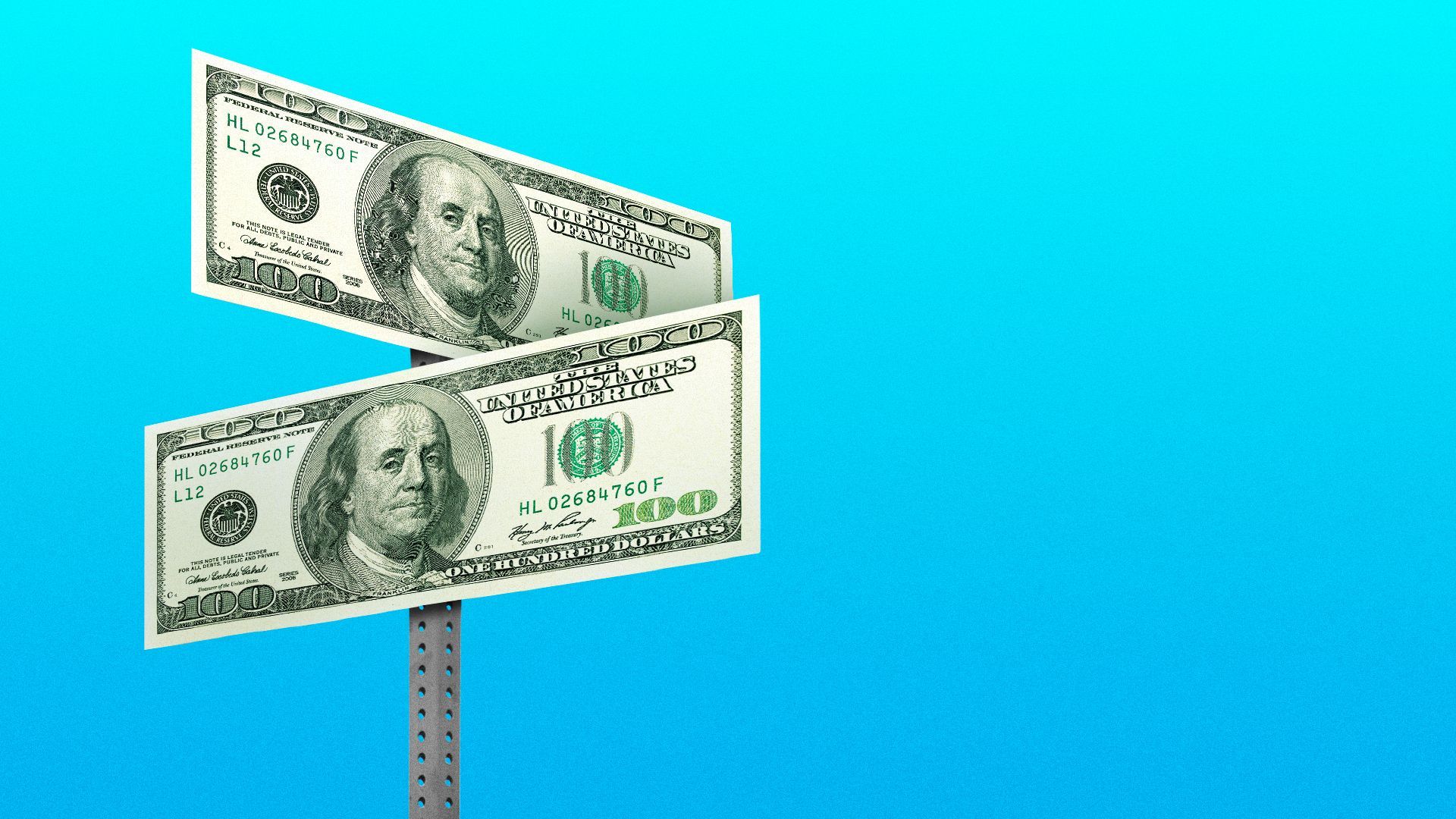
The soft landing seems to have stuck, inflation has been frustratingly persistent, rate cuts will be slower to arrive than many thought, and small cracks are showing up in the growth outlook.
The big picture: That is where the U.S. economy stands as we pass the midpoint of 2024 — a year in which things have not gone quite according to plan, but the overall balance of conditions is, for now, favorable for both workers and investors.
- A series of elevated inflation numbers in the first three months of the year scared the Fed, and it now looks like only one or two rate cuts are on the way this year — down from three that were the consensus six months ago.
- But the job market has kept chugging along, and financial markets have taken the diminished rate cut outlook in stride.
By the numbers:
- ⬆️ The unemployment rate rose to 4% in May, from 3.7% in December. Three-month average job growth also increased, to 249,000 from 212,000 in the final months of 2023.
- ⬆️ The Fed's preferred measure of inflation, the Personal Consumption Expenditures Price Index, rose at a 3.3% annual rate in the first five months of 2024, from 2.2% over the final five months of 2023.
- ➡️ The Federal Reserve's target interest rate range was unchanged between 5.25% and 5.5%.
- ⬆️ The S&P 500 is up 15.2%. The 10-year U.S. Treasury yield climbed to 4.48%, from 3.87%.
Yes, but: The rise in the stock market has been extremely concentrated in a handful of companies poised to benefit from generative AI, as our colleague Felix Salmon noted recently. It's not being driven by rising valuations of companies in all corners of the economy.
- Meanwhile, even as the latest inflation data has looked a lot better than it did in the first couple of months of 2024, the jobs picture has been worse on the edges.
- The number of job openings keeps falling rapidly, and the unemployment rate is now 0.6 percentage point higher than at its recent low in the spring of 2023.
- Lower-income Americans appear to be particularly stretched, which is showing up in anecdotal reports from consumer-facing companies and higher credit card delinquency rates.
What's next: The May Job Openings and Labor Turnover report is out tomorrow morning and will show whether companies continued shelving job openings and what happened with hiring and layoffs that month.
- Friday, the June jobs report is due out, and a key question is whether the softness shown in May unemployment was a blip or part of a trend.
The bottom line: All in all, it was a pretty solid first half for the U.S. economy, even if not precisely in the ways that forecasters predicted.
2. Mixed manufacturing picture
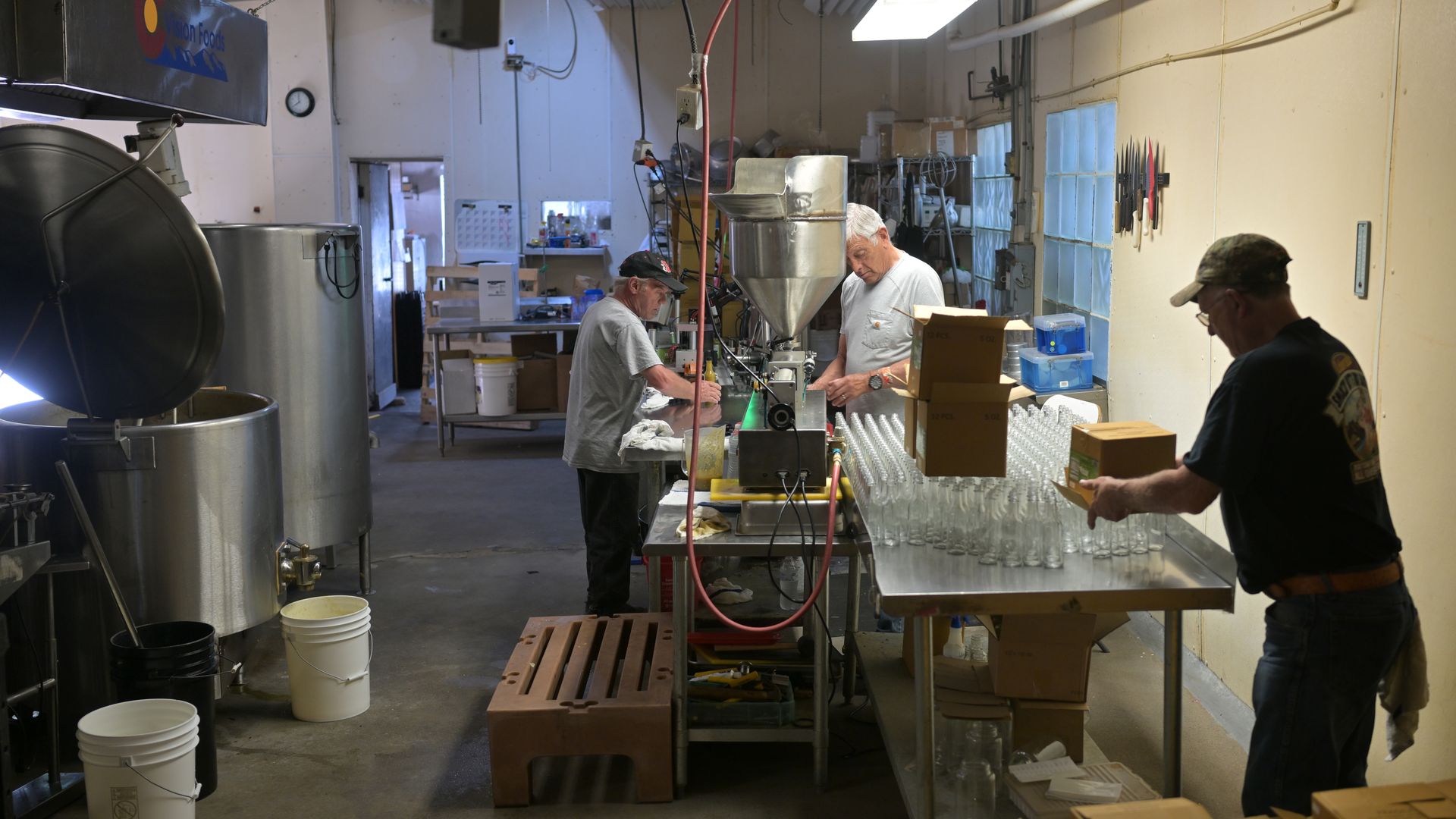
Prices are not rising as quickly in the manufacturing sector — a good sign for the inflation outlook. But factories say high interest rates keep weighing on demand, evidence that the economy is cooling and the sector slump is ongoing.
- Those themes are consistent across the two manufacturing surveys out this morning, from S&P Global and the Institute for Supply Management.
Driving the news: S&P said the rate of inflation for input costs eased in its final assessment of June, while selling prices rose at the slowest pace so far in 2024. Some firms were cutting prices to stay competitive, S&P said.
- ISM's prices index, meanwhile, fell almost 5 points from May's reading of 57% — the second month to indicate slower price increases.
Manufacturers were "hamstrung by weak demand," according to S&P. Its new order index picked up just "slightly," while a gauge of demand from abroad stayed flat — ending a four-month growth streak.
- ISM said new orders were still contracting, though at a slower rate than the prior month: Its index registered 49% in June, a point below the level that suggests expanding growth.
What they're saying: "[H]ousehold and business spending power has been diminished by higher prices and concerns over higher-for-longer interest rates," Chris Williamson, chief business economist at S&P, said in a release.
- "Demand remains subdued, as companies demonstrate an unwillingness to invest in capital and inventory due to current monetary policy and other conditions," ISM's Tim Fiore said.
What to watch: ISM's employment index fell about 2 points to 48% — suggesting headcount reductions.
- "Sales backlog is decreasing. We have furloughed a portion of our workforce as a result," a machinery manufacturer told ISM.
Sign up for Axios Macro