Axios Macro

April 29, 2025

The White House is playing up a summertime tax cut deadline, but it's tariff policy that is top of mind for Wall Street.
- And for consumers, for that matter, if the new dismal confidence numbers out this morning are any indication — though measures of how the labor market is actually holding up look solid. More below.
🇨🇦 Situational awareness: Mark Carney will remain prime minister, after his Liberal Party prevailed in Canadian elections held yesterday.
- The former Bank of Canada and Bank of England governor is the second member of the close-knit club of top central bankers to lead a G7 nation in recent years, following former European Central Bank president Mario Draghi's time as Italian prime minister.
Today's newsletter, edited by Ben Berkowitz and copy edited by Katie Lewis, is 769 words, a 3-minute read.
1 big thing: Trump's tax vs. tariff policy dilemma
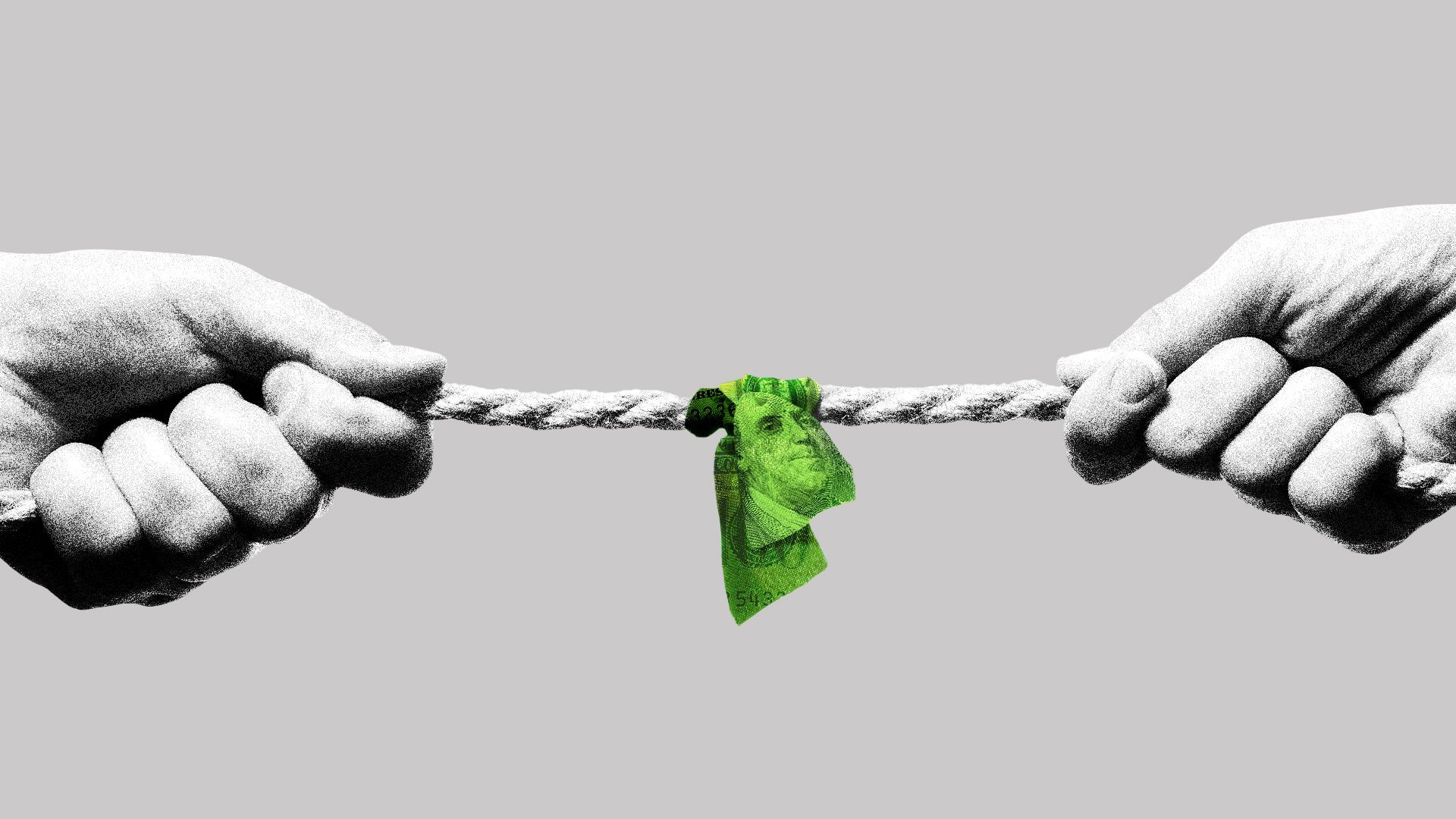
Any Trump administration win on tax policy looks set to be overshadowed by the White House's tumultuous trade agenda.
Why it matters: Economic optimism across corporate America soared on hopes of tax cuts and deregulation, which some CEOs were sure would make up for any potential tariff pain.
- Those expectations now look far too sunny.
Driving the news: President Trump's top economic officials are racing to pass legislation that includes an extension of 2017 tax cuts by July 4.
- "The tax bill is moving forward," Treasury Secretary Scott Bessent said at a White House briefing this morning. "It will give American business certainty; it will give the American people certainty."
The intrigue: That deadline — if met, which is no guarantee — would come just four days before the 90-day pause on reciprocal tariffs is set to expire.
- Bessent hinted that the administration might be close to trade deals with India and South Korea. But he would not clarify the status of talks with China, America's largest trading partner — talks that Chinese officials deny are underway.
State of play: Major tax legislation is Congressional Republicans' central goal for the year.
- There remains plenty of uncertainty about how they will tweak taxes on individuals and what spending cuts the bill may include. However, the outlook for corporate taxes has gelled in the last few months in ways that business interests see as pro-growth.
- There is no talk about raising the corporate income tax rate to pay for other priorities, for example, and it looks like the legislation will allow "bonus depreciation" and the ability to immediately deduct research and development expenses, both of which incentivize investment.
- The outlook is a little murkier regarding whether the legislation may cap the corporate state and local tax deduction, something conservatives don't want to see.
What to watch: Bessent often likens Trump's economic agenda to a three-legged stool supported by deregulation, trade and tax cuts. The extent to which those policies are interlinked, however, remains unknown.
- Over the weekend, Trump claimed tariff revenue would help offset tax cuts for individuals. This suggests substantial levies on imports would need to remain in place, downplaying the possibility of tariff reductions from the trade deals the administration itself has touted.
Speaking to reporters, Bessent said the administration would aim for high tariff revenues to support tax cuts and trade deals, though it's unclear what that would look like in practice.
- "The president campaigned on no tax on tips, no tax on Social Security, no tax on overtime, and restoring interest deductibility for American-made autos — so tariff income could be used for tax relief on all those immediately," Bessent said.
The bottom line: The White House is counting on tax cuts to buoy economic growth. Even leaving aside the political realities of tax reduction promises, ongoing tariff uncertainty could keep a dark cloud over the economy.
2. "Pervasive pessimism" in confidence, solid JOLTS


Americans now expect the job market and other measures of economic well-being to deteriorate in ways not seen since some of the darkest moments in recent economic history, per data out this morning.
The big picture: Today's data tells the story of the U.S. economy this spring in a nutshell: Activity is holding up fine for now, but Americans have become deeply pessimistic about what is to come.
Driving the news: The Conference Board's long-running consumer confidence survey fell for the fifth straight month, and consumers' expectations for the future fell to a 13-year low — worse even than in the depths of the pandemic.
- Separately, the Labor Department released its Job Openings and Labor Turnover data for March, which painted a more benign picture of the job outlook. Hiring was slightly up and layoffs were down, compared to February.
- The number of job openings did fall by 288,000 in March, however, which could be an early warning of a pullback by employers. (But also could be statistical noise in a volatile data series.)
What they're saying: Americans' expectations for business conditions, job prospects, and future income all fell, Conference Board senior economist Stephanie Guichard said in a release, reflecting "pervasive pessimism about the future."
- "Notably, the share of consumers expecting fewer jobs in the next six months (32.1%) was nearly as high as in April 2009, in the middle of the Great Recession," she wrote.
- "In addition, expectations about future income prospects turned clearly negative for the first time in five years, suggesting that concerns about the economy have now spread to consumers worrying about their own personal situations."
- The average respondent expected inflation of 7% over the next 12 months, the highest since the post-pandemic surge of 2022.
Sign up for Axios Macro