Axios Macro

October 23, 2024


Today we look at new data on the share of American households that really spend nearly every dollar they bring in on basic essentials.
- Plus, Europe's top monetary policy official makes the case against tariffs and trade wars.
Today's newsletter, edited by Kate Marino and copy edited by Katie Lewis, is 769 words, a 3-minute read.
1 big thing: Paycheck-to-paycheck reality gap
A majority of Americans often tell survey-takers that they live paycheck to paycheck. But a new look at aggregated data from one of America's largest banks implies that this may not be true.
Why it matters: A widespread, self-reported sense of financial strain suggests Americans think their financial lives are more precarious than economic data appears to indicate — the latest example of a disconnect between how people feel and what the data shows.
- But while there's no doubt plenty of people face difficult financial circumstances, the share who are genuinely spending nearly all the income they take in on essentials is lower than survey data suggests, based on an analysis of customer behavior by Bank of America Institute.
- Some who report living paycheck to paycheck may not be accounting for how much of their spending goes to nonessentials.
By the numbers: About 26% of households spend 95% or more of their income on essentials — including housing, gasoline, groceries, child care, general retail, transportation, insurance, taxes, utilities and internet service — according to the analysis.
- In contrast: In a survey by Bank of America, a much higher share — nearly half — reported that they live paycheck to paycheck. Some other surveys have pointed to even higher rates, roughly two-thirds.
- In other words, while many Americans feel like they're living paycheck to paycheck, they can afford their basic needs with money left over for either savings or leisure.
Yes, but: The share of people living paycheck to paycheck has risen since 2019, per the BofA Institute data, suggesting that the cost of living surge over the last few years has left more families on the financial edge.
- Moreover, older Americans are more likely to be financially stressed than younger families.
The intrigue: Strikingly, many people in the BofA Institute analysis who spend nearly all their income on staples have relatively high incomes.
- Among households making $150,000 or more a year — nearly double the median household income — about 20% live paycheck to paycheck using the definition here.
- How can that be? "One reason is that higher-income households may have bought larger, more expensive, homes and consequently have bigger mortgages," wrote senior economist David Tinsley. "And often along with bigger homes come bigger insurance costs, property taxes and utility bills."
Between the lines: As a person's income rises, their baseline spending also tends to rise. It takes real financial discipline to end up with extra cash at the end of the month after paying for all the necessities.
- Moreover, for some households, saving occurs in the background of their daily financial lives. If you contribute to a 401(k) and are gradually paying down the principal on your mortgage every month, you are saving even if most of the money that comes into your bank account goes out every month.
2. Lagarde's trade war warning
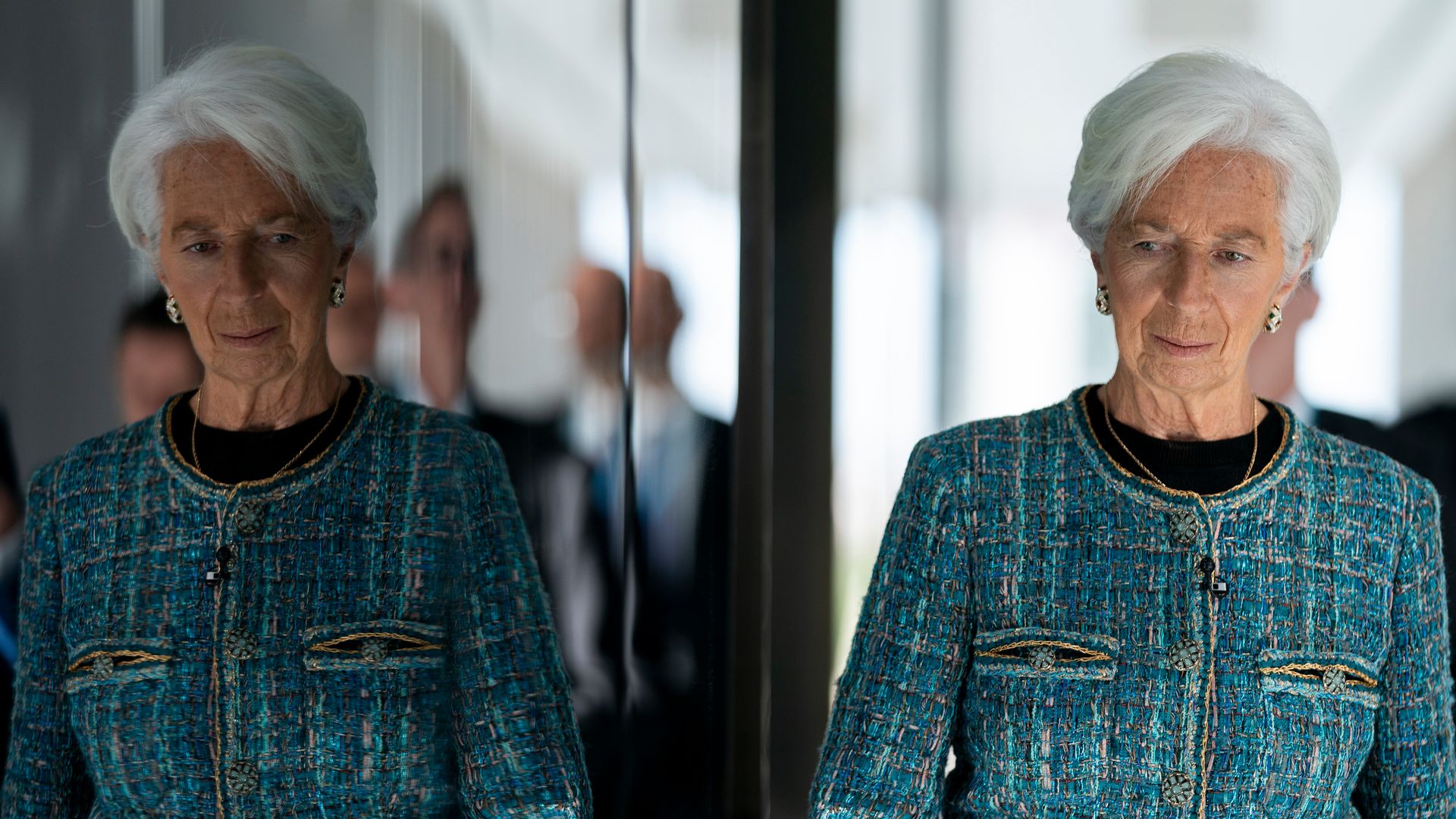
The specter of a global trade war is top-of-mind for finance ministers and central bankers at this week's IMF/World Bank annual meetings in Washington, D.C.
- That's clearly the case for European Central Bank president — and one-time trade minister — Christine Lagarde, who talked about the economic upsides to free trade at an event hosted by Bloomberg yesterday.
Why it matters: Former President Trump says he will impose huge tariffs on all goods imported to the U.S. — threatening a worldwide rewiring of trade with unknown consequences.
What they're saying: "I don't like restrictions to trade," Lagarde said. "I think fair trade is the key boost for employment, for innovation, for productivity. And I would say that it's something we should not throw away."
The big picture: Tariffs are central to Trump's economic plan, despite warnings about the damage it might cause to the global economy — including reigniting inflation.
- "To me, the most beautiful word in the dictionary is tariff — and it's my favorite word," Trump said at the Economic Club of Chicago last week.
The other side: Lagarde, who earlier this year warned Trump's return to the White House would be "clearly a threat" to Europe, said the U.S. has been most prosperous during periods of open trade.
- "In any period of time where this country, the United States, has thrived were periods of trade. Not periods of 'I'm going to retire behind my boundaries and play at home,'" Lagarde said.
The intrigue: Asked about Trump's assertion that the Federal Reserve chair simply flips a coin "once a month" to make interest rate decisions, Lagarde extended an invitation to the former president.
- "He should come and visit us," Lagarde says, adding the ECB's thousands of staffers "work super hard every day, not just once a month."
Sign up for Axios Macro