Axios Macro

October 29, 2026

The last 24 hours of economic news — yesterday's Federal Reserve interest rate decision and this morning's strong GDP data — show how the AI buildout is this era's central economic narrative.
- It is shaping both the growth backdrop and the balance of risks facing policymakers. More below.
- Plus, what new September spending, income and inflation data tell us about the American consumer.
Situational awareness: European Central Bank president Christine Lagarde will step down from her post on Feb. 7, she said this morning, nine months before her term is to end. More here.
Today's newsletter, edited by Jeffrey Cane and copy edited by Katie Lewis, is 1,011 words, a 4-minute read.
1 big thing: The AI story is the macro story
A capital spending boom linked to the AI-related buildout is powering overall economic growth. Understanding its outlook and risks is the Fed's crucial task in trying to calibrate monetary policy right now.
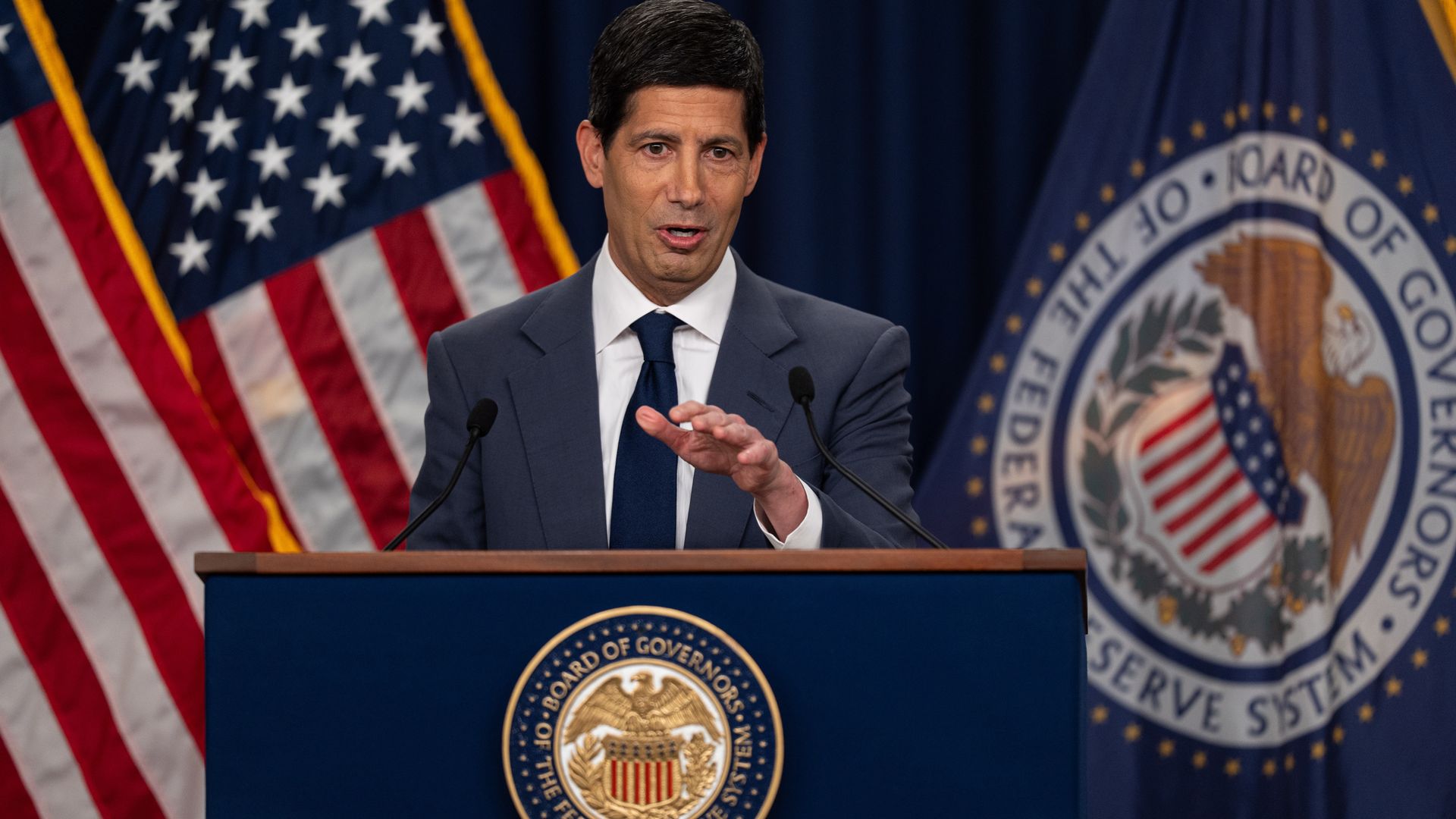
The big picture: That's the takeaway from both the strong Q3 growth numbers released this morning and yesterday's press conference from Fed chairman Kevin Warsh, who is trying to oh-so-gently pump the brakes in hopes of prolonging the growth cycle.
- With debt markets that have funded the data center and AI buildout wobbling, Warsh and the Fed face an extraordinarily delicate balance.
- Right now, the buildout is powering growth while also fueling inflation and displacing investment in other sectors, especially housing. But if AI-related investment were to go bust, the potential financial losses would be massive and the rest of the economy would surely face collateral damage.
- That's not to mention the lost potential for long-term productivity gains — and higher standards of living — if AI lives up to the promises of its boosters.
By the numbers: The capital spending numbers for the third quarter are truly extraordinary. Nonresidential fixed investment rose at a 12.7% annual rate, the strongest since the bounce back from the early stage of the pandemic in 2020 (excluding that, it's the highest since 2011).
- It's not a story of one quarter, either. This measure of investment has been positive for seven consecutive quarters, climbing 14.3% since the end of 2024, with the investment surge seen across business structures, equipment and intellectual property.
- Contrast that with housing: Residential investment has contracted in six of the last seven quarters, including at a 3.3% annual rate in the third quarter.
State of play: Warsh, following yesterday's announcement of no change to interest rates, spoke of the new stresses in debt markets in notably approving terms.
- "Market participants are becoming somewhat more discerning in their capital allocations," he said in his prepared statement.
- "And while overall financial conditions are tighter, I'm unwilling and unable to call them tight. But broadly, these developments go in the direction of achieving a longer, more durable period of economic growth and price stability."
- Later, responding to a question, Warsh argued that the Fed's September interest rate hike was a factor in some of the tighter borrowing environment for AI, saying that "interest rates get in the cracks" and "affect directly or indirectly almost everything."
Between the lines: Warsh is a believer that the AI boom can continue driving growth in the near term and provide big long-term payoffs — but both are threatened if there is a boom-bust cycle.
- He's arguing, in effect, that the modest financial tightening of the last few weeks has injected some much-needed discipline into AI-related investment that makes it more sustainable.
- But if the Fed were to crank the monetary policy dial aggressively by raising rates too much, it could put that all at risk — hence no rate hike yesterday while leaving the door wide open to another one in December.
What they're saying: "In some ways, the Fed is operating a house with one thermostat, but very different temperatures in every room," Rick Rieder, chief investment officer of global fixed income at BlackRock, wrote in a note.
- "Turning the thermostat down further may make the rooms that are already cool even colder, without doing very much to cool the rooms that remain hot," Rieder added. "That, to us, is the fundamental argument for patience here."
- "The Fed can acknowledge that recent inflation has been hotter than desired, reinforce its commitment to the 2% objective and retain the option to potentially tighten again, while simultaneously recognizing that the existing level of rates is already exerting meaningful restraint on the areas of the economy most responsive to monetary policy."
Reality check: That approach will work so long as inflation really does start to behave itself — and as this era of elevated inflation approaches the six-year mark, the central bank's credibility, and Warsh's, is on the line.
2. September spending slump


The economy entered the fall with considerable momentum. But a snapshot from September suggests that households ended the third quarter squeezed by higher prices and weaker purchasing power.
Driving the news: Consumer spending was strong across the third quarter but showed signs of stalling in September in data released simultaneously with the GDP report this morning.
By the numbers: Personal consumption expenditures rose 0.5% in September, slowing from August's 0.9% gain. But after accounting for a 0.5% rise in prices, September spending was flat after rising by 0.5% the prior month.
- Inflation-adjusted disposable income fell 0.3%, the steepest monthly decline since April.
- As spending outpaced income growth and inflation eroded purchasing power, the personal saving rate slipped to 3.8%, its lowest since October 2022.
The intrigue: Inflation cooled over the third quarter, though price pressures were stubborn at the end of the three-month period.
- The core PCE price index rose at a 2.5% annualized rate last quarter, down from 3.3% in the second quarter. Headline inflation slowed to 2.1% from 5%.
- Headline prices rose 0.5%, up from 0.3% in August. Annual inflation accelerated to 3.6% from 3.4%, while core inflation ticked up to 3.1% from 3%.
The bottom line: Together, the GDP and PCE reports capture a central tension in the U.S. economy ahead of next week's midterm elections.
- Consumer spending is powering robust growth, even as households contend with higher prices and declining purchasing power while saving a smaller share of their income.
Sign up for Axios Macro