
Axios Macro

November 19, 2024

Today in Macro, we take a look at new evidence the American consumer is chugging along nicely — at least, if Walmart's upbeat quarterly results are any signal.
- Plus, the latest on the uneven homebuilding sector.
🚨 Situational awareness: President-elect Trump has selected billionaire Howard Lutnick to lead the Commerce Department, a transition source tells our colleague Mike Allen.
- The pick takes Lutnick out of the running for Treasury secretary and positions him as a key official charged with implementing Trump's tariff agenda.
Today's newsletter, edited by Ben Berkowitz and copy edited by Katie Lewis, is 599 words, a 2-minute read.
1 big thing: What Walmart shows about the economy
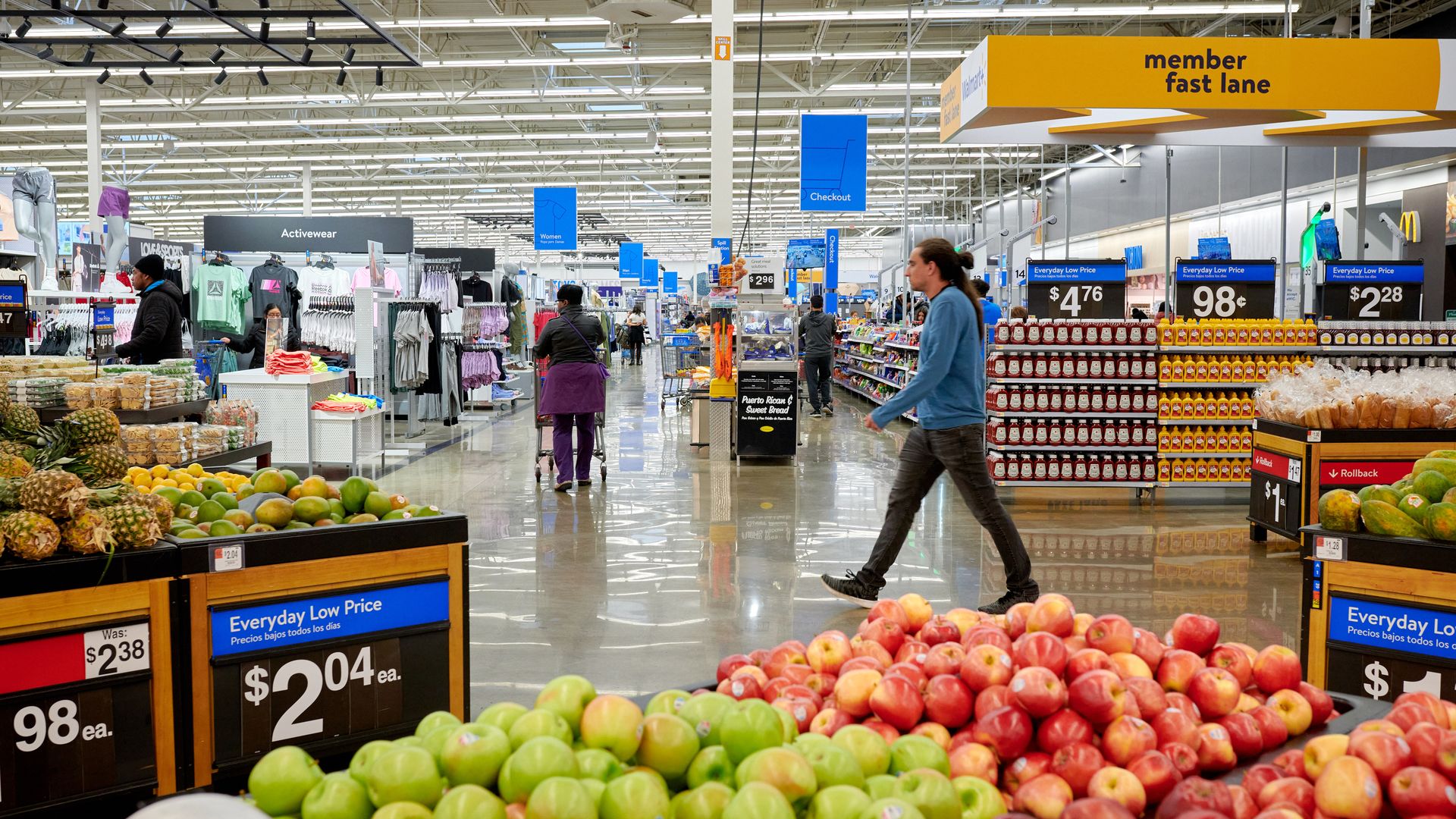
Official economic data shows the bedrock of the economy — the American consumer — is strong. Anecdotes from the nation's largest retailer back that up and suggest the good times will continue into the holiday season.
Why it matters: Fears of a potential recession sparked by sluggish consumer spending looked like a head fake. Robust shopping continues to underpin robust growth.
Driving the news: Few companies have their fingers on the pulse of the economy as completely as Walmart. The company says consumers are splurging more on non-essentials like toys and televisions, a trend they anticipate will continue through the end of the year.
- "We had good back-to-school, we had a good Halloween — and it's important to string these holidays together," John Furner, CEO of Walmart's U.S. division, said on the company's earnings call this morning.
- "We go into the [holiday] season with momentum," he added.
The big picture: A real-time indicator of consumer confidence showed a rebound in sentiment after the election, fueled by more economic optimism among Republicans.
- While inflation and other economic concerns might have affected how Americans voted (or made them double down), it has not knocked consumer spending off its steady trend.
- Walmart says prices are down for some grocery items and general merchandise — a relief to consumers.
- But the company also confirmed that it had fewer markdowns across its business than in previous quarters, a sign consumers are still somewhat willing to stomach higher costs.
- Walmart, which continues to attract higher-income customers, also cited a greater willingness among shoppers to pay the premium for faster delivery.
By the numbers: The data so far, however, suggests consumer spending kicked off the final three months of the year on solid footing.
- Retail sales in October rose 0.4%, while updated data for the previous month showed spending jumped by 0.8%.
- That report primarily examines spending on goods. A more complete snapshot of consumer spending on services — hotels, restaurants, etc. — will be released next week.
What to watch: High delinquency rates are one indicator flashing yellow. The New York Fed said last week that credit card delinquency rates fell slightly in the third quarter, though a larger share of Americans transitioned into delinquency for auto and mortgage loans.
- Another risk: potential trade wars, if Trump follows through on his campaign promise to aggressively hike tariffs.
- Walmart's CFO told CNBC that tariffs might fuel inflation and the retailer might have to hike costs if that promise becomes a reality.
2. Bumpy road for housing


For a slightly less buoyant take on where the economy stands in the final weeks of 2024, look to the homebuilding sector.
Driving the news: Builders started work on 3.1% fewer housing units in October than in September, the Census Bureau said this morning. Permits were also down slightly, by 0.6%.
- The starts number was dragged down in part by hurricanes in the Southeast that likely caused some builders to delay projects.
- Single-family starts fell the most, down 6.9% in October. Multifamily starts rose about 10%, a reversal after months of weakness.
The intrigue: With interest rates again surging, builders may be focusing on completing projects underway rather than starting new projects from the ground up.
- "In the details, builders appear to be diverting resources to working through what had been a record backlog in 2022 and 2023," wrote Nationwide economist Daniel Vielhaber in a note, adding that "the number of housing completions remains very elevated and the number of housing units under construction continues to dwindle."
- "With rates higher still in November, we could see builders continue to prioritize projects already started," he wrote.
Sign up for Axios Macro