Axios Macro

October 17, 2024


A strong retail sales number this morning adds to the evidence that the U.S. economy is on firm footing. We unpack it below.
- But first, a look at some spicy comments Treasury Secretary Janet Yellen will make this afternoon about tariffs that reflect the shifting politics of trade. 🌶
💶 Situational awareness: The European Central Bank cut key interest rates by a quarter-percentage point for the third time this year as inflation plunges and the eurozone economy slows. ECB president Christine Lagarde said she was not "pre-committing" to another rate cut in December.
Today's newsletter, edited by Kate Marino and copy edited by Katie Lewis, is 735 words, a 3-minute read.
1 big thing: Yellen's case against tariffs
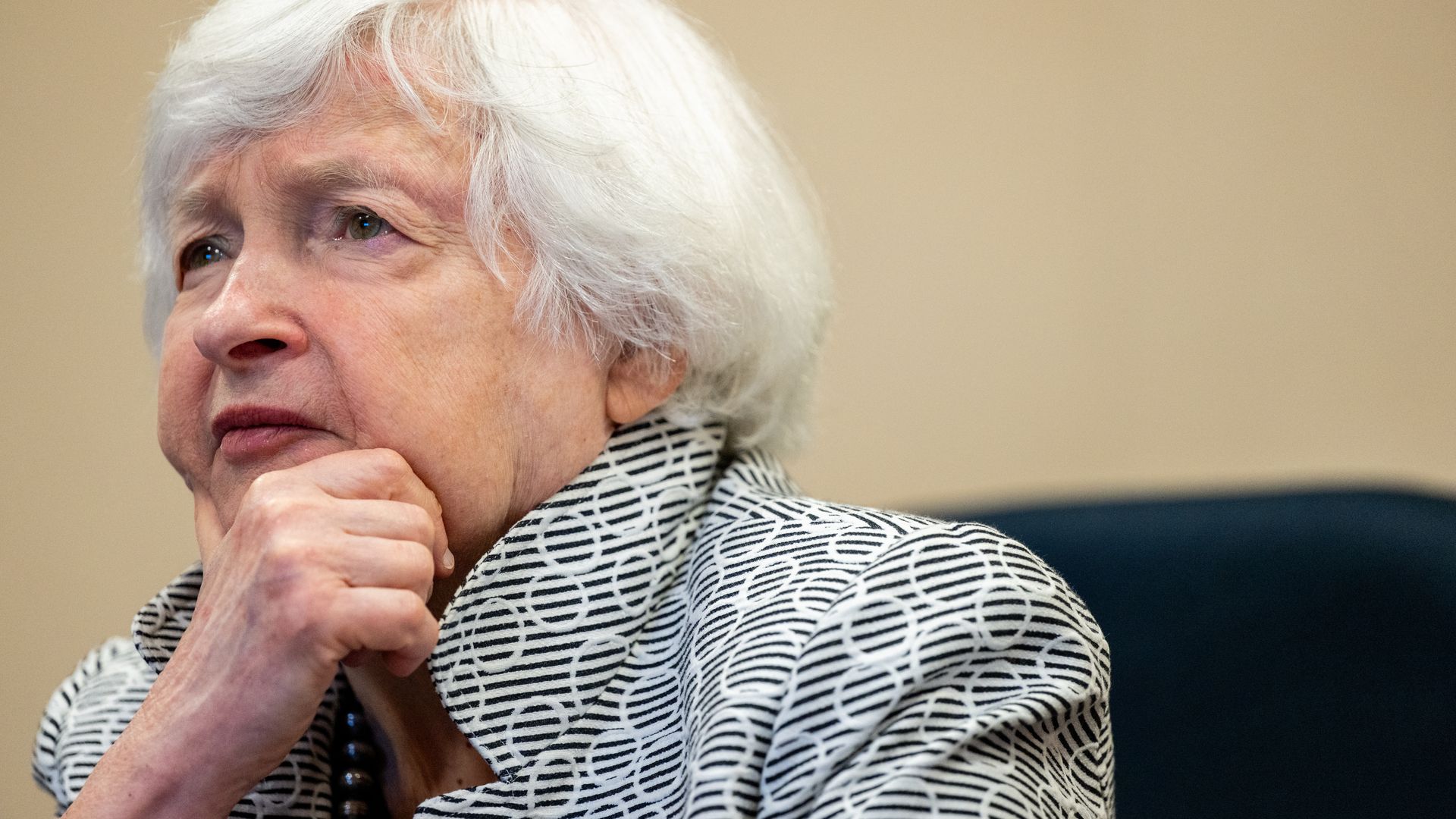
Yellen will deliver a speech today assailing broad-based tariffs. While her words implicitly target former President Trump, they also signify shifting intellectual currents within the Democratic Party.
Why it matters: If Vice President Kamala Harris wins the presidency next month, it's unclear whether she will share the inclination toward trade barriers of Trump and President Biden or listen more to the views of those in her orbit who advocate for using them sparingly.
- Yellen's comments stake out the position of those — including essentially all mainstream economists — who see trade as broadly beneficial for Americans and tariffs as an inflationary force that do more harm than good.
- That party wing has lost internal battles in the Biden years, as the administration kept Trump's broad-based China tariffs in place even when inflation spiked and has expanded them in targeted areas.
What they're saying: "Calls for walling America off with high tariffs on friends and competitors alike or by treating even our closest allies as transactional partners are deeply misguided," Yellen will say this afternoon at the Council on Foreign Relations, according to remarks obtained by Axios.
- "Sweeping, untargeted tariffs would raise prices for American families and make our businesses less competitive," she will add.
- "Trade expands the market for our exports, from services to goods like transportation equipment and electronics; helps our producers efficiently source key inputs; and enables American consumers to access more goods at lower prices," Yellen will say.
Between the lines: Harris' campaign focus on attracting moderate pro-business voters and her political identity from trade-heavy California offer reasons to think she could resist tariffs in ways Biden has not.
- Yellen's speech also appears aimed in part at fellow Democrats, making the affirmative case that trade creates economic benefits for American citizens and cements geopolitical ties with allies.
- Tellingly, today's event is a fireside chat with Council on Foreign Relations president Michael Froman, who was former President Obama's trade envoy and recently published an essay critical of both the Trump and Biden administrations' uses of trade barriers.
Yes, but: Yellen will continue to defend the Biden team's use of targeted tariffs to try to combat China's heavy subsidies of products like electric vehicles, which they argue undermine the rest of the world's ability to compete in the industries that will drive the future.
- China's policies, Yellen will say, are "leading to industrial overcapacity in critical industries, threatening the viability of American and other firms and increasing the risk of over concentrated supply chains that undermine global economic resilience."
The bottom line: The Clinton-Obama era enthusiasm for free trade has been dormant in the Trump and Biden years, but its believers are not giving up.
2. The strong data run continues

The better-than-expected retail sales data is the latest evidence the U.S. economy is still humming along.
Why it matters: Some data over the summer pointed to a slowdown. But solid spending last month and a surge in job growth suggest that might not be the case.
- "[T]he continued strength of household consumption — as evidenced by the unexpectedly strong retail data — provides a solid underpinning for the broad economy to sustain its positive momentum as inflation eases," Plante Moran Financial Advisors' Jim Baird wrote in a note.
By the numbers: Retail sales rose 0.4% in September, after increasing 0.1% in August.
- Most retail categories saw spending increase in September, including clothing shops (+1.5%), restaurants and bars (+1%), and other food shops (+1%).
- A catch-all category for other retailers — pet stores, convenience stores and more — saw the biggest spending surge: up 4% from August.
- There was a pullback in spending at furniture shops (-1.4%) and electronics stores (-3.3%).
Between the lines: Excluding spending at gas stations and auto shops, last month was even stronger with an increase of 0.7%.
- Energy prices dropped sharply in September, which weighed on gasoline sales. The data is not adjusted for inflation.
- The "control retail sales" group that feeds into GDP data rose 0.7%.
Also this morning, the Labor Department said filings for unemployment applications dropped 19,000 last week to 241,000 after a hurricane-related jump in claims.
What to watch: The run of strong data is raising doubts about whether the Fed will cut rates at the final policy meetings of the year.
- The yield on the two-year Treasury note — sensitive to expectations about Fed policy — spiked after the retail sales data release, suggesting diminished expectations for rate cuts ahead.
Sign up for Axios Macro