Axios Macro

March 28, 2023

Key bank regulators are on Capitol Hill today, taking hard questions from senators about the collapse of Silicon Valley Bank, and the official response to stabilize the banking system.
- Below, we look at what supervisors knew about SVB's health, and big future implications the incident poses for banks and financial regulation.
📣 Tune in tomorrow: Axios' second annual What's Next Summit is happening all day tomorrow starting at 8:10am ET! Check out our day-of agenda featuring interviews with music producer Timbaland, head of YouTube Neal Mohan, United Airlines CEO Scott Kirby and more. Register to livestream the event here.
Today's newsletter, edited by Javier E. David, is 749 words, a 3-minute read.
1 big thing: The huge question created by SVB's failure
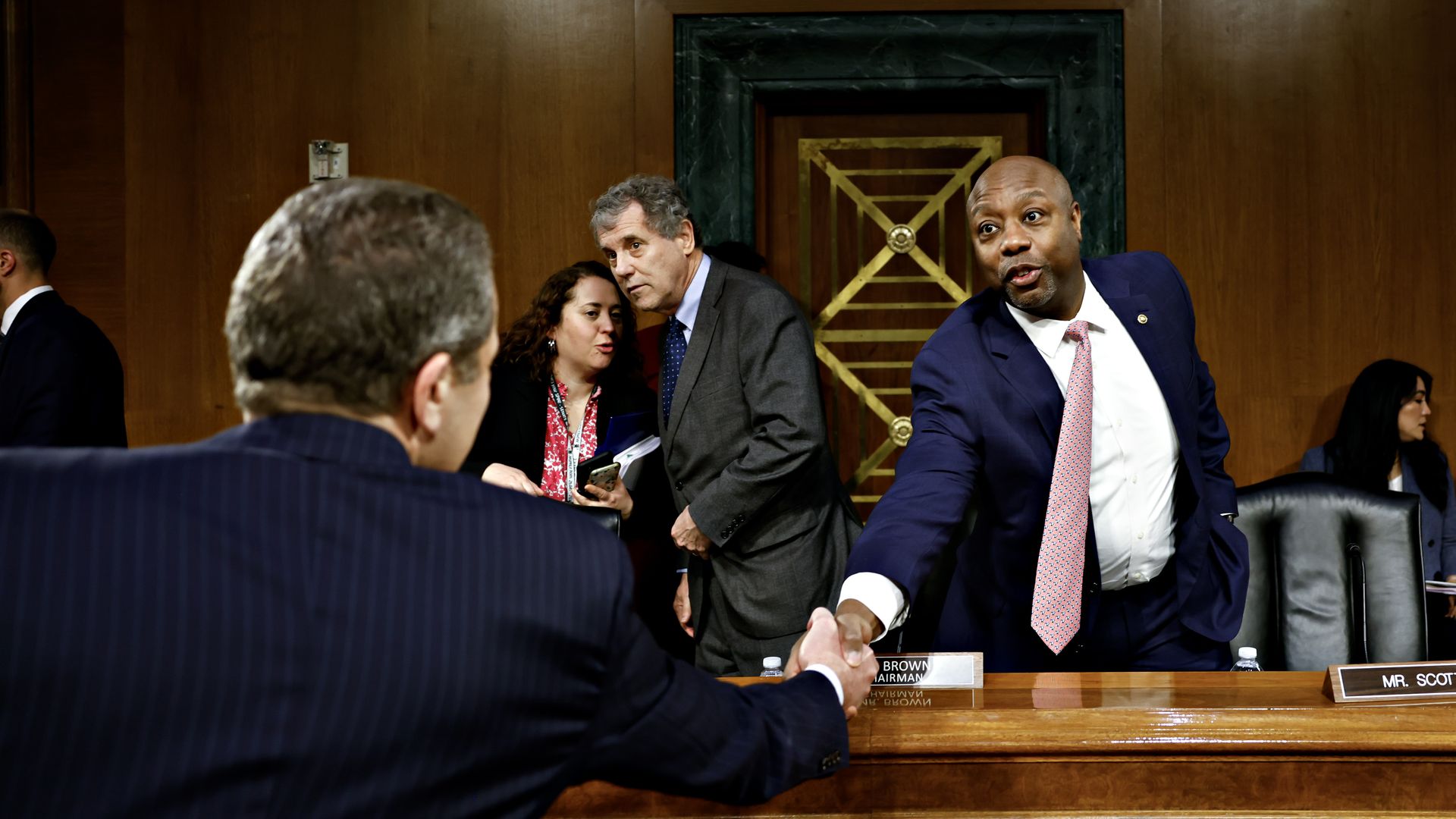
Michael Barr, vice chair for supervision at the Federal Reserve, shakes hands with Sen. Tim Scott, a Republican from South Carolina and ranking member of the Senate Banking, Housing, and Urban Affairs Committee. Photo: Samuel Corum/Bloomberg via Getty Images
When bank supervisors do their best work, you will not hear about it. You will never read about how a heroic bureaucrat identified a risk to an institution's health, flagged it to management and, as a result, the bank didn't fail.
- By design, most bank supervision work is strictly confidential, and "Local bank remains open" is not the stuff of newspaper front pages.
Why it matters: We're getting more granular detail about what went horribly wrong at Silicon Valley Bank (SVB). But a huge open question is not whether bank supervisors can identify problems — it's clear in this case that they did — but what ought to happen when they do.
- The problems that caused it to unravel — prompting an extraordinary government response to back the entire banking system — were identified early by the supervisors scrutinizing the bank.
- But they were evidently unable to force the issue and insist that the bank improve its risk management and reduce its exposure to rising interest rates and deposit flight, until it was too late.
Driving the news: In the first of what will likely be many public inquiries about the failures of SVB and Signature Bank, leaders of the Fed, the Treasury and the FDIC are testifying before the Senate Banking Committee as this newsletter sends.
- Fed vice chair for supervision Michael Barr listed the many ways regulators had identified problems long before SVB failed, including finding six areas of deficiency near the end of 2021; three more in May 2022; and concluding the bank's management was deficient in the summer of last year.
- This past October, Barr testified, supervisors met with SVB senior management about interest rate risk, and delivered another formal finding in November.
- FDIC chair Martin Gruenberg stunned with news that SVB's top 10 depositors had a combined $13.3 billion parked there. That implies it had customers big enough to know better — keeping more than $1 billion in cash at a single mid-sized bank.
The intrigue: So far at least, regulators have no good answers for why, despite all that evidence of excessive risk, this all remained confined to confidential reports among bank supervisors, their bosses and SVB management.
- Meanwhile, the Fed and other officials lacked the ability or the will to force changes.
What they're saying: "I hope to learn how the Fed could know about such risky practices for more than a year and fail to take definitive, corrective action," said Sen. Tim Scott of South Carolina, the ranking Republican on the committee.
- "Our regulators appear to have been asleep at the wheel."
- "It looks to me like the regulators knew the problem, but nobody dropped the hammer," said Sen. Jon Tester, a Democrat from Montana.
The bottom line: The real work of bank supervision may take place in the shadows, but it doesn't work if policymakers don't act on what those supervisors learn.
2. Key themes of the SVB hearing
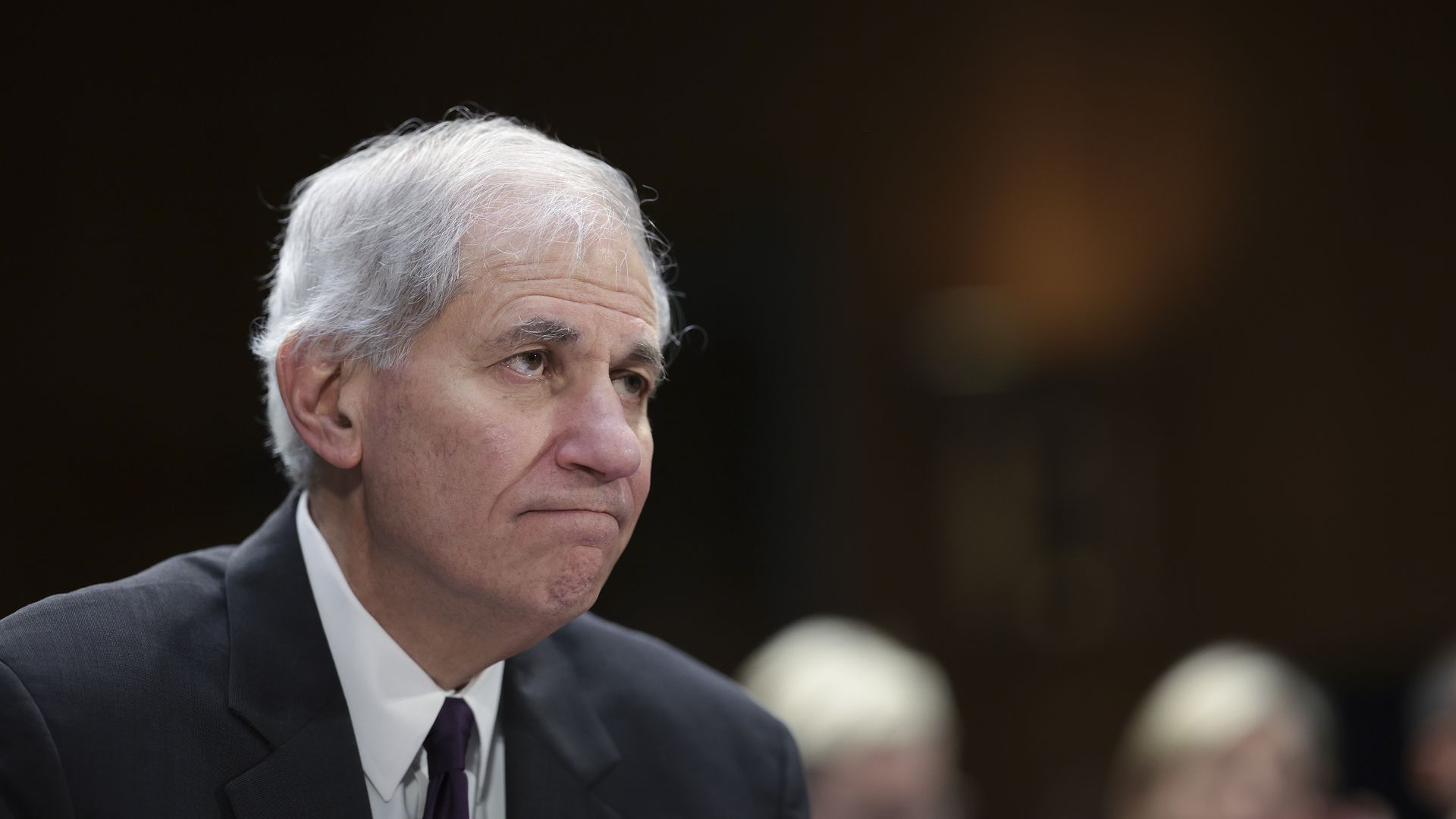
Federal Deposit Insurance chairman Martin Gruenberg appears before the Senate Banking committee today. Photo: Win McNamee/Getty Images
The question of "where were the regulators?" is one that looks to be a key theme for the hearing based on early lawmaker queries, as regulators like the Fed's Barr point back to the bank's mismanagement.
Details: In the hearing's first question, Sen. Sherrod Brown (D-Ohio) asked Barr, "Did the Fed drop the ball because it didn't see the risk that was building?"
- Barr, who acknowledged that supervisors had been flagging risks, pointed to irresponsibility: "Fundamentally, the bank failed because its management failed to appropriately manage interest rate risk and liquidity risk."
On whether the Fed can appropriately review its own potential failures in the collapse of SVB, Barr said, "I think it's an important part of risk management to do self-assessment."
- Barr added that he would welcome other independent investigations.
Barr gave new color to the timeline of SVB's implosion.
- On Thursday, March 8, depositors tried to withdraw $42 billion, as was previously disclosed.
- As the bank opened the next morning, another $100 billion in withdrawal requests were waiting, Barr said, forcing regulators to shut the bank.
Of note: FDIC's Gruenberg also defended official actions to try to prevent contagion from that collapse from spreading through the economy.
- "There would have been a contagion, and I think we'd be in a worse situation today, with consequences for the actors in our economic system," Gruenberg said.
- In opening remarks, Treasury's Nellie Liang struck a similar tone: "The situation demanded a swift response. In the days that followed, the federal government took decisive action to strengthen public confidence in the U.S. banking system and to protect the U.S. economy."
Sign up for Axios Macro

Stay ahead of the curve on the most important economic developments with reporting and analysis on how business, policy, and markets collide.