Axios Macro
April 15, 2026


It has been a strange 12 months for the Federal Reserve, and things got even stranger in the last 24 hours.
- More below, including what we heard from the White House's top economist about what it all means for Kevin Warsh's nomination to take charge of the central bank.
- Plus, the Trump administration is softening its tone on the need for imminent interest rate cuts. 👀
Today's newsletter, edited by Jeffrey Cane and copy edited by Katie Lewis, is 836 words, a 3-minute read.
1 big thing: A weird 24 hours for the Fed
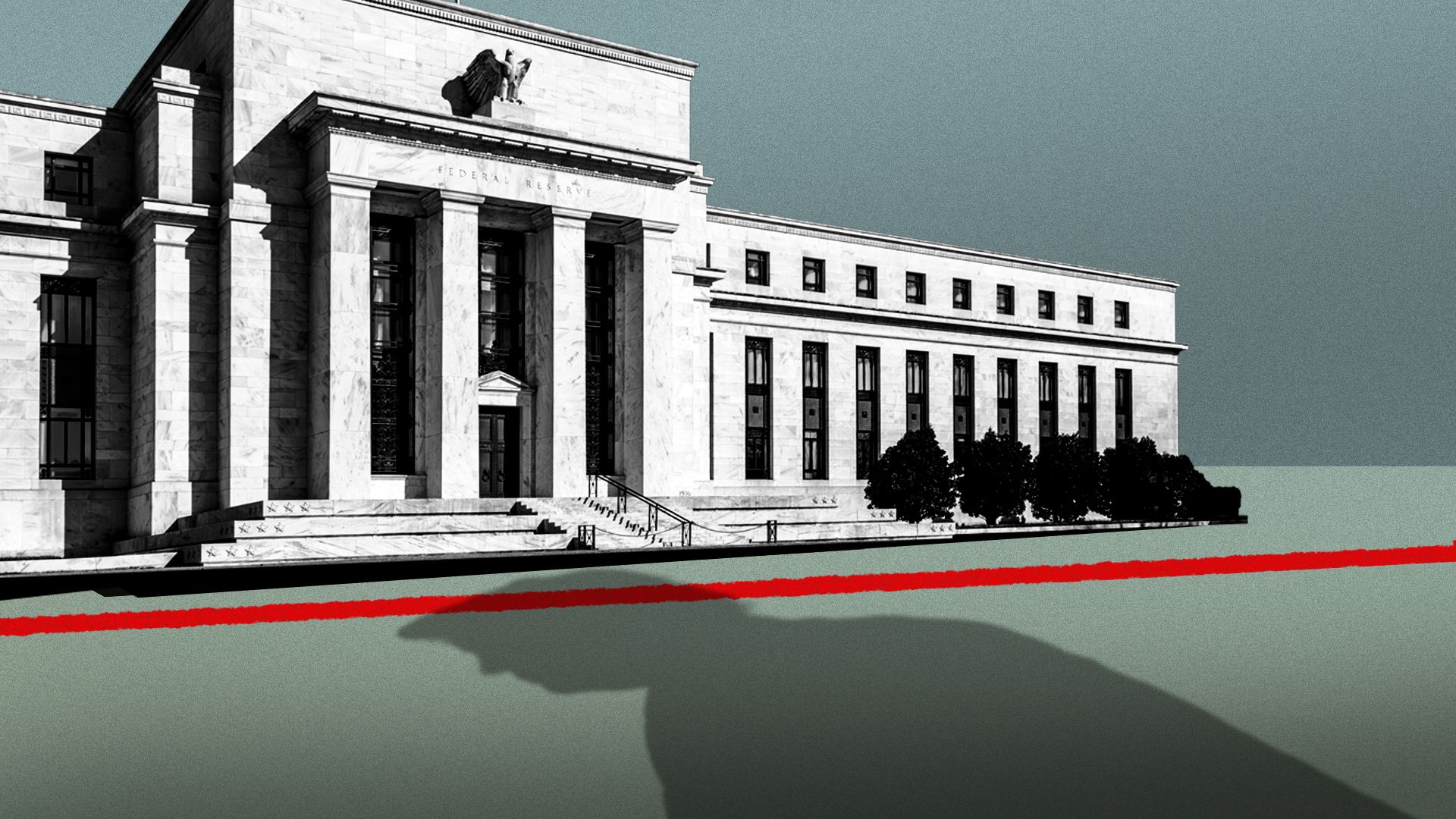
The message from top Republicans yesterday morning was that things are on track for an orderly transition atop the Fed when Jerome Powell's term ends one month from today. Events over the last 24 hours make those prospects messier.
The big picture: As much as Senate Republicans seek an off-ramp that would smooth the path for Warsh's confirmation as Fed chair, the legal stalemate holding things up has only escalated.
Driving the news: Yesterday, three Justice Department officials showed up unannounced at the Fed's construction site, looking to investigate the $2.5 billion renovation project, the New York Times reported.
- They were turned away, and a lawyer for the Fed subsequently said that it was inappropriate and that the DOJ must go through Fed lawyers in its investigation.
- In an interview aired on Fox Business this morning, President Trump, when asked what he would do if Powell does not resign from his position as a governor when his term as chair is up, said, "Well, then I'll have to fire him."
- The legality of the president's efforts to fire another Fed governor, Lisa Cook, is currently pending before the Supreme Court.
Catch up quick: Sen. Thom Tillis (R-N.C.) is pledging to block Warsh's nomination from advancing until the Justice Department investigation — which he and Fed leaders view as a blatantly pretextual attack on the central bank's independence — is resolved.
- Powell, whose term as a governor extends until 2028, has said, "I have no intention of leaving the Board until the investigation is well and truly over, with transparency and finality."
- A federal judge quashed earlier DOJ subpoenas of the Fed, ruling that there is "abundant evidence" that its purpose "is to harass and pressure Powell" to either yield to Trump on monetary policy or resign.
Between the lines: There is seemingly a schism between Republicans who want to move on and get Warsh into place as promptly as possible, and Justice Department officials — particularly Jeanine Pirro, U.S. attorney for the District of Columbia — who want to deliver to Trump the vengeance he seeks.
- The latest events are the opposite of the kind of de-escalation that the senators who must vote to confirm Warsh seek.
What they're saying: We asked top White House economist Kevin Hassett this morning about what comes next and whether there is a path for Warsh to be confirmed by next month.
- "I have high confidence that that will happen," Hassett said. He added that the way the Justice Department got involved "was that the president wanted to investigate the cost overrun."
- "So right now, the Fed's position is that they can spend as much money, perhaps wasting, as they want, and the White House is not allowed to inspect it."
As to whether Powell should resign as a governor when his term as chair ends next month, Hassett said, "Jay will have to decide for himself what he wants to do."
- "But the tradition is once a Fed chairman is confirmed, then the previous chairman resigns, and I think Fed chair Powell has said he would do that as long as he felt he wasn't in legal jeopardy," Hassett said.
2. Trump officials soften rate cut calls
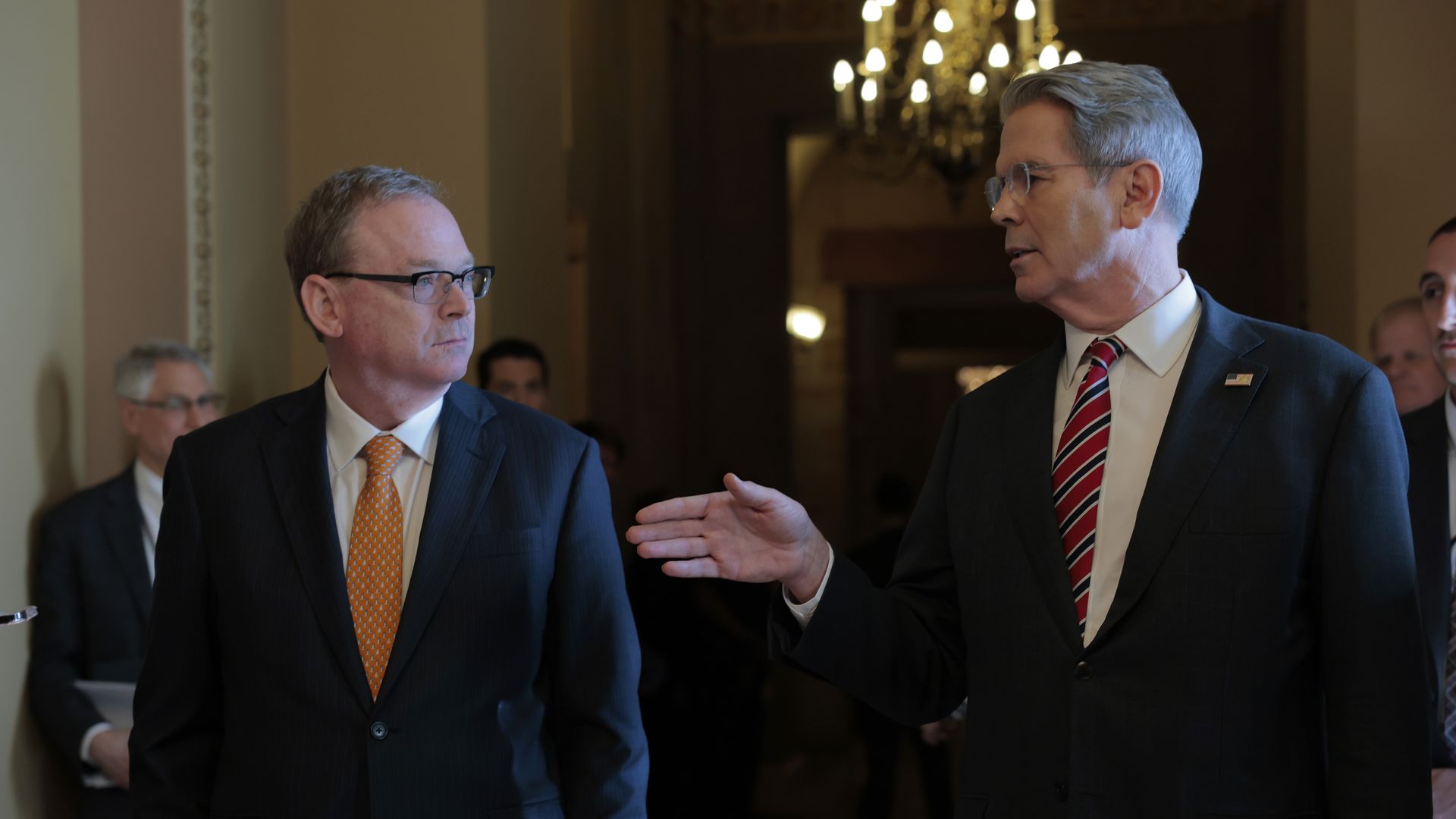
That's not all when it comes to developments in the relationship between the Trump administration and the Fed in the last 24 hours. There has also been a softening of the administration's calls for immediate interest rate cuts.
Why it matters: With inflation surging thanks to the Iran war, Warsh — once confirmed — will face a tricky task in trying to deliver the rate cuts Trump has demanded.
- The latest comments from Treasury Secretary Scott Bessent, echoed this morning by Hassett, suggest that Warsh will not face immediate pressure from the White House to deliver cheaper money.
What they're saying: "I believe rates should be cut ... but if they want to wait for some clarity, I understand that," Bessent told a small group of reporters yesterday.
- He added that "we should wait for the new chairman, Warsh, and let him lead the next cycle."
Hassett seconded those comments this morning.
- "I understand that the energy shock will certainly have some repercussion for global inflation," Hassett told Neil, after noting Bessent's comments.
- "But on the other hand, core inflation is at the lowest level since the Biden inflation began, and interest rates in the U.S. are higher than for comparable countries around the world," he added.
- "If I were a [Fed] governor, I would still be willing to cut rates because I know that oil price shocks don't lead to inflation."
Sign up for Axios Macro