
Axios Macro

May 02, 2024
The underlying drivers of last year's drop in inflation loom large for Fed chair Jerome Powell — and he's betting they can be sustained, despite a rough last few months of inflation data.
- That's our big takeaway from yesterday's news conference. More below, plus inside the latest figures on productivity.
Today's newsletter, edited by Kate Marino and copy edited by Katie Lewis, is 716 words, a 3-minute read.
1 big thing: Powell is still a supply-side believer
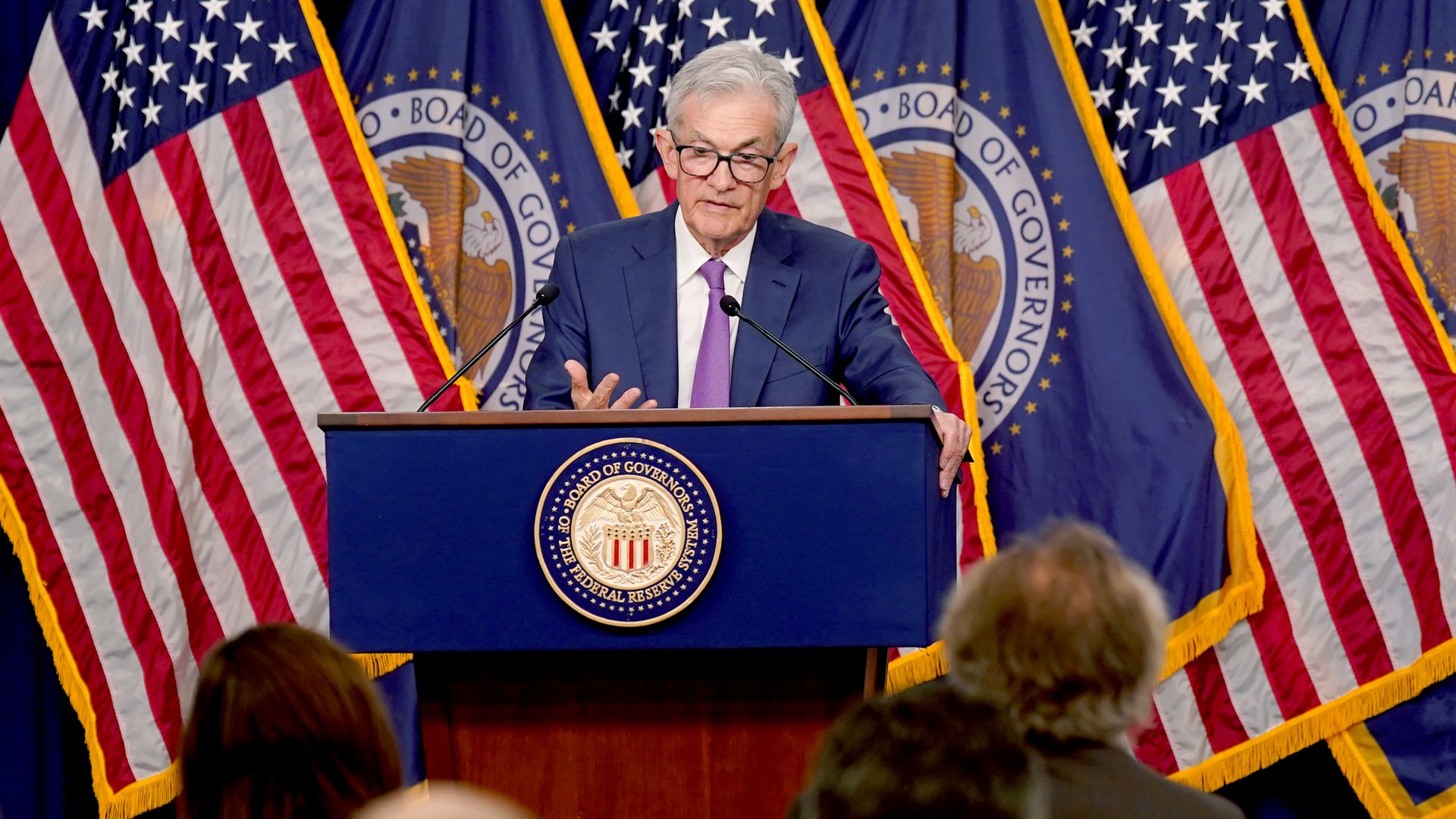
Fed chair Jerome Powell during a news conference yesterday. Photo: Al Drago/Bloomberg via Getty Images
What the Federal Reserve does next largely rests on how much this year's economy will look like last year's.
Why it matters: If the factors that enabled 2023's painless disinflation are still in play — healing of pandemic-era disruptions to supply chains, surging worker productivity and an expanding labor force — then things look rosy for the remainder of 2024.
- But if this year's stalled progress on inflation in fact means those forces are in the past, the nation's inflation battle might stretch longer and require tighter money policy that will eventually cause more economic pain.
Driving the news: Speaking to reporters yesterday, Powell was optimistic the backdrop that helped bring inflation down last year is still intact, that the supply side of the economy will continue to rebound and the current level of interest rates is restricting economic activity.
- But he acknowledged that optimism was tempered, given what Fed officials called a "lack of further progress" on inflation in the first few months of 2024 in their policy statement.
What they're saying: "We know there are two forces at work here, the unwinding of pandemic-related supply-side distortions, and on the demand side there is restrictive monetary policy." Powell said. "I wouldn't rule out that something like that can't continue."
- "I wouldn't give up at this point that further things can't happen on the supply side either," Powell added. "We do see that companies still report that there are supply-side issues that they're facing."
State of play: Powell said the solid underlying economic growth or the flourishing labor market did not alone spark inflation concerns — largely because they didn't prevent a painless disinflation last year.
- "I don't like to say that either growth or a strong labor market in and of itself would automatically create problems on inflation because, of course, it didn't do that last year," Powell said.
- Later, he added: "Remember what we saw last year — very strong growth, a really tight labor market and historically fast decline in inflation."
What to watch: Powell noted that prices rose more quickly than expected for all sorts of goods since the end of last year, one reason behind the recent bout of hotter-than-expected inflation.
- More worrying was strong housing inflation. Fed officials have long expected the cooldown in rental prices to flow through to official government data, but it still hasn't happened.
- That is key to inflation cooling in 2024, UBS economist Jonathan Pingle wrote in a note, calling it one "important component of gaining the needed confidence" for the Fed.
"I am confident it will come," Powell said, referring to the slowing of housing costs. "I am not so confident in the timing of it, but yes, I expect that this will happen."
2. Unpacking the productivity surge


A key part of the pain-free disinflation last year was a remarkable surge in how much economic output each hour of labor could generate. The productivity boom continued to start 2024, if not at the breakneck pace of 2023.
Driving the news: Labor productivity increased only 0.3% in Q1, the Labor Department said this morning, but that was enough to push the year-over-year number to a remarkably strong 2.9%.
- If sustained, productivity growth at that elevated level would allow a golden mix of surging growth, rising real incomes and falling inflation.
- Less sunny were the first-quarter numbers of unit labor costs — how much companies pay workers for each unit of output. The combination of soft Q1 GDP growth and rapidly rising wages meant unit labor costs were up 4.7%, which would fuel inflation if sustained.
Between the lines: In a new policy brief examining possible drivers of the productivity surge, Luke Pardue, policy director at the Aspen Economic Strategy Group, identifies strong business formation as a likely factor.
- "New business applications through the first quarter of 2024 have outpaced 2019 levels by 54%," Pardue writes, with particularly elevated levels among information and business services that disproportionately contribute to productivity growth.
- These signs "point to entrepreneurship as a key driver of productivity growth."
By contrast, while AI technology may drive strong gains in the years ahead, there is little evidence it is a major part of the story over the last year.
Disclosure: Neil is a member of the Aspen Economic Strategy Group, participating in his role as a reporter.
Sign up for Axios Macro

Stay ahead of the curve on the most important economic developments with reporting and analysis on how business, policy, and markets collide.